Writing Files in C: A Practical Guide for 2026
Learn how to master writing files in C. This guide covers fopen, fwrite, text vs. binary modes, error handling, and tips to avoid common data loss pitfalls.
You run your C program, it exits cleanly, and you go check the output file. It's empty. Or worse, the file isn't empty anymore because your code helpfully erased what was there before. That's a very C kind of lesson. The compiler shrugs, your program smiles, and your data disappears.
Writing files in C looks simple until you face the significant problems. Not “how do I print text to disk,” but “how do I avoid wiping production logs,” “how do I save structs correctly,” and “how do I update one record without rewriting the whole file.” Those are the problems that matter when you're building something you want to trust.
C gives you a very explicit model for file I/O. You open a file, verify the handle, write, and close it. Nothing is hidden. That's part of the charm and part of the trap. If you skip a check, C won't stop you. It'll just let you meet your old friend, undefined behavior, who always shows up uninvited and occasionally brings segfaults.
From Empty Files to Flawless Output
Most beginners learn file I/O from tiny examples. Open with "w", call fprintf, close the file, done. That's fine for hello-world code, but it leaves out the part that burns people in real projects: mode choice and update strategy.
If you're searching for practical help with writing files in C, you probably don't need another toy snippet that writes "Hello, world!" into output.txt. You need to know why one mode destroys old content, why another preserves it, and when text output stops being the right tool.
The real problem isn't syntax
The standard pattern in C is old, stable, and still the right mental model. You declare a FILE *, open with fopen, check for NULL, write with a library function such as fprintf, and close with fclose. Introductory notes on C file handling teach that exact flow because it prevents writing through an invalid stream and keeps code portable across systems, as shown in .
That explicit sequence is one reason C code stays understandable for years. You can hand a file-writing function to another developer and they can usually reason about it quickly. If the code is messy, that's not C's fault. That's on us, and it's why habits from matter so much when file operations start branching on modes, paths, and error states.
Good file I/O code is boring in the best way. It opens carefully, writes predictably, and leaves no surprises behind.
What separates safe code from fragile code
The useful progression looks like this:
- Start with text output when humans need to read the file. Logs, reports, and config-like output fit here.
- Switch to binary output when you're storing raw data structures, arrays, or records where exact bytes matter.
- Use random access when you need to update one part of a file instead of rewriting everything.
- Treat errors as normal because file operations fail all the time for mundane reasons like permissions, bad paths, or a full disk.
A lot of “my C file write isn't working” bugs come from choosing the wrong tool for the job. fprintf is great for readable text. It's a poor fit for structured binary data. Opening with "w" is fine when you want a fresh file. It's a disaster when you meant to preserve history.
The mindset that actually helps
C doesn't reward wishful thinking. It rewards precise intent.
When you write files in C, ask three questions before writing any code:
- Should this file be readable by humans or by programs?
- Should existing content be replaced, preserved, or updated in place?
- What happens if opening or writing fails?
Answer those well, and most file I/O bugs become obvious before they ship. Ignore them, and your program may still compile beautifully right up until it trashes a file you cared about. Efficiently, too. C likes to be thorough like that.
The Standard C Library File Writing Playbook
The standard library handles most file-writing work you'll do in C. If you get this part right, the rest gets much easier. If you get this part wrong, you end up debugging ghosts.
A very practical rule comes from : 90% of file write failures in both student and production C code stem from omitting the NULL validation after fopen() or forgetting to call fclose(). The same guide also notes that using "w" when "a" was intended accounts for an estimated 25% of accidental data loss incidents. That lines up with what seasoned C developers see over and over. The mistakes aren't exotic. They're routine.
Five-step rule:
- Declare a
FILE *pointer- Open with
fopen()using the right mode- Check that the pointer is not
NULL- Write with
fprintf(),fputs(), orfwrite()- Close with
fclose()
The minimum safe pattern
Here's the version I'd want a junior developer to memorize:
int main(void) { FILE *fp = fopen("notes.txt", "w"); if (fp == NULL) { return 1; }
}
This isn't fancy, but it respects the contract. Open. Verify. Write. Close. If you skip the check after fopen, the next write can blow up or fail without warning. If you skip fclose, your output may not be fully written when you expect it, and resource cleanup becomes sloppy fast.
If you're also brushing up on flow control while handling file errors, a quick refresher on is useful when processing batches of records and skipping bad entries without killing the whole loop.
Picking the right mode before you write
Most accidental file damage happens before the first fprintf call. It happens when the file is opened with the wrong mode.
That table is the practical heart of writing files in C.
- Use
wwhen you want a clean slate. Reports generated from scratch are a good fit. - Use
afor logs, audit trails, and any file where history matters. - Use
r+when you need to modify content without automatically deleting what's already there.
What works and what doesn't
What works:
- Checking
fpimmediately afterfopen - Choosing the mode based on data preservation needs
- Keeping file handling code short and obvious
What doesn't:
- Opening everything with
"w"out of habit - Assuming file creation always succeeds
- Returning early without closing an already-open file
If the file contains history, don't reach for
"w"unless you're completely sure history should die today.
One more habit helps a lot. Put file-open logic close to file-use logic. Don't open a file, pass the pointer through half the codebase, and then wonder who forgot to close it. That kind of bug is less “advanced systems programming” and more “treasure hunt with sadness.”
Handling Binary Data with Fwrite
Text files are great when a human might inspect the output with a plain editor. They're lousy when you need exact bytes on disk. If you're saving a game state, a sensor buffer, or a fixed-size record, binary I/O is usually the better fit.
That's where fwrite earns its keep. It writes raw memory directly to a file instead of converting values into formatted text. No format strings. No delimiter juggling. No accidental “why did this integer become text and break my parser” moment.

Text output versus binary output
fprintf produces human-readable output. That's the point. It turns your values into characters.
fwrite stores raw bytes. That makes it a stronger choice for structured data.
A benchmark summary from reports that fwrite() can reach 1.2 MB/s for 10KB data blocks, while fprintf() drops to 0.9 MB/s for the same data due to format parsing overhead. The same source notes that using binary modes like "wb" can improve write throughput by up to 28% on Windows systems by avoiding newline translation.
A practical struct example
typedef struct { int id; float score; } Player;
int main(void) { Player p = {42, 98.5f};
}
This writes the Player struct as raw bytes. That's compact and direct. It also means the file is not meant for humans to read. Open it in a text editor and you'll get gibberish, which is normal. That's the machine's lunch, not yours.
When binary is the right call
Use binary writing when:
- You need exact structure layout for arrays, records, or snapshots of data in memory
- You care about throughput more than readability
- You plan to seek to specific offsets later for updates
Avoid binary writing when:
- Humans need to inspect or edit the file manually
- You need portable text interchange between tools that expect strings and delimiters
- Your data format must stay stable across different struct layouts or compiler settings
fprintfis for readable output.fwriteis for exact output. Mixing those goals usually creates a file that satisfies neither.
One caution. Writing structs directly is convenient, but it ties the file format to your in-memory representation. That's often fine for internal tools or small projects. It gets riskier when file compatibility matters across builds or systems. If long-term stability matters, define the on-disk format deliberately instead of dumping memory blindly.
Updating Records with Random File Access
Sequential writing is only half the job. Real programs need surgical updates. A score changes. A cache entry expires. One inventory record needs a new quantity. Rewriting the entire file every time works, but it's clumsy and wasteful.
Random access is what makes file updates feel professional instead of improvised. In C, that usually means working with fseek, ftell, and rewind.

Updating one game record without touching the rest
Say you're storing high scores for a retro platformer. Each player record is fixed-size. You don't want to load every record, edit one, and write the whole file back just to change the third player's score.
That's a good fit for fixed-size binary records:
typedef struct { char name[20]; int score; } HighScore;
int main(void) { FILE *fp = fopen("scores.dat", "r+b"); if (fp == NULL) { return 1; }
}
The fseek call jumps straight to the third record because record indexing starts at zero. That's the big win. No full rewrite. No fragile line-by-line parsing.
If this kind of file layout sounds suspiciously like a tiny database, that's because it is. The same thinking shows up in , especially when you care about record shape, update safety, and access patterns.
Where random access shines
Random access works best when records have predictable sizes.
- Fixed-size structs: easy offset math
- Caches and index files: quick updates without touching unrelated data
- Large append-heavy files: jumping to the end is cleaner than scanning forward
A note from points out that using fseek() with SEEK_END can be up to 50% faster than iteratively reading the entire file just to find the end. That matters once files stop being tiny and your “simple” loop starts doing unnecessary work.
The catch nobody mentions early enough
Random access gets awkward with variable-length text records. If one line grows, everything after it shifts. That means in-place updates become messy fast.
Fixed-size records make random access straightforward. Variable-length text makes it a negotiation.
If you know you'll need partial updates later, design for that early. Use fixed-size binary records, or maintain an index, or accept that full rewrites are part of the format. The wrong file layout can turn a five-minute feature into an afternoon of muttering at offsets and wondering why player three now owns player four's score.
Bulletproof Your Code with Proper Error Handling
In C, file I/O doesn't throw exceptions to save you. It returns status values and expects you to pay attention. That's not outdated. It's the model.
IBM's documentation for stat() reflects the same philosophy you see across C file APIs: success and failure are exposed explicitly through return values and errno, with 0 indicating success and -1 indicating failure for that call pattern, and errors reported through errno in the C environment. That low-level approach is exactly why checking return values is essential. You can see that design laid out in .

Start with the checks that matter
This is the baseline:
int main(void) { FILE *fp = fopen("output.txt", "w"); if (fp == NULL) { perror("fopen failed"); return 1; }
}
A few things are happening here:
fopengets checked immediatelyfprintfis treated as an operation that can failfcloseis checked too, because cleanup can failperrorgives you a readable error message tied toerrno
That last part matters more than people think. “Write failed” is almost useless. “Permission denied” or “No such file or directory” is actionable.
Use errno like a grown-up
errno exists to answer the question, “why did that fail?” You don't need to print raw numeric codes unless you have a specific reason. In many programs, perror() is the fastest path to a useful message.
A simple rule helps:
- Check right after the failing call
- Report context with the message
- Don't overwrite the evidence by doing unrelated work first
Debugging rule: if a file operation failed and your error message doesn't say which call failed, you've made debugging harder than it needs to be.
When the message still feels cryptic, that's where tooling helps. A plain-English explanation often saves a surprising amount of time. If you want help turning low-level failures into readable diagnostics, tools for can make that feedback far more useful to whoever has to debug the issue next.
Handle failures without turning code into soup
Error handling shouldn't make the function unreadable. Keep it local. Fail early. Clean up deliberately.
Patterns that work well:
- Return immediately on open failure
- Close before returning after a later write failure
- Keep each error message tied to one operation
A short visual walkthrough can help if you're teaching this pattern to a junior dev or reviewing code together:
Don't confuse “program kept running” with “write succeeded”
C will happily let the rest of your program continue after a failed write unless you stop and react. That's why file bugs can feel sneaky. The process exits. The logs are incomplete. The output file exists, but not in the state you expected.
If you remember one thing from this section, remember this: a successful compile tells you nothing about whether your file operation succeeded at runtime. C separates those concerns completely. That's powerful, but only if you meet it halfway.
Beyond the Basics and Best Practices
Once the basic open-write-close cycle is solid, a few extra habits make your code calmer, faster, and easier to maintain. This is the difference between code that merely works and code you trust in a long-running tool or service.
Buffering explains a lot of “missing output”
File output is often buffered. That means your data may sit in memory temporarily before it reaches disk. If you write to a file and immediately inspect it from another process, you might think the write failed when the buffer just hasn't been flushed yet.
That's where fflush() comes in. It forces buffered output to be written through the stream. You don't need to scatter fflush everywhere like confetti. Use it when timing matters, such as progress logs, interactive output, or cases where a crash before fclose would make recently written data especially painful to lose.
Know when stdio.h is enough
Most of the time, standard C file I/O is the right choice. FILE *, fopen, fprintf, fwrite, fseek, and fclose give you portability and a clear abstraction.
Sometimes you'll also see low-level system calls like open() and write() in POSIX code. Those can offer more control, but they aren't the same API family. Mixing them casually with standard stream code usually creates confusion. Keep your mental model straight. If you're writing portable C and don't need system-specific behavior, stdio.h is usually the safer default.
A short checklist worth keeping
Use this when reviewing any function that writes files in C:
- Choose the mode intentionally:
wreplaces,apreserves history, update modes require extra care. - Check every return value: opening, writing, seeking, and closing all deserve validation.
- Prefer binary for raw structures: if humans don't need to read it, text may just add overhead and parsing trouble.
- Design for updates early: fixed-size records make random access practical.
- Keep cleanup obvious: whoever opens the file should make ownership and closing behavior clear.
The easiest file bug to fix is the one you prevent by choosing the right mode and file format before writing any code.
The habit that helps teams most
Document your file format and intent, even for small internal tools. A short comment that says “append-only audit log” or “fixed-size binary player records” saves future debugging time because it tells the next developer what must not be changed casually.
That's also where earn their keep. You don't need a novel. You need enough context so someone else can tell whether changing "a" to "w" is harmless or catastrophic.
The nice thing about file I/O in C is that the rules are stable. The bad thing is that the rules are stable. The same mistakes that wrecked files years ago still wreck files today. But once you respect modes, validate every operation, and choose text versus binary on purpose, writing files in C stops feeling fragile and starts feeling dependable.
If you want a faster way to draft, debug, and refine file-handling code, is worth a look. It brings coding help, document workflows, research tools, and AI-assisted writing into one workspace, which is handy when you're bouncing between C code, error messages, notes, and implementation docs instead of opening twelve tabs and slowly becoming one with your browser.
*Explore Zemith Features
Every top AI. One subscription.
ChatGPT, Claude, Gemini, DeepSeek, Grok & 25+ more


Always on, real-time AI.
Voice + screen share · instant answers
What's the best way to learn a new language?
Immersion and spaced repetition work best. Try consuming media in your target language daily.
Voice + screen share · AI answers in real time
Image Generation
Flux, Nano Banana, Ideogram, Recraft + more

Write at the speed of thought.
AI autocomplete, rewrite & expand on command
Any document. Any format.
PDF, URL, or YouTube → chat, quiz, podcast & more
Video Creation
Veo, Kling, Grok Imagine and more

Text to Speech
Natural AI voices, 30+ languages
Code Generation
Write, debug & explain code
Chat with Documents
Upload PDFs, analyze content
Your AI, in your pocket.
Full access on iOS & Android · synced everywhere
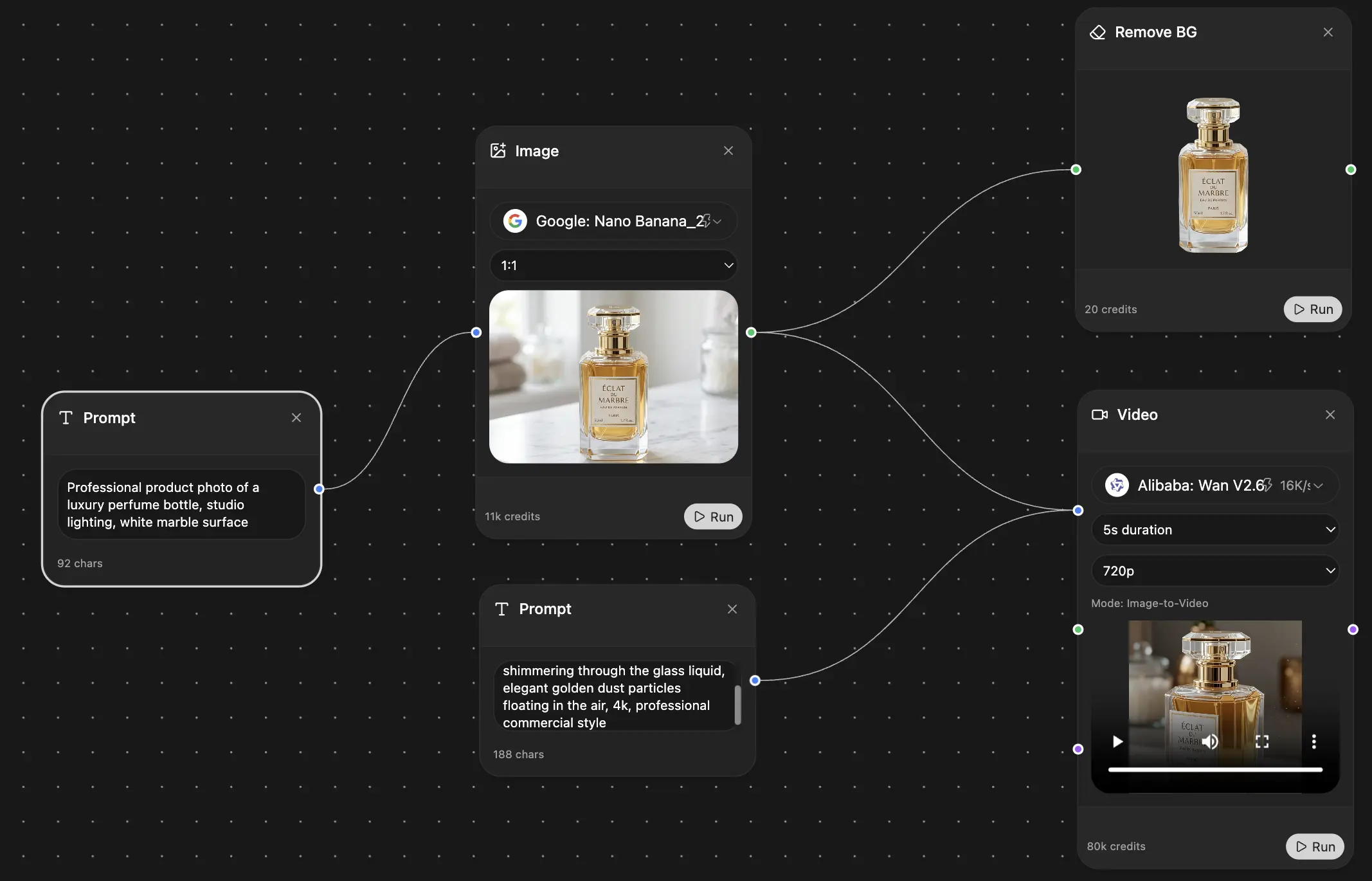
Your infinite AI canvas.
Chat, image, video & motion tools — side by side
Save hours of work and research
Transparent, High-Value Pricing
Trusted by teams at


Free
No credit card required
- 100 credits daily
- 3 AI models to try
- Basic AI chat
Plus
- 1,000,000 credits/month
- 25+ AI models — GPT, Claude, Gemini, Grok & more
- Agent Mode with web search, computer tools and more
- Creative Studio: image generation and video generation
- Project Library: chat with document, website and youtube, podcast generation, flashcards, reports and more
- Workflow Studio and FocusOS
Professional
- Everything in Plus, and:
- 2,100,000 credits/month
- Pro-exclusive models (Claude Opus, Grok 4, Sonar Pro)
- Motion Tools & Max Mode
- First access to latest features
- Access to additional offers
What Our Users Say
Great Tool after 2 months usage
"I love the way multiple tools they integrated in one platform. Going in the right direction."
— simplyzubair
Best in Kind!
"The quality of data and sheer speed of responses is outstanding. I use this app every day."
— barefootmedicine
Simply awesome
"The credit system is fair, models are perfect, and the discord is very responsive. Quite awesome."
— MarianZ
Great for Document Analysis
"Just works. Simple to use and great for working with documents. Money well spent."
— yerch82
Great AI site with accessible LLMs
"The organization of features is better than all the other sites — even better than ChatGPT."
— sumore
Excellent Tool
"It lives up to the all-in-one claim. All the necessary functions with a well-designed, easy UI."
— AlphaLeaf
Well-rounded platform with solid LLMs
"The team clearly puts their heart and soul into this platform. Really solid extra functionality."
— SlothMachine
Best AI tool I've ever used
"Updates made almost daily, feedback is incredibly fast. Just look at the changelogs — consistency."
— reu0691