10 Best Voice Chatting Apps for 2026: From Gaming to AI
Looking for the best voice chatting apps? We review 10 top options for gaming, work, and even talking to AI. Find your perfect app today.
Is your mic on? That question used to be simple. Now it’s a tiny stress test. Is this a Zoom room, a Teams meeting, a Discord voice channel, a WhatsApp group voice chat, or that one friend who still insists “just call me normally” like it’s 2012?
Voice chatting apps are everywhere now, and that’s both great and mildly annoying. Great because there’s a tool for almost every kind of conversation. Annoying because picking the wrong one means bad audio, confused participants, privacy headaches, or a group of twelve people all talking over each other while one person says, “wait, can you hear me?”
The good news is you don’t need a giant buyer’s guide to sort this out. You need the short list with the trade-offs. Some apps are built for hanging out. Some are built for work. Some are built for security. And some, finally, are built for talking through actual tasks instead of just talking at each other.
That last category is where things get interesting. Voice chat isn’t just for coordinating raids or replacing phone calls anymore. You can now use voice as an interface for research, brainstorming, document analysis, and live AI collaboration. If you care about clear audio, that still matters too, especially if you're already .
Here are the voice chatting apps worth your time in 2026, including one that changes the definition of what a “voice chat app” can be.
1. Zemith

You’re halfway through a research sprint, your notes are a mess, and typing feels slower than your brain. A normal voice app helps you talk. Zemith helps you talk, get answers, organize the output, and keep working in the same place.
That distinction matters in daily use. If the job is brainstorming, reviewing a PDF, testing code, outlining a post, or asking follow-up questions out loud, voice alone is not enough. Zemith’s Live Mode handles the live conversation. The surrounding workspace gives that conversation memory, tools, and somewhere useful to land.
The practical upside is less tab-hopping. Instead of voice in one app, notes in another, documents in a third, and AI in a fourth, Zemith pulls those steps together with multi-model AI access, document tools, an AI Notepad, coding support, visual tools, shared projects, and mobile sync. If you want the broader context on how voice fits into modern AI workflows, their guide to is a solid primer.
A few things stand out quickly:
- Real-time AI voice chat: You can speak naturally, interrupt, clarify, and iterate without turning every idea into a carefully typed prompt.
- Document workflow: PDFs, summaries, quizzes, flashcards, and audio-style outputs make it useful for study, research, and content prep.
- Developer support: Code generation, debugging, and previews are built in, which beats trying to describe a broken function over a generic call.
- Shared context: Library, Projects, and Whiteboard keep the session tied to actual work instead of letting it disappear the moment the call ends.
This makes Zemith a strong fit for developers, students, researchers, and creators who use voice to think, then need something concrete from that conversation. That is the part many voice apps miss. They handle communication well enough, but they stop helping once the task begins.
There are trade-offs. If you are a heavy user, check how credits and model limits line up with your workflow before you commit. If your team has strict procurement or security review requirements, you may need to verify vendor details the same way buyers cross-check outside records such as before signing off on a tool.
For “voice app” in the old sense, Zemith is a category mismatch. That’s the point. It works better as a productivity partner with voice built in, which is exactly why it earns the top spot here.
2. Discord

Your raid starts in five minutes, two people are late, one person is posting screenshots instead of joining voice, and somebody is asking where the strategy notes went. Discord handles that kind of chaos better than almost anything else here because the call is only one part of the setup. The server, channels, roles, chat history, screen sharing, and bots all stay in place between sessions.
That persistent structure is why Discord still owns the “community voice app” category. It is less about making a clean one-off call and more about giving a group a shared operating base. Gaming clans, hobby groups, study servers, open source communities, and creator fan spaces all benefit from that.
Where Discord still wins
if your group needs ongoing rooms instead of disposable meetings. Voice channels and Stage Channels work well when conversation, announcements, and side chat need to happen in the same place without forcing everyone into a calendar-driven workflow.
It also fits the broader idea behind this list. Voice apps are no longer just for talking to other people. Some are now part communication layer, part work surface, part AI interface. Discord is not built like Zemith’s live AI workspace, but it pairs well with that shift because communities often use Discord for coordination and then branch into tools built for spoken brainstorming, research, or .
My practical warning is simple. Discord gets messy fast if nobody owns the setup. Permissions can become a part-time job, channel sprawl is common, and too many bots turn a useful server into a blinking control panel. If your team needs quiet simplicity, TeamSpeak or Mumble may age better. If your group wants a living home base, Discord is still hard to beat.
There is also an admin reality people skip over. Community tools eventually raise trust and vendor-review questions, especially for schools, brands, and larger organizations. Teams doing that diligence often cross-check outside records such as before approving software partners or adjacent vendors. Same mindset here. If Discord is becoming core infrastructure for your group, treat it like infrastructure.
3. Telegram

Telegram is underrated for live audio. While often perceived as a messaging app, its group Voice Chats and channel live streams make it surprisingly useful for community events, pop-up discussions, and broadcast-style sessions.
It’s one of the easiest tools for hosting a large audio room without making everyone learn a new platform. That matters more than fancy feature lists. If people already have Telegram, they’re much more likely to join.
Best use case for Telegram
when you want quick setup and big-room flexibility. Admin tools are solid, speaker queues are helpful, and recording support is practical for communities that want to archive sessions.
I especially like Telegram for creator communities, niche groups, and “we need to start this now” situations. It also pairs naturally with AI voice workflows, especially if you’re already thinking about how people use spoken interaction in everyday chat apps and tools like .
Here’s the catch. Telegram’s voice features aren’t always obvious to new users, and its privacy model is often misunderstood. If privacy is your top requirement, you’ll want to look more closely at how its encryption works in different chat contexts before treating it like a secure-by-default option for everything.
That doesn’t make it bad. It just means Telegram is better for reach and convenience than for high-trust private conversations.
4. WhatsApp
It’s 8:47 PM, half the group is on iPhone, two people are on Android, one cousin never installs anything new, and you need everyone talking now. WhatsApp handles that situation better than almost any app on this list because the hard part is already done. People already use it.
That reach matters more than advanced audio controls in a lot of real life scenarios. Family calls, friend groups, apartment logistics, school parent chats, quick client check-ins. WhatsApp wins by removing setup friction, not by giving you a control panel full of knobs.
What WhatsApp gets right
The app is built for speed. Tap the call button, start talking, done. Group voice features are also more natural than they used to be, especially for ongoing group chats where people want to drop in without turning the moment into a formal meeting.
That makes WhatsApp a strong fit for:
- Existing contact networks: families, friend groups, local clubs, and small teams who already message there
- Fast voice communication: quick calls, group coordination, and casual audio check-ins
- Low-training environments: nobody needs to learn servers, channels, roles, or moderation settings
The trade-off is just as clear. WhatsApp is not a community platform in the Discord or Telegram sense, and it is definitely not a productivity voice tool in the way AI voice apps are becoming. You can talk to people easily. You cannot do much to structure larger live spaces, manage layered permissions, or turn voice into something more interactive, like brainstorming with an AI in real time through a tool such as Zemith’s Live Mode.
That distinction matters. If the job is “call these people right now,” WhatsApp is excellent. If the job is “run a public audio community,” “moderate a large live room,” or “use voice as part of a workflow,” you’ll hit the ceiling pretty fast.
WhatsApp is the default pick for everyday voice chat because it is familiar and fast. Sometimes that really is the feature.
5. Signal

Signal is the app you choose when privacy is the feature, not the marketing wallpaper. It doesn’t try to be a public community platform, and that’s a good thing. It knows what it is.
For one-to-one and group calls, Signal is clean, focused, and easy to trust if your priority is secure communication with people you already know. It also supports screen sharing, which makes it more useful for practical problem-solving than many people assume.
Who should actually use Signal
if you care about privacy posture more than network effects. It’s a strong fit for private conversations, small team coordination, and sensitive discussions where you’d rather not hand your communication graph to a giant platform if you can avoid it.
What doesn’t work as well is community-building. No public channels. No giant discovery ecosystem. No sprawling server experience. For some people that sounds like a limitation. For others, it sounds like peace and quiet.
Use Signal for trust-based groups. Don’t use it if you’re trying to run a public community, fan server, or large open collaboration space.
The biggest trade-off is adoption. Signal is excellent, but you still need the other person to use Signal. That’s always the essential test with private communication tools. The best secure app in the world is useless if your group refuses to install it.
6. Zoom

Zoom is still the workhorse. It’s not glamorous, but that’s fine. Voice apps don’t need charisma when they’re already carrying half the business world before lunch.
For meetings, interviews, client calls, webinars, and audio-heavy work sessions, Zoom remains one of the safest bets because it’s dependable. Noise suppression is strong, dial-in options are helpful, and its usage is widely understood even if they claim they hate it.
Why businesses keep using it
when reliability matters more than novelty. If you need audio conferencing that works across devices and doesn’t require everyone to join your preferred ecosystem, Zoom keeps the friction low.
It also fits well with post-call workflows. If your meetings produce recordings, transcripts, and action items, pairing Zoom with tools for makes the conversation more useful after the call ends.
A few real-world trade-offs:
- Strong for formal meetings: Scheduled calls, client conversations, and team syncs are where Zoom feels most natural.
- Less fun for casual communities: It doesn’t create a social “hangout” vibe the way Discord does.
- Watch the free plan limits: Group meetings on free plans still have a time cap, which has ended many good conversations right when someone finally gets to the point.
If you need a voice app for work and don’t want surprises, Zoom is still an easy recommendation.
7. Google Meet

Google Meet is what I recommend for people who live in Gmail and Calendar already and have zero patience for downloads. Open browser. Click link. Start talking. Done.
That simplicity is underrated. For busy teams, the best voice chatting apps are often the ones nobody has to explain.
The low-friction meeting pick
if you’re already inside Google Workspace and want fast joins, decent audio handling, and predictable integration with your calendar and inbox. The mobile audio-only mode is useful too, especially when you’re joining while walking, commuting, or pretending your kitchen is not currently a disaster zone.
Meet also works well when the conversation needs clean follow-through. Good calls are nice. Searchable notes are better. That’s where practical systems for start to matter.
The trade-offs are familiar. Some advanced features are tied to paid Workspace plans, and feature parity can vary depending on device and browser. It’s polished, but not always identical everywhere.
Still, if your company runs on Google, Meet is the path of least resistance. And realistically, “least resistance” wins more software decisions than vendors like to admit.
8. Microsoft Teams

Microsoft Teams is what happens when chat, meetings, files, calendars, identity management, and enterprise policy all decide to move into the same building. It’s heavy, sometimes messy, and very powerful if your organization is already all-in on Microsoft 365.
For voice alone, Teams is fine. For voice inside a broader company operating system, Teams makes more sense.
Best for Microsoft-native organizations
if your company already uses Microsoft 365, SharePoint, Outlook, and the rest of that universe. Teams Phone adds PBX-style business telephony, and the admin controls are a real advantage for larger organizations.
Where it shines is integration. Calls connect naturally with files, chats, channels, calendars, and user management. If your workplace needs voice plus compliance, governance, and collaboration in one place, Teams fits the job.
That’s also why broader matter when evaluating Teams. It’s not really competing with lightweight social voice apps. It’s competing as part of an entire work environment.
The obvious downside is weight. Teams can feel bloated if all you want is “talk clearly with a few people.” It’s excellent for organizations. It’s overkill for a gaming squad, a creator community, or a quick private call with three friends.
9. TeamSpeak

TeamSpeak is the veteran pick for people who care about voice performance more than social features. It’s been around forever by internet standards, and that longevity shows in a good way. The app knows its job.
Competitive players, sim communities, and groups that want tight control still appreciate TeamSpeak because it’s focused. Push-to-talk, whisper lists, channel permissions, and self-hosting options all support serious voice coordination without the extra clutter.
Why some groups still swear by it
if low-latency voice and server control matter more than discoverability or shiny community tools. It’s especially appealing when your group wants to manage its own environment rather than depend entirely on a third-party platform.
The trade-off is social gravity. TeamSpeak doesn’t have Discord’s cultural momentum, broad integrations, or community-layer polish. That means it feels lean, but also less inviting to casual users who expect modern text-chat ecosystems around their voice channels.
- Use it for performance-first voice
- Use it when self-hosting matters
- Skip it if your group wants rich social features and easy onboarding
TeamSpeak is a specialist. That’s why it still has loyal users.
10. Mumble

Mumble is for people who hear “open source, low latency, self-hostable” and immediately lean forward in their chair. If that sentence makes you happy, Mumble will probably make you happy too.
It’s lightweight, configurable, and built around strong real-time voice performance. The positional audio support is still a fun differentiator in compatible games, and self-hosting through Murmur gives technical users a lot of control.
The tinkerer’s voice app
if you want a free and open-source voice platform with minimal overhead and strong performance. It’s good for gaming groups, privacy-conscious communities, and technical users who don’t mind setup work.
Mumble also benefits from the broader growth in speech tech and voice-enabled apps. The U.S. voice-activated apps market reached , which reflects how much voice interfaces have moved from niche utility to mainstream computing behavior. Mumble sits on the communication side of that shift, even if it keeps a more old-school feel.
Mumble is great if you’d rather configure a server than click through a social feed.
That old-school feel is the downside too. The interface is sparse, and setup can be technical. If your group wants consumer polish and instant familiarity, Discord or WhatsApp will be easier.
Top 10 Voice Chat Apps: Feature Comparison
From Shouting in Games to Brainstorming with AI
You finish a raid call on Discord, jump into a client meeting on Zoom, then open an AI tool to turn a half-formed idea into notes, code, or a plan. That stack works. It also gets messy fast.
The right voice app depends on the job. Discord still works well for active communities and drop-in voice rooms. Signal is the safer pick for private conversations. WhatsApp remains the practical choice when the people you need to reach are already there, because convenience usually beats feature purity in real life.
Work calls are a different category. Zoom is still the safe recommendation for reliability and larger meetings. Google Meet keeps things simple for teams already living in Gmail and Calendar. Teams makes sense in Microsoft-heavy companies where calls, files, chat, and identity controls need to stay tied together.
Specialist tools still have a place. TeamSpeak and Mumble appeal to people who care more about latency, server control, and self-hosting than polished onboarding. They ask more from you during setup, but they return that effort with tighter control over how voice behaves.
The bigger shift is that voice is no longer only about talking to another person. It is becoming an input method for getting work done.
Zemith stands out for that reason. Its Live Mode lets you talk with AI in real time, then continue into document analysis, notes, coding, image generation, shared projects, or a whiteboard session in the same workspace. Traditional voice apps usually end when the call ends. Zemith treats the conversation as the starting point for output.
That changes the buying decision. If the goal is hanging out with friends, running guild comms, or calling family, a standard voice chat app is still the right tool. If the goal is to think out loud, test ideas, interview an AI, or turn spoken context into useful work without bouncing across five tabs, Zemith fits that job better.
And if spoken practice is part of your workflow, you can even before the actual conversation happens.
If you want one place for voice, AI, notes, and analysis instead of a pile of separate tools, try . It is a strong fit for developers, researchers, creators, and anyone who wants a conversation to produce something useful.
Explore Zemith Features
Every top AI. One subscription.
ChatGPT, Claude, Gemini, DeepSeek, Grok & 25+ more


Always on, real-time AI.
Voice + screen share · instant answers
What's the best way to learn a new language?
Immersion and spaced repetition work best. Try consuming media in your target language daily.
Voice + screen share · AI answers in real time
Image Generation
Flux, Nano Banana, Ideogram, Recraft + more

Write at the speed of thought.
AI autocomplete, rewrite & expand on command
Any document. Any format.
PDF, URL, or YouTube → chat, quiz, podcast & more
Video Creation
Veo, Kling, Grok Imagine and more

Text to Speech
Natural AI voices, 30+ languages
Code Generation
Write, debug & explain code
Chat with Documents
Upload PDFs, analyze content
Your AI, in your pocket.
Full access on iOS & Android · synced everywhere
Your infinite AI canvas.
Chat, image, video & motion tools — side by side
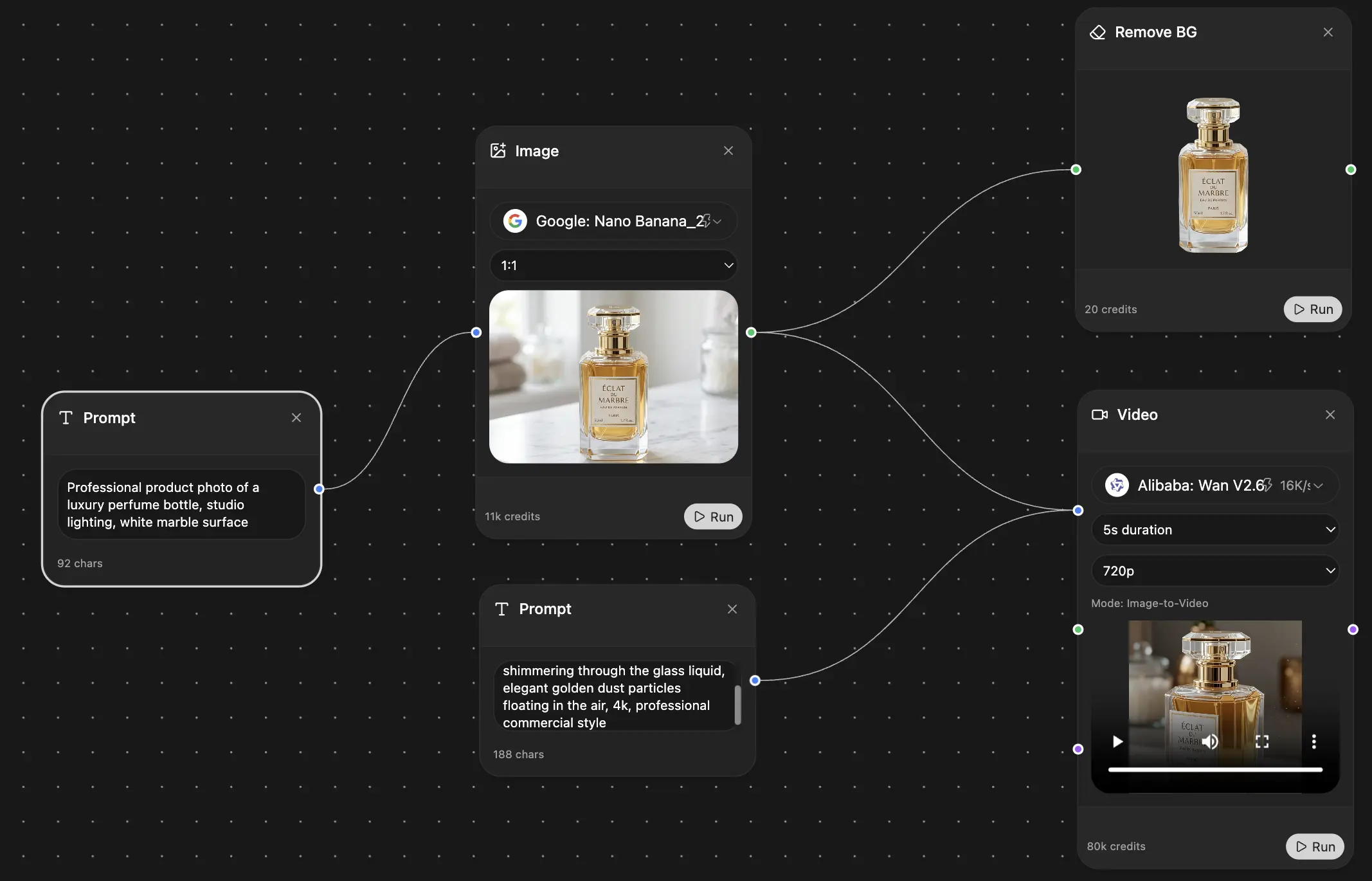
Save hours of work and research
Transparent, High-Value Pricing
Trusted by teams at


Free
No credit card required
- 100 credits daily
- 3 AI models to try
- Basic AI chat
Plus
- 1,000,000 credits/month
- 25+ AI models — GPT, Claude, Gemini, Grok & more
- Agent Mode with web search, computer tools and more
- Creative Studio: image generation and video generation
- Project Library: chat with document, website and youtube, podcast generation, flashcards, reports and more
- Workflow Studio and FocusOS
Professional
- Everything in Plus, and:
- 2,100,000 credits/month
- Pro-exclusive models (Claude Opus, Grok 4, Sonar Pro)
- Motion Tools & Max Mode
- First access to latest features
- Access to additional offers
What Our Users Say
Great Tool after 2 months usage
"I love the way multiple tools they integrated in one platform. Going in the right direction."
— simplyzubair
Best in Kind!
"The quality of data and sheer speed of responses is outstanding. I use this app every day."
— barefootmedicine
Simply awesome
"The credit system is fair, models are perfect, and the discord is very responsive. Quite awesome."
— MarianZ
Great for Document Analysis
"Just works. Simple to use and great for working with documents. Money well spent."
— yerch82
Great AI site with accessible LLMs
"The organization of features is better than all the other sites — even better than ChatGPT."
— sumore
Excellent Tool
"It lives up to the all-in-one claim. All the necessary functions with a well-designed, easy UI."
— AlphaLeaf
Well-rounded platform with solid LLMs
"The team clearly puts their heart and soul into this platform. Really solid extra functionality."
— SlothMachine
Best AI tool I've ever used
"Updates made almost daily, feedback is incredibly fast. Just look at the changelogs — consistency."
— reu0691