From Pseudo Code to Python: A Practical Translation Guide
Ready to turn theory into code? This guide shows how to translate pseudo code to Python with practical examples, common pitfalls, and expert tips.
You've probably been here before. There's a page of pseudocode in front of you. Maybe it came from a class worksheet, a whiteboard interview prompt, or your own “I'll definitely understand this tomorrow” notebook scribble from last night.
The logic kind of makes sense. The Python syntax does not.
That awkward middle zone is where a lot of beginners stall. They don't have a problem-solving issue. They have a translation issue. Turning pseudo code to Python is less about memorizing keywords and more about learning how to preserve intent when you move from human-friendly logic to machine-friendly structure.
The good news is that this gets easier fast. Once you learn to spot patterns like input, decision, repetition, and function calls, Python starts feeling less like a wall of symbols and more like a tidy version of what you were already trying to say. Kind of like cleaning up your room, except the compiler tells you what you missed.
Why Turning Pseudocode into Python Is Your Coding Superpower
A junior developer once showed me a page that said:
- get username
- get password
- if username exists and password matches
- allow login
- else deny access
They asked, “Why does this feel obvious until I open Python?”
Because pseudocode removes friction. Python enforces decisions. You can wave at an idea in pseudocode. In Python, you have to commit. Where does the input come from? What happens if the username is empty? What exactly counts as a match? Where does each block begin and end?
That's why this skill matters so much. You're not just converting notes into code. You're learning how to move from problem-solving to implementation without losing the plot.

Why this matters beyond school
This isn't just a classroom exercise. You'll use it when you:
- Sketch features before coding: You write rough steps before touching a real file.
- Answer interview questions: A lot of interviewers want clear logic before polished syntax.
- Debug messy requirements: Product notes are often half pseudocode, half wishful thinking.
- Learn faster: Converting small logic plans into code is one of the cleanest ways to build confidence. If you're working on that broader skill, this guide on pairs nicely with the habits we're using here.
Industry guidance describes this as a foundational practice and stresses that developers should “map structure first, then syntax” before implementation, with loops, conditionals, and edge cases reviewed up front in .
Practical rule: If your pseudocode is fuzzy, your Python will be fussy.
Python feels close to pseudocode, but not identical
People often say Python is “executable pseudocode.” That's mostly true, and also a tiny trap. Python is readable, but it still has strict rules. It cares about indentation, exact function names, real data types, and whether your if block is inside the loop or just emotionally adjacent to it.
That's the superpower. Once you can translate whiteboard logic into Python reliably, you stop fearing blank editors. You start seeing code as structured decisions. And that's when programming gets fun.
Your Core Translation Toolkit From Logic to Syntax
Direct translation works best when you stop treating pseudocode like poetry and start treating it like a set of patterns. Most beginner pseudocode uses the same building blocks over and over: variables, input and output, decisions, loops, and functions.
One practical shortcut is a word-for-word pass first. A useful technique is replacing uppercase pseudocode keywords with Python-style equivalents, especially changing OUTPUT to PRINT and INPUT to int(input()) when you expect a number, as described in .
Pseudocode to Python Translation Map
The one thing beginners trip over
Python uses indentation as structure. That means spaces aren't decoration. They define what belongs to what.
Pseudocode:
Python:
if age >= 18: print("Adult") else: print("Minor")
If the print("Adult") line isn't indented, Python won't think it belongs to the if. It's like showing up to a group project and sitting at the wrong table.
Python doesn't guess your block structure. You have to show it clearly.
Translate in passes, not all at once
A clean workflow looks like this:
- Mark variables first: What values exist?
- Mark inputs and outputs: What comes in, what goes out?
- Convert decisions: Every
IF,ELSE IF, andELSE. - Convert repetition:
FOR,WHILE, and nested loops. - Fix indentation: Logic becomes legal Python through proper indentation.
If you want extra practice moving between logic diagrams and written steps, this walkthrough on helps sharpen the same conversion muscle from the other direction.
A tiny example
Pseudocode:
Python:
for number in numbers: total = total + number
print(total)
Nothing fancy. That's the point. Most pseudo code to Python work is simple pattern matching done carefully.
Translating Real Algorithms Search Sort and Recurse
Abstract rules are nice. Real algorithms are where your brain starts trusting the process.
When I help juniors with pseudo code to Python, I usually pick three examples: one search, one sort, and one recursive function. Those cover a surprising amount of programming territory. They also expose the places where people accidentally add extra logic that wasn't in the original plan.

Expert benchmark notes emphasize keeping the translation simple and avoiding added logic not present in the pseudocode. That simplicity correlates with a 40% reduction in debugging time, and skipping type casting causes a 100% failure rate in numerical comparison logic in the referenced examples from .
Linear search without drama
Pseudocode:
Python:
for item in numbers: if item == target: print("Found") found = True break
if not found: print("Not Found")
A few translation notes matter here:
FOR EACH item IN numbersbecomesfor item in numbers:STOPbecomesbreak- We added
found = Falsebecause Python needs a way to remember whether the loop succeeded after it ends
That last point is important. You're not “changing the algorithm.” You're making the original intent explicit in Python.
Bubble sort and the rookie mistake of getting fancy
Pseudocode:
Python:
for i in range(len(items)): for j in range(len(items) - i - 1): if items[j] > items[j + 1]: items[j], items[j + 1] = items[j + 1], items[j]
print(items)
Beginners often try to optimize this while translating. Don't. If the pseudocode says bubble sort, write bubble sort. Don't suddenly invent a shortcut, toss in sorted(), and declare victory like a magician who replaced the rabbit with a PowerPoint.
Keep the first translation faithful. Make it elegant later.
If you're ever handed logic and need help understanding what the final code is doing line by line, this explainer on is a useful companion read.
Recursion feels spooky until you spot the two parts
Pseudocode for factorial:
Python:
print(factorial(5))
Recursion always has two moving parts:
- Base case: when the function stops calling itself
- Recursive case: when the function moves toward that stop point
That pattern shows up all over Python. For nested dictionaries, tree structures, and scraped data, recursion gets practical fast. If you want a concrete example beyond textbook factorials, is a solid reference because it shows recursion solving a problem developers hit in the wild.
One more translation gotcha
If your pseudocode says:
Then Python should not be:
That fails because input() returns a string. For numeric comparisons, you need int(input()). This is one of those bugs that teaches the same lesson every time, loudly.
Using an AI Co-Pilot to Accelerate Your Workflow
A lot of developers use AI for this now, and that makes sense. If you already understand the logic, typing every bracket and remembering every tiny syntax rule is not where your brain adds the most value.

Educational material from pyOpenSci notes that LLMs like ChatGPT can assist in converting pseudocode into actual Python code, letting developers focus more on problem-solving and testing when they use structured pseudocode as the prompt in .
What a good prompt looks like
Bad prompt:
Better prompt:
SET total = 0 FOR EACH number IN numbers total = total + number OUTPUT total
That wording matters. You're telling the model to preserve logic, not freestyle. AI loves being helpful. Sometimes a little too helpful. Give it an inch and it'll refactor your simple loop into something that looks like it drinks artisan coffee and judges variable names.
Use AI for draft speed, not blind trust
A practical workflow looks like this:
- Write clear pseudocode first: Ambiguous input leads to ambiguous code.
- Ask for a faithful translation: Tell the model not to add shortcuts.
- Run tests immediately: Especially on edge cases and user input.
- Review every branch: Loops, conditionals, and return paths are where mistakes hide.
If you want a broader view of how developers structure these habits, I like this roundup of . It's useful because it treats AI like part of a workflow, not magic dust.
One option for this kind of work is . Zemith includes a coding assistant inside its broader AI workspace, so you can move from pseudocode draft to generated Python, explanation, and revision in one place.
A quick demo helps more than another paragraph. Watch this and notice how much better the results get when the prompt includes structure instead of vague intent.
The real skill is still yours
AI can produce the first draft. You still need to decide whether the code matches the original logic. That's the part that turns pseudo code to Python from a copy-paste trick into an actual engineering skill.
Common Pitfalls and Writing More Pythonic Code
Literal translation is fine at first. But if you stop there, your code often ends up technically correct and mildly cursed.
The biggest trap is assuming every pseudocode line should map to one Python line. Real code needs judgment. Real-world pseudocode is often vague, especially in interviews, old docs, or feature requests like “loop through sentence” or “check if the words match somehow.” That ambiguity matters. One cited overview notes a 40% rise in related Stack Overflow questions tied to translating unclear logic into concrete Python methods in .

Common mistakes that keep showing up
Here are the classics:
- Forgetting type conversion:
input()gives you text, not a number. - Mixing up
=and==: One assigns. One compares. They are not cousins. - Off-by-one loops: Especially when translating “from 0 to length - 1”.
- Manual indexing everywhere: Sometimes you need it. Often you really don't.
- Adding clutter: Temporary variables that contribute nothing except emotional support.
Clear code saves future-you from detective work.
Less literal, more Pythonic
Suppose your pseudocode says:
A beginner might write:
That works. It's also noisier than necessary.
More Pythonic version:
Same logic. Cleaner expression.
Another example:
Straight translation:
for n in numbers: doubled_numbers.append(n * 2)
Pythonic version:
Don't force list comprehensions on day one. But do learn to recognize when Python gives you a shorter, clearer way to say the same thing.
Handle ambiguity like a developer
When the pseudocode is vague, ask better questions:
- What is the input shape? String, list, dict, file?
- What counts as done? A printed result, a returned value, a modified structure?
- What Python tool fits the action? A loop,
.split(),sum(),enumerate(), regex?
For example, “loop through sentence” could mean:
- loop through each character
- loop through each word with
.split() - loop through regex matches
Those are different implementations. The pseudocode doesn't decide that for you. You do.
If you're trying to sharpen that judgment and write code people can maintain, this guide on is worth your time.
A good rule for cleaner translations
Start literal. Then refactor only when you can explain why the new version is clearer.
That's how you avoid the opposite beginner mistake, which is discovering one cool Python trick and then trying to use it for everything. Just because you can compress five lines into one doesn't mean you should. Readability still wins. Your future teammates, and your future sleep schedule, will thank you.
Conclusion From Thinker to Coder
The jump from pseudocode to Python feels awkward until you realize what's taking place. You're taking a rough plan and making each decision explicit. Variables become real values. Loops get boundaries. Conditions get syntax. Ambiguous ideas get nailed down.
That's a big part of becoming a developer.
You don't need perfect syntax memory to get good at this. You need a repeatable process. Map the logic. Translate the core constructs. Test the result. Clean it up once it works. Do that enough times and the gap between “I know what I want” and “I can code it” gets much smaller.
Keep your first examples tiny. A calculator. A login check. A loop over a list. Write the pseudocode on paper if you want. Napkins are acceptable. Slightly dramatic whiteboards are also acceptable.
Then turn it into Python.
If you want one workspace for turning rough logic into code, testing ideas, explaining output, and iterating without jumping between tools, take a look at . It's a practical setup for developers who want AI help without losing control of the thinking.
Explore Zemith Features
Every top AI. One subscription.
ChatGPT, Claude, Gemini, DeepSeek, Grok & 25+ more


Always on, real-time AI.
Voice + screen share · instant answers
What's the best way to learn a new language?
Immersion and spaced repetition work best. Try consuming media in your target language daily.
Voice + screen share · AI answers in real time
Image Generation
Flux, Nano Banana, Ideogram, Recraft + more

Write at the speed of thought.
AI autocomplete, rewrite & expand on command
Any document. Any format.
PDF, URL, or YouTube → chat, quiz, podcast & more
Video Creation
Veo, Kling, Grok Imagine and more

Text to Speech
Natural AI voices, 30+ languages
Code Generation
Write, debug & explain code
Chat with Documents
Upload PDFs, analyze content
Your AI, in your pocket.
Full access on iOS & Android · synced everywhere
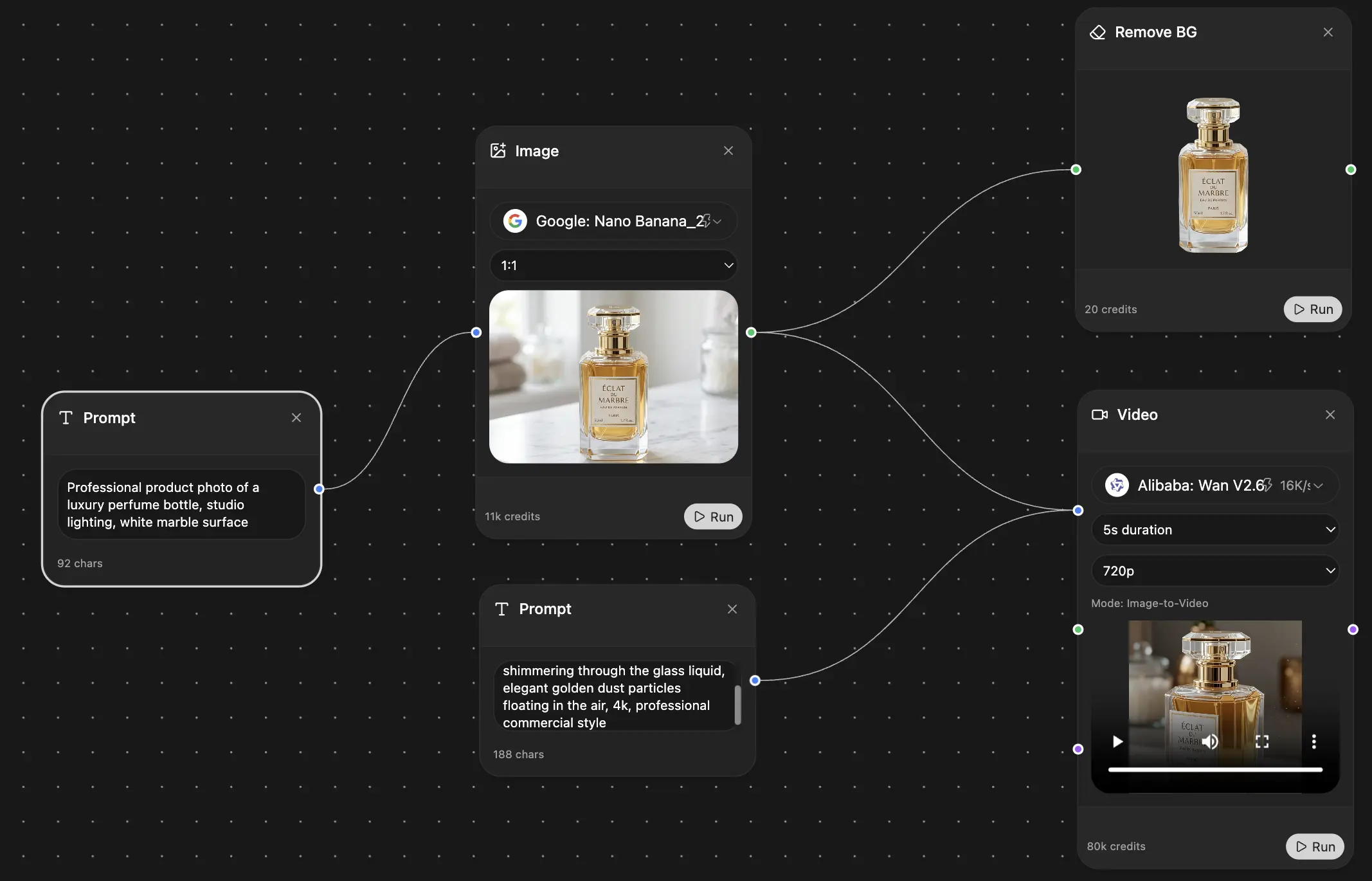
Your infinite AI canvas.
Chat, image, video & motion tools — side by side
Save hours of work and research
Transparent, High-Value Pricing
Trusted by teams at


Free
No credit card required
- 100 credits daily
- 3 AI models to try
- Basic AI chat
Plus
- 1,000,000 credits/month
- 25+ AI models — GPT, Claude, Gemini, Grok & more
- Agent Mode with web search, computer tools and more
- Creative Studio: image generation and video generation
- Project Library: chat with document, website and youtube, podcast generation, flashcards, reports and more
- Workflow Studio and FocusOS
Professional
- Everything in Plus, and:
- 2,100,000 credits/month
- Pro-exclusive models (Claude Opus, Grok 4, Sonar Pro)
- Motion Tools & Max Mode
- First access to latest features
- Access to additional offers
What Our Users Say
Great Tool after 2 months usage
"I love the way multiple tools they integrated in one platform. Going in the right direction."
— simplyzubair
Best in Kind!
"The quality of data and sheer speed of responses is outstanding. I use this app every day."
— barefootmedicine
Simply awesome
"The credit system is fair, models are perfect, and the discord is very responsive. Quite awesome."
— MarianZ
Great for Document Analysis
"Just works. Simple to use and great for working with documents. Money well spent."
— yerch82
Great AI site with accessible LLMs
"The organization of features is better than all the other sites — even better than ChatGPT."
— sumore
Excellent Tool
"It lives up to the all-in-one claim. All the necessary functions with a well-designed, easy UI."
— AlphaLeaf
Well-rounded platform with solid LLMs
"The team clearly puts their heart and soul into this platform. Really solid extra functionality."
— SlothMachine
Best AI tool I've ever used
"Updates made almost daily, feedback is incredibly fast. Just look at the changelogs — consistency."
— reu0691