Photo Age Progression: See Your Future Self
Explore photo age progression AI. Discover how it works, its accuracy, and tools like Zemith to create your own aged photos. See your future appearance!
You upload an old photo for fun. Maybe it’s your fourth-grade school picture, complete with a heroic bowl cut and the expression of someone who just learned fractions are forever. A few seconds later, an AI tool shows you a version of your face decades later. Same eyes. Same general vibe. More forehead history.
That little moment feels like a gimmick until you realize photo age progression didn’t start as a social media toy. It grew out of forensic work, where updated images can help people recognize someone after years have passed. That origin matters, because it explains both the promise and the weirdness. A good age progression isn’t just “add wrinkles and gray hair.” It tries to preserve identity while changing the details time usually changes.
That’s why this topic is so interesting. It sits right at the intersection of science, art, and human curiosity. One part detective work. One part digital portraiture. One part “wow, I really hope I keep my eyebrows.”
Your Guide to AI Time Travel
A lot of people meet photo age progression in the most ordinary way possible. You’re cleaning out cloud storage, open an old selfie, and suddenly your brain asks a dangerous question: “So what would this person look like at 60?” That question is half vanity, half anthropology, and fully human.
The funny part is that age progression feels futuristic, but the urge behind it is ancient. People have always wanted to imagine future selves, future children, future characters, future stories. AI just gives that instinct a much sharper pencil.
Why this feels more powerful than a filter
A regular face filter usually slaps on a style. It says, “Here’s old mode,” and tosses on texture, sagging, maybe some silver hair if it’s feeling dramatic. Photo age progression aims for something more specific. It tries to keep the person recognizable while projecting how their features might evolve.
That’s why the output can feel eerie in a good way. It’s not just “older person aesthetics.” It’s “older version of this person.”
Practical rule: If the aged image looks like a random stranger wearing your eyebrows, the tool didn’t preserve identity well enough.
This is also why people who work with AI visuals should care. Writers use age progression to visualize characters across timelines. Creative teams use it for concept development. Educators use it to explain how machine learning transforms images. If you’re already learning how prompts shape outputs, this pairs nicely with a guide on .
Curiosity is the gateway. Understanding is the upgrade
The coolest part isn’t just seeing a future face. It’s realizing there’s a real chain of logic behind it. The system looks at structure, texture, proportions, and patterns learned from many faces across age ranges. Then it generates a plausible visual forecast.
Plausible is the key word.
AI isn’t a crystal ball. It’s more like a very skilled visual forecaster that studies lots of examples and makes an informed guess. Sometimes that guess is impressive. Sometimes it ages a healthy adult into a wise raisin in one leap. That’s not prophecy. That’s a model having a day.
What Is Photo Age Progression Really
At its simplest, photo age progression means taking a current or old photo of a person and generating a visually plausible image of how they may look at a later age. The goal isn’t just to make the face older. The goal is to make the face older while still looking like the same person.
A useful analogy is baking. The original photo is the dough. You don’t throw it away and bake a random loaf. You start with that dough, then change it with heat, time, and technique. In age progression, the “heat and technique” are facial aging patterns learned by software.

The core ingredients
A decent system usually needs a few basic ingredients to work well:
- A clear original image that shows the face without heavy blur, extreme angle distortion, or giant novelty sunglasses.
- A target age or timeline so the model knows whether it’s aging someone a little or a lot.
- A way to preserve identity so the nose, eyes, jawline, and general facial signature stay coherent.
- Learned aging patterns based on many examples of how faces change over time.
If you skip that last part, you don’t get progression. You get costume makeup done by math.
Why the technology has serious roots
Photo age progression originated in forensics to update photos of missing persons. The National Center for Missing & Exploited Children has used these techniques since the 1980s, contributing to over 400 recoveries by 2020 through updated images distributed globally, as described in this .
That history changes how you look at the technology. It’s not just about entertaining “future me” experiments. In the forensic world, an updated image can help a stranger recognize someone whose original photo is decades out of date.
A strong age progression doesn’t merely age a face. It keeps enough of the person intact that recognition can still happen.
What people often misunderstand
The biggest confusion is thinking age progression predicts one guaranteed future. It doesn’t. Human faces change for many reasons, including genetics, health, environment, grooming, expression habits, and simple randomness. An aged image is a plausible scenario, not a final answer.
Another common mix-up is treating it like a generic style effect. Real progression tries to consider continuity over time. Even older manual methods paid attention to prior photos, family aging patterns, and identifying features.
So when you ask “What is photo age progression really,” the best answer is this:
It’s a structured visual prediction system. It starts with one face, applies known patterns of change, and produces an older version that still tries to feel like the same human being.
The Tech Behind the Time Machine
Long before modern image models showed up, age progression depended on human skill. Forensic artists studied the person’s face, previous photos, and available background information, then created an updated image by hand. That work required judgment, patience, and a lot of visual memory.
Then digital morphing entered the scene and made things more reproducible. That shift mattered because software could apply transformations consistently instead of relying only on one artist’s interpretation.
Old-school morphing versus modern AI
Image morphing works by detecting feature points on a young face and an adult template, then using triangular mesh warping and cross-dissolve blending to simulate aging. The method gave law enforcement “good approximations,” according to this . It wasn’t magic, but it was systematic.
Think of morphing as stretching and blending a face through a carefully mapped wireframe. Eyes line up with eyes. Mouth corners line up with mouth corners. The mesh warps one geometry toward another, then the texture blends in stages.
Modern AI goes further. Instead of relying mainly on one source face and one target template, newer systems learn broader aging patterns from many images. That lets them generate more natural changes in texture, proportions, and facial detail.
Two easy analogies for modern models
A GAN, or generative adversarial network, works like a tiny art rivalry. One model creates an aged face. Another model critiques it. The creator keeps improving until the critic has a harder time spotting flaws. It’s competitive creativity, which is a very on-brand way for computers to behave.
A diffusion model feels different. It starts from noise or a rough image state and gradually refines it into something coherent, like restoring a fogged-up mirror until a face appears. If a GAN is an artist in a duel, diffusion is an artist polishing the same portrait over and over.
If you want a broader foundation for reading visual outputs critically, this overview of helps connect the dots between what models see and what they generate.
Age Progression Methods Compared
That table hides one important truth. “AI” is not one thing. One tool might preserve identity well. Another might make everyone look like they spent retirement inside a haunted Instagram filter.
Why this matters outside forensics
Creative professionals already use related workflows in adjacent spaces. If you’ve looked into visual profile upgrades or , you’ve seen the same underlying idea in a different outfit. The system studies a face, preserves recognizable traits, and generates a new, more targeted version for a specific purpose.
Age progression just adds time as the design brief.
The leap from morphing to AI didn’t remove the need for judgment. It just moved more of the heavy lifting into the model.
Accuracy Ethics and The Uncanny Valley
The biggest myth around photo age progression is that AI “knows” what someone will look like later. It doesn’t. It estimates. Sometimes those estimates are persuasive enough to make you stare at the screen for an extra second. Sometimes they fall into the uncanny valley and produce a face that looks both familiar and suspiciously manufactured.
That gap between “convincing” and “correct” is where things get interesting.

Accuracy depends on inputs more than most apps admit
Consumer AI age progression tools often gloss over evidence-based accuracy. One important example is angle. Peer-reviewed findings summarized in this discussion of note that using multi-angle photos can reduce age prediction errors by 20 to 30 percent, yet many consumer apps still push users toward a single front-facing image.
That matters because a face isn’t flat. Side structure, jaw shape, and facial rotation all carry information. If a tool only wants one perfect passport-style image, it may be optimizing for convenience rather than fidelity.
Why good-looking results can still be misleading
A polished image can trick people into thinking the output is reliable. It’s the same problem 3D artists run into when a render looks technically clean but emotionally off. If you’ve ever worked with product visuals or interiors, are a useful parallel. Surface realism isn’t the same as believable realism.
Age progression has the same trap. Smooth skin detail and cinematic lighting can distract from weak identity preservation. If the aged face is beautiful but no longer recognizably the same person, the tool has missed the point.
Reality check: A realistic-looking image can still be an inaccurate age progression.
Bias is not a side issue
Bias shows up when training data skews heavily toward certain faces, skin tones, or demographic patterns. Then the model learns some kinds of aging better than others. In practice, that can mean certain users get results that feel less believable or more generic.
This is one reason ethical use matters. If someone treats an AI-aged image as authoritative without questioning the model’s blind spots, they can overtrust a system that may not generalize evenly across people.
A solid habit is to evaluate claims the way you’d evaluate any research-heavy topic. Ask what evidence supports the result, what data the model likely learned from, and what the output leaves out. If you want a practical framework for that mindset, this guide on is useful well beyond AI images.
A short checklist before you share an aged image
- Check intent first. Are you creating art, testing a concept, or trying to represent a plausible future face for a serious use case?
- Question the input quality. Poor lighting, heavy makeup, extreme expressions, and odd angles can distort the result.
- Watch for identity drift. If the person stops looking like themselves, don’t trust the output just because it looks polished.
- Share responsibly. An aged image can feel personal, emotional, or sensitive, especially when it involves other people.
AI can create compelling visual futures. It can’t replace judgment, consent, or context.
Your Practical Age Progression Workflow in Zemith
If you want to create a photo age progression without juggling a pile of separate apps, an all-in-one workspace is the easiest route. The main win is convenience, but the deeper win is iteration. You can generate, inspect, refine, compare prompts, and keep notes in one place instead of bouncing between tabs like a caffeinated squirrel.
The underlying logic behind modern generators echoes research systems from the University of Washington. Those systems compute average facial changes from thousands of photos, then apply those transformations to a new image. In that work, processing could take about 30 seconds and user studies found the results indistinguishable from reality in identification tasks, according to the .

Step one: start with the right photo
Pick an image where the face is clear, unobstructed, and reasonably neutral. You don’t need a passport photo, but you do want enough visible structure for the model to hold onto.
Avoid these if you can:
- Extreme facial expressions that distort cheeks, brows, or mouth shape
- Heavy filters that blur skin or alter facial proportions
- Tiny low-resolution crops where the face is mostly guesswork
- Big occlusions like hands, hats, hair across the eyes, or oversized glasses
A good source image gives the model less room to hallucinate.
Step two: choose the right generation style
For age progression, model choice changes the vibe of the output. Some models lean photorealistic. Others give you more interpretive control. If your goal is “show me a plausible older portrait,” realism matters. If your goal is “show me a cinematic future version of this character,” style control matters more.
A simple way to think about it:
Step three: write a prompt that preserves identity
Most weak results come from vague prompts. “Make this person old” invites chaos. Better prompts tell the model what to change and what to preserve.
Try these copy-ready prompt patterns:
Basic realistic prompt
“Create a realistic photo age progression of this person approximately 30 years older. Preserve identity, facial structure, eye shape, nose shape, and overall likeness. Add natural aging details such as mild wrinkles, subtle skin texture changes, and slightly graying hair.”More specific portrait prompt
“Generate a photorealistic portrait of this same person at age 60. Keep the face clearly recognizable. Add laugh lines, gentle forehead creases, slightly heavier lower eyelids, and graying at the temples. Avoid exaggerated aging or cartoonish wrinkles.”Healthy aging version
“Show this person later in life with graceful, realistic aging. Maintain a warm expression and natural skin detail. Keep the output believable and consistent with the original facial proportions.”Character design version
“Age-progress this character by several decades while preserving distinctive identity markers. Keep the same eyes, smile shape, and jawline. Add mature skin texture and age-appropriate detail without losing recognizability.”
Use the phrase “preserve identity” on purpose. That tells the model the job is continuity, not costume.
Step four: use image analysis to improve the prompt
A useful trick is to analyze the source image first and extract visible traits before generating anything. That gives you raw material for a stronger prompt: face shape, hairline, eye spacing, skin tone, expression, lighting, and camera angle.
If you work with portrait generation often, a workflow like this pairs nicely with tools and examples from an , because both tasks depend on preserving identity while transforming appearance.
Step five: generate in batches, not one precious attempt
Don’t treat the first render like destiny. Create several versions with small prompt changes. One might preserve the eyes better. Another might get the skin texture right. A third may finally stop turning everyone into a mysterious retired actor from a prestige drama.
Here’s a practical batch strategy:
- Run a neutral version with minimal styling.
- Run a softer-aging version to avoid overdone wrinkles.
- Run a stronger-aging version for contrast.
- Compare for identity preservation, not just visual polish.
- Refine the winner with one or two prompt edits, not a total rewrite.
A quick visual walkthrough helps if you prefer learning by watching instead of reading prompts all day:
Step six: fix the common failure modes
You’ll usually see one of a few recurring issues:
- Too much aging. The model adds dramatic wrinkles everywhere. Ask for “subtle” or “natural” age detail.
- Identity drift. The person starts resembling a cousin from another timeline. Re-emphasize preserved facial structure and likeness.
- Plastic skin. Ask for realistic texture and avoid beauty-filter language.
- Style creep. If the output gets cinematic when you wanted documentary realism, specify “plain studio portrait” or “natural photographic lighting.”
The workflow is simple once you stop expecting one-click perfection. Good photo age progression is less like pressing a button and more like directing a very fast, very literal digital portrait artist.
Creative Examples and Inspiring Use Cases
Forensics gave photo age progression its serious foundation, but the creative uses are where a lot of people first realize how flexible it is. Once you stop thinking “old face filter” and start thinking “visual timeline tool,” the possibilities expand fast.
Storytelling, branding, and concept work
A novelist can age a character from teenager to older adult to keep visual continuity across a multi-decade story. A game designer can explore how a hero changes over time without redesigning the face from scratch. A filmmaker can mock up the same actor across different eras before spending money on makeup tests.
That’s useful because age progression turns abstract writing notes into visible choices. “Weathered but still recognizable” becomes something you can iterate on rather than just imagine.

Personal projects that don’t feel cheesy
Done well, these can be surprisingly thoughtful:
- Family timeline portraits that show the same person across life stages
- Memoir visuals where writers map a life story with aged character images
- Class reunion humor that’s slightly more advanced than “remember frosted tips?”
- Future-themed event experiences where guests see playful older versions of themselves
Event creators are already experimenting with more interactive photo concepts. If you’re brainstorming something more imaginative than a standard booth setup, this shows how guests respond to personalized visual experiences rather than generic snapshots.
A few use cases that deserve more attention
One underrated business use is campaign prototyping. Teams can test how a spokesperson or fictional customer persona might appear across time in retirement, insurance, health, or legacy-themed storytelling. Another is educational content. Teachers and trainers can use age progression to explain how AI image generation balances structure, pattern learning, and uncertainty.
A more artistic example is future-world portraiture. You can combine age progression with genre design and create an older version of a cyberpunk character, a historical figure, or even an android with believable facial aging cues. That’s half concept art, half visual thought experiment.
The most interesting projects treat age progression as a storytelling device, not just a novelty effect.
For prompt inspiration across portrait styles, moods, and creative directions, a gallery of can help when your first idea is “make them older, but cooler,” and your second idea is somehow even less specific.
Go Forth and Distort Time
Photo age progression is one of those technologies that looks playful on the surface and gets more serious the closer you examine it. It came out of forensic needs, where updated images can help people recognize someone after years have passed. Then AI pushed the process into a much faster, more accessible form.
That accessibility is the exciting part. You no longer need a specialized pipeline just to experiment with aging a portrait, visualizing a character arc, or building a timeline-based concept. The barrier is lower, which means more people can use the technique for education, art, research, and personal projects.
The caution matters just as much. An aged image is not a guaranteed future. It’s a plausible interpretation shaped by model quality, training data, input photo quality, and prompt choices. If you treat it like a prediction machine, you’ll overtrust it. If you treat it like a smart visual drafting tool, you’ll use it much better.
There’s also something refreshing about learning how the illusion works. Once you understand identity preservation, aging cues, input quality, and the uncanny valley, the whole thing becomes more useful and less mystical. You stop asking, “Is this magic?” and start asking, “What variables changed this result?”
That’s the right question. It leads to better outputs, better judgment, and fewer accidental portraits of yourself as a haunted marble statue.
Experiment with care. Keep your expectations realistic. Preserve context when you share images of other people. And have fun with it, because seeing time rendered as a face is still one of the stranger and cooler things AI can do.
If you want to try photo age progression without juggling separate tools for prompting, image generation, analysis, and refinement, gives you an all-in-one workspace to do it in one place. You can compare models, iterate on prompts, analyze source images, and build polished visual workflows without tab chaos.
Explore Zemith Features
Every top AI. One subscription.
ChatGPT, Claude, Gemini, DeepSeek, Grok & 25+ more


Always on, real-time AI.
Voice + screen share · instant answers
What's the best way to learn a new language?
Immersion and spaced repetition work best. Try consuming media in your target language daily.
Voice + screen share · AI answers in real time
Image Generation
Flux, Nano Banana, Ideogram, Recraft + more

Write at the speed of thought.
AI autocomplete, rewrite & expand on command
Any document. Any format.
PDF, URL, or YouTube → chat, quiz, podcast & more
Video Creation
Veo, Kling, Grok Imagine and more

Text to Speech
Natural AI voices, 30+ languages
Code Generation
Write, debug & explain code
Chat with Documents
Upload PDFs, analyze content
Your AI, in your pocket.
Full access on iOS & Android · synced everywhere
Your infinite AI canvas.
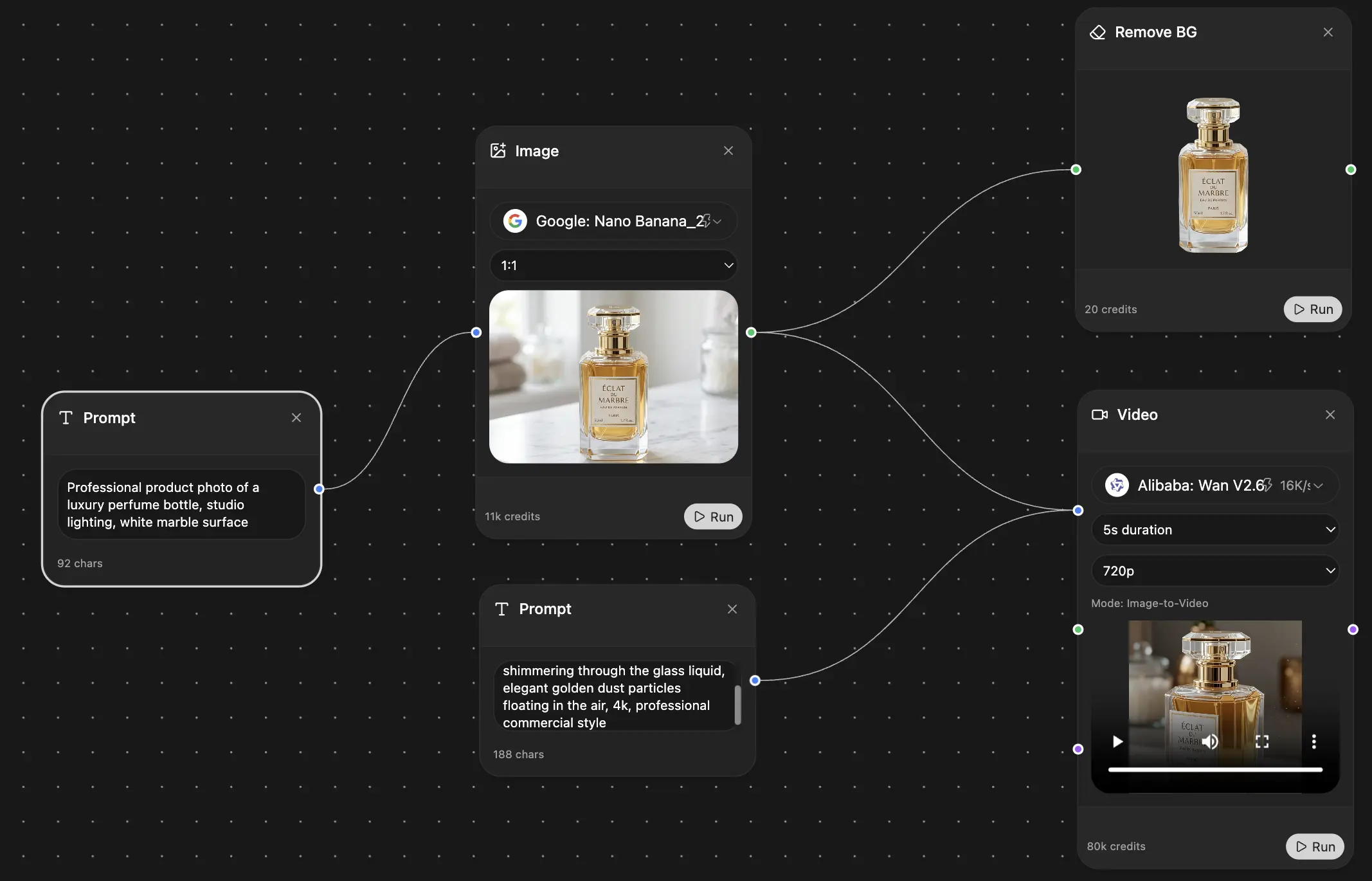
Chat, image, video & motion tools — side by side
Save hours of work and research
Transparent, High-Value Pricing
Trusted by teams at


Free
No credit card required
- 100 credits daily
- 3 AI models to try
- Basic AI chat
Plus
- 1,000,000 credits/month
- 25+ AI models — GPT, Claude, Gemini, Grok & more
- Agent Mode with web search, computer tools and more
- Creative Studio: image generation and video generation
- Project Library: chat with document, website and youtube, podcast generation, flashcards, reports and more
- Workflow Studio and FocusOS
Professional
- Everything in Plus, and:
- 2,100,000 credits/month
- Pro-exclusive models (Claude Opus, Grok 4, Sonar Pro)
- Motion Tools & Max Mode
- First access to latest features
- Access to additional offers
What Our Users Say
Great Tool after 2 months usage
"I love the way multiple tools they integrated in one platform. Going in the right direction."
— simplyzubair
Best in Kind!
"The quality of data and sheer speed of responses is outstanding. I use this app every day."
— barefootmedicine
Simply awesome
"The credit system is fair, models are perfect, and the discord is very responsive. Quite awesome."
— MarianZ
Great for Document Analysis
"Just works. Simple to use and great for working with documents. Money well spent."
— yerch82
Great AI site with accessible LLMs
"The organization of features is better than all the other sites — even better than ChatGPT."
— sumore
Excellent Tool
"It lives up to the all-in-one claim. All the necessary functions with a well-designed, easy UI."
— AlphaLeaf
Well-rounded platform with solid LLMs
"The team clearly puts their heart and soul into this platform. Really solid extra functionality."
— SlothMachine
Best AI tool I've ever used
"Updates made almost daily, feedback is incredibly fast. Just look at the changelogs — consistency."
— reu0691