Marketing Content Automation: Smart Workflows for 2026
Stop the content grind! Learn marketing content automation essentials: build smart workflows, avoid pitfalls, & get actionable tips for success in 2026.
You're probably sitting on a pile of half-finished assets right now. A blog draft in Google Docs. Social posts in a spreadsheet. Webinar notes in Slack. Two email versions nobody approved. A “content calendar” that's really just a polite fiction.
That's the usual setup when teams start looking at marketing content automation. They want relief, and fair enough. Repetitive publishing work is annoying, handoffs are messy, and manually repurposing content feels like office punishment for crimes you don't remember committing.
The trouble is that often, teams automate the wrong thing first. They automate output before they fix intent. So they get more content, faster, and somehow less useful. That's not a workflow win. That's just industrialized confusion.
Stop Drowning in Content and Start Automating Smart
Most content teams don't have a volume problem. They have a clarity problem.
Yes, the industry has gotten serious about automation. But the hype skips a hard truth. While automation tools mass-produce content, 70% of marketers report that AI outputs lack strategic clarity, leading to generic messaging that fails to engage underserved audiences or differentiate brands. The same analysis notes that leading organizations prioritize evolved content strategies over pure automation, which says a lot about why so many AI-heavy workflows still feel bland and forgettable (Instapage on the clarity gap in content automation).
Why more content often makes the problem worse
If your team hasn't locked down audience intent, message hierarchy, and brand point of view, automation won't save you. It will scale the slop. You'll publish faster, sure. You'll also create more near-duplicate posts, vague nurture emails, and social copy that sounds like it was written by a committee of agreeable toasters.
That's why the first win in marketing content automation usually isn't speed. It's control.
A useful automation system should answer questions like these before it generates anything:
- Who is this for: A real segment, not “B2B decision-makers”
- What do they need: Education, validation, comparison, urgency, reassurance
- What are we trying to move: Awareness, reply, demo interest, retention, enablement
- What should stay consistent: Claims, terminology, offer framing, tone, proof points
Practical rule: If a junior marketer can't explain the audience, the promise, and the next action in one minute, the workflow isn't ready for automation.
The off-ramp from the content hamster wheel
Smart teams treat automation like amplification. It multiplies what's already coherent.
That means your first automation project shouldn't be “let's generate 50 posts.” It should be something smaller and cleaner. A repeatable webinar repurposing flow. A post-publication social routine. A draft-to-review pipeline with approval logic. If you need a simple starting point, this guide on is the kind of thinking that helps teams stop duct-taping their week together.
A lot of marketers are still buying tools like they're shopping for a miracle. The better approach is less glamorous. Define the message first. Build the workflow second. Then let automation handle the chores humans should've fired years ago.
What Is Marketing Content Automation Anyway
People often reduce marketing content automation to social scheduling. That's like calling a restaurant kitchen “a place where plates leave the counter.” Technically not wrong. Wildly incomplete.
Real marketing content automation is an operating system for the content lifecycle. It coordinates planning, drafting, review, personalization, publishing, and performance feedback in one connected process. The point isn't just to save clicks. The point is to keep strategy intact as content moves across channels and teams.
The kitchen analogy that actually helps
Think of it as a content kitchen.
Your pantry is the central repository where approved messaging, source material, campaign notes, and reference docs live. Your recipes are templates and frameworks that make quality repeatable. Your chefs are the AI models and writers generating first drafts. Your sous-chef handles prep, formatting, extraction, and repurposing. Your taste-tester is analytics. Your delivery fleet distributes finished assets to the right channels.
That's very different from a scheduler.

Why the category is getting crowded
This isn't a niche anymore. The global marketing automation industry hit $6.65 billion in 2024 and is projected to reach $15.58 billion by 2030, with 92% of marketers now using AI tools in their efforts, according to . That shift matters because it tells you automation is no longer an “innovation project.” It's infrastructure.
Still, a bigger market also means more tools pretending to do everything.
Here's the practical split:
If you're evaluating platforms, it helps to review because the useful distinction isn't “AI or not.” It's whether the tool supports actual operations or just one flashy part of them.
What separates a real engine from a shiny toy
A strong setup usually includes these traits:
- Shared source material: One place for approved facts, messaging, and assets
- Workflow logic: Triggers, statuses, assignments, and review paths
- AI support with context: Drafting and transformation based on existing material, not guesswork
- Channel-ready outputs: Blog, email, social, sales enablement, and internal reuse
- Feedback loops: Performance signals that shape what gets reused next
For teams exploring broader orchestration, these are a useful frame because they show where simple task automation ends and content operations begin.
Building Your Content Automation Engine
If your process still lives across email, docs, chat threads, and “hey, did anyone publish that?” messages, you don't have a system. You have a scavenger hunt.
Effective marketing content automation depends on architecture, not enthusiasm. True content automation architecture relies on integrating data, rule engines, and AI models to target the entire content lifecycle, which has been shown to reduce manual workload by 40-60% using template-driven and trigger-based systems, as outlined in .

The six parts that matter
You don't need a monster stack. You do need the right pieces connected in a sane way.
Content repository
This is your single source of truth. Messaging docs, research notes, brand language, approved product descriptions, old campaign assets, and customer insights should sit in one accessible place.
If your writers are pulling from Slack screenshots and memory, the machine is already wobbling.
Templates and frameworks
Templates don't make content robotic. Bad templates do.
Strong frameworks preserve the parts that should repeat, like structure, CTA logic, proof placement, or SEO formatting, while leaving room for real judgment. A case study template, for example, should lock in the progression from challenge to approach to outcome without forcing every customer story to sound like the same brochure.
A practical helper for this step is a , especially if your team keeps skipping the “what are we trying to say?” part.
Your automation can only be as sharp as the template behind it. Messy inputs create polished-looking nonsense.
Triggers and logic
Workflows are no longer manual babysitting.
When a webinar transcript is uploaded, a summary draft gets generated. When a blog is approved, social snippets move into the queue. When an asset mentions pricing or product claims, legal or product review gets pulled in. These rules are not glamorous. They are what make the whole thing work.
The layers teams usually forget
The first three components get all the attention. The next three are where quality survives scale.
- Personalization engine: Audience segment, use case, funnel stage, and industry context should shape outputs
- Distribution network: CMS, email platform, social tools, enablement systems, and internal channels should receive content without copy-paste gymnastics
- Measurement loop: The system needs a way to capture what performed, what stalled, and what got ignored
Here's the part people learn the expensive way. If each of those layers lives in a different tool with weak handoffs, your stack turns into a small haunted house. Data goes missing. Versions drift. Approvals stall. Everyone starts saying “the system” with visible resentment.
That's why consolidated workspaces often beat sprawling tool collections. When the repository, drafting environment, research layer, and workflow logic live closer together, teams spend less time translating between apps and more time making decisions.
Real-World Automation Workflows You Can Steal
The easiest way to understand marketing content automation is to stop talking about “capabilities” and start looking at workflows. The best ones are boring in the right way. They remove repetitive effort, preserve strategic inputs, and keep people focused on judgment instead of formatting.
Some categories are especially suited to this. The most common and effective areas for automation include social media posting at 83% of departments, email marketing at 75%, and social media advertising at 58%, with AI systems showing a 30-40% speed increase in tracking engagement and generating reports, according to .
A good workflow looks less like “press a button, receive brilliance” and more like “one approved source creates many controlled outputs.”

The webinar-to-everything machine
This one is the easiest place to start because webinars already contain structure. They usually have a problem, a point of view, examples, and Q&A.
The flow works like this: upload the transcript, extract the themes, create a blog draft, pull social snippets, write an email summary, and generate internal sales notes. One source. Several useful assets. Minimal rework.
The hidden advantage here is consistency. Everyone works from the same source material, so marketing isn't promising one thing while sales repeats a completely different angle.
If you want an extra repurposing layer, turning that source material into audio can extend its shelf life. This guide on how to shows the kind of secondary workflow that makes one asset pull its weight.
The case study factory that doesn't sound factory-made
A lot of teams try to personalize case studies by rewriting the whole thing from scratch for each segment. That's noble. It's also a wonderful way to burn a week.
The better move is to build a master structure with fixed elements and variable sections:
- Fixed core: Challenge, implementation, proof points, product context
- Variable layer: Industry framing, role-specific pain points, terminology, opening hook
- Channel adaptations: PDF, web version, sales one-pager, nurture email excerpt
This only works if your source material is organized. Otherwise the output starts improvising, and AI loves improvising in the same way raccoons love kitchens.
Keep the proof stable. Personalize the framing.
After the draft is assembled, a human editor should check for tone, compliance, and awkward substitutions. “Healthcare-grade workflow confidence” might make sense. “Healthcare vibes but for fintech” probably needs another pass.
The SEO cluster bot with adult supervision
This workflow starts with a pillar page that already reflects your strategy. Then the system pulls subtopics, drafts supporting articles, proposes internal links, and creates metadata or excerpt variations for distribution.
Done well, this saves a huge amount of repetitive production time. Done badly, it creates a graveyard of near-identical posts targeting every keyword variation nobody asked for.
The fix is simple. Tie cluster generation to a message map first:
- Define the business theme
- List audience questions around that theme
- Approve the cluster angles
- Generate first drafts
- Edit for overlap, specificity, and voice
- Publish and monitor performance together
Here's a useful demo to pair with that kind of process:
The reporting loop people forget to automate
Teams love automating creation. They often ignore reporting until someone asks for “a quick content performance summary” five minutes before a leadership meeting.
Automating the reporting layer is one of the least flashy and most valuable upgrades. Pull engagement signals, tag output by campaign or topic, and generate a recurring summary that shows what content is earning attention. That's how your next workflow gets smarter instead of just faster.
Your Roadmap to Smart Content Automation
Rolling out marketing content automation without a plan usually creates one of two outcomes. Either the team stalls in tool comparison for months, or they connect five apps in a burst of optimism and then stop using the setup because nobody trusts it.
A phased rollout works better. You need enough structure to avoid chaos, but not so much ceremony that the team treats automation like an ERP project in a windbreaker.

Phase one audit and strategize
Start with the clarity gap, not the software.
Map your current content flow. Where does work slow down? Where do teams duplicate effort? Which assets repeatedly need repurposing? Which claims, messages, or audience definitions keep changing depending on who writes the draft?
Write down three things before you automate anything:
- Core audiences: Specific segments, not broad demographics
- Message pillars: What your brand wants to be known for
- Workflow candidates: Repeatable, high-friction processes worth fixing first
This is also where you decide what stays human-led. Strategy, nuanced positioning, and sensitive messaging should not be tossed into an automated chute and hoped for the best.
Phase two choose tools that can actually connect
A tool can have clever AI and still be useless in operations if it can't integrate properly.
Expert benchmarks show that effective automation platforms must have native CRM integration and multi-channel capabilities, which achieve 35% higher lead scoring accuracy and 22% faster marketing-to-sales handoff times compared to platforms with weaker integrations, based on .
That matters because content operations don't live in isolation. Your assets affect lead quality, sales handoff, segmentation, and follow-up.
When reviewing tools, check these points first:
If video is part of your content mix, browsing can help teams think beyond text workflows and build stronger automation around visual storytelling too.
Bad automation hides mess. Good automation exposes and fixes it.
Phase three run one pilot and refine it hard
Pick one workflow. Not six.
A pilot should be frequent enough to generate learning, simple enough to monitor, and valuable enough that people care if it works. Webinar repurposing is a classic choice. So is blog-to-email adaptation or post-approval social distribution.
Watch for these failure signs:
- Output drift: The content sounds generic or off-brand
- Approval friction: Reviewers still step outside the system
- Source confusion: Teams use old versions or missing assets
- Weak ownership: Nobody maintains the workflow after launch
Fix those before you scale.
Phase four scale what proved itself
Once one workflow is reliable, expand carefully. Add adjacent automations, not random ones.
You also need better success metrics than “we published more.” Volume is a vanity metric if the content doesn't support pipeline, sales conversations, or customer understanding. Track business relevance, speed of turnaround, and whether the team now spends more time editing for insight instead of reformatting for survival.
The Future Is Automated But Still Human
The best outcome of marketing content automation isn't endless output. It's better use of human attention.
Automation should take the repetitive work. Scheduling. formatting. first-pass repurposing. routing. status chasing. summary generation. report assembly. That stuff drains teams and rarely benefits from heroic manual effort.
What shouldn't be automated is the part that makes content worth reading in the first place. Positioning. taste. empathy. judgment. the ability to know when a message is technically correct but emotionally dead. No workflow engine has solved that. And frankly, if it ever does, half of marketing will deserve the humiliation.
What smart teams keep human
The strongest teams protect a few things on purpose:
- Strategic direction: Humans define what the brand means and where it competes
- Editorial judgment: Humans decide whether a draft has substance or just structure
- Audience empathy: Humans understand what a buyer is nervous about, not just what keyword they typed
- Final accountability: Humans own the claims, the tone, and the consequences
There's nothing anti-automation about that. It's the opposite. It's how automation stays useful.
A lot of teams also underestimate how much value comes from simple refinement tools. Rewriting, simplifying, tightening, and adapting tone across formats are where many workflows become practical instead of theoretical. That's why capabilities like matter in day-to-day operations. They support the editor, not replace the editor.
The future belongs to teams that automate the process and keep the point of view human.
If your current system is producing too much noise, don't buy your way out with more volume. Fix the clarity gap first. Once your strategy is solid, automation becomes what it was supposed to be all along: a force multiplier for good thinking.
If you want one workspace for research, drafting, document analysis, rewriting, repurposing, and AI-assisted execution, is worth a look. It brings multiple AI models, document workflows, smart writing tools, and creative utilities into one place, which is a lot nicer than juggling a dozen tabs and pretending that counts as a system.
Explore Zemith Features
Every top AI. One subscription.
ChatGPT, Claude, Gemini, DeepSeek, Grok & 25+ more


Always on, real-time AI.
Voice + screen share · instant answers
What's the best way to learn a new language?
Immersion and spaced repetition work best. Try consuming media in your target language daily.
Voice + screen share · AI answers in real time
Image Generation
Flux, Nano Banana, Ideogram, Recraft + more

Write at the speed of thought.
AI autocomplete, rewrite & expand on command
Any document. Any format.
PDF, URL, or YouTube → chat, quiz, podcast & more
Video Creation
Veo, Kling, Grok Imagine and more

Text to Speech
Natural AI voices, 30+ languages
Code Generation
Write, debug & explain code
Chat with Documents
Upload PDFs, analyze content
Your AI, in your pocket.
Full access on iOS & Android · synced everywhere
Your infinite AI canvas.
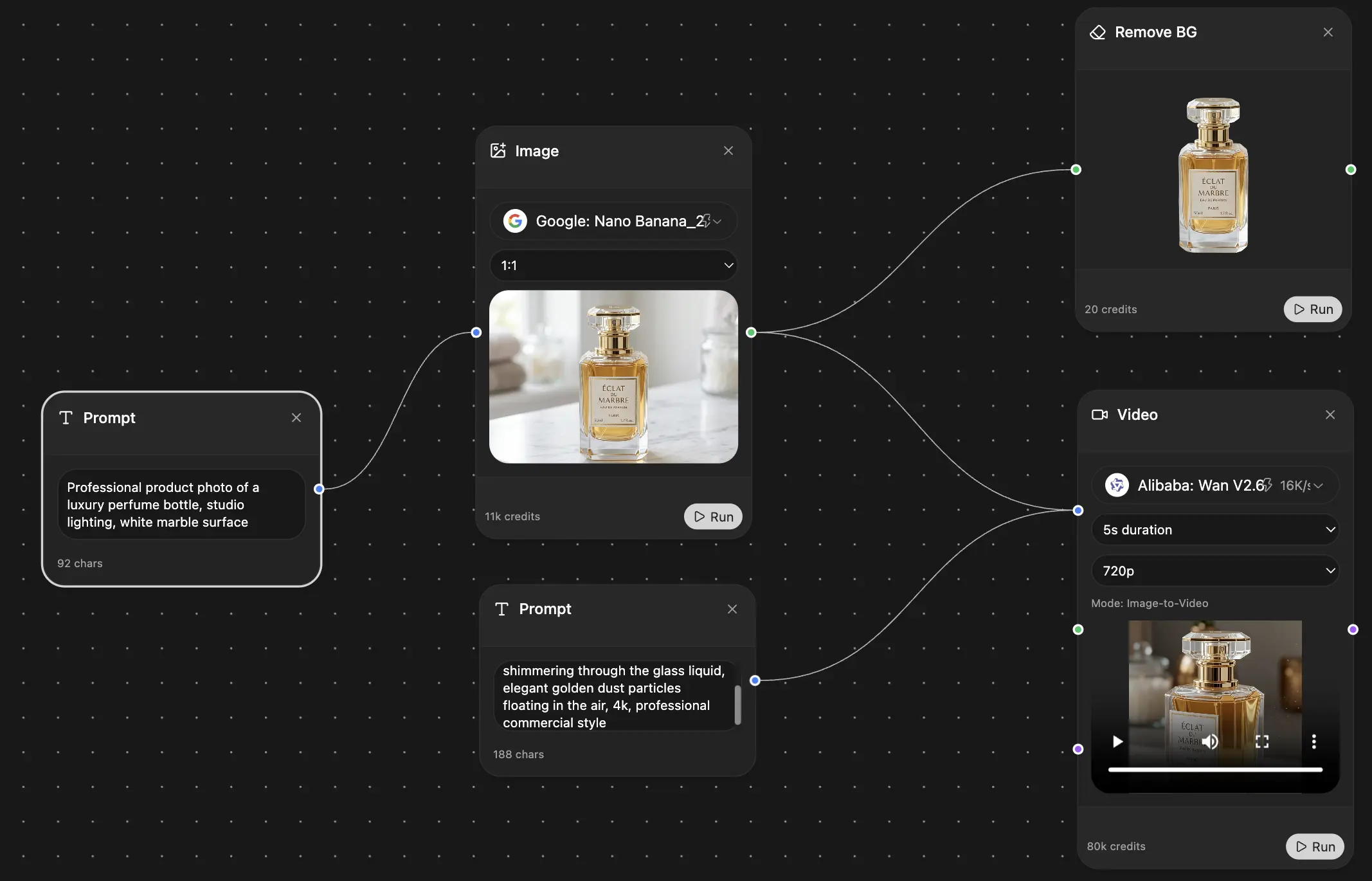
Chat, image, video & motion tools — side by side
Save hours of work and research
Transparent, High-Value Pricing
Trusted by teams at


Free
No credit card required
- 100 credits daily
- 3 AI models to try
- Basic AI chat
Plus
- 1,000,000 credits/month
- 25+ AI models — GPT, Claude, Gemini, Grok & more
- Agent Mode with web search, computer tools and more
- Creative Studio: image generation and video generation
- Project Library: chat with document, website and youtube, podcast generation, flashcards, reports and more
- Workflow Studio and FocusOS
Professional
- Everything in Plus, and:
- 2,100,000 credits/month
- Pro-exclusive models (Claude Opus, Grok 4, Sonar Pro)
- Motion Tools & Max Mode
- First access to latest features
- Access to additional offers
What Our Users Say
Great Tool after 2 months usage
"I love the way multiple tools they integrated in one platform. Going in the right direction."
— simplyzubair
Best in Kind!
"The quality of data and sheer speed of responses is outstanding. I use this app every day."
— barefootmedicine
Simply awesome
"The credit system is fair, models are perfect, and the discord is very responsive. Quite awesome."
— MarianZ
Great for Document Analysis
"Just works. Simple to use and great for working with documents. Money well spent."
— yerch82
Great AI site with accessible LLMs
"The organization of features is better than all the other sites — even better than ChatGPT."
— sumore
Excellent Tool
"It lives up to the all-in-one claim. All the necessary functions with a well-designed, easy UI."
— AlphaLeaf
Well-rounded platform with solid LLMs
"The team clearly puts their heart and soul into this platform. Really solid extra functionality."
— SlothMachine
Best AI tool I've ever used
"Updates made almost daily, feedback is incredibly fast. Just look at the changelogs — consistency."
— reu0691