Mandarin to English Voice Translator: A 2026 Guide
Lost in translation? Our 2026 guide shows you how to use a Mandarin to English voice translator for seamless, real-time conversations. Featuring Zemith AI.
You're probably here because you've already had one of those conversations.
You ask a simple question in English. The other person smiles politely in Mandarin. You both nod as if meaning has somehow transferred through pure optimism. Then someone pulls out a phone, everybody starts talking over the app, and the result sounds like a confused robot ordering lunch on your behalf.
A good Mandarin to English voice translator fixes that. A bad one turns a quick interaction into a group project.
I've learned this the hard way in train stations, hotel lobbies, late-night noodle shops, and business meetings where everybody was too courteous to admit the tech was failing. The difference usually isn't whether the app can technically translate. Most can. The difference is whether it helps two humans keep talking naturally without breaking rhythm every ten seconds.
That's the standard that matters in 2026. Not “does it support Chinese?” Not “does it have a microphone button?” The key question is whether it can handle live speech, messy audio, interruptions, mixed phrases, and the normal weirdness of actual conversation.
That Awkward Moment You Ask for the Bathroom and Get a Dumpling
My favorite translation failure happened when I was tired, overconfident, and extremely sure my pronunciation was “close enough.” I wanted the bathroom. What I got was a cheerful explanation from a vendor, a pointed finger toward a food stall, and a plate of dumplings that I was apparently too embarrassed not to buy.
That's the old travel pattern. You try a phrasebook line. The other person hears something adjacent. Then both of you begin acting with your hands like you're trapped in a silent film.
A modern Mandarin to English voice translator changes that dynamic because it removes the worst part of old-school translation apps. They used to feel like calculators with a microphone. Say a sentence, wait, stare, repeat. That rhythm kills conversation.
What's different now is the underlying quality of machine translation itself. Back in 2018, Microsoft announced that its Chinese-to-English machine translation system had reached human parity on the newstest2017 benchmark, using a test set of about 2,000 sentences and validation from external bilingual evaluators, as described in . That didn't mean every live conversation suddenly became flawless. It did mean the foundation got strong enough for today's real-time systems to become effective.
If you want the simplest way to think about it, the translator is no longer just a dictionary. It's part of a broader conversational layer, the same shift you see in .
What actually feels better now
The best tools no longer force you into tiny command-style speech. You can speak like a person, pause like a person, and keep eye contact like a person. That matters more than slick marketing copy ever will.
The best translator is the one that disappears fast enough that both people forget they're using it.
That doesn't mean magic. If your sentence is rambling, idiomatic, or packed with slang, you can still confuse the machine. But for everyday directions, travel requests, introductions, and straightforward business talk, the gap between “possible” and “comfortable” has narrowed a lot.
The real goal
You're not trying to produce perfect literary English from spoken Mandarin. You're trying to keep a live interaction moving without awkward stalls.
That's why the right tool matters. And it's also why choosing a translator by app store rating alone is how you end up with dumplings instead of directions.
Choosing Your Digital Interpreter Wisely
Often, users start in the wrong place. They search “best Mandarin to English voice translator,” download three free apps, test them with one sentence in a quiet room, and declare victory.
That test tells you almost nothing.
The better way to choose is to decide what kind of digital interpreter you need. The market itself is a clue here. The AI language translator market was estimated to grow from $1.88 billion in 2023 to $2.34 billion in 2024, a 24.9% CAGR, with projections reaching $42.75 billion by 2030. The speech-to-speech translation segment alone was estimated at $0.56 billion in 2024, according to . This isn't novelty software anymore. It's a serious product category.

Three categories that matter
Free apps are fine for “Where is gate B12?” They're much less fine when you need to discuss delivery times, food allergies, factory specs, or a hotel booking that somehow includes three room types and one confused cousin.
Dedicated translator gadgets still exist, and some people love them. I get the appeal. They feel purpose-built. But a lot of them solve yesterday's problem. Hardware ages. Language models improve fast. A fixed device often loses that race.
Cloud platforms are where the category has matured. They're usually better at live updates, context handling, and fitting into everything else you're already doing.
Stop juggling tools
The hidden cost isn't just money. It's workflow friction.
If you're translating a call, taking notes, saving transcripts, checking a product term, and cleaning up a follow-up email, using five separate tools is a mess. Serious users should think in systems, not isolated apps. That's why it helps to keep a shortlist of broader , then choose one stack you can live in.
Practical rule: Stop collecting apps. Start building a system.
For technical teams building voice experiences themselves, it also helps to understand how real-time speech tools fit into automation. A useful overview is this guide to , especially if you're thinking beyond personal travel use and into support flows or multilingual operations.
What I'd choose for different people
- For casual travelers: a good mobile app is enough if you mostly need directions, food ordering, and short exchanges.
- For frequent travelers: choose a cloud-based setup with better live conversation controls.
- For business users: pick something that can sit inside a wider workspace, because translation is rarely the only task happening.
- For learners: use a translator that lets you slow down, replay, and compare what was said versus what was meant.
A Mandarin to English voice translator shouldn't just convert speech. It should reduce the number of things you have to think about while you're already trying to be understood in a different language.
Setting Up Your Translator for Seamless Conversation
Most translation failures start before anyone says a word. The mic is wrong. The output language is backwards. Somebody forgot headphones. Or the laptop is proudly listening to the air conditioner instead of the human standing in front of it.
Setup matters more than people think.

Start with the microphone, not the translation
On a phone, the built-in mic is often good enough for casual use if you're in a reasonably quiet place and holding the device close to the speaker. In a busy street or café, a headset mic usually gives you cleaner input and fewer weird guesses.
On a laptop, I almost never trust the default input blindly. Check which microphone is active before the conversation begins. If the machine is hearing keyboard taps and chair squeaks louder than speech, your transcript is going to wander into nonsense.
A quick pre-flight routine helps:
- Pick the right input: Use the closest, cleanest microphone available.
- Set the language direction correctly: Mandarin to English sounds obvious until someone accidentally flips it.
- Test speaker output: If the translated audio is too quiet, people start talking over it.
- Check network stability: Real-time tools hate flaky connections.
Keep the interface simple
A live translator should show only what you need in the moment. Input source, source language, target language, transcript, translated output. Anything more becomes visual clutter while you're trying to talk.
If you also want a text record afterward, pair the conversation with a transcription workflow. A separate read on is useful if you want to save meetings, voice notes, or post-conversation summaries without relying on memory.
If you need to tap around the interface during a live conversation, your setup isn't ready.
Do one dry run before the real thing
This is the step almost everyone skips. Don't.
Do a two-minute test by yourself or with a language exchange partner. Say the kind of things you'll need in a live interaction. Ask for a train platform. Explain a check-in issue. Describe a product feature. Use normal pace, then slower pace. You'll quickly hear whether the translator likes your speaking style.
That little rehearsal teaches rhythm. You learn how long to pause, how much context to include, and whether your microphone placement is helping or sabotaging you.
A visual walkthrough helps if you prefer seeing the flow before trying it live:
Mobile and desktop are good at different jobs
- Phone setup works best for: taxis, restaurants, markets, quick hotel interactions, street-level conversations.
- Laptop setup works best for: meetings, interviews, longer conversations, desk-based support, note-heavy discussions.
The mistake is assuming one setup covers every context equally well. It doesn't. Your phone is the fast, flexible option. Your laptop is the stable, work-oriented option.
Use the one that matches the scene, and the translator immediately feels smarter.
Mastering the Art of Real-Time Translated Chat
Owning the tool is easy. Using it without making everyone uncomfortable takes practice.
A real-time translated conversation has a rhythm. If you speak in giant tangled paragraphs, the app will struggle. If you fire off fragments like “yes yes no maybe shipment tomorrow but not exactly,” it will also struggle. The sweet spot is clear, compact speech that still sounds natural.

Speak like a helpful human
The best input style is not robotic, but it is disciplined.
Try this instead of rambling:
- “I need to go to Terminal 2.”
- “Can you tell me which line to take?”
- “I have a peanut allergy. Does this dish contain peanuts?”
Don't do this:
- “So basically I'm kind of trying to get over there because my friend told me maybe I should switch somewhere but I'm not totally sure and also is there food there?”
The machine can only work with what you give it. Clean sentences produce cleaner translations.
Use the pause well
A pause is not dead air. It's part of the interface.
After one thought, stop. Let the system catch up. Then continue. Most awkward conversations happen because both people keep talking while the device is still processing the previous sentence.
Short sentence. Small pause. Confirm meaning. Continue.
That tiny rhythm change makes the interaction feel much more fluid.
Warn people in one sentence
If the other person has never used a live translator, tell them what's happening. A simple line works: “I'm using a translation app, so short sentences help.”
That one sentence lowers tension immediately. It also gives the other person permission to slow down a bit without feeling patronized.
If you want to get more comfortable with natural spoken interfaces in general, it's worth spending time with practical examples of .
Idioms are where comedy begins
Avoid idioms unless you want accidental performance art.
“It's raining cats and dogs” can turn into something that sounds like a disaster report from an unwell zoo. “Let's table this” can become the linguistic equivalent of putting a meeting on top of a piece of furniture.
A Mandarin to English voice translator handles plain language better than clever language. That's not a flaw. That's a reminder to optimize for understanding, not style points.
Keep your eyes on the person, not the phone
People trust you more when you stay engaged with them instead of staring at the glowing rectangle in your hand. Glance at the translation, yes. But look back at the person quickly.
That's especially important in China, where warmth, patience, and courtesy often carry a conversation farther than perfect wording. If the app makes a small mistake but your manner is relaxed and respectful, you will likely be met with understanding and cooperation.
A translator should support human interaction, not replace it. If the conversation starts feeling like two people taking turns talking to a phone, slow down and reset the rhythm.
Fine-Tuning Your AI for Crystal-Clear Accuracy
Here's the part marketing pages usually skip. A Mandarin to English voice translator does not “just work” in every environment.
Put the same app in a quiet hotel room and then in a crowded tea house with clinking cups, side conversations, regional accents, and somebody saying half the sentence in English product jargon, and you'll get very different results.

Hard audio is the real test
One of the more useful reality checks comes from , which explicitly addresses hard cases such as Chinese dialects, accents, mixed phrases, real-time speaker separation, and context hints. That matters because those are exactly the situations where “works great in the demo” tools tend to wobble.
The practical lesson is simple. If your translator can't handle messy input, it's not ready for real-world Mandarin conversation.
Small adjustments that help a lot
You don't need to be an audio engineer. You do need a few habits.
- Move closer to the speaker: Distance hurts clarity fast.
- Angle the phone upward: Don't point the mic at your own jacket or the tabletop.
- Reduce competing sound: Step away from the espresso machine, traffic, or blasting speaker.
- One speaker at a time: Overlap is poison for translation.
- Repeat key nouns clearly: Names, places, product terms, and numbers deserve a second pass if they matter.
Give the system context
If the conversation is about semiconductors, customs paperwork, skincare ingredients, or manufacturing tolerances, say that early. Even a simple framing sentence helps anchor terminology.
For example, instead of opening with “We need to review the process issue,” try “We're discussing a semiconductor packaging issue.” The second version gives the translator a fighting chance.
That same principle shows up across many . Context isn't decoration. It changes output quality.
Better translation often comes from better framing, not louder speech.
Know when to stop trusting the first output
If a sentence sounds oddly polished but slightly wrong, don't wave it through just because it arrived quickly. Automatic systems can produce something fluent and still miss the intended meaning.
In practice, I'd verify anything involving:
- Medical details
- Legal terms
- Technical specifications
- Pricing and deadlines
- Names, quantities, and addresses
For sensitive conversations, use the translator to get understanding moving, then confirm the critical points in writing.
Privacy is part of accuracy
People talk more naturally when they trust the setup. If they're worried about where the audio goes, they shorten answers, avoid specifics, and the conversation quality drops.
So before using any live translator for work, check how it handles transcripts, storage, and sharing. For casual travel, convenience usually wins. For business, product selection should include privacy review, not just language support.
Accuracy isn't only a model problem. It's also an environment problem, a microphone problem, and sometimes a human-behavior problem.
From Boardrooms to Bao Buns Real-World Scenarios
The most useful way to judge a Mandarin to English voice translator is to put it inside real situations and ask one question. Does this make the conversation easier, or does it become another participant who needs babysitting?
In a business meeting
A laptop-based setup works best when several people are involved and clarity is paramount. You need stable audio, a visible transcript, and enough screen space to keep track of what was said versus what was meant.
In that setting, translation isn't the only workflow. You may also need notes, action items, and a quick written recap afterward. That's why business users usually outgrow single-purpose translation apps first.
I also like to keep one eye on whether technical terms are landing cleanly. If they aren't, I'll restate the sentence in simpler language instead of pretending the machine caught it. Pride is expensive in multilingual meetings.
At a food stall
Travel is where people expect less from the tech, but there, a good setup feels magical.
You're standing at a busy stall. Steam everywhere. A line forming behind you. You want to ask what's in a dish, whether it's spicy, and if they can swap one ingredient. This is not the moment for a giant menu-translation session or a full grammar lesson.
A phone-based translator works well here if you keep your requests short and concrete:
- “What meat is this?”
- “No cilantro, please.”
- “Is this very spicy?”
- “Can I take this to go?”
At this point, people stop pointing randomly and hoping for the best. Bao buns should be chosen on purpose, not by destiny.
In a casual social conversation
The nicest use case is also the hardest to fake. You meet someone in a park, on a train, or while waiting for coffee. Nobody needs a formal exchange. You just want enough translation support to keep the moment alive.
That's when latency and tone matter most. You don't need perfect transcript-grade output. You need a back-and-forth that still leaves room for humor, curiosity, and timing.
For creators and media-heavy users, the broader direction of the field is also interesting. Tools are increasingly trying to preserve voice and timing in translated output, as shown by current dubbing workflows described on . That's a different use case from live conversation, but it points to the same goal. Translation is moving closer to preserving how something was said, not just what was said.
In hospitality and customer-facing work
Hotels, tours, and service desks sit in the middle. The conversation has to feel warm, but the details still matter. Check-in times, room types, breakfast rules, transport options, and special requests all create plenty of room for accidental confusion.
If you work in or around hospitality, it's useful to pair translation tools with practical service training. I like resources such as because they focus on how people communicate under pressure, not just on scripts.
And if your multilingual needs extend beyond Mandarin, it helps to compare workflows across language pairs too. This guide to is useful for seeing how setup and conversation discipline carry across languages.
The biggest surprise with these tools isn't that they translate. It's that, when used well, they lower social friction. They help you ask better questions, catch the answer, and stay present enough to connect with the person in front of you.
That's the win. Not sounding fluent. Being understood.
If you're tired of juggling separate tools for live translation, notes, research, and follow-up work, take a look at . It brings those workflows into one place, which is exactly what makes a Mandarin to English voice translator useful in real life instead of just impressive in a demo.
Explore Zemith Features
Every top AI. One subscription.
ChatGPT, Claude, Gemini, DeepSeek, Grok & 25+ more


Always on, real-time AI.
Voice + screen share · instant answers
What's the best way to learn a new language?
Immersion and spaced repetition work best. Try consuming media in your target language daily.
Voice + screen share · AI answers in real time
Image Generation
Flux, Nano Banana, Ideogram, Recraft + more

Write at the speed of thought.
AI autocomplete, rewrite & expand on command
Any document. Any format.
PDF, URL, or YouTube → chat, quiz, podcast & more
Video Creation
Veo, Kling, Grok Imagine and more

Text to Speech
Natural AI voices, 30+ languages
Code Generation
Write, debug & explain code
Chat with Documents
Upload PDFs, analyze content
Your AI, in your pocket.
Full access on iOS & Android · synced everywhere
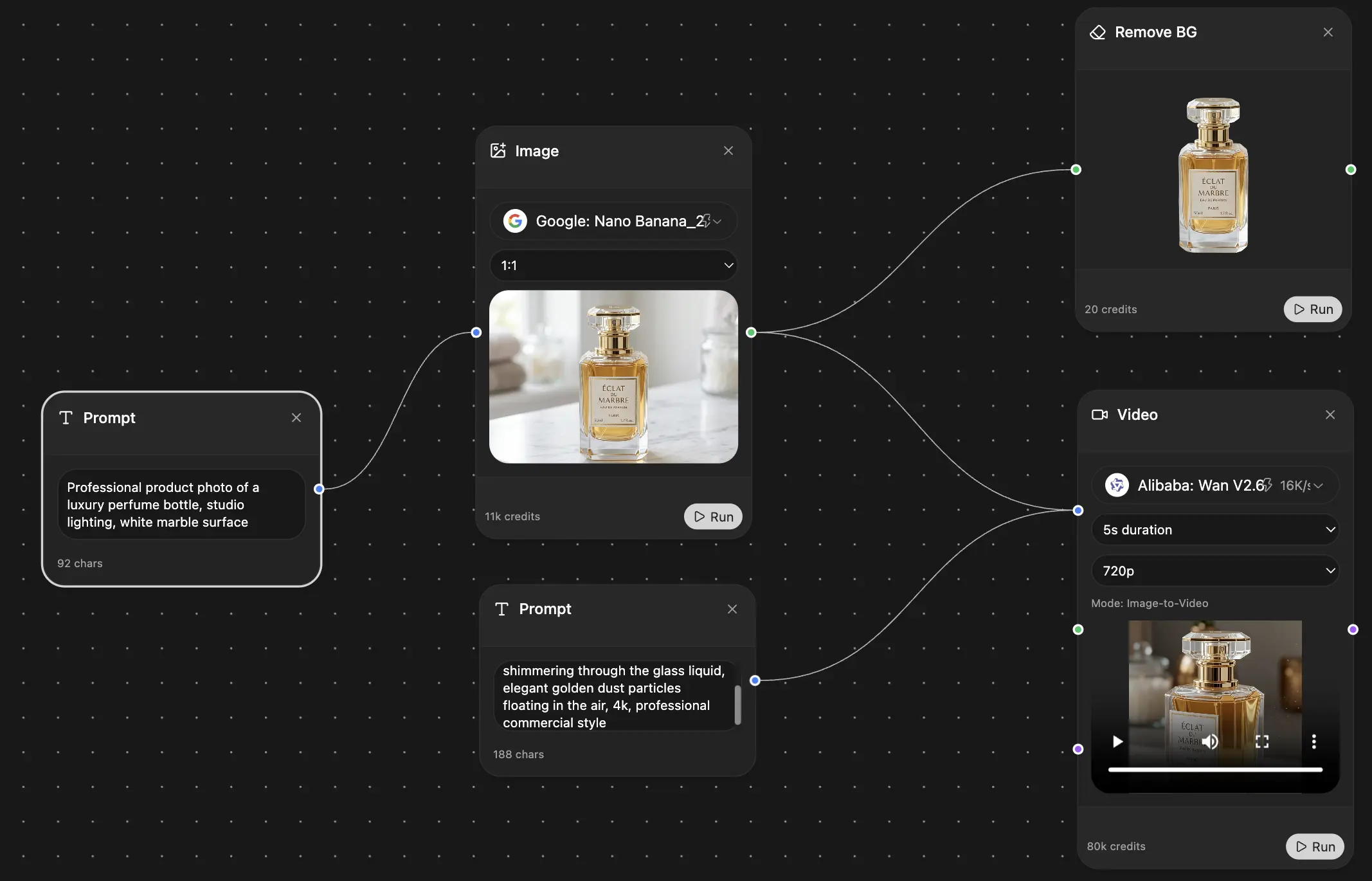
Your infinite AI canvas.
Chat, image, video & motion tools — side by side
Save hours of work and research
Transparent, High-Value Pricing
Trusted by teams at


Free
No credit card required
- 100 credits daily
- 3 AI models to try
- Basic AI chat
Plus
- 1,000,000 credits/month
- 25+ AI models — GPT, Claude, Gemini, Grok & more
- Agent Mode with web search, computer tools and more
- Creative Studio: image generation and video generation
- Project Library: chat with document, website and youtube, podcast generation, flashcards, reports and more
- Workflow Studio and FocusOS
Professional
- Everything in Plus, and:
- 2,100,000 credits/month
- Pro-exclusive models (Claude Opus, Grok 4, Sonar Pro)
- Motion Tools & Max Mode
- First access to latest features
- Access to additional offers
What Our Users Say
Great Tool after 2 months usage
"I love the way multiple tools they integrated in one platform. Going in the right direction."
— simplyzubair
Best in Kind!
"The quality of data and sheer speed of responses is outstanding. I use this app every day."
— barefootmedicine
Simply awesome
"The credit system is fair, models are perfect, and the discord is very responsive. Quite awesome."
— MarianZ
Great for Document Analysis
"Just works. Simple to use and great for working with documents. Money well spent."
— yerch82
Great AI site with accessible LLMs
"The organization of features is better than all the other sites — even better than ChatGPT."
— sumore
Excellent Tool
"It lives up to the all-in-one claim. All the necessary functions with a well-designed, easy UI."
— AlphaLeaf
Well-rounded platform with solid LLMs
"The team clearly puts their heart and soul into this platform. Really solid extra functionality."
— SlothMachine
Best AI tool I've ever used
"Updates made almost daily, feedback is incredibly fast. Just look at the changelogs — consistency."
— reu0691