Labor Cost Reduction Strategies That Actually Work in 2026
A practical guide to modern labor cost reduction. Learn proven strategies, from AI augmentation to smart scheduling, to cut costs without hurting morale.
Margins usually don't collapse in one dramatic moment. They get nibbled to death.
A little extra overtime here. A few scheduling misses there. A team buried in admin work that should've been automated months ago. Another software tab open, another manual handoff, another “quick task” that stealthily eats half an hour. By the end of the quarter, payroll looks heavier, output feels weirdly flat, and everyone in leadership is asking the same question: why are we spending more without getting more?
That's the primary labor cost problem in 2026. It's rarely just compensation. It's friction.
The good news is that labor cost reduction doesn't have to mean panicked layoffs, morale damage, and a fresh batch of problems wearing fake mustaches. The better play is to tighten operations, raise output per hour, and use technology to remove low-value work so the same team can do better work. That's where the primary gains usually live.
Why Labor Costs Are Your Sneakiest Profit Thief
If you run a business, you already know labor is expensive. What catches people off guard is how subtly it expands.
One new hire seems manageable. A little overtime feels temporary. Manual approvals, duplicate data entry, status meetings, and context switching don't show up on the org chart, but they absolutely show up in the P&L. That's why labor costs become the sneakiest profit thief. They don't kick the door down. They leak through the floorboards.
In the U.S., employer costs for employee compensation averaged $49.32 per hour worked in March 2026, and labor can account for up to 70% of total business costs, according to . The same source notes that buddy punching can inflate payroll by an average of 2.2%, which tells you something important. A lot of labor cost reduction has nothing to do with cutting jobs. It has to do with cutting waste.
The leak is usually operational
Most operators don't lose money because they forgot salaries exist. They lose money because they manage labor as a static expense instead of a moving system.
That system includes:
- Scheduling drift that leaves teams overstaffed during slow periods and stretched during busy ones
- Manual process overhead that turns smart employees into expensive copy-paste machines
- Timekeeping errors that inflate payroll
- Tool sprawl that forces employees to bounce between apps all day
One of the worst offenders is context switching. When people keep jumping between systems, they lose focus, recreate work, and slow each other down. If you want a practical look at that hidden tax, is worth reading.
Practical rule: If labor costs feel high but your team still feels overloaded, your first problem probably isn't headcount. It's workflow design.
Smart reduction beats blunt reduction
There's also a policy lesson here. A peer-reviewed analysis of a U.S. payroll tax reform found that lowering employer labor costs increased employment of young individuals by 2.7 percentage points and created 18,100 new jobs in total, as reported in . Different context, same operating principle. When labor becomes cheaper or more efficient, firms can expand productive capacity.
That's the mindset shift that matters. Don't start with “where can we cut people?” Start with “where are we paying people to fight bad systems?”
That question usually leads to better answers. Also fewer awkward all-hands meetings.
Rethinking Labor Costs What to Actually Measure
A lot of companies say they're managing labor costs when they're really just staring at payroll totals and hoping insight appears. It won't.
If you want labor cost reduction that sticks, measure labor the way a CFO and an operator would measure it together. That means getting past wages alone and calculating the true cost of work.
Start with the burdened rate
A robust labor cost model uses a burdened rate. That includes gross pay plus employer payroll taxes, benefits, insurance, training, and other employment-related costs. Then you divide that total by annual hours worked to get a true cost per hour, which you can benchmark and manage, as explained in .

When teams skip this step, they make bad decisions fast. A role that looks affordable on paper may be far more expensive in practice once taxes, benefits, training time, and absenteeism are included. On the flip side, a process improvement that saves only a few hours a week may be far more valuable than it first appears.
For operators in hospitality, is a useful example of how to connect labor tracking to margin decisions instead of treating payroll as a separate universe.
Three metrics that actually help
You don't need a giant dashboard to start. You need a few numbers that force the right conversations.
These aren't just finance metrics. They're operational metrics. If labor cost per unit rises, something is slowing work down. If overtime keeps appearing, demand planning is probably weak or your staffing model is too rigid.
What a useful dashboard looks like
A good labor dashboard answers three questions:
- Where are we overpaying for routine work?
- Where are delays forcing premium labor or rework?
- Which teams are producing more with the same hours?
That's the point where labor cost reduction gets practical. You stop debating feelings and start looking at evidence. If you want that discipline baked into day-to-day management, is the habit to build.
Measure labor as a system, not a paycheck. The companies that do this catch problems while they're still annoying, not after they've become expensive.
Five Proven Labor Cost Reduction Strategies
There's no single trick here. Labor cost reduction works best as a portfolio of moves. Some remove waste. Some increase output. Some give you more flexibility with the same payroll base. Together, they change the economics of the team you already have.
To keep this practical, here are five strategies that consistently hold up in practice.

Automate repetitive work first
Here, most businesses still have the easiest win.
If a task is repetitive, rules-based, and hated by everyone assigned to it, automate it. Think document summarization, meeting notes, content formatting, data extraction, invoice routing, internal FAQs, first-draft reporting, and status updates. Those tasks don't usually require more people. They require less drudgery.
A lot of teams wait too long because they think automation has to be a giant enterprise project. It doesn't. Start with one ugly workflow and clean it up. If you're evaluating ways to , focus on processes where delays and handoffs already irritate everyone.
Tighten forecasting and scheduling
This is one of the most impactful moves available. Independent operational guidance recommends using historical demand data to avoid overstaffing and understaffing, tracking attendance and absenteeism, and deploying cross-trained employees to raise utilization. It also notes that overtime should be used only when its marginal return exceeds its premium cost, according to .
That sounds obvious. It is. It's also ignored all the time.
The point isn't to squeeze every shift until people hate you. The point is to match labor to actual demand instead of a manager's guess from last Tuesday.
Here's a quick explainer that pairs well with that thinking:
Cross-train for flexibility, not just coverage
Cross-training is one of the least glamorous cost levers, which is probably why it works so well.
A rigid team creates expensive bottlenecks. A flexible team absorbs demand swings, covers absences better, and reduces the need for last-minute premium labor. Cross-training also helps redeploy people into higher-value work when automation removes lower-value tasks.
The cheapest labor hour is often the one you reallocate well, not the one you eliminate.
Use flexible staffing where variability is real
Not every function needs full-time capacity all year. If work is project-based, seasonal, or unpredictable, a flexible staffing model can make sense.
This isn't a license to hollow out core functions. It's a way to avoid carrying permanent cost for temporary demand. In education businesses, for example, admin-heavy payroll coordination can become its own mini headache. A focused tool like shows how specialized workflows can reduce admin burden without forcing internal staff to babysit spreadsheets.
Streamline the process before touching headcount
Many cost-cutting efforts go off the rails when leaders cut people before they fix the workflow. Then the remaining team inherits a broken process and a worse mood.
Look at handoffs, approvals, duplicated work, search time, and unclear ownership. Lean methods still matter because waste still matters. AI just gives you better tools to remove it faster.
The pattern is simple:
- Bad process plus fewer people creates burnout
- Better process plus the same people boosts efficiency
- Better process plus selective automation creates durable savings
That's the version worth building.
Your Implementation Roadmap to Smarter Labor Costs
Most labor cost programs fail for one boring reason. They try to do too much at once, in too many places, with too little clarity.
A better approach is to treat labor cost reduction like any other operations project. Find the leaks. Prioritize the fixes. Pilot small. Scale what works. Keep the team informed so they don't assume “efficiency initiative” means “surprise misery.”

Phase one is an audit, not a vibe check
Start by mapping where labor hours go. Not where you think they go. Where they are found.
Pull together managers from operations, finance, HR, and department leads. Review your workload by function, recurring admin tasks, overtime patterns, absenteeism friction, bottleneck processes, and any recurring complaints that sound suspiciously like hidden labor cost. People usually tell you where the waste is long before the dashboard catches up.
Use a simple review structure:
- List recurring workflows that consume labor every week
- Mark bottlenecks where work waits on approval, formatting, follow-up, or re-entry
- Separate core work from support work so you can see what employees were originally hired to do
- Flag avoidable premium labor such as overtime caused by poor planning rather than genuine spikes
If your leadership team needs help getting this from whiteboard talk into an actual sequence, are a practical place to start.
Prioritize quick wins before big transformations
Don't begin with the most ambitious project. Begin with the most obvious waste.
Good early targets usually include manual reporting, repetitive document handling, onboarding admin, internal content production, scheduling friction, and low-value coordination work. These are often easier to fix than frontline service workflows, and they build confidence because teams feel the improvement immediately.
A simple prioritization filter helps:
Pilot one automation project
Pick a single workflow with high repetition and clear pain. Then redesign it and automate as much of it as makes sense.
For example, a knowledge-heavy team might pilot one unified workspace that handles research, drafting, document interaction, and coding support in the same place. Zemith is one option for that kind of test because it combines multi-model AI access, document assistance, Smart Notepad, deep research, coding tools, and project organization in one workspace. The operational logic is straightforward. Fewer handoffs, fewer tabs, less duplicate work, and less paid time spent stitching disconnected tools together.
Keep the pilot narrow. One team. One use case. One owner. Clear before-and-after measures.
Run pilots where the work is repetitive and the team is cooperative. Don't test new systems in the messiest corner of the company first unless you enjoy chaos as a management style.
Measure, adjust, then scale
Once the pilot is live, watch quality as closely as cost. If output gets faster but sloppier, you haven't reduced labor cost. You've delayed it.
Look for changes in turnaround time, manager review load, overtime pressure, error frequency, and employee capacity for higher-value work. When the process holds up, document it and roll it out in waves. That's how labor cost reduction becomes a management system instead of a one-off project everyone forgets in six weeks.
How AI Is Revolutionizing Labor Cost Management
AI is changing labor cost management in a way that older software never really did. It doesn't just speed up tasks. It can take over specific types of work that used to require human time from start to finish.
That distinction matters. It changes how leaders think about staffing, role design, and where skilled employees should spend their day.

According to , the new frontier isn't just labor-time savings. It's labor substitution, where AI and automation handle tasks previously done by humans. The key is to evaluate total cost of ownership and service quality so automation doesn't create downstream problems.
AI works best as a force multiplier
The smart use of AI isn't “replace everyone.” That's lazy thinking and usually bad operations.
The useful approach is to let AI absorb low-value, repeatable, cognitively draining work so employees can focus on judgment, exceptions, client communication, and execution quality. In practice, that means things like:
- Research support for analysts, marketers, and operators
- Draft generation for content, proposals, and documentation
- Document interaction so teams can summarize, extract, and repurpose information quickly
- Coding assistance for debugging, prototyping, and repetitive build tasks
- Workflow support that turns scattered tasks into a more unified process
If you're exploring that shift, these are a useful frame for what to automate and what to keep human-led.
The real cost advantage is consolidation
There's another piece leaders often miss. AI can reduce labor cost directly, but it can also reduce the overhead created by fragmented software.
When teams bounce between one app for writing, another for research, another for image generation, another for coding help, and another for note organization, they create labor waste even if each tool works well on its own. People spend paid time switching, exporting, reformatting, and re-explaining context.
A unified AI platform changes that equation. It lets one employee move from research to drafting to revision to execution without rebuilding the task environment every few minutes. That's not just convenience. It's labor economics.
What to automate first
Start with task categories that meet three conditions:
- They happen often
- They follow recognizable patterns
- Mistakes can be reviewed before final delivery
That usually includes internal reporting, content prep, document workflows, first-pass analysis, support documentation, and repetitive coding or formatting work. Leave edge cases, sensitive judgment calls, and customer-critical nuance to humans.
Done well, AI doesn't create an empty office. It creates a team that spends less time doing robot work while the robots finally earn their keep. About time, frankly.
The Pitfalls That Can Actually Increase Your Costs
Bad labor cost reduction can cost more than doing nothing.
That sounds dramatic until you've watched a company cut headcount without fixing process design, slash training, overload the remaining team, then act shocked when service slips, turnover rises, and managers spend half their week putting out fires. None of that is theoretical. It's what happens when cost cutting is disconnected from operations.
The classic backfires
The most common mistake is treating labor as a line item instead of a capability. Cut too deep, too fast, and the work doesn't disappear. It just gets redistributed to fewer people.
That creates a nasty chain reaction:
- Burnout rises because the same workload now sits on a smaller base
- Errors increase because rushed teams skip checks and rework follows
- Turnover climbs because good employees won't stay in a permanently understaffed mess
- Service quality drops because people are busy surviving, not improving
Randstad notes that a critical question is how to reduce labor cost without creating hidden costs such as turnover, absenteeism, and lower service quality. Their guidance points toward retention and better workforce forecasting rather than shortsighted cuts, as outlined in .
Cutting labor without fixing workflow is like saving fuel by removing the brakes. You'll notice a difference. It won't be the difference you wanted.
Cheap tech can get expensive fast
Another trap is buying disconnected tools that each solve one tiny problem while creating three new ones.
On paper, every app has a modest subscription fee. In practice, employees spend time learning them, switching between them, cleaning up inconsistent outputs, and managing duplicate information. That hidden labor cost is why “we automated it” sometimes translates to “we created a fancier kind of admin work.”
Training is not a luxury
Leaders under pressure sometimes freeze training budgets because training feels optional. It isn't.
If your team can't use the tools, can't cover adjacent work, and can't adapt when processes change, you end up paying for rigidity. Cross-training, process training, and tool adoption support are part of the savings plan, not a side note to it.
The whole point is sustainable efficiency. If the savings only exist until your best people quit, you didn't reduce labor cost. You borrowed against the future at ugly terms.
The Future of Work is Efficient Not Empty
The strongest labor cost reduction strategies in 2026 don't start with subtraction. They start with design.
Measure labor correctly. Fix scheduling and workflow friction. Cross-train for flexibility. Automate repetitive work. Use AI where it substitutes low-value labor without dragging quality down. Then redeploy people into work that moves the business forward.
That's a healthier model than serial cutting, and it's usually a more profitable one too. You're not trying to build an empty company. You're trying to build one where talented people spend less time wrestling systems and more time producing value.
The companies that win this decade will probably look lean from the outside, but not because they gutted the team. They'll look lean because they got serious about operational efficiency.
If your stack is fragmented, your workflows are messy, and your employees are doing work that software should already be handling, labor cost reduction is still sitting on the table. Not in theory. In your current process map.
If you want to reduce labor cost without reducing capability, take a look at . It gives teams one workspace for AI research, writing, document work, coding, and project context, which can help cut tool sprawl and the paid time lost to switching between disconnected apps.
Explore Zemith Features
Every top AI. One subscription.
ChatGPT, Claude, Gemini, DeepSeek, Grok & 25+ more


Always on, real-time AI.
Voice + screen share · instant answers
What's the best way to learn a new language?
Immersion and spaced repetition work best. Try consuming media in your target language daily.
Voice + screen share · AI answers in real time
Image Generation
Flux, Nano Banana, Ideogram, Recraft + more

Write at the speed of thought.
AI autocomplete, rewrite & expand on command
Any document. Any format.
PDF, URL, or YouTube → chat, quiz, podcast & more
Video Creation
Veo, Kling, Grok Imagine and more

Text to Speech
Natural AI voices, 30+ languages
Code Generation
Write, debug & explain code
Chat with Documents
Upload PDFs, analyze content
Your AI, in your pocket.
Full access on iOS & Android · synced everywhere
Your infinite AI canvas.
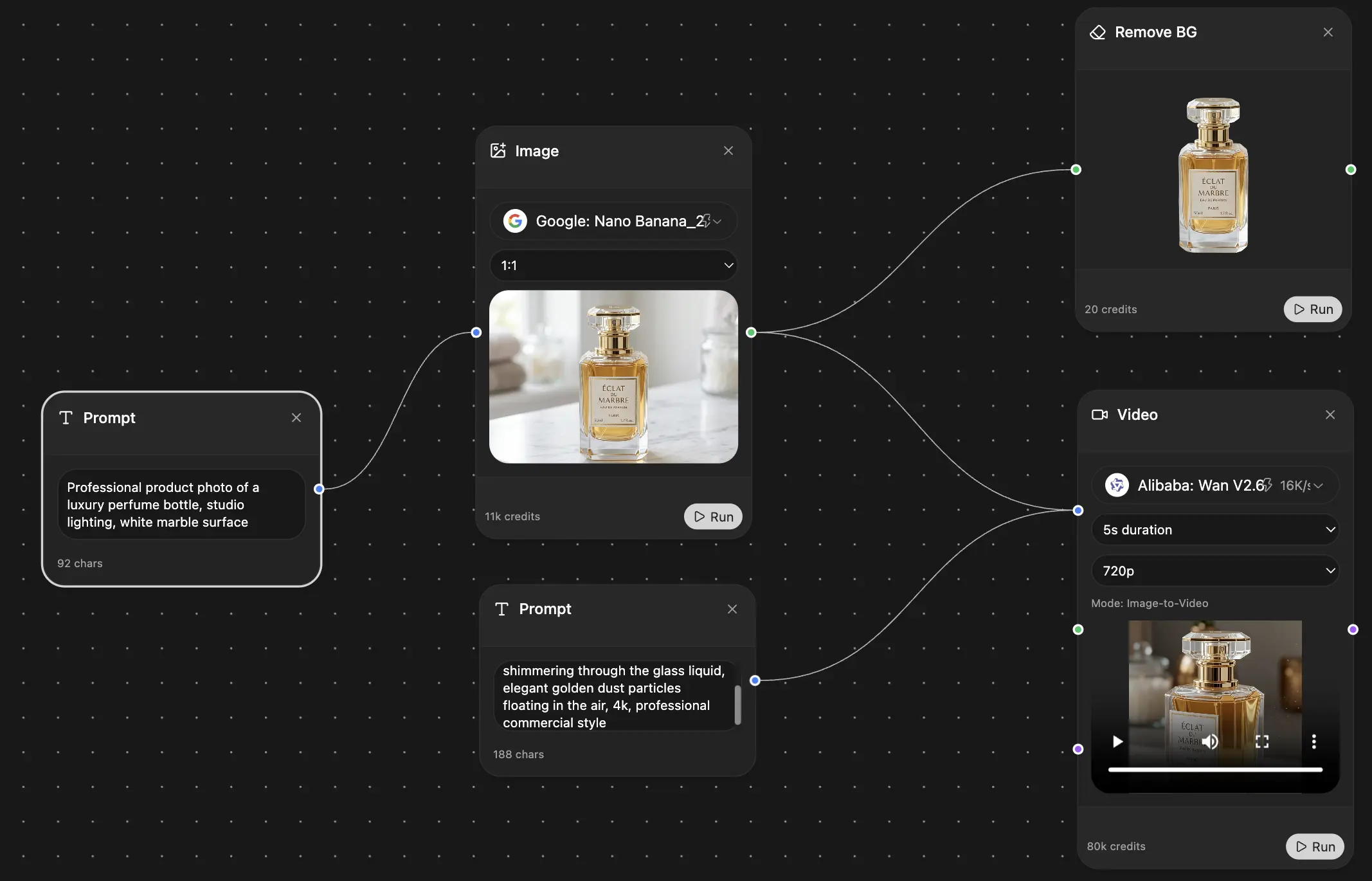
Chat, image, video & motion tools — side by side
Save hours of work and research
Transparent, High-Value Pricing
Trusted by teams at


Free
No credit card required
- 100 credits daily
- 3 AI models to try
- Basic AI chat
Plus
- 1,000,000 credits/month
- 25+ AI models — GPT, Claude, Gemini, Grok & more
- Agent Mode with web search, computer tools and more
- Creative Studio: image generation and video generation
- Project Library: chat with document, website and youtube, podcast generation, flashcards, reports and more
- Workflow Studio and FocusOS
Professional
- Everything in Plus, and:
- 2,100,000 credits/month
- Pro-exclusive models (Claude Opus, Grok 4, Sonar Pro)
- Motion Tools & Max Mode
- First access to latest features
- Access to additional offers
What Our Users Say
Great Tool after 2 months usage
"I love the way multiple tools they integrated in one platform. Going in the right direction."
— simplyzubair
Best in Kind!
"The quality of data and sheer speed of responses is outstanding. I use this app every day."
— barefootmedicine
Simply awesome
"The credit system is fair, models are perfect, and the discord is very responsive. Quite awesome."
— MarianZ
Great for Document Analysis
"Just works. Simple to use and great for working with documents. Money well spent."
— yerch82
Great AI site with accessible LLMs
"The organization of features is better than all the other sites — even better than ChatGPT."
— sumore
Excellent Tool
"It lives up to the all-in-one claim. All the necessary functions with a well-designed, easy UI."
— AlphaLeaf
Well-rounded platform with solid LLMs
"The team clearly puts their heart and soul into this platform. Really solid extra functionality."
— SlothMachine
Best AI tool I've ever used
"Updates made almost daily, feedback is incredibly fast. Just look at the changelogs — consistency."
— reu0691