Kinyarwanda to English Translation: The Ultimate Guide to Getting It Right
Tired of bad Kinyarwanda to English translations? This guide shows you a modern workflow using AI and human expertise to unlock the Rwandan market.
Getting a Kinyarwanda to English translation right is so much more than just a word-for-word swap. It’s about building a real bridge. For anyone trying to do business or share ideas in Rwanda, a clumsy translation is a locked door. But get it right? Well, that's your secret weapon.

Why Nailing Your Kinyarwanda Translation Is a Game-Changer
Ever dropped a Kinyarwanda phrase into a free online translator and gotten a result that just felt… off? You’re not the only one. It’s like trying to assemble IKEA furniture with a butter knife—you might technically finish, but the end result is wobbly and you definitely wouldn't trust it. When you're trying to connect with a real, dynamic market, the stakes are so much higher.
Rwanda is a nation on the rise, full of vibrant culture and a booming economy. Yet, there’s a massive language gap that most international businesses completely miss.
The Untapped Market Hiding in Plain Sight
Let's look at the numbers, shall we? Rwanda has a population of around 13.7 million people and a GDP of $13.3 billion. A staggering 93.2% of the population speaks Kinyarwanda as their native language.
Here's the kicker: fewer than 10% speak English fluently. This means the vast majority of digital content and business communications from the outside world simply doesn't connect. Think of it as a huge, waiting audience that most companies don't even know how to talk to.
This isn't a barrier; it's a massive opportunity for anyone willing to speak the local language authentically. Accurate Kinyarwanda to English translation services aren't just a "nice-to-have" anymore. They are a core strategy for:
- Actually Understanding Customers: How else can you analyze feedback, reviews, and social media chatter from Kinyarwanda speakers?
- Building Genuine Trust: Clear product info, support docs, and marketing that actually resonates with people is how you earn their business.
- Expanding Your Footprint: You can finally make your content accessible to a massive, underserved audience.
A bad translation doesn't just look sloppy—it can completely warp your message. Imagine your slogan about "fast, reliable service" gets translated as "rushed and careless." That's the kind of mistake that can kill a brand's reputation before it even gets started. Ouch.
A Smarter Way to Translate
So, how do you get it right without hiring a whole team of linguists or waiting weeks for a project to finish? The answer isn't just dumping your text into the first free tool you find. It’s about adopting a smarter workflow that blends the speed of AI with the nuance of a human expert. This is where a unified platform like really shines—you get a solid AI draft in seconds, then use built-in tools to polish it to perfection, all in one place.
It’s all about getting the meaning behind the words right. This is often called semantic analysis, and it's what separates a crude word-swap from a translation that truly connects with people. If you're curious about the tech, you can learn more about how AI deciphers meaning by checking out this great guide on .
Before we get into the nitty-gritty of the workflow, let's compare the old way of doing things with this new, smarter approach.
Kinyarwanda to English Translation Methods Compared
Here’s a quick look at old-school vs. modern AI-enhanced translation approaches.
As you can see, blending AI with a human touch gives you the best of both worlds: speed and quality. This is the workflow we're going to break down.
The Modern Workflow: AI Speed Meets Human Smarts
Let's get real for a second. The old copy-paste-and-pray method of translation is a recipe for disaster. Anyone who's tried it knows the results can be clunky, robotic, or just plain wrong. The secret to getting truly professional Kinyarwanda to English translations isn't about choosing between a machine and a human—it's about making them work together. This is the exact workflow the pros use.
It’s a simple but powerful idea: let AI handle the initial heavy lifting, then bring in a human expert for the critical finishing touches. This hybrid approach gives you the incredible speed of a machine with the nuance and cultural savvy that only a person can provide. It's truly the best of both worlds.
Let the Machine Do the Heavy Lifting
Your first move is to get a solid draft done quickly. This is where AI translation tools absolutely shine. Instead of staring at a blank page, you can generate a full translation of your Kinyarwanda text in just a few seconds.
We built for exactly this purpose. You can feed it pretty much anything—a Word document, a spreadsheet of customer feedback, or a simple email—and it will get to work.
The goal here isn't perfection. Not yet, anyway. Think of the AI as your incredibly fast junior assistant. It’s there to do about 80% of the work by correctly translating the basic words and sentence structures, saving you a massive amount of time.
If you're curious about how this technology is reshaping language work beyond just text, it's worth seeing how people are for learning and other tasks.
Adding the All-Important Human Touch
An AI's first draft is a fantastic starting point, but that's all it is. No matter how advanced the model, it's almost guaranteed to miss the subtle cultural context, unique brand voice, and idiomatic phrases that make content feel natural and authentic. This is where you need a human reviewer.
Ideally, this is a native Kinyarwanda speaker who also has a deep command of English. Their job isn't to start from scratch; it's to post-edit. They're scanning for very specific things:
- Cultural Fit: Does a translated greeting feel too formal? Or maybe not formal enough for the situation?
- Awkward Phrasing: Are there sentences that are technically correct but just sound clunky or unnatural to a native English speaker?
- Tone of Voice: Does the translation capture the right emotion? Is it supposed to be professional, friendly, urgent, or reassuring?
- Lost in Translation: Did the AI take an idiom literally? For instance, it might translate "guhangana n'ibibazo" as "to face problems," but a human editor can refine it to the more natural "tackling challenges" depending on the context.
This human review is your quality control. It's what turns a functional-but-flawed translation into a polished, professional piece of communication. Skipping this step is like baking a cake and forgetting the frosting—sure, it’s edible, but it’s not going to impress anyone.
This AI-plus-human workflow isn't just for text, by the way. The same principles are incredibly effective when you're working with audio files. You can see how this combo works for transcription in our guide on using .
Now, let's get into the specifics of how you can put this exact workflow into action with the tools right inside Zemith.
Putting Your Kinyarwanda Translations on Autopilot with Zemith
Okay, so we've established that the best translations come from blending AI's speed with a human's touch. Now, let's get practical and see what that actually looks like inside . This is where we stop talking theory and start building a real, repeatable workflow that turns a complex chore into a streamlined process.
Forget about bouncing between different tabs and tools. Think of this as your new mission control for getting Kinyarwanda to English translations done right.
From Document Upload to Instant AI Draft
First up, you need that initial draft. Instead of the old, tedious copy-and-paste routine, Zemith’s Document Assistant lets you just upload your Kinyarwanda file directly. It could be a PDF packed with customer feedback, a Word doc of meeting notes, or even an entire spreadsheet.
The moment you upload, the AI kicks in and starts translating. Within seconds, you have a complete English draft ready for you. It’s like having an assistant handle the heavy lifting, which frees you up to do the more important work of refining and polishing.
This simple workflow is really what it's all about: the AI gives you a running start, the human review ensures quality, and you end up with a polished final text.

The big idea here is simple: let the machine do what it's good at (speed and volume), so the human can do what they're good at (nuance and accuracy).
Create a Glossary for Perfect Consistency
Have you ever seen a key term translated three different ways in the same report? It’s jarring for the reader and just looks unprofessional. This is where a custom Glossary inside a Zemith Project becomes your best friend.
A Glossary is basically your rulebook. You tell the AI how certain words must be translated every single time. This is a lifesaver for things like:
- Brand names and specific product features.
- Technical jargon with very precise meanings in your industry.
- Unique Kinyarwanda terms like 'Umuganda' (community work) that you want to translate consistently, maybe as "Community Engagement Day" in a corporate report.
By setting up a Glossary, you’re basically telling the AI, "Hey, whenever you see this word, use this exact translation. No exceptions." This takes all the guesswork out of the equation and locks in your brand voice and technical accuracy.
If you find yourself working on very specific projects, it’s even worth looking into how you can that's pretrained on your glossaries and style.
Polish and Perfect with the Smart Notepad
With your AI draft and glossary in place, it's time for the human-in-the-loop part of the process. This is the post-editing stage, where you’ll fine-tune the AI’s work, and Zemith's Smart Notepad is designed specifically for this.
Think of it as your interactive editing workbench. You can see the original Kinyarwanda, the AI's English translation, and your notes all in one place. As you go, you can tweak sentences, adjust the tone, and make sure the translation follows your glossary rules.
If a sentence feels a little robotic or clumsy, you can highlight it and ask the AI for a few different ways to rephrase it. It’s less like editing a static document and more like a collaboration between you and the machine, all happening in a single, clean workspace. This lets you work so much faster without constantly toggling between different windows and apps.
Dodging Common Kinyarwanda Grammar Traps
Let's get into the nitty-gritty. This is where automated tools often get spectacularly confused, and where a sharp human eye makes all the difference. Kinyarwanda's grammar is beautiful and logical, but its structure is a world away from English. This is where a free translator can take a perfectly good sentence and turn it into gibberish.
Think of this as your field guide to spotting those common blunders. Once you know what to look for, you can clean up a machine-generated draft in minutes and make your translations far more accurate from the start.
The Noun Class Puzzle
This is the big one. If you only learn to spot one type of error, make it this. Kinyarwanda is built on a system of noun classes, which is the #1 source of hilarious (and embarrassing) mistakes in automated translations.
In English, we have simple pronouns like "he," "she," and "it." Kinyarwanda is more complex; the prefix on a verb must match the class of the noun it refers to. A machine often doesn't get this. It might see the word for a person (umuntu) and the word for a chair (intebe) and apply the same generic logic to both. The result? Pure nonsense.
Here’s a classic machine-only translation fumble:
- What the AI spits out: "The elder is respected. It is wise."
- What a human understands: "The elder is respected. He/She is wise."
This is a dead giveaway of a raw, unedited translation. When you're post-editing in a tool like , you can catch these instantly in the Smart Notepad. It’s a quick fix that saves you from accidentally referring to a community leader as an inanimate object.
The "Muraho" vs. "Bite" Dilemma
A word-for-word translation of "Muraho" is "Hello." Simple, right? Not so fast. "Muraho" is a formal or plural "hello." You'd use it to greet a group of people, an elder, or your boss. For a friend your own age, you’d probably just say "Bite."
Using the wrong one can make you sound stuffy and formal when you’re trying to be friendly, or worse, overly familiar and disrespectful. It’s a tiny detail that carries huge cultural weight.
Understanding the difference between 'Muraho' and 'Bite' is the first step toward a translation that doesn't just speak the language, but also understands the culture. It’s the kind of detail a human reviewer nails.
This kind of nuanced work is in high demand. The global translation services market is projected to grow from $27.78 billion in 2025 to $28.86 billion in 2026, with a huge part of that growth driven by the need for high-quality, localized content that AI alone can't produce. In places where English proficiency is low, like Rwanda, getting this cultural translation right is the only way to build a real connection.
When Literal Translations Go Wrong
Ah, idioms. They're the final boss of translation. Trying to translate them word-for-word is a guaranteed recipe for a nonsensical mess.
Take the Kinyarwanda phrase "gira so yose." A machine might literally translate this as "have your father all," which means absolutely nothing in English. The real meaning? "Good luck!"
This is where a hybrid workflow is so powerful. An AI tool might give you that literal first draft, but a human editor immediately flags it as an idiom and supplies the correct, natural-sounding English equivalent. It's a perfect partnership between AI's processing speed and a person's cultural intuition. These kinds of challenges aren't unique to Kinyarwanda, either—as you can see in our guide on , every language has its own set of beautiful, untranslatable quirks.
Your Go-To Kinyarwanda Business Phrasebook
If you're doing business in Rwanda, the standard tourist phrases will only get you so far. To really connect and communicate clearly, you need a vocabulary that's built for professional settings, from marketing copy to client emails.
This isn't just a list of words. Think of it as a starter kit for your own custom Glossary in Zemith. Each phrase comes with notes on how and when to use it, based on real-world experience.

Essential Greetings and Pleasantries
How you start a conversation sets the tone for everything that follows. Using the right greeting shows respect and immediately makes you look more professional. The opening line is just as important in Kinyarwanda as it is in a business email—something we cover in our guide on .
- Muraho / Mwaramutse - Hello / Good morning. Muraho is your go-to formal hello, appropriate for any time of day. Mwaramutse is specifically for the morning and adds a nice touch of polish.
- Amakuru? - How are you? This is the standard, friendly way to ask how someone is doing.
- Ni meza - I'm fine. The classic, positive reply.
- Murakoze (cyane) - Thank you (very much). Adding cyane gives your thanks more weight. It's always a good move.
Essential Business & Daily Phrases
To help you get started, here's a quick reference table with some of the most common phrases you'll encounter in business and marketing. Getting these right is the first step toward creating clear, consistent content for a Rwandan audience.
This table is a great foundation. As you translate more content, you'll naturally build on this list, creating a powerful resource for your entire team.
Understanding "Yes" and Agreement
This seems simple, but I've seen it trip people up. Kinyarwanda has a few different ways to say "yes," and each one carries a slightly different nuance.
- Yego - This is the direct, unambiguous "Yes." Use it when you need to give a clear confirmation.
- Ego - This is more of a casual "Yeah" or "Yep." It's perfectly fine for informal chats but stick with Yego for anything formal.
- Nibyo - This translates to "That's right" or "It is so." It’s an excellent way to affirm something someone just told you, showing you're on the same page.
Nailing these subtle differences is what elevates your translation from just "correct" to genuinely natural and human.
Your Burning Questions about Kinyarwanda Translation Answered
It's natural to have a few questions popping up as you get ready to tackle a new language. That's a good sign—it means you're thinking critically about getting it right. Let's walk through some of the most common things people ask about translating Kinyarwanda.
Can I just use a free online translator?
For a quick check on a single word? Sure, maybe. But for anything that actually matters—like your marketing copy, legal docs, or customer emails—you're really rolling the dice.
Free tools are notorious for mangling Kinyarwanda's grammar and have zero understanding of cultural context. This can lead to some cringeworthy mistakes that can seriously damage your brand's reputation. It’s like trying to build a solid house with a plastic hammer. For professional work, you need professional tools.
A much smarter approach is using an advanced platform like for the initial heavy lifting, followed by a final polish from a human expert. That's how you get a translation that's rock-solid, not wobbly.
How do I find a good human reviewer?
This is the crucial final step. You're not just looking for anyone; you need a native Kinyarwanda speaker who is also a pro in English. Even better if they have some background in your specific field, whether that's tech, tourism, or public health.
Freelance sites can be a starting point, but I'd suggest digging a little deeper. Try connecting with Rwandan business networks or cultural organizations. A great example is the in North Carolina, which maintains a network of skilled interpreters. The goal isn't just to find a linguist, but someone who gets the world your content lives in.
Here's the one thing you absolutely must remember: context is everything. Kinyarwanda is an incredibly rich, context-heavy language. A direct, word-for-word translation almost never works. You have to consider the situation, the speakers, and the cultural vibe. That’s what separates a translation that's merely "correct" from one that genuinely connects with people.
Which is more important: Kinyarwanda to English or the other way around?
That's a fantastic question, and the simple answer is: it totally depends on what you're trying to do. It’s not a one-or-the-other deal; you really need both to do business well.
Kinyarwanda to English is all about listening to the market. This is how you'll make sense of customer feedback, understand local news, and review documents coming from partners in Rwanda.
English to Kinyarwanda is how you speak to that market. This is for your ad campaigns, website copy, support articles, and any other message you want to land perfectly with a local audience.
Think of it as a real conversation. You can't have a good one if you're only listening or only talking. You need both.
Ready to move past the guesswork and start translating with real confidence? The entire AI-powered workflow we've talked about—from instant drafts and glossaries to smart editing features—is built right into Zemith. See for yourself how simple managing your Kinyarwanda to English projects can be. .
Explore Zemith Features
Every top AI. One subscription.
ChatGPT, Claude, Gemini, DeepSeek, Grok & 25+ more


Always on, real-time AI.
Voice + screen share · instant answers
What's the best way to learn a new language?
Immersion and spaced repetition work best. Try consuming media in your target language daily.
Voice + screen share · AI answers in real time
Image Generation
Flux, Nano Banana, Ideogram, Recraft + more

Write at the speed of thought.
AI autocomplete, rewrite & expand on command
Any document. Any format.
PDF, URL, or YouTube → chat, quiz, podcast & more
Video Creation
Veo, Kling, Grok Imagine and more

Text to Speech
Natural AI voices, 30+ languages
Code Generation
Write, debug & explain code
Chat with Documents
Upload PDFs, analyze content
Your AI, in your pocket.
Full access on iOS & Android · synced everywhere
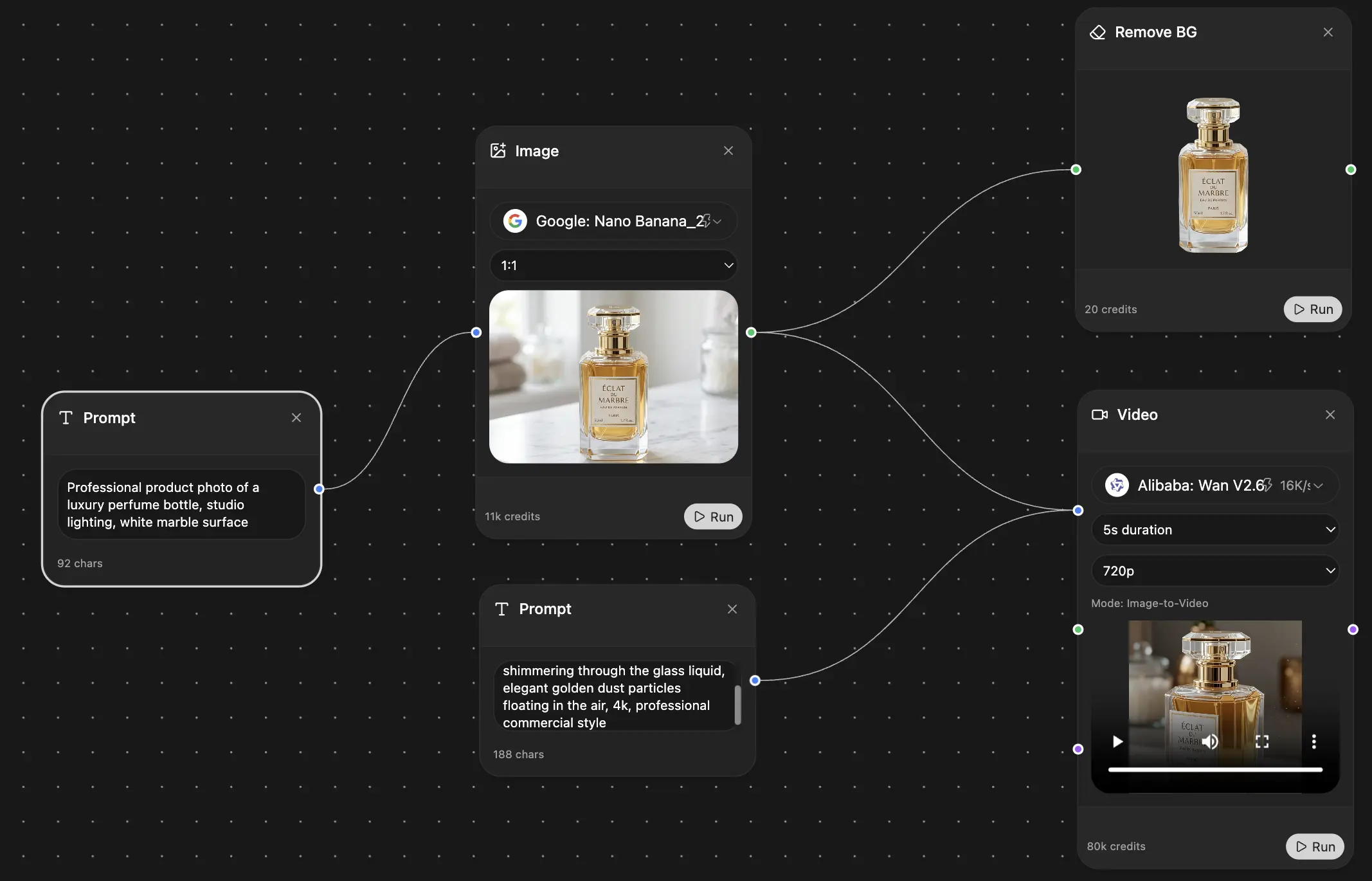
Your infinite AI canvas.
Chat, image, video & motion tools — side by side
Save hours of work and research
Transparent, High-Value Pricing
Trusted by teams at


Free
No credit card required
- 100 credits daily
- 3 AI models to try
- Basic AI chat
Plus
- 1,000,000 credits/month
- 25+ AI models — GPT, Claude, Gemini, Grok & more
- Agent Mode with web search, computer tools and more
- Creative Studio: image generation and video generation
- Project Library: chat with document, website and youtube, podcast generation, flashcards, reports and more
- Workflow Studio and FocusOS
Professional
- Everything in Plus, and:
- 2,100,000 credits/month
- Pro-exclusive models (Claude Opus, Grok 4, Sonar Pro)
- Motion Tools & Max Mode
- First access to latest features
- Access to additional offers
What Our Users Say
Great Tool after 2 months usage
"I love the way multiple tools they integrated in one platform. Going in the right direction."
— simplyzubair
Best in Kind!
"The quality of data and sheer speed of responses is outstanding. I use this app every day."
— barefootmedicine
Simply awesome
"The credit system is fair, models are perfect, and the discord is very responsive. Quite awesome."
— MarianZ
Great for Document Analysis
"Just works. Simple to use and great for working with documents. Money well spent."
— yerch82
Great AI site with accessible LLMs
"The organization of features is better than all the other sites — even better than ChatGPT."
— sumore
Excellent Tool
"It lives up to the all-in-one claim. All the necessary functions with a well-designed, easy UI."
— AlphaLeaf
Well-rounded platform with solid LLMs
"The team clearly puts their heart and soul into this platform. Really solid extra functionality."
— SlothMachine
Best AI tool I've ever used
"Updates made almost daily, feedback is incredibly fast. Just look at the changelogs — consistency."
— reu0691