Image To LaTeX: How To Convert Math In Seconds (Without Losing Your Mind)
Tired of manual typing? This guide shows you how to use an image to LaTeX converter for instant results. Learn the best tools and workflows to save time.
We’ve all been there. Staring at a dense page of equations in a textbook or a scribbled formula on a whiteboard, knowing you have to painstakingly type every single fraction, integral, and Greek letter into your LaTeX document. It's a soul-crushing, mind-numbing task that has probably fueled more late-night coffee runs than actual research breakthroughs.
Thankfully, that’s not the world we live in anymore. Modern image to latex converters can take a picture of that math and spit out clean, editable code in seconds. And with a unified AI platform like , the whole process is surprisingly smooth and, dare I say, even a little bit fun.
Why An Image-To-LaTeX Workflow Is A Game Changer

Remember the "good old days" of manual transcription? Me neither, because they were terrible. That feeling of dread when you faced a page full of equations was a rite of passage for every STEM student, researcher, and engineer. It was a tedious chore that stole hours you could have spent on actual research, debugging, or just enjoying a well-deserved coffee.
But it’s not just about speed. It’s a massive drain on your focus. Every minute spent triple-checking if your \frac{} is nested correctly is a minute you aren't thinking about the actual problem you're trying to solve. This is exactly the kind of friction modern AI tools are designed to eliminate, so you can work on what actually matters.
The Real Cost of Typing It All Out
Let's do some quick, painful math. If you spend just two hours a week manually transcribing equations, that adds up to over 100 hours per year. That's more than two full workweeks spent on a task that can now be automated in a few clicks. These tools literally give you your time back. Who couldn't use an extra two weeks of vacation?
This whole field has exploded, moving from academic experiments just a few years ago to the powerful tools we have today. In 2017, early deep learning models were just starting to show promise. Now, that same foundational tech powers platforms like Zemith, letting you convert anything from whiteboard sketches to textbook screenshots into perfect LaTeX. Understanding this is part of a bigger picture in how we're starting to use to offload the repetitive work and focus on creative problem-solving.
From Clunky Tools To A Single Workspace
The real magic here isn’t just the conversion itself—it's the integrated workflow. Not long ago, you'd have to juggle multiple apps: one to scan the document, another to run the OCR, and a third to edit the resulting code. It was a clunky, disjointed process that often felt like more trouble than it was worth.
An integrated AI workspace like Zemith brings this entire sequence into one place. You can upload an image, have a Document Assistant generate the LaTeX, and then immediately ask a Coding Assistant to refine it, all without ever leaving the platform. This is the difference between duct-taping three different apps together and driving a finely tuned machine.
This represents a fundamental shift in how we create technical documents. It’s not just about saving time; it's about reclaiming your mental energy for the work that truly matters. This approach is a perfect example of the trend toward , which focuses on automating the tedious extraction and formatting of information.
How To Prep Your Images For Perfect Conversion

You’ve probably heard the old saying "garbage in, garbage out." Well, it's brutally honest when it comes to image to latex conversion. Before you even think about tossing an image at an AI, a little prep work can be the difference between getting perfect LaTeX code and a jumbled mess that takes forever to fix.
Think of it as a five-minute pre-flight check that saves you thirty minutes of debugging later. You’re asking a machine to read, and making its job easier is the fastest way to get what you want. This is especially true when you're snapping photos of whiteboards or scribbled notebook pages. I've seen it all—blurry pics from across a lecture hall, a massive shadow from someone's head covering half the formula... you name it. The AI isn't a mind reader (yet!).
Getting The Perfect Shot
Let's start with the basics of how to get an image ready for an image to LaTeX converter. Your phone is a surprisingly good scanner, but only if you know how to use it.
- Lighting is everything. Get into a spot with bright, even light. Natural light from a window is usually your best bet. The biggest enemies here are harsh shadows and glare, which can completely obscure crucial symbols.
- Get straight on. Don't take the photo from an angle. Shoot directly in front of the equation. Any skew or perspective will distort the characters, making them nearly impossible for the AI to identify correctly.
- Fill the frame. Get close enough for the equation to take up most of the screen, but be careful not to clip off the edges. This gives the software the highest possible resolution to work with.
Honestly, if you're pulling from a PDF or a website, just take a crisp, high-resolution screenshot. It's already perfectly flat and lit, which means you get to skip all the real-world photography headaches.
Quick And Dirty Image Cleanup
Got your image? Great. A few seconds in any basic photo editor can boost your accuracy by a huge margin. You don’t need Photoshop; the editor built into your phone or computer will do just fine.
The goal is simple: isolate the equation and make it pop. Your three best friends are cropping, contrast, and sharpening. A clean input is absolutely non-negotiable for getting clean output.
First, crop out everything that isn't the equation. I’m talking about your thumb in the corner, the coffee stains on the desk, or any other random doodles. This forces the AI to focus only on what matters. If you've got a really busy background, you might even want to to make the equation stand out even more.
Next, crank up the contrast. You're aiming for bold, dark text on a clean, bright background. This one tweak does wonders for helping the tool distinguish symbols from empty space. And if you're dealing with a large file, it’s a good idea to so they upload quickly. There's no point in sacrificing the clarity you just worked for with a slow, clunky upload.
Choosing The Right Image To LaTeX Converter
Let's be honest—the internet is packed with tools that promise to turn your images into perfect LaTeX code in a single click. But how many of them actually deliver? Trying to find the best converter can feel like a chore in itself, leaving you with a dozen browser tabs open and not much to show for it.
You've got standalone apps, open-source projects on GitHub, and slick web services, each with its own quirks and learning curves.
The real challenge isn't just about finding the most accurate converter. It's about finding the one that fits your workflow. Are you just trying to grab a single equation for your homework, or are you wrangling dozens of them for a massive research paper? The right tool for one job is often the wrong tool for another.
The Three Main Flavors Of Converters
When you start digging in, you'll find that these tools generally fall into three camps. Each one has its pros and cons, depending on what you need and how much you like to tinker.
- Standalone Apps & Web Services: These are your point-and-shoot options. You upload an image, and it spits out some LaTeX. They're fantastic for quick, one-off conversions but can become a real bottleneck. You’ll spend a lot of time copying from the website, pasting into your editor, and then switching back and forth to fix the inevitable mistakes.
- Open-Source Projects: If you're a bit more adventurous, you can find some incredible open-source projects on . These often have the best accuracy and can be customized or scripted into your own setup. The trade-off? They usually require some comfort with the command line and a bit of initial setup.
- Integrated AI Platforms: This is where things get really interesting. An all-in-one workspace like Zemith doesn't just offer a single tool; it provides a complete environment. You're no longer juggling different apps—you’re working in one fluid, connected space.
The accuracy of modern open-source models is truly impressive. Some have shattered early performance benchmarks, hitting a BLEU score of 0.88 and token accuracy of 0.60. For an automated system, that's incredibly precise and drastically cuts down on the time you spend manually correcting errors. What was once a pipe dream is now a practical reality.
Before we dive deeper into workflows, it's helpful to see how these tools stack up at a glance.
Image to LaTeX Tool Feature Showdown
Here's a quick comparison to help you decide which type of tool might be the best fit for your projects.
Ultimately, there's no single "best" tool, only the best tool for the task at hand. This table should give you a starting point for figuring out what you actually need.
Why An Integrated Workflow Is A Game-Changer
Think about the old way of doing things. You find an equation in a PDF, take a screenshot, upload it to a random web converter, copy the generated LaTeX, and paste it into your editor. Then you compile it, only to find a syntax error. Now you have to start the whole messy cycle all over again. It’s a classic productivity killer.
Now, picture this instead: you upload your image directly into your Zemith workspace. You ask the Document Assistant to generate the LaTeX. Right there, you can pass that code snippet to the Coding Assistant to refine it, check for errors, or even ask it to explain a specific part of the syntax. It all happens in the same window.
The goal isn't just to find a tool; it's to build an efficient, frustration-free workflow. An integrated platform like Zemith turns a multi-step, multi-app headache into a single, seamless action.
This approach really shines when you're dealing with more than just images. What if your formulas are buried deep inside a 50-page PDF? You're not just converting an image anymore; you're also extracting content. A platform that can handle both text and image conversion is a huge advantage. If you're tackling documents like that, our guide on has some great tips on those broader extraction challenges.
In the end, it comes down to your situation. A student on a tight budget might be perfectly happy using open-source tools for occasional help. But for a professional researcher, academic, or developer, the productivity boost from an integrated platform like Zemith is hard to ignore. It’s all about choosing the path of least resistance so you can focus on your actual work, not fight with your tools.
The Ultimate Image To LaTeX Workflow (Step-by-Step)
Alright, theory is great, but let's get our hands dirty. This is your practical guide for turning any equation image—whether it’s a quick phone snap of your notebook, a PDF snippet, or a screenshot—into clean, ready-to-use LaTeX. We'll be using an integrated workspace like Zemith, so you can finally stop juggling a dozen different browser tabs.
This is the exact workflow I use to save a ton of time and, more importantly, a ton of frustration.
The Upload and First Pass
First things first: you need to get your image into the system. If you're using a platform like Zemith, this is as simple as dragging and dropping the file into your project. It doesn't matter if it's a .jpg from your phone or a .png you just screenshotted.
Once it's uploaded, you can put the AI Assistant to work. You don't need a fancy prompt; just be direct. I usually start with something like this:
"Extract the main formula from this image as LaTeX code."
In a few seconds, the AI will spit out its best guess. It's usually a fantastic starting point, but don't expect perfection on the first try. Think of it as a solid first draft that gets you 80% of the way there.
The immediate convenience here is a game-changer. Manually coding LaTeX can easily eat up 20-30% of a researcher's time on a paper heavy with formulas. Tools like really paved the way, proving there was a huge appetite for this kind of instant conversion. What’s great about a tool like Zemith is that it builds this capability right into the rest of your workflow, making it that much more powerful.
Instant Verification and Refinement
This is where working in a single, integrated environment really pays off. Instead of copying the generated code, pasting it into a separate LaTeX editor, and compiling just to see if it worked, you can do it all in one spot.
Here’s a quick look at what this kind of integrated workspace feels like on Zemith.
You’ve got your AI chat, your code editor, and your live preview all on one screen. The real magic happens when you take that AI-generated LaTeX and drop it straight into the live-preview editor, which is a key part of Zemith’s Coding Assistant.
You see the rendered equation immediately. Now you can ask the important questions:
- Did the AI read a
5as anS? - Is that supposed to be a
vor a\nu? - Are my fractions nested the right way?
This instant feedback loop is everything. You can spot errors in seconds and fix them right there, in the same window. No more bouncing between apps, recompiling, and losing your train of thought. If you want to see more on how this works under the hood, we have a great guide on using that goes deeper.
Common Post-Conversion Fixes
Even with the best tools, you're going to run into a few common hiccups, especially if your original image was a bit messy. Here are the issues I see most often and how to deal with them.
Matrix Mayhem: AI can sometimes get confused with the alignment in matrices or multi-line equations. You might need to go in and manually adjust the
&alignment characters or switch the environment frompmatrixtobmatrixto get the right kind of brackets.Symbol Slip-ups: Weird Greek letters or less common math symbols are prime candidates for misidentification. I always keep a good LaTeX symbol reference sheet bookmarked for quick lookups. It’s a lifesaver.
Bracket Blunders: This is a classic. Mismatched or incorrectly sized brackets can break the whole equation. Just make sure every opening
\left(has a closing\right)and that they’re wrapping the right expressions.
What's cool about a platform like Zemith is that the Coding Assistant can help you debug, too. If you're staring at a broken equation, you can just ask the AI, "Why is this matrix not rendering correctly?" and it will often pinpoint the exact syntax error for you. It’s like having a coding buddy looking over your shoulder.
This simple loop—upload, generate, and refine—is what makes image-to-LaTeX a genuinely useful tool you'll actually want to use every day.
How to Fix Common LaTeX Conversion Errors
Okay, so you’ve just run an image-to-LaTeX converter, and the code it spit out is... well, a mess. Don't worry. This happens all the time. While AI is a fantastic starting point, it’s rarely perfect right out of the box. Think of it as a junior assistant—it does the heavy lifting, but you still need to do the final review.
Let's be real, the most common conversion problems are often tiny syntax errors that can break your entire document. The good news is that once you learn to spot them, fixing them becomes second nature.
This is where the "refine" step in the workflow comes in. It’s arguably the most important part of the whole process.

The refining stage is where you turn that 90% correct code into something that actually compiles and looks right.
Common Culprits and Quick Fixes
Most of the errors you'll encounter fall into just a few predictable buckets. The usual suspects are characters that look visually similar, like a v getting mistaken for the Greek letter nu (\nu), or the number 1 being swapped with a lowercase l. Simple syntax goofs, like a single missing curly brace {}, are also incredibly common.
Here are the issues I see most often when converting math images to LaTeX:
- Symbol Slip-ups: The AI can easily get confused by similar-looking characters. Is that a plain
xor the multiplication symbol\times? You'll have to visually check the output against your original image to catch these. - Bracket Blunders: A forgotten
}or)will almost always cause the compiler to have a meltdown. Scan for mismatched pairs, especially in complex fractions or nested expressions. A good rule of thumb: every\left(needs a corresponding\right). - Fraction Frustration: The
\frac{numerator}{denominator}structure is a classic failure point. An AI might miss a brace, turning\frac{a+b}{c}into\frac{a+bc}—a completely different mathematical statement. - Matrix Mayhem: Matrices are notoriously tricky for automated tools. It’s common for the AI to miscount columns or fumble the
&alignment characters. More often than not, you just need to pop in or delete an ampersand to get everything back in line.
The goal here isn't just about fixing the one broken equation in front of you. It's about training your eyes to spot these common patterns. The more you do it, the faster you'll get, and the less you'll have to rely on trial and error.
A fantastic way to streamline this entire process is to use an environment with a live preview. For example, Zemith’s Coding Assistant can show you the rendered equation in real-time. You just paste in the garbled LaTeX, and you'll immediately see where it breaks, making it so much easier to hunt down the error.
You can even ask the assistant something like, "Why won't this code compile?" and it will often pinpoint the typo for you. This same verification principle is just as useful when you're trying to turn a for web projects.
Common Questions (and Honest Answers) About Image to LaTeX
When people first hear you can turn a picture of an equation into clean LaTeX, a few questions always pop up. It almost sounds too good to be true, so let's tackle the most common ones head-on.
So, How Accurate Is It, Really?
This is what everyone wants to know, and the honest answer is: it depends entirely on the image quality and the tool you're using.
Give a good AI converter a sharp, clean screenshot of a printed equation, and you can expect 98%+ accuracy. It’s genuinely impressive. For neat, legible handwriting, that number is still around 90%, which is a huge time-saver.
But if you’re feeding it a blurry, low-light photo snapped from the back of a lecture hall? The results are going to be a mess. This is exactly why prepping your image first is the single most important thing you can do. A quick crop and a little contrast boost can make a night-and-day difference.
Can It Actually Handle My Messy Handwriting?
Yes, it absolutely can, and this is where the magic really happens. Modern tools, especially ones integrated into platforms like , have been trained on massive datasets of handwritten math. I've thrown some of my own pretty gnarly scribbles at it and have been genuinely surprised by the output.
The key is always clarity. Neat, well-spaced notes will always convert better than a frantic scrawl on a crumpled napkin. But don't just assume your handwriting is too messy—give it a shot. The worst that can happen is you have to fix a few symbols yourself. What have you got to lose?
Should I Bother with a Paid Tool, or Is Free Good Enough?
This really comes down to your workflow. If you just need to convert a single equation once in a blue moon, a free online tool will work just fine. They're perfect for that occasional, one-off task.
However, if you're a student, a researcher, or anyone who lives in LaTeX, a paid, integrated platform is a game-changer. It's not just about the conversion; it's about the entire workflow.
With a tool like Zemith, you get the image conversion, the code editor, and the AI assistant all in one spot. The productivity gain from not having to constantly copy, paste, and switch between different apps easily pays for itself. It’s the difference between owning a single screwdriver and having a complete toolbox ready for any job.
Ready to see how this fits into your own work? Zemith builds powerful image-to-LaTeX conversion right into an all-in-one AI workspace. You can upload your equations, get clean code, and then instantly refine it with our Document and Coding Assistants. and start getting your time back.
Explore Zemith Features
Every top AI. One subscription.
ChatGPT, Claude, Gemini, DeepSeek, Grok & 25+ more


Always on, real-time AI.
Voice + screen share · instant answers
What's the best way to learn a new language?
Immersion and spaced repetition work best. Try consuming media in your target language daily.
Voice + screen share · AI answers in real time
Image Generation
Flux, Nano Banana, Ideogram, Recraft + more
Write at the speed of thought.
AI autocomplete, rewrite & expand on command
Any document. Any format.
PDF, URL, or YouTube → chat, quiz, podcast & more
Video Creation
Veo, Kling, Grok Imagine and more

Text to Speech
Natural AI voices, 30+ languages
Code Generation
Write, debug & explain code
Chat with Documents
Upload PDFs, analyze content
Your AI, in your pocket.
Full access on iOS & Android · synced everywhere
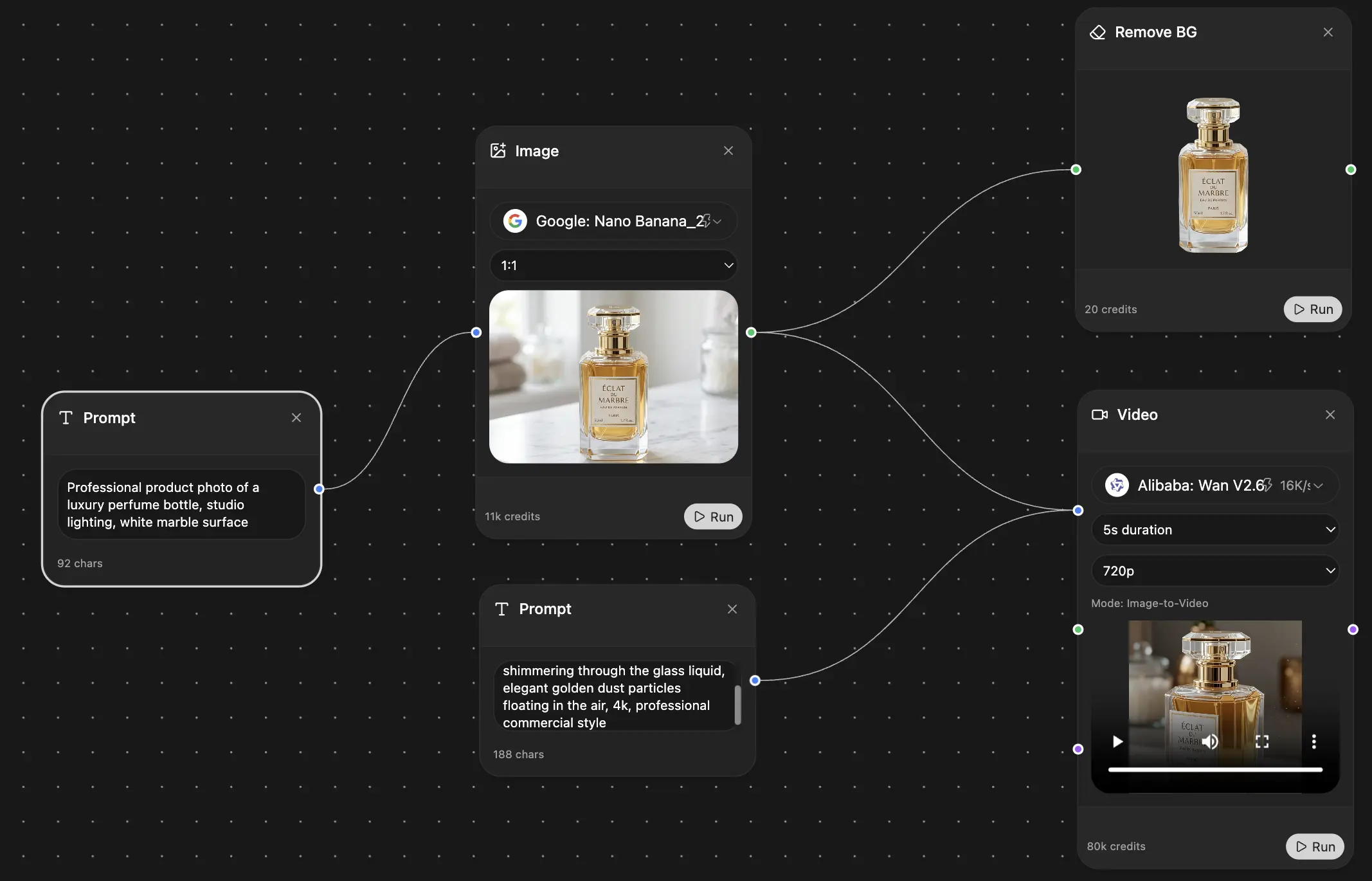
Your infinite AI canvas.
Chat, image, video & motion tools — side by side
Save hours of work and research
Transparent, High-Value Pricing
Trusted by teams at


Free
No credit card required
- 100 credits daily
- 3 AI models to try
- Basic AI chat
Plus
- 1,000,000 credits/month
- 25+ AI models — GPT, Claude, Gemini, Grok & more
- Agent Mode with web search, computer tools and more
- Creative Studio: image generation and video generation
- Project Library: chat with document, website and youtube, podcast generation, flashcards, reports and more
- Workflow Studio and FocusOS
Professional
- Everything in Plus, and:
- 2,100,000 credits/month
- Pro-exclusive models (Claude Opus, Grok 4, Sonar Pro)
- Motion Tools & Max Mode
- First access to latest features
- Access to additional offers
What Our Users Say
Great Tool after 2 months usage
"I love the way multiple tools they integrated in one platform. Going in the right direction."
— simplyzubair
Best in Kind!
"The quality of data and sheer speed of responses is outstanding. I use this app every day."
— barefootmedicine
Simply awesome
"The credit system is fair, models are perfect, and the discord is very responsive. Quite awesome."
— MarianZ
Great for Document Analysis
"Just works. Simple to use and great for working with documents. Money well spent."
— yerch82
Great AI site with accessible LLMs
"The organization of features is better than all the other sites — even better than ChatGPT."
— sumore
Excellent Tool
"It lives up to the all-in-one claim. All the necessary functions with a well-designed, easy UI."
— AlphaLeaf
Well-rounded platform with solid LLMs
"The team clearly puts their heart and soul into this platform. Really solid extra functionality."
— SlothMachine
Best AI tool I've ever used
"Updates made almost daily, feedback is incredibly fast. Just look at the changelogs — consistency."
— reu0691