10 Best Image Prompt Generators to Use in 2026
Tired of bad AI art? We tested the 10 best image prompt generator tools for 2026. Create stunning visuals with detailed, model-specific prompts today.
You type “majestic cyber-dragon over neon Tokyo,” hit generate, and get a rubbery lizard with too many legs hovering above a streetlight that looks like it melted. That usually isn't the model failing on its own. It's a fuzzy prompt producing a fuzzy result.
Good image prompt generators fix that by turning a half-formed idea into an actual visual brief. They help you specify subject, style, composition, lighting, lens, mood, and the details that many models respond to better when they appear in a clear order. In practice, that's the difference between “futuristic dragon city thing” and a prompt that gives Midjourney, SDXL, Flux, or DALL.E something useful to work with.
They also save time. A lot of creators are still juggling one tool for prompt building, another for image generation, a third for reference analysis, and a notes app full of prompt scraps. That setup works until it doesn't. If you want a better sense of what strong prompts look like across styles and use cases, these are a good place to calibrate your eye.
If you want extra inspiration before diving in, has some useful examples.
Some generators are great for beginners who need structure. Others are better for power users trying to reverse-engineer a reference image or tune prompts for a specific model. The useful ones reduce guesswork. The great ones also fit into a real workflow, which matters a lot if you're tired of hopping between single-purpose apps.
1. Zemith

Zemith is the one I'd put in front of anyone who's tired of cobbling together five tabs, three subscriptions, and one cursed notes file called “final_prompt_v27_REAL.” It's an all-in-one AI workspace, not just a prompt widget. You can work across a wide stack of models, generate images, edit them, analyze references, switch workflows, and keep the rest of your research and production work in the same place.
That matters because prompt work rarely lives on its own. You generate a prompt, compare model outputs, adjust wording, pull in a reference image, check a document, maybe rewrite the creative brief, and then hand the result to a teammate. Zemith fits that messier real-world process better than single-purpose prompt toys.
Why Zemith stands out
A lot of image prompt generator tools do one thing well and then dump you back into the app-hopping Olympics. Zemith is built for people who want one workspace for text, image, video, documents, code, and collaboration. It combines access to major models, image generation and editing, document chat, AI notepad tools, coding assistance, whiteboarding, and mobile apps in one subscription.
For creators, marketers, researchers, and product teams, the killer feature is consolidation. If you're already bouncing between prompt tools, image apps, chat assistants, and note systems, Zemith cuts the friction. It's less “one more AI tool” and more “finally, one dashboard that behaves like an adult.”
Practical rule: Use an all-in-one workspace when your prompt work is tied to campaigns, research, or team reviews. Use a single-purpose builder only if your needs are narrow and repetitive.
Zemith is also a strong fit if you want examples to reverse-engineer. Their guide to is useful because it shows the kind of structured phrasing that gets cleaner outputs across different models.
The real trade-offs
The upside is obvious: fewer subscriptions, faster switching, less context loss. The downside is also real. Pricing is most attractive on annual billing, and heavy use of premium models depends on credits. If you burn through top-tier generations all day, you'll want to watch usage instead of pretending credits are a magical woodland creature.
A second caveat is enterprise due diligence. If your organization has strict procurement or compliance requirements, verify the security and data-handling details directly.
What I like most is that Zemith doesn't trap prompt generation in a tiny box. It treats prompting as part of a larger creative workflow, which is exactly how most professionals work.
- Best for multi-tool fatigue: Strong choice if you're tired of paying separate bills for chat, image, video, doc analysis, and note tools.
- Best for collaborative work: Useful when prompts need revisions, references, and handoff instead of solo tinkering.
- Watch the credits: Great value for broad use, but power users should keep an eye on premium model consumption.
Use if you want one place to generate, refine, organize, and ship.
2. PromptoMANIA

PromptoMANIA is the friendly on-ramp. It's browser-based, free, and doesn't make you create an account just to click a few style options and copy a prompt. For beginners, that's a relief. Nobody wants a full onboarding funnel just to ask for “retro sci-fi portrait with dramatic rim light.”
Its strength is structure. If you've never learned how to organize an image prompt, this tool gently nudges you into describing style, subject, mood, and visual cues instead of typing a mushy sentence and hoping Stable Diffusion reads your mind.
Where it helps most
PromptoMANIA is especially useful if you're still learning prompt anatomy. For AI images, one effective structure is to use short comma-separated phrases in this order: image style, subject, action, physical characteristics, clothes, setting, and additional details, with the most important elements first, as explained in . PromptoMANIA's builder naturally pushes you in that direction.
That's why it works well as a training wheel tool. It doesn't just output prompts. It teaches you how to think in visual components.
If you want a deeper grounding in the logic behind that, Zemith's primer on pairs nicely with this tool.
PromptoMANIA is less “power cockpit” and more “good habits generator.” That's a compliment.
Where it runs out of road
The limitation is simple. It doesn't generate the image itself. You still need to move your prompt into Midjourney, Stable Diffusion, FLUX, or wherever you're working. That's fine for learning, less ideal for fast production.
It's also broad rather than offering extensive model-specificity. You'll get usable prompts, but not the kind of precision tuning a specialist might want for a particular engine.
- Best for beginners: Great if you want a no-login prompt builder that doesn't feel intimidating.
- Best for prompt practice: Helpful for learning how to separate style, subject, and scene details.
- Less ideal for pros: If you need integrated generation and iteration, you'll outgrow it.
Try when you want clarity fast.
3. OpenArt Image to Prompt

OpenArt's Image to Prompt tool is for the moment when words fail and references save the day. Upload an image, and it reverse-engineers the likely prompt ingredients: subject, style, lighting, camera feel, and other production-friendly details. If you've ever stared at a mood board and thought, “I know what I want, I just can't phrase it,” this is the shortcut.
This category matters more than most roundups admit. Newer workflows are shifting toward image-driven prompt generation and camera-aware prompting, not just typing text from scratch. Tools that can extract prompt language from a reference are increasingly useful for creative teams trying to maintain style and angle consistency, as discussed in this overview of .
Why reverse-prompting is practical
OpenArt is handy when you need to learn from a visual. Maybe a client sends an image with the dreaded note, “Can we do something like this, but different?” You can pull out the descriptive layers and build a cleaner brief from there.
This also aligns with a bigger creative shift. AI image generation didn't appear overnight. Harold Cohen's AARON dates back to 1973, GANs emerged around 2014, then diffusion models accelerated the field with DALL-E in 2021, MidJourney's open beta in March 2022, and Stable Diffusion in July 2022, trained on LAION-2B with 2.32 billion image-text pairs in English, according to this . Reverse-prompt tools are one result of that progress. We've gone from “computer-assisted image experiments” to “upload a frame and get a workable cinematic brief.”
The catch
OpenArt works best when the reference image itself is strong. If the source is muddy, generic, or overloaded, the extracted prompt can become a polished version of confusion. Garbage in, but make it eloquent.
And like many freemium tools, serious usage eventually nudges you toward a paid plan.
- Best for mood boards: Strong when your starting point is visual rather than verbal.
- Best for mixed-model teams: Useful if your team works across several image generators.
- Expect cleanup: Reverse-generated prompts still benefit from manual edits.
Use when the image is the brief.
4. Krea Image to Prompt

Krea has a polished feel that makes it popular with people who want reference-to-prompt and generation in the same ecosystem. Upload an image, and it produces a denser visual description than many simpler tools. You often get useful clues about composition, palette, lighting, and camera language that you can reuse as a repeatable brief.
That density is the main appeal. Some image prompt generator tools output a prompt that's technically fine but creatively thin. Krea tends to hand you something with more texture, which is helpful when you're trying to maintain a look across several images.
Good for repeatable visual briefs
Krea is strong when you're not just making one pretty picture. It works well for projects that need a recognizable visual system, like campaign art variations, look-dev passes, or product mockups with a shared vibe. Its integrated generation flow means you can move from analysis to output without much friction.
I also like it for comparative prompting. Run the reference through Krea, trim the fluff, then test the cleaned prompt in another model. It's a quick way to isolate what visual descriptors matter.
If your prompt reads like a novel and the result still drifts, the issue usually isn't “not enough words.” It's unclear priorities.
Where Krea can annoy you
Its credit model can be a little fuzzy for first-time users. That's common in AI tools, but common doesn't make it charming. Some advanced features also sit behind paid tiers, so the free experience is more “taste test” than full meal.
It's still one of the better options if you want a modern, design-forward tool that understands reference-driven workflows.
- Best for visual consistency: Good for turning one reference into a reusable style brief.
- Best for integrated flow: Nice if you want prompt extraction and generation close together.
- Less friendly for budget hawks: Credits and paid gates require attention.
Try if you work from references often.
5. Microsoft Promptist on Hugging Face

Promptist is the research-tool pick. It takes a short user input and expands it into a more detailed prompt tuned for Stable Diffusion v1-4. That makes it less flashy than some visual builders, but very useful if you want to study how prompt expansion works.
I wouldn't call it the sleekest image prompt generator on this list. I would call it educational. If you want to see how sparse inputs become more model-friendly phrasing, Promptist is a nice little laboratory.
Why it still matters
There's value in seeing prompt optimization stripped down to the essentials. Promptist helps you recognize common expansion patterns, which can improve your manual prompting even if you never use the tool in production.
It's also a reminder that “better prompt” doesn't always mean “longer prompt.” A lot of improvements come from adding the right attributes in the right order, then cutting ambiguity.
What it doesn't solve
It's tuned for older Stable Diffusion behavior, so don't expect it to perfectly match newer engines out of the box. Think of it as a template teacher, not a universal oracle.
It also lacks the hand-holding UI some users want. If you need visual controls, Promptist may feel bare-bones. If you like tinkering, that's part of the appeal.
- Best for prompt nerds: Great for studying how prompt optimization works under the hood.
- Best for free experimentation: Easy to test and fork in the Hugging Face ecosystem.
- Not ideal for modern one-click workflows: Better as a utility than a polished production app.
Use if you want to learn prompt mechanics instead of just pressing buttons.
6. Leonardo AI Describe with AI

Leonardo's “Describe with AI” feature is practical in the best way. It lives inside an image creation platform people already use, so you can turn a reference into a prompt and immediately iterate in the same interface. No copy-paste relay race. No twenty-tab browser circus.
That's a big reason teams like it. Prompt generation is more useful when it's tied to model choice, reference images, and style settings right where the generation happens.
Strong when you already use Leonardo
If your workflow already lives in Leonardo, this feature makes a lot of sense. It helps with prompt discovery, consistency, and reference-based ideation. That's especially useful for creators who want to maintain a visual direction without manually rewriting every descriptive detail from scratch.
For broader workflow tips around creating visuals inside a more unified AI setup, Zemith's guide on is worth bookmarking.
A practical note on refinement: when improving an image result, change only one variable per iteration round, such as lighting, pose, or color palette. Meta's guidance on gets this right. If you tweak five things at once, you won't know what fixed the image.
The downside
Leonardo can feel heavier than a focused prompt-only tool. That's not a flaw if you want a full platform. It is a flaw if you only want a quick reverse prompt and then out.
The free tier also has limits, so frequent use means keeping an eye on tokens and feature access.
- Best for Leonardo users: Excellent if you're already inside that ecosystem.
- Best for structured iteration: Handy for reference-driven prompt discovery and refinement.
- Less ideal for minimalists: Overkill if you only need prompt text and nothing else.
Use when generation and prompt extraction need to live together.
7. Promptrace AI Image Prompt Generator

PromptTrace is one of the better tools for learning that different models speak different dialects. Midjourney syntax doesn't behave like Flux phrasing. GPT Image doesn't behave like Ideogram. Promptrace acknowledges that instead of pretending one prompt fits every engine equally well.
That alone makes it useful. A lot of image prompt generator tools are “model-agnostic” in a way that sounds nice and performs average. Promptrace is better at helping you shape prompts toward the platform you'll use.
Where it earns its keep
The step-by-step interface is clean. You choose subject, style, mood, lighting, camera, composition, palette, and negative cues, then it formats the output for the target model. That's especially nice if you're switching between tools and need to avoid syntax whiplash.
It's also free and doesn't demand a signup. Bless any software company that understands not every interaction needs a relationship.
Different image models reward different prompt habits. If your output keeps missing, check the dialect before blaming the model.
Where it stops
Promptrace doesn't generate images itself, so you still jump to the target platform after building the prompt. It also focuses on leading models rather than trying to be a universal catalog of every niche generator on the planet.
Still, for learning cross-model prompt differences, it punches above its weight.
- Best for cross-model users: Helpful if you regularly move between Midjourney, Flux, GPT Image, and similar tools.
- Best for syntax clarity: Strong for understanding how prompt formats shift across engines.
- Not a full studio: You'll still need a separate generation platform.
Use when the model-specific wording matters.
8. Make The Prompt

Make The Prompt is a smart tool for people who treat prompts like production assets instead of disposable text blobs. Its standout trick is dual export: you get a polished natural-language prompt and a structured JSON object. That's useful if you're building repeatable workflows, internal tools, or API pipelines.
This one won't wow casual users with cinematic flair. It will make developers, technical artists, and ops-minded teams nod approvingly, which is its own kind of applause.
Great for systems-minded teams
Fielded inputs force a more complete visual brief. You fill in subject, scene, lighting, camera, lens, post-processing, and other attributes. The result is cleaner than the “just type vibes into a box” approach.
That structured output is particularly useful when you want consistency across prompts or need to programmatically store, compare, and regenerate them later. It's less romantic, more reliable.
The trade-off
There's no built-in image-to-prompt feature, so this isn't the best pick if your workflow starts from references or mood boards. It's also model-agnostic enough that some engine-specific tuning will still happen after export.
For teams that like order, though, it's a neat tool.
- Best for developers: JSON export makes prompt handling easier in pipelines.
- Best for repeatability: Good when you need prompts as structured assets, not one-off text.
- Less ideal for pure creatives: It's more workflow-minded than inspirational.
Use if you want prompts you can systematize.
9. promptXfactory Text to Image Prompt Builder

promptXfactory leans into parameter-first control. Instead of asking you to dream in prose, it guides you through style and camera choices, then assembles a ready-to-copy prompt for engines like DALL·E and Stable Diffusion. That's a good fit for users who'd rather tweak controls than write creative copy from a blank page.
I like tools like this for one reason: they reduce the chance of forgetting obvious visual ingredients. Half of bad prompting is not bad writing. It's omission.
Useful when you want camera and style scaffolding
promptXfactory includes camera and lens controls, style presets, and prompt previewing. That makes it accessible for non-technical users while still giving enough structure to feel productive. It's especially helpful for people who know what they want visually but don't know how to phrase it.
If you're working with OpenAI-style image workflows, Zemith's overview of is a solid companion read.
There's also an important realism check here. Many users ask prompt tools for exact front, side, or camera-level views using phrases like “front view” or “side view,” but in major tools such as Bing Image Creator, those prompts may fail outright, according to this . Better results come from more descriptive camera phrasing and added scene context.
What to keep in mind
Its model list is more limited than broader competitors. If you're constantly switching among many modern engines, you may want something with wider coverage.
But for a clean builder with practical camera/style scaffolding, it does the job well.
- Best for non-technical users: Easy to configure without overthinking the wording.
- Best for parameter lovers: Good when you prefer selecting options over freeform writing.
- Limited range: Better for a focused set of engines than a sprawling AI stack.
Use if you want guided control without a steep learning curve.
10. Snap2Prompt

Snap2Prompt is fast, free, and frictionless. Upload an image, get a prompt, move on with your life. That simplicity is the whole selling point. It's excellent for newcomers who want to learn by reverse-engineering references instead of staring at a blank prompt box.
If your workflow starts with screenshots, comps, inspiration boards, or random “this is the vibe” images from a client, Snap2Prompt is useful right away.
Best as a starting point
I wouldn't treat its output as final copy for a production pipeline. I would treat it as a draft generator. It gives you a practical first pass, which is often enough to get unstuck.
That's especially handy when building internal prompt libraries from references. You can reverse-prompt a set of inspiration images, compare the extracted descriptions, and start spotting recurring visual language.
What it misses
You won't get advanced controls, batch workflows, or model-tuned optimization. Prompts often need manual cleanup before they perform well in a specific engine.
This is the tool you use when speed matters more than precision. Sometimes that's exactly the right call.
- Best for quick reverse prompting: Great when you need prompt text from a reference image immediately.
- Best for beginners: Very low-friction way to learn visual description patterns.
- Not enough for power users: You'll likely edit the result before serious use.
Use when you want a quick visual-to-text jump.
Top 10 Image Prompt Generators, Feature Comparison
Go Forth and Generate Masterpieces
You have a reference image, a deadline, and a model that keeps missing the brief. The usual fix is not more random adjectives. It is better prompt control.
That is what a good image prompt generator gives you. It turns loose intent into usable direction. Sometimes that means cleaning up a text prompt. Sometimes it means reverse-engineering a prompt from an image. Sometimes it means rewriting the same idea for Midjourney, Stable Diffusion, Flux, or DALL·E so the model stops fighting you.
AI image generation is no longer a toy for hobby nights and Discord experiments. It is part of real production work for creators, marketers, product teams, and studios that need visuals fast and need them to be repeatable.
Prompt quality still decides a lot of the outcome. As noted earlier, market research points in the same direction: descriptive wording remains one of the clearest advantages for getting sharper, more reliable results. Better models help, but they do not consistently rescue a muddy brief.
One habit separates decent prompting from professional prompting. Change one variable at a time. If the composition works but the lighting is wrong, fix lighting only. If the style is right but the subject anatomy is drifting, fix anatomy only. And if your tool supports seeds, keep them. This walkthrough on shows why controlled variation matters when you need consistency across a set.
Camera direction is still messy in plenty of tools. "Front view" and "side view" often get you halfway there, then the model improvises. I have had better results using cinematic framing terms, lens cues, and image-to-image reframing when shot design matters. This breakdown of is useful if perspective keeps slipping.
Here is the practical pick list. PromptoMANIA and Snap2Prompt are good starting points if you are learning and want low-friction help. OpenArt and Krea make more sense when your workflow starts with references. Promptrace is handy when you need to compare model dialects without rewriting everything from scratch. Make The Prompt fits builders who want prompts exported as structured data instead of loose text.
Zemith stands out for a different reason. It puts prompt generation inside a broader workspace that also covers research, iteration, and model switching. That matters when you are tired of bouncing between one tool for reverse prompting, another for drafting, and a third for actual image work. Separate tools can be fine for testing. They get old fast in production.
Use the generator that matches your job. Use the workspace that lets you finish it.
And yes, if the brief calls for a seven-legged dragon, write the seven legs into the prompt. The model will not read your mind, no matter how expensive it is.
If you want one workspace for image prompting, model switching, document research, creative iteration, and the rest of your AI workflow, is a practical place to start. It is built for people who are done duct-taping separate tools together and would rather create in one organized system.
Explore Zemith Features
Every top AI. One subscription.
ChatGPT, Claude, Gemini, DeepSeek, Grok & 25+ more


Always on, real-time AI.
Voice + screen share · instant answers
What's the best way to learn a new language?
Immersion and spaced repetition work best. Try consuming media in your target language daily.
Voice + screen share · AI answers in real time
Image Generation
Flux, Nano Banana, Ideogram, Recraft + more

Write at the speed of thought.
AI autocomplete, rewrite & expand on command
Any document. Any format.
PDF, URL, or YouTube → chat, quiz, podcast & more
Video Creation
Veo, Kling, Grok Imagine and more

Text to Speech
Natural AI voices, 30+ languages
Code Generation
Write, debug & explain code
Chat with Documents
Upload PDFs, analyze content
Your AI, in your pocket.
Full access on iOS & Android · synced everywhere
Your infinite AI canvas.
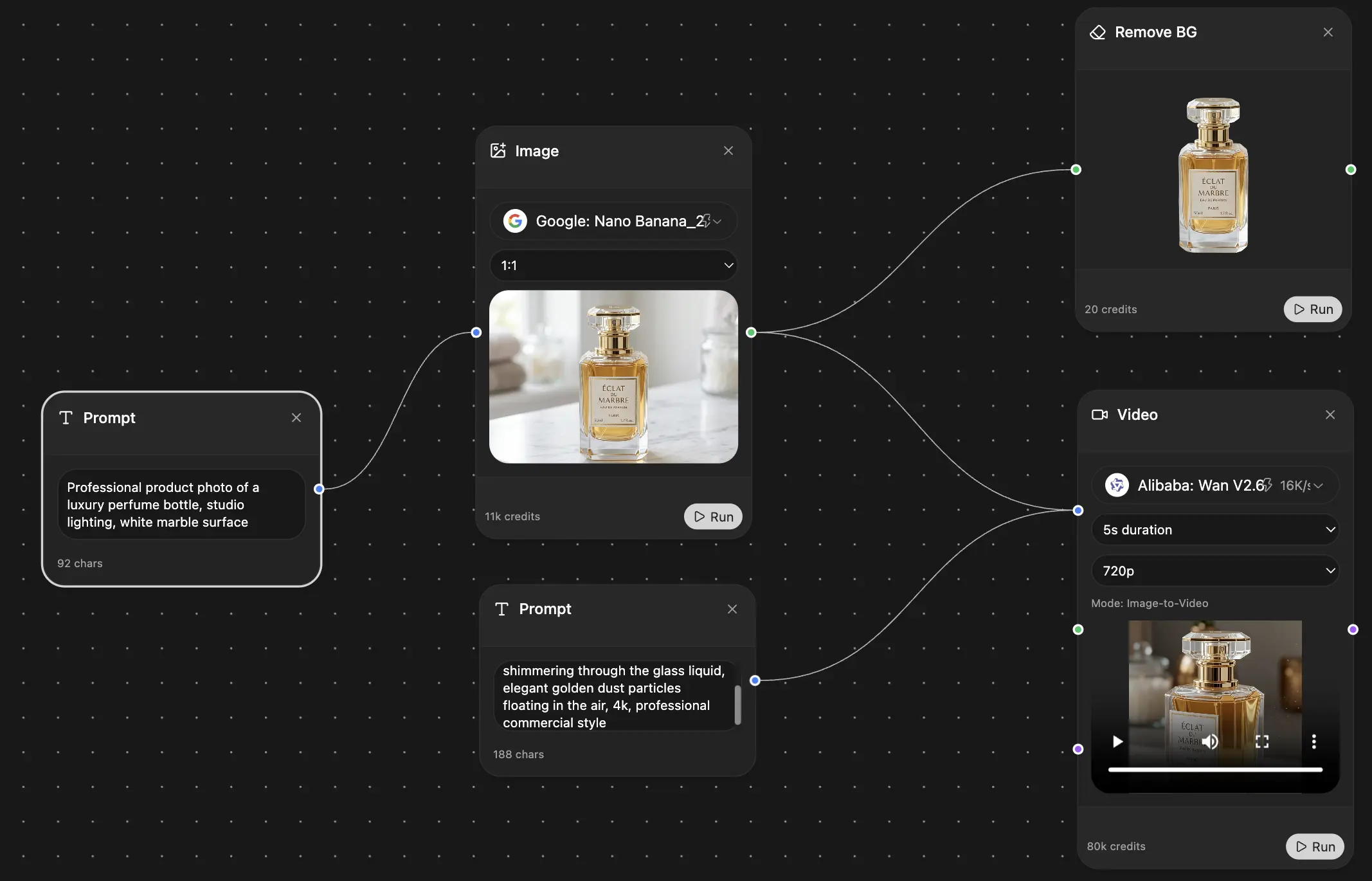
Chat, image, video & motion tools — side by side
Save hours of work and research
Transparent, High-Value Pricing
Trusted by teams at


Free
No credit card required
- 100 credits daily
- 3 AI models to try
- Basic AI chat
Plus
- 1,000,000 credits/month
- 25+ AI models — GPT, Claude, Gemini, Grok & more
- Agent Mode with web search, computer tools and more
- Creative Studio: image generation and video generation
- Project Library: chat with document, website and youtube, podcast generation, flashcards, reports and more
- Workflow Studio and FocusOS
Professional
- Everything in Plus, and:
- 2,100,000 credits/month
- Pro-exclusive models (Claude Opus, Grok 4, Sonar Pro)
- Motion Tools & Max Mode
- First access to latest features
- Access to additional offers
What Our Users Say
Great Tool after 2 months usage
"I love the way multiple tools they integrated in one platform. Going in the right direction."
— simplyzubair
Best in Kind!
"The quality of data and sheer speed of responses is outstanding. I use this app every day."
— barefootmedicine
Simply awesome
"The credit system is fair, models are perfect, and the discord is very responsive. Quite awesome."
— MarianZ
Great for Document Analysis
"Just works. Simple to use and great for working with documents. Money well spent."
— yerch82
Great AI site with accessible LLMs
"The organization of features is better than all the other sites — even better than ChatGPT."
— sumore
Excellent Tool
"It lives up to the all-in-one claim. All the necessary functions with a well-designed, easy UI."
— AlphaLeaf
Well-rounded platform with solid LLMs
"The team clearly puts their heart and soul into this platform. Really solid extra functionality."
— SlothMachine
Best AI tool I've ever used
"Updates made almost daily, feedback is incredibly fast. Just look at the changelogs — consistency."
— reu0691