Master How to Write a Title of a Poem
Learn how to write a title of a poem that grabs attention. Discover practical methods, avoid mistakes, and use AI tools like Zemith.
You’ve got the poem. The ending lands. One image still hums in your head. Maybe you even read it aloud and did that quiet little nod poets do when a draft finally behaves.
And then you hit the title line and suddenly your brain becomes mashed potatoes.
That’s normal. Titling feels weird because it asks you to do two jobs at once. You need to name the poem, but you also need to frame the experience of reading it. A bad title can make a strong poem feel generic. A sharp one can make a reader lean in before the first line has done any work.
A poem title is the poem’s first handshake. It can whisper, misdirect, anchor, flirt, or politely grab someone by the collar. That’s why learning how to write a title of a poem matters more than is often acknowledged.
The good news is that titles aren’t mystical gifts delivered by moonlight and suffering. They’re craft. You can practice them. You can test them. You can rewrite them without betraying the poem. If you’ve ever studied headline writing, some of the same instincts apply, especially around curiosity and clarity. This piece on writing better headlines makes that overlap pretty clear, even though poems get to be stranger and more stylish.
What's in a Name? Apparently, Everything
A lot of poets treat the title like the last dusty chore. They write the poem, survive the emotional weather, and then slap on something like Night Thoughts or Untitled #14 and call it a day. That’s a pity, because the title often decides whether a reader enters with attention or indifference.
Think about what a title can do before line one even starts. It can set the emotional temperature. It can tell us who’s speaking. It can place us in a kitchen, a war zone, a memory, a joke, a confession. It can also create productive friction, where the title says one thing and the poem complicates it.
A title doesn’t just label the poem. It teaches the reader how to arrive.
That’s why titling isn’t separate from the poem. It’s part of the poem’s architecture. If the poem is delicate, the title can steady it. If the poem is dense, the title can offer a door. If the poem is plainspoken, the title can add shimmer without turning into costume jewelry.
Why titles feel harder than they should
The title is short, visible, and exposed. There’s nowhere to hide. In the poem itself, you can layer, qualify, and deepen. In a title, every word is carrying furniture upstairs.
That pressure makes poets do one of two unhelpful things:
- They go vague: titles like Feelings, Life, or Thoughts While Walking.
- They overperform: titles so decorated they sound like a Victorian chandelier fell on the page.
Neither usually works. The best titles feel deliberate, not desperate.
The title is a craft problem
Once you see the title as a problem of function, not genius, things get easier. You stop waiting for revelation and start asking useful questions. What does this title need to do? Invite? Clarify? Disturb? Delay understanding? Echo the ending?
Those questions turn the blank title line from a threat into a workshop table.
Finding Your Title's North Star

Before you brainstorm titles, decide what the title is supposed to do. That sounds obvious, but most title struggles come from skipping this step and throwing fancy words at the wall like undercooked pasta.
Poet Toosie-Watson puts the central question beautifully: “What is going to direct the reader towards the emotional core?” That approach comes from her craft discussion at The Cincinnati Review on titling poems. It’s a strong question because it forces the title to serve the poem, not your ego.
Start with the emotional core
Read the poem and mark the emotional words, but also the emotional pressure points. Not just sad or happy. Look for tension, dread, longing, relief, shame, devotion, embarrassment, tenderness, annoyance. Poems usually have a weather system, even when they don’t announce it.
Ask yourself:
- What feeling does the poem leave behind?
- What does the speaker want, fear, hide, or resist?
- What should the reader sense before line one?
If the poem is about grief but moves with dry humor, the title shouldn’t suggest melodrama unless that contrast is intentional. If the poem is playful on the surface but carrying anger underneath, the title can tilt the reader toward that buried current.
Give the title a job
A title can do several jobs, but usually one job matters most.
Here are common jobs a title might take on:
Mood-setter
It prepares the emotional tone. Quiet, feral, bruised, comic, reverent.Context-giver
It supplies place, speaker, or occasion. A room, a season, a witness, a specific moment.Question-raiser
It creates a productive itch. Not confusion for its own sake, but intrigue.Lens-provider
It tells the reader what kind of meaning to look for.
That’s useful design thinking. You define the function before you fuss over the surface. If you like working that way, this guide to the design thinking process steps maps the same logic onto creative problem-solving.
Practical rule: if you can swap your title onto five unrelated poems and it still fits, it probably isn’t doing enough.
Test for direction, not decoration
Write three to five rough title options and ask what each one directs the reader toward. One may emphasize sadness. Another may sharpen imagery. Another may make the speaker more legible.
That small test changes everything. The right title often isn’t the prettiest. It’s the one that points the reader in the best direction.
Creative Techniques for Generating Title Ideas

This is the part poets enjoy. The draft exists. The tea has gone cold. You start poking around for a title like you’re searching couch cushions for rent money.
Good. That’s the right mood.
One strong pattern stands out in an Atmosphere Press analysis of 5,000 poems from major literary journals: 68% of award-winning poems used titles borrowed directly from a key line or phrase within the poem. That’s not a magic formula, but it is a giant neon arrow pointing toward one reliable method.
Mine the poem for a found title
Read the poem aloud and circle phrases that feel charged. Not necessarily the “best” line. Look for language that carries tension, image, or surprise.
A found title works because it creates internal cohesion. The title and poem speak to each other.
“The title is already in the draft more often than poets think.”
Try these sources inside the poem:
- A sharp image like “Glass Orchard”
- An odd phrase like “Instructions for Folding Rain”
- A line fragment that still makes sense out of context
- A phrase near the ending that gains power on reread
Use a single striking word
One-word titles can work when the word is loaded enough to create pressure. Not Emotion. Not Memory. Those are coat hangers.
Try nouns or verbs with texture. A one-word title should feel specific enough to radiate.
Example:
Brine
Better than Sadness, because it suggests tears, sea, sting, preservation, body.
Build with juxtaposition
Juxtaposition titles put unlike things together so the reader feels a spark.
Example:
The Roar of the Dandelion
That title works because it combines delicacy with force. The mind pauses. The poem gets an entrance instead of a label.
If you want to sharpen this instinct, regular Creative skill building helps. Not because title writing is formulaic, but because your ability to notice useful contrasts improves with practice across forms.
Make the title a doorway
Some titles give orientation through place, time, or speaker.
Examples of this approach might sound like:
- At the Bus Stop After My Father’s Funeral
- Notes from the Motel Ice Machine
- Self-Portrait with Burnt Toast
These titles are useful when the poem itself is lyrical or abstract. They give the reader footing.
Let the title act like a first line
Advanced poets sometimes make the title do double duty, functioning as title and first line in spirit. That creates momentum and can make the poem feel cohesive on the page.
The trick is to choose a phrase that opens the world of the poem rather than sitting on top of it like a hat nobody asked for.
Try a title prompt sprint
If you’re stuck, do a fast title round using these prompts:
- From the poem’s best noun
Pull a concrete object and reshape it. - From the emotional center
Name the tension, not the topic. - From contradiction
Pair softness with violence, stillness with motion, sacred with ordinary. - From context
Add place, date, season, speaker, or occasion. - From a question
Ask something the poem deepens rather than answers.
A practical brainstorming session can help here. If your process is getting stale, these creative brainstorming techniques are handy for generating options without forcing a single “perfect” answer too early.
Title Rewrites From Blah to Brilliant
Watching a title improve is one of the fastest ways to train your eye. You start noticing what changes the energy: more specificity, sharper imagery, better tension, cleaner music.
Advanced poets also sometimes make the title work harder by letting it carry context and thematic weight at the same time. That’s part of the dual-function approach discussed in Elyse Hart’s guide on writing titles for poems, where titles can behave almost like first lines.
Poem Title Transformations
Why the rewrites work
Most weak titles fail for one of three reasons:
- They name the topic instead of the experience
- They use broad emotion words without texture
- They don’t create any tension
The stronger rewrites do the opposite. They imply story. They suggest voice. They make room for the poem.
If a title sounds like it belongs in a middle-school worksheet, keep revising.
There’s also an editing principle here. The first decent title isn’t always the right one. Title revision is real revision. If you already revise lines with care, you should revise titles with the same seriousness. This guide on how to edit writing applies neatly to titles too, especially the part about cutting what’s generic and keeping what carries weight.
Common Poem Title Pitfalls to Avoid

A lot of bad titles aren’t bad because the poet lacks talent. They’re bad because the poet got tired.
That’s understandable. It’s also fixable.
Four traps that weaken good poems
The vague abstraction
Titles like Thoughts, Change, Sorrow, Life. They don’t frame anything. They sit there like unlabeled cardboard boxes.The cliché parade
Broken Heart, Shattered Dreams, Whispers in the Wind. If your title sounds like it was generated by a candle store, keep going.The spoiler title
Don’t explain the poem before the poem can work. Mystery matters. The title should invite, not summarize the ending like a terrible friend ruining a movie.The private joke
If the title only makes sense to you and one roommate from 2019, it may not be doing enough for the reader.
Complexity can become a costume
Some poets swing too far in the other direction and write titles that feel overdesigned. Seven nouns, three adjectives, and a subtitle later, the poem hasn’t even started and everyone’s already tired.
Usually, simpler wins. Not simpler in thought, but simpler in execution.
A title should add pressure to the poem, not paperwork.
Don’t skip formatting
Professionalism matters too. According to a Monmouth University overview of MLA poetry citation rules, since the MLA Style Guide’s 1984 edition formalized the rule of enclosing short poem titles in double quotes, over 92% of academic citations have adhered to it, and compliance correlates with higher acceptance rates in literary journals.
The basic rule is simple:
- Short poem titles go in double quotation marks
- Book-length works are italicized
This isn’t the sexy part of poetry. Still, small formatting choices signal care. Editors notice care.
Your New Co-Poet Using AI to Refine Titles

A lot of poets still treat AI like it’s going to kick in the workshop door, steal their notebook, and start writing moody villanelles. That’s not the useful way to think about it.
Used well, AI is a brainstorming partner. It’s fast, tireless, and occasionally weird in a way that helps. The trick is not to let it decide. Let it propose.
According to Free Sia McKee’s discussion of poem titling and AI-assisted workflows, as of 2026, an estimated 35% of poets are using AI tools for title generation, up from 5% in 2024, and hybrid workflows where AI drafts and a human refines can lead to 25% higher acceptance rates from editors. That last part makes sense. The machine helps with volume. The poet handles taste.
A practical hybrid workflow
Try feeding an AI one stanza or even just six lines and ask for:
- 10 metaphorical titles
- 10 direct titles
- 10 titles built from key images
- 5 one-word titles
- 5 titles that sound like a first line
Then go ruthless. Keep maybe two or three. Rewrite those by hand.
Another useful move is to generate an image based on your poem’s mood, then ask AI to title the image instead of the poem. That sidestep often produces stranger, less obvious language. If you’re exploring broader workflows, this piece on AI for content ideation and editing is a helpful companion read.
If you use AI for title work, revision matters even more than usual. Generic phrasing is the biggest tell. You want surprise, precision, and voice. If a draft title feels smooth but forgettable, rewrite it until it sounds like your poem, not a machine with a candle addiction.
For polishing rough options, tools built for AI text rewriting and refinement can help you test alternate phrasings quickly without losing control of the final call.
If you’re tired of bouncing between writing apps, image tools, and AI tabs just to name one stubborn poem, Zemith makes the process much easier. You can brainstorm title variations, rewrite awkward options, generate mood images for lateral inspiration, and keep all your poem drafts in one workspace. That’s especially useful when you want AI as a co-poet, not as a replacement for your own ear.
Explore Zemith Features
Every top AI. One subscription.
ChatGPT, Claude, Gemini, DeepSeek, Grok & 25+ more


Always on, real-time AI.
Voice + screen share · instant answers
What's the best way to learn a new language?
Immersion and spaced repetition work best. Try consuming media in your target language daily.
Voice + screen share · AI answers in real time
Image Generation
Flux, Nano Banana, Ideogram, Recraft + more

Write at the speed of thought.
AI autocomplete, rewrite & expand on command
Any document. Any format.
PDF, URL, or YouTube → chat, quiz, podcast & more
Video Creation
Veo, Kling, Grok Imagine and more

Text to Speech
Natural AI voices, 30+ languages
Code Generation
Write, debug & explain code
Chat with Documents
Upload PDFs, analyze content
Your AI, in your pocket.
Full access on iOS & Android · synced everywhere
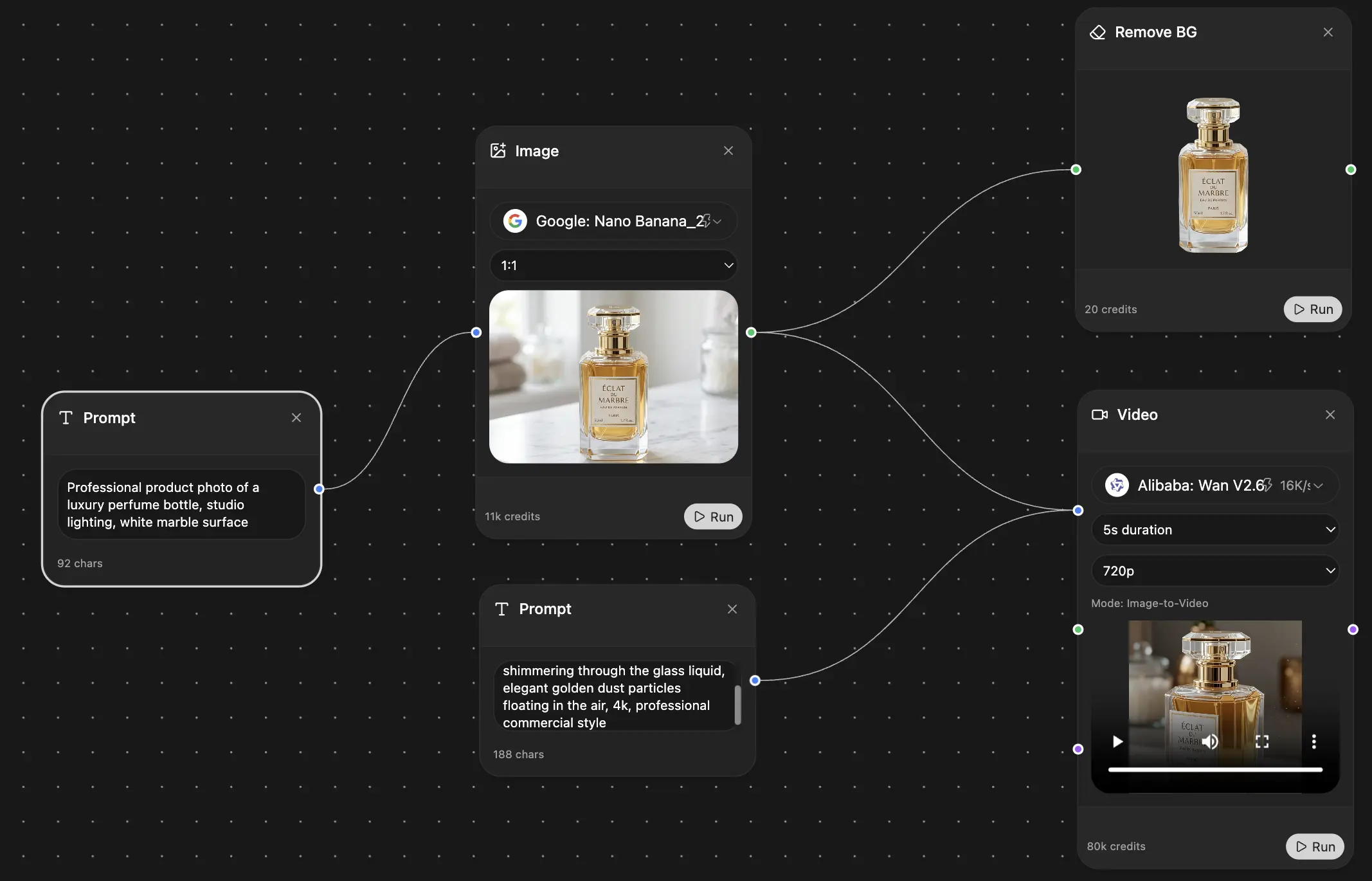
Your infinite AI canvas.
Chat, image, video & motion tools — side by side
Save hours of work and research
Transparent, High-Value Pricing
Trusted by teams at


Free
No credit card required
- 100 credits daily
- 3 AI models to try
- Basic AI chat
Plus
- 1,000,000 credits/month
- 25+ AI models — GPT, Claude, Gemini, Grok & more
- Agent Mode with web search, computer tools and more
- Creative Studio: image generation and video generation
- Project Library: chat with document, website and youtube, podcast generation, flashcards, reports and more
- Workflow Studio and FocusOS
Professional
- Everything in Plus, and:
- 2,100,000 credits/month
- Pro-exclusive models (Claude Opus, Grok 4, Sonar Pro)
- Motion Tools & Max Mode
- First access to latest features
- Access to additional offers
What Our Users Say
Great Tool after 2 months usage
"I love the way multiple tools they integrated in one platform. Going in the right direction."
— simplyzubair
Best in Kind!
"The quality of data and sheer speed of responses is outstanding. I use this app every day."
— barefootmedicine
Simply awesome
"The credit system is fair, models are perfect, and the discord is very responsive. Quite awesome."
— MarianZ
Great for Document Analysis
"Just works. Simple to use and great for working with documents. Money well spent."
— yerch82
Great AI site with accessible LLMs
"The organization of features is better than all the other sites — even better than ChatGPT."
— sumore
Excellent Tool
"It lives up to the all-in-one claim. All the necessary functions with a well-designed, easy UI."
— AlphaLeaf
Well-rounded platform with solid LLMs
"The team clearly puts their heart and soul into this platform. Really solid extra functionality."
— SlothMachine
Best AI tool I've ever used
"Updates made almost daily, feedback is incredibly fast. Just look at the changelogs — consistency."
— reu0691