How to Rephrase Sentences Without Sounding Like a Robot That Just Woke Up
Learn how to rephrase sentences like a pro. This guide shares manual tricks and AI prompts to sharpen your writing and make every word count.
Learning how to rephrase a sentence isn't some dark art reserved for English professors and snooty novelists. It's a skill you can learn, and you've got two great ways to do it: either by hand, swapping out words and rearranging the structure, or with a smart AI tool like Zemith that gives you a ton of options in seconds. Getting good at both? That's when you really start to feel like you have writing superpowers.
Why Rephrasing Is Your New Secret Weapon
Let's be real—the word "rephrasing" probably gives you flashbacks to high school English class. But what if I told you it's one of the most powerful and overlooked tools you have for communicating effectively? This isn't just about shuffling words around to avoid a plagiarism checker. It's about making your ideas land with a punch.
Think about your day-to-day. You're trying to explain a tricky concept to your team, make a dull product feature sound like a game-changer, or just write an email that doesn't put people to sleep. A simple, thoughtful rephrase is often the one thing that separates a clear message from one that gets totally lost in the noise. It's the difference between "meh" and "must-have."

The Payoff of a Powerful Rephrase
Here's a quick look at the real-world benefits you unlock when you learn how to change a sentence structure without changing the meaning and start rephrasing with purpose.
This isn't just about tweaking for the sake of it. Every rephrase is a chance to sharpen your point and get closer to the result you're after.
Ditch the Textbook Definitions
Forget the boring theory. Let's talk about what this looks like in the real world. Say you’re trying to create more compelling content. Instead of just listing facts, rephrasing lets you frame those same facts in a story that grabs your audience, turning them from passive scanners into genuine fans. It's a massive advantage once you get the hang of it. If you want to dive deeper on this, our guide on how to write engaging content is a great next step.
When you boil it all down, effective manual rephrasing really comes back to two simple moves that pros rely on: swapping in better synonyms and changing up the word order. That’s it. These two tweaks are consistently shown to be the most effective ways to improve a piece of writing.
Think of rephrasing as your chance for a do-over. It lets you say the same thing, but better—clearer, sharper, and with more conviction. You're not changing the message; you're amplifying it.
Ultimately, getting good at rephrasing gives you total command over how your message is received. Whether you’re doing it by hand or getting a boost from an AI assistant like the one in Zemith, you're the one steering the ship. We'll get into both methods so you're ready for anything.
Mastering Manual Rephrasing Like a Pro
Before we jump into how AI can help, let's talk about the fundamentals. Honestly, learning how to rephrase sentences by hand is the single best thing you can do to become a better writer. It gives you a toolkit you can rely on, turning you from someone who just accepts what the AI gives you to someone who can direct it with precision.
Think of it like this: knowing these techniques is the difference between telling your AI to "make this sound better" and giving it a specific command like, "Rephrase this in an active voice and lead with the main benefit." That’s where the real power lies, and it's what separates the pros from the rookies when using tools like Zemith.

The Synonym Swap
This is the classic technique. But it's also the easiest to get wrong. Just plugging in words from a thesaurus can create clunky, unnatural sentences that sound like you swallowed a dictionary and are now regurgitating it.
The real goal is to find synonyms that actually improve the sentence by fitting the context and tone perfectly.
- Original: The company must make an assessment of the current market dynamics to facilitate future growth.
- Rephrased: The company must evaluate current market trends to drive future growth.
See how much better that is? "Evaluate" is a stronger verb than "make an assessment," and "drive" is more direct and powerful than "facilitate." The rephrased version is punchier and gets straight to the point.
A great rephrase doesn't just change words; it upgrades them. Focus on finding stronger, more precise verbs and ditching vague corporate jargon. The clearer your language, the more powerful your message.
The Structure Shake-Up
Sometimes your words are fine, but the sentence itself just feels… off. Maybe the flow is clunky, or it takes forever to get to the main idea. That's when you need to shake up the structure.
A simple trick is to move clauses and phrases around to change the rhythm and emphasis. For example, using sentences with prepositional phrases at the beginning can completely alter how a sentence lands with the reader.
- Original: We can achieve our Q4 sales targets by launching the new marketing campaign early.
- Rephrased: By launching the new marketing campaign early, we can achieve our Q4 sales targets.
This small adjustment puts the "how" right at the front, creating a stronger cause-and-effect relationship that can feel much more persuasive.
The Strategic Voice Flip
The voice of your sentence—active or passive—dramatically changes its tone and impact. There isn't a "correct" voice, but knowing when to use each is a sign of an experienced writer.
- Active Voice: The subject does the action (e.g., "We launched the feature."). It’s confident, clear, and direct. You should be using this about 90% of the time.
- Passive Voice: The subject receives the action (e.g., "The feature was launched by us."). It can feel a bit evasive, but it's useful when the action itself is more important than who did it.
Getting a handle on rephrasing is a huge part of clear communication, and it’s absolutely essential for avoiding plagiarism, especially in professional or academic work. If you're working on something where that’s a concern, you should check out our guide on how to paraphrase without plagiarizing.
Once you get comfortable with these manual skills, you'll be ready to work wonders with AI tools like Zemith's Smart Notepad, which we’ll dig into next.
Adding Some AI Firepower to Your Rewriting
Okay, you've got the hang of rewriting sentences by hand. Now, let’s talk about how to get the same results, but faster. Using an AI to rephrase text isn't about letting a robot take over. It’s more like having a super-smart assistant who can instantly spitball a dozen different ways to say something when you're feeling stuck.
The real trick isn't just hitting the "rephrase" button. It's about learning how to tell the AI exactly what you need. Once you stop being a passive user and start actively directing the tool, you’ll get the perfect output every single time. This is how you rephrase text to improve readability without losing your voice.
Good Prompts Are Everything
Forget lazy requests like "rewrite this." To get truly great results from an AI, you have to give it a clear job to do. Think of yourself as an art director giving very specific instructions to a talented designer—the more precise your direction, the better the final product.
Here are a few prompts you can try right away in Zemith to see what I mean:
- To simplify: "Rephrase this sentence for a fifth-grade reading level."
- To add punch: "Rewrite this to sound more confident and assertive."
- To clarify: "Turn this technical jargon into a simple analogy that a non-expert can understand."
- To be concise: "Make this sentence 50% shorter but keep the core meaning."
This kind of control is a huge deal, especially for anyone managing brand content and needing to keep the tone consistent across thousands of words.
The Zemith interface showcases an integrated workspace where you can access multiple AI tools, like a Smart Notepad and Document Assistant. This setup allows you to rephrase text, generate content, and conduct research without ever leaving the platform.
Keeping Your Voice with AI
One of the biggest worries people have about using AI is that it will make their writing sound generic. Ironically, getting good at rephrasing is also the secret to making AI-generated text sound more human.
One 2023 study found that an advanced paraphrasing technique dropped an AI detector’s accuracy from 70.3% all the way down to 4.6%. That's a 93% drop. It really shows why having powerful rephrasing tools built into a platform like Zemith is so important for creators who want to stand out.
When you use an AI, the goal isn't to adopt its default voice—it's to guide it toward yours. Use it to blast through writer's block by generating a few options, then trust your gut to pick the one that sounds the most like you. We cover this in more detail in our guide on using AI to rewrite text.
Don't let the AI be the writer; let it be your brainstorming partner. Generate five different versions of a sentence, then mix and match the best parts to create a sixth version that's all your own.
Finding the Right AI Assistant
The market is flooded with tools that can help with this stuff. If you want to see what's out there, you can check out reviews of the best AI content generators to get a sense of the landscape.
But honestly, bouncing between five different tabs for writing, rephrasing, and research is a total productivity killer. That's why having an all-in-one platform like Zemith just makes sense. It puts a powerful writing assistant, document analysis, and multi-model chat all in one clean workspace, so you have everything you need to direct your AI co-pilot without the chaos.
Building Your Ultimate Rephrasing Workflow in Zemith
Let’s be honest—juggling a dozen different tabs and AI subscriptions just to get your writing done is a total drag. This is where having an all-in-one platform like Zemith really changes the game, acting as a central command center for all your work.
I want to walk you through a practical workflow that feels less like a chore and more like a creative superpower. This isn't just about finding another tool; it's about building a single, smooth process for rephrasing that becomes a natural part of how you write.
Start with Smart Notepad
Your first stop is Zemith's Smart Notepad. Think of it as your main writing space, but with AI baked right in. When you stumble upon a clunky sentence or a paragraph that just isn't hitting the mark, you don't have to copy and paste it into another tool.
Just highlight the text you want to fix. A single click gives you instant, smarter alternatives. This is perfect for those quick fixes, like trimming down a wordy sentence or flipping the tone from passive to active.
The real win here is staying in the flow. By keeping the rephrasing function right where you're writing, you maintain your momentum and can stay focused on your ideas, not on managing a bunch of different tools.
Level Up with the Document Assistant
For the bigger jobs, your workflow can expand to the Document Assistant. This is where you can stop fussing with individual sentences and start working with entire files at once.
Imagine you're staring down a dense, 20-page report packed with technical jargon. Instead of chipping away at it section by section, you can just upload the whole thing and tell the AI what you need.
Here are a couple of real-world examples:
- For an Executive Summary: Upload the report and prompt it with, "Summarize the key findings from this document and rephrase them into three clear bullet points for an exec-level email."
- For Marketing Copy: Upload a dry technical spec sheet and ask, "Rephrase the features in this document as customer-facing benefits. Use an enthusiastic and confident tone."
This approach is an incredible time-saver. You're no longer spending hours translating dense material by hand. Instead, you get a solid first draft in seconds that you can then polish up. This simple but powerful process is what it's all about.

As you can see, a great output really just comes down to quality input and a specific prompt. It's how you turn that raw text into something truly polished.
Direct Your AI with Multi-Model Prompts
The final piece of this workflow puzzle is matching the right AI model to the right job. Different AI models have different strengths—some are wildly creative, while others are masters of technical precision and logic. Hopping between different subscriptions just to access them is a headache nobody needs.
Zemith brings multi-model chat into one place, so you can pick the best AI for your specific rephrasing task without ever leaving the platform.
Here’s how you can tailor your prompts for different models available right inside Zemith:
Ultimately, this is about more than just learning how to rephrase sentences; it’s about making it a seamless part of your entire creative process. A centralized hub like Zemith turns a clunky set of tasks into a single, powerful workflow. If you're curious about how this all fits together, you can learn more about what a no-code AI platform like Zemith can do to boost your productivity.
Beyond Word Swapping: Advanced Rephrasing Tactics
Alright, if you're ready to get past basic synonym-swapping, you've come to the right place. True rephrasing mastery isn't just about changing a few words���it's about fundamentally reshaping your message. We're going beyond the surface level to think about the underlying structure and tone.
This is where your writing can really start to shine, especially if you work in a technical or academic field where every nuance matters.
Go Deeper with Structural Rephrasing
This is about changing the very skeleton of your writing. Think of yourself as a sentence architect. You're not just swapping out the curtains; you're moving walls and windows to change how the light hits the room. The result is a completely different feeling, even if the furniture stays the same.
Instead of just telling an AI to "rewrite this," you can get incredibly specific. Try telling it, "Rephrase this paragraph to lead with the main conclusion, followed by three supporting points in parallel structure."
This kind of control is a total game-changer. It’s what lets you take a dense academic finding and instantly morph it into a clear, compelling point for a business presentation.
The most powerful rephrasing happens when you stop thinking about words and start thinking about message architecture. How can you rebuild the sentence to make the main point impossible to miss?
The technology driving this has gotten ridiculously good. Modern automated paraphrasing has moved past simple rule-based systems into sophisticated statistical techniques and neural models. In fact, cutting-edge AI can now generate specific paraphrases that follow precise syntactic structures with very little training data. For anyone using a platform like Zemith, this means you have access to tools with extremely fine-tuned structural control right at your fingertips.
Master the Art of Tonal Rephrasing
Once you've got the structure down, it's all about tone. Most tools give you basic options like "formal" or "casual," but let's be real—sometimes you need something way more specific. Tonal rephrasing is all about dialing in that perfect emotional frequency.
Imagine you're writing a project update. Things are a bit rocky, but you're still on track. You don't want to sound like you're panicking, but you can't be overly optimistic either. This is where a sophisticated tool lets you aim for a very precise tone.
Here are a few nuanced prompts I've used in Zemith that work wonders:
- “Rephrase this to sound cautiously optimistic.”
- “Make this sound boldly confident but not arrogant.”
- “Rewrite this with an inquisitive and curious tone.”
Getting this right is crucial for everything from investor updates to team comms. It’s about making sure your message doesn't just inform but lands with the exact emotional impact you intended. This really gets into the deeper mechanics of language, and if you find that fascinating, it's worth learning more about what semantic analysis is.
Answering Your Top Rephrasing Questions
Alright, let's get into the nitty-gritty. Once you start seriously rephrasing your work, a few common questions always seem to come up. Here are the straight-up answers I give people when they ask.
Can Rephrasing Too Much Change My Meaning?
You bet it can, and it's a trap I see writers fall into all the time. The pros call it "semantic drift," but you can just think of it as your sentence losing its way. It's like that game of telephone you played as a kid—fun at a party, disastrous in a business proposal.
The trick is to constantly ask yourself: "Does this new version still say the one thing I absolutely need it to?" Be ruthless about changing sentence structure and swapping out filler words, but treat your core nouns and verbs like gold. They're what carry the actual meaning.
A rephrase has gone rogue the moment it loses the original's core truth. You're just changing the packaging, not the product inside.
This is where having a tool like Zemith's Smart Notepad is a lifesaver. Seeing the original and the new version side-by-side makes it painfully obvious when a rephrase starts wandering off into the weeds.
Is Using AI to Rephrase Sentences Plagiarism?
This is a big one, and the answer is refreshingly simple: It's not plagiarism if you're using AI to rework your own ideas. Think of it as a brainstorming partner or a thesaurus on steroids. It’s a tool to help you find better ways to express your own thoughts.
Where you cross the line is when you feed someone else's article into a rephraser and claim the output as your original work. That’s 100% plagiarism, no question. As long as you’re starting with your own draft and just refining it for tone or clarity, you’re in the clear. Still, it never hurts to check your company's or school's specific AI policy.
How Can I Rephrase to Make My Writing Shorter?
Ah, my favorite use for rephrasing! This is all about trimming the fat.
First, go on a hunt for those sneaky filler phrases that clog up your sentences. Things like "in order to," "due to the fact that," and "for all intents and purposes" can almost always be deleted. Just nuke 'em.
Next, look for weak verb phrases and replace them with a single, powerful verb. For example, why "make an assessment" when you can just "assess"? A killer AI prompt for this is: "Rephrase this to be 50% shorter but keep the core message." The tools baked into Zemith are fantastic for this kind of sharp, concise writing.
Ready to stop juggling tabs and start rephrasing like a pro? Zemith integrates a powerful rephrasing engine right into your writing workflow, so you can focus on your ideas, not your tools. Try it now at zemith.com and see the difference.
Explore Zemith Features
Every top AI. One subscription.
ChatGPT, Claude, Gemini, DeepSeek, Grok & 25+ more


Always on, real-time AI.
Voice + screen share · instant answers
What's the best way to learn a new language?
Immersion and spaced repetition work best. Try consuming media in your target language daily.
Voice + screen share · AI answers in real time
Image Generation
Flux, Nano Banana, Ideogram, Recraft + more

Write at the speed of thought.
AI autocomplete, rewrite & expand on command
Any document. Any format.
PDF, URL, or YouTube → chat, quiz, podcast & more
Video Creation
Veo, Kling, Grok Imagine and more

Text to Speech
Natural AI voices, 30+ languages
Code Generation
Write, debug & explain code
Chat with Documents
Upload PDFs, analyze content
Your AI, in your pocket.
Full access on iOS & Android · synced everywhere
Your infinite AI canvas.
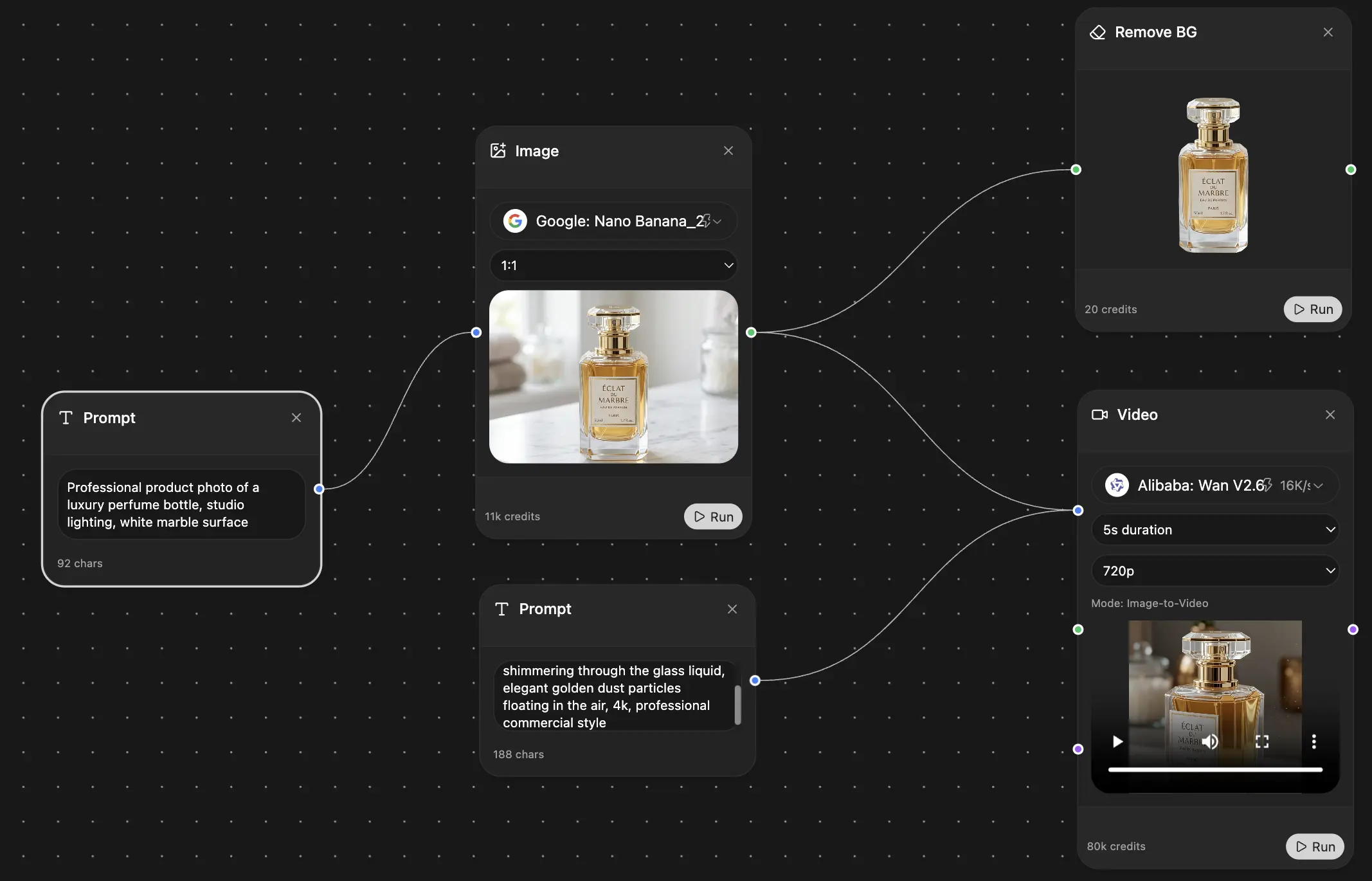
Chat, image, video & motion tools — side by side
Save hours of work and research
Transparent, High-Value Pricing
Trusted by teams at


Free
No credit card required
- 100 credits daily
- 3 AI models to try
- Basic AI chat
Plus
- 1,000,000 credits/month
- 25+ AI models — GPT, Claude, Gemini, Grok & more
- Agent Mode with web search, computer tools and more
- Creative Studio: image generation and video generation
- Project Library: chat with document, website and youtube, podcast generation, flashcards, reports and more
- Workflow Studio and FocusOS
Professional
- Everything in Plus, and:
- 2,100,000 credits/month
- Pro-exclusive models (Claude Opus, Grok 4, Sonar Pro)
- Motion Tools & Max Mode
- First access to latest features
- Access to additional offers
What Our Users Say
Great Tool after 2 months usage
"I love the way multiple tools they integrated in one platform. Going in the right direction."
— simplyzubair
Best in Kind!
"The quality of data and sheer speed of responses is outstanding. I use this app every day."
— barefootmedicine
Simply awesome
"The credit system is fair, models are perfect, and the discord is very responsive. Quite awesome."
— MarianZ
Great for Document Analysis
"Just works. Simple to use and great for working with documents. Money well spent."
— yerch82
Great AI site with accessible LLMs
"The organization of features is better than all the other sites — even better than ChatGPT."
— sumore
Excellent Tool
"It lives up to the all-in-one claim. All the necessary functions with a well-designed, easy UI."
— AlphaLeaf
Well-rounded platform with solid LLMs
"The team clearly puts their heart and soul into this platform. Really solid extra functionality."
— SlothMachine
Best AI tool I've ever used
"Updates made almost daily, feedback is incredibly fast. Just look at the changelogs — consistency."
— reu0691