How to Process Information Quickly: A Guide to Mastering Your Focus and Speed
Feeling overwhelmed by data? Learn how to process information quickly with brain hacks and smart AI tools to reclaim focus.
Let's be honest, trying to process information faster can feel like trying to drink from a firehose. The secret isn't to drink faster; it's to have a smarter system. The best approach is a one-two punch: first, sharpen your own brain with proven techniques like active reading, and second, let smart AI tools like Zemith do the heavy lifting for you. This combo frees up your brain to focus on what it does best: understanding, connecting ideas, and making brilliant decisions, instead of just trying to stay afloat in a sea of data.
Why Your Brain Feels Like It Has Too Many Tabs Open

Ever feel like your mind is a web browser with 100 tabs open, and one of them is playing music but you can't figure out which one? That’s not just a feeling; it’s the reality of modern work. We’re all trying to sip from a digital firehose—a constant gush of emails, reports, articles, and Slack messages. Our brains simply weren't designed for this kind of information marathon.
This sense of being perpetually overwhelmed isn't a personal flaw. It's a fundamental mismatch between our biology and the digital world we've built. Our brains evolved for a much slower pace of information, and now they're struggling to keep up, leading straight to burnout and mental exhaustion.
The Daily Data Deluge
The sheer amount of information we face is almost hard to comprehend. Think about it: the average person is now online for 6 hours and 37 minutes every single day. That’s a firehose of content that professionals in every industry have to manage just to stay current.
This constant connection means we're never really "off." Every notification, email, and article adds to our mental load. Switching from a dense report to a quick Slack message might seem harmless, but it comes with a hidden cost. We've actually written about the high price of this mental juggling in our guide on .
The problem isn't the information itself. It's the lack of a system to handle it. Without a solid workflow, your brain goes into chaos mode, treating a cat video notification with the same urgency as a deadline from your boss.
Your Brain's Bottleneck
A big part of why this feels so hard for some of us relates to what’s known as . This has nothing to do with how smart you are. It’s about how fast your brain can take in new information, make sense of it, and figure out what to do next.
When the flood of data comes in faster than your brain can process it, you hit a bottleneck. The result is a messy pile-up that leads to:
- Decision Fatigue: Your brain gets tired from making countless small choices all day, which leads to bad judgment when it actually matters.
- Cognitive Load: Trying to juggle too much information in your short-term memory makes it impossible to think deeply or come up with creative solutions.
- Analysis Paralysis: With too much data and too many options, you just get stuck, unable to make a decision and move forward.
The way out isn't to just work harder or try to force your brain to remember more. The solution is to work smarter by adopting that dual-pronged strategy we talked about.
Your Dual-Pronged Attack on Information Overload
This table breaks down how you can combine classic cognitive techniques with modern AI to create a powerful system for managing information.
By upgrading your mental "operating system" with better habits and bringing in an AI co-pilot like Zemith to filter the noise, you can finally turn that information firehose into a calm, manageable stream. It's the first real step toward taking back control.
Train Your Brain With Core Cognitive Upgrades
Before you let an AI co-pilot take the wheel, it pays to pop the hood on your own internal processor—the one between your ears. Think of this as a gym for your brain.
By upgrading your own mental software with a few core cognitive techniques, you can completely change how you absorb information. This makes every tool you use, especially a smart one like Zemith, infinitely more powerful. This isn't about memorizing dry theories. It's about installing a new operating system for your mind, one built for speed, deep comprehension, and actually remembering what you learn.
Master these manual controls first, and then you can really fly with autopilot.
Chunking The Unchunkable
Ever stared at a dense, 50-page research paper and felt your soul slowly packing its bags? We've all been there. The secret to tackling these informational monsters isn't to read harder, but to break them down into bite-sized pieces. This is the art of chunking.
Our short-term memory is surprisingly limited; it can only hold about seven pieces of information at once. Chunking works by grouping related bits of info into a single, larger "chunk," effectively tricking your brain into holding more data without overloading.
Instead of seeing a wall of text, you start seeing patterns. That massive report on market trends suddenly becomes three distinct chunks:
- Chunk 1: Key Findings & Executive Summary
- Chunk 2: Competitor A vs. Competitor B Analysis
- Chunk 3: Future Projections & Recommendations
Suddenly, an overwhelming task is just a simple, three-part to-do list. When you upload that same report to Zemith, its Document Assistant does this for you automatically. But understanding the why behind it makes you a much smarter user. You'll know exactly what to ask the AI to summarize because you’re already thinking in organized chunks.
Reading With A Purpose
Passive reading is like having music on in the background—most of it just washes over you. Active reading, on the other hand, is like having a direct conversation with the author. You aren't just scanning words; you're interrogating the text. You're questioning its assumptions and connecting its ideas to what you already know.
This technique is a game-changer for anyone who needs to truly understand, not just read. In demanding fields, how fast you can accurately process information is a direct predictor of your success. In fact, one study from PMC found that even a small dip in processing speed scores could significantly increase the risk of cognitive decline. You can dive into the to see just how critical this skill is.
Active Reading in Action: Before you even start a document, ask yourself: What am I trying to get out of this? As you read, highlight key arguments and jot down questions in the margins (or a notepad). Afterward, try to summarize the main points in your own words without peeking.
This forces you to engage with the material on a much deeper level. When you pair this with Zemith’s Smart Notepad, you can pull your highlighted chunks and margin notes directly into a workspace. This creates a living document of your thoughts right alongside the source material.
Spaced Repetition For Long-Term Recall
You crammed for that history exam, aced it, and then promptly forgot everything the next day, right? That’s because your brain dumped the information from its short-term cache. To move knowledge into long-term storage where it can do some good, you need spaced repetition.
The idea is surprisingly simple: revisit information at increasing intervals. You might review a new concept after one day, then three days, then a week, and so on. This process signals to your brain, "Hey, this stuff is important—hang onto it!"
It's one of the most effective ways to truly learn something, not just memorize it for a little while. For anyone wanting to build a rock-solid memory, we’ve put together a full guide on with more practical tips.
This isn't just for students. If you're a developer learning a new framework or a marketer trying to master an analytics platform, spaced repetition is your best friend. You can use Zemith to create flashcards from a technical doc or set reminders to review key summaries from your meetings, building a learning system that practically runs itself.
By mastering these cognitive upgrades, you ensure you're not just offloading work to AI, but collaborating with it as a sharper, faster, and more effective thinker.
Build Your Second Brain With an AI Co-Pilot

So, you’ve sharpened your mind with some powerful cognitive techniques. That’s awesome. But now it’s time to give your brain some serious backup. This is the point where you stop wrestling with information overload all on your own and bring in a powerful AI co-pilot.
The whole "Second Brain" idea isn't just about dumping notes somewhere. It's about building an intelligent, external system that does the grunt work for you—finding, summarizing, and connecting information. This frees you up to do what you do best: the high-level thinking that actually gets projects across the finish line.
An AI-powered platform like Zemith isn't just a fancy digital notebook. It's an active partner in how you think, built to help you digest information at a speed that would otherwise be impossible. (Don't worry, no actual brain-frying required.)
From 50-Page Reports To Five-Point Summaries
Let’s get real for a minute. Picture this: you've just been handed a dense, 50-page market analysis report. The old way? You’d spend hours highlighting, taking notes, and praying you didn’t miss that one crucial detail buried on page 37.
There's a much faster way now.
With Zemith's Document Assistant, you can just upload the file and let it do the heavy lifting. In seconds, you get a concise five-point summary, a list of key takeaways, or even a detailed outline. It’s a lifesaver when you need to get up to speed on a topic, like, yesterday.
For instance, you could just ask it:
- "What are the main competitive threats mentioned in this report?"
- "Pull out all the stats related to customer retention."
- "Turn the executive summary into a short podcast script I can listen to on my commute."
Think of it as having a junior analyst who reads at lightning speed and never needs a coffee break. The goal isn't to skip reading, but to instantly know if a document is worth your focused attention.
The interactive summary lets you click into specific topics without having to manually hunt through the original document. It’s a massive time-saver.
Taming the Chaos of Brainstorming
Brilliant ideas rarely show up fully formed. They usually start as a chaotic jumble of half-thoughts, random links, and scattered bullet points. Turning that creative mess into a polished draft can feel like a real slog.
This is exactly where Zemith's Smart Notepad shines. It acts as the perfect bridge between your raw ideas and a finished piece of work.
You can dump all your messy brainstorming notes into the notepad and then use AI to instantly bring order to the chaos. For example, just highlight a messy list of bullet points and ask the AI to "turn this into a well-structured paragraph" or "rephrase this in a more professional tone." It cuts out hours of tedious editing. For anyone who creates content, this is a total game-changer. You can see more on how to use an to speed up these kinds of tasks.
Supercharging Deep Research and Development
For researchers, developers, and engineers, your job depends on how fast you can find and apply complex information. The explosion in global internet speeds has been a massive help. Data shows that the global mean internet download speed jumped from 24.8 Mbps in 2020 to 46.8 Mbps by 2023. This connectivity boom is what powers tools like Zemith, where you can process complex queries up to 50% faster than just a few years ago.
This speed makes features like Zemith’s Deep Research and Coding Assistant incredibly powerful. A researcher can ask for a summary of recent academic papers on a super-niche topic and get fact-checked insights in minutes, not days.
A developer wrestling with a tricky bug can just paste their code into the Coding Assistant and get immediate help.
- Instant Debugging: The AI can spot errors and suggest fixes on the spot.
- Code Explanations: It can give you a line-by-line breakdown of what a complex function actually does.
- New Snippets: You can generate boilerplate code or even entire components from a simple text prompt.
This second brain isn't just a digital filing cabinet. It’s an active, intelligent workspace that helps you think better and work faster. To really build out your system and boost how you handle information, checking out the is a smart move. Finding the right platforms for your workflow is the key to unlocking some serious efficiency.
Master Your Time and Protect Your Focus
Let's be real. You can have the sharpest mind and the best software, but none of it matters if your concentration shatters every time a notification pings. Those cat videos aren't going to watch themselves, but they are the sworn enemy of getting anything meaningful done.
True speed isn’t just about how fast you can read; it’s about carving out the mental space to think clearly and without interruption. This is your battle plan for winning back your attention. We'll look at time-tested strategies for building a fortress of focus, turning your workday from a chaotic mess into a series of productive sprints.
Slaying Procrastination With Focus Sprints
I used to be a world-class procrastinator. If a big project was looming, I'd suddenly find that cleaning my keyboard was the most urgent task on the planet. The breakthrough for me was when I stopped trying to tackle massive, intimidating tasks all at once.
Instead, I started breaking my day into what I call 'focus sprints'—short, intense bursts of work where one single task gets my undivided attention. No email, no social media, just pure, unadulterated focus.
This whole idea is built on a classic method you've probably heard of.
The Pomodoro Technique, But With a Modern Twist
The Pomodoro Technique is simple: work in 25-minute intervals, separated by short breaks. It’s brilliant because it makes starting feel less daunting. After all, anyone can do something for just 25 minutes, right?
But just setting a timer isn't enough anymore. The lure of notifications and that "just one quick search" rabbit hole can still derail you. This is where you need to pair the technique with a tool that actively eliminates digital noise.
A dedicated 'Focus OS' like the one in Zemith acts as your digital bouncer. It silences non-essential pings and creates a clean environment, letting you get the absolute most out of every 25-minute sprint. It’s like putting on digital blinders so you can finally hit your stride.
Prioritize Like a President
Not all tasks are created equal. Answering a low-priority email feels productive, but it often happens at the expense of the deep work that actually moves the needle. To really process information quickly and effectively, you have to be ruthless about what gets your attention in the first place.
The Eisenhower Matrix is a dead-simple but powerful way to do this. It helps you sort tasks into four boxes:
- Urgent & Important: Do these immediately (e.g., a critical project deadline).
- Important, Not Urgent: Schedule these. This is where your most strategic work lives (e.g., planning next quarter's goals).
- Urgent, Not Important: Delegate these if you can (e.g., scheduling a routine meeting).
- Neither Urgent Nor Important: Eliminate them (e.g., mindlessly scrolling social media).
Using this matrix forces you to confront what truly matters. So many people get stuck in the "Urgent, Not Important" box, staying busy but never making real progress. Protecting your focus means dedicating solid blocks of time to those "Important, Not Urgent" tasks.
If you want more ideas on this, we've got a whole guide on .
The Power of Time Blocking
Once you know your priorities, give them a home on your calendar. Time blocking is simply the act of scheduling every part of your day, assigning specific tasks to specific blocks of time. Your vague to-do list suddenly becomes a concrete plan of action.
A time-blocked schedule might look something like this:
This method protects your most valuable resource—your focused attention. You end up building your day around your most important work, rather than letting distractions call the shots.
A Real-World High-Speed Workflow In Action
All this theory is great, but what does it look like when the rubber meets the road? Let's follow "Alex," a marketing pro who just got a classic assignment: build a comprehensive competitor analysis report from scratch.
Normally, this is the kind of project that would mean a full week drowning in articles, messy spreadsheets, and way too much caffeine. But Alex has a system. We’ll see how Alex goes from a chaotic pile of data to a polished, insightful report in record time.
This isn't just theory; it's a practical blueprint you can steal.
The Initial Data Dump
Alex’s first move isn't to start reading everything in sight. Big mistake. Instead, a few targeted search queries net a dozen promising articles, analyst reports, and press releases on the key competitors.
This is where the old way would grind to a halt. You’d have 12 tabs open, trying to skim each one and keep it all straight in your head. It’s a recipe for disaster.
Instead, Alex just drags and drops all 12 documents directly into a new Zemith Library. Instantly, there’s a single source of truth—an intelligent, searchable database for this specific project. No more tab-switching chaos.
From Hours of Reading to Minutes of Insight
Now, with all the sources in one place, Alex still doesn't start reading them one by one. That would eat up the entire afternoon. The secret weapon here is Zemith's Document Assistant.
One by one, Alex clicks on each document and asks the AI for a quick summary. "Give me the three main takeaways from this report," or "Summarize the section on Q4 financial performance." In less than 15 minutes, Alex has a solid high-level overview of all 12 sources.
This isn't about skipping the work; it's about doing the right work. Alex instantly identifies the five most valuable documents and archives the rest, cutting the research pile by more than half without missing a single key insight.
This pre-processing step is a massive time-saver. If you've ever spent an afternoon reading a dense PDF only to find out it was useless, you know exactly how painful that is. If you want to get better at this specific skill, our guide on is a great place to start.
Connecting the Dots Visually
With the core research identified, it’s time for synthesis. Alex opens up the Zemith Whiteboard, which is perfect for this. Alex creates columns for each competitor and starts dragging and dropping key quotes, stats, and summaries from the Document Assistant directly onto the board.
Instead of a boring, linear text document, Alex now has a visual map of the competitive landscape. It’s so much easier to see where one competitor is strong, another is weak, and where the real gaps in the market are. Alex even uses the AI to generate sticky notes like, "Brainstorm potential marketing angles against Competitor B's pricing."
This visual approach helps turn a pile of disconnected facts into a coherent story. The process flow below shows a simple but effective way to structure your focus for this kind of deep work.

This simple workflow—blocking time, using focused sprints, and taking breaks—is the discipline needed to move from chaos to clarity. It's exactly what Alex is doing right now.
Drafting the Report at High Speed
The final step is actually writing the report. The good news? The whiteboard already contains the structure and all the key points. Alex just opens the Smart Notepad right alongside it and starts drafting.
When Alex gets stuck on a sentence, the AI suggests three better ways to phrase it. A messy list of bullet points about a competitor's weaknesses is instantly transformed into a well-structured paragraph with a single command.
Here's a quick look at how the time savings really stack up for Alex's project.
Alex's High-Speed Competitor Analysis Workflow
By combining sharp cognitive techniques with the right tools, Alex managed to knock out a task that used to take a full week in just one focused afternoon. This isn't some futuristic fantasy—it's just a smarter way to work, turning information overload into your biggest advantage.
Got Questions? Let's Talk.
Still have a few things you're wondering about? You're definitely not alone. Here are some of the most common questions that pop up when people start digging into this stuff, along with my straight-up answers.
Can I Really Learn to Process Information Faster?
Absolutely. Some people might seem like they were born speed-readers, but this is a skill, not some fixed trait you’re stuck with. Think of it like training a muscle.
When you consistently practice techniques like chunking or active reading, you're literally strengthening the neural pathways your brain uses to understand and remember things. Then, when you layer an AI tool like Zemith on top, it acts like a mental power-up, letting you chew through way more data than you ever could on your own. It's not about being a genius; it’s just about having better strategies.
You wouldn't walk into a gym and expect to deadlift 400 pounds on day one. Your brain is no different. Consistent practice with these methods builds the mental muscle you need for high-speed processing.
Won't Relying On AI Make My Brain Lazy?
That's a fair concern, but let me reframe it for you. Does using a calculator to do your taxes make you worse at financial planning? Not at all. It just frees you from the tedious number-crunching so you can focus on the big-picture strategy.
AI tools, like Zemith's summarizer, are designed to handle the repetitive busy work that saps your mental energy. This leaves your brain fresh for the things humans are uniquely good at:
- Critical thinking: Actually questioning and evaluating the information you're seeing.
- Creative problem-solving: Connecting ideas from different sources to come up with something new.
- Strategic decision-making: Using those insights to make smart, informed choices.
It’s all about delegating the grunt work so you can operate at a higher, more strategic level.
How Long Does It Take to See Results?
You'll feel the impact of the AI tools almost immediately. The first time you use Zemith to shrink a 30-page report down to its key points in 30 seconds, you'll get it. That's an instant win.
As for the cognitive techniques, consistency is everything. Sure, active reading might feel a little awkward at first. But after a week or two of consciously practicing it, most people tell me they feel noticeably faster and more in control.
Combine the two—the instant boost from AI and the steady gains from your own training—and you'll be genuinely surprised by how much more productive you feel in your first month.
Ready to stop drowning in information and start putting it to work for you? Zemith brings all these AI tools together in one place, turning information overload into your secret weapon. .
Explore Zemith Features
Every top AI. One subscription.
ChatGPT, Claude, Gemini, DeepSeek, Grok & 25+ more


Always on, real-time AI.
Voice + screen share · instant answers
What's the best way to learn a new language?
Immersion and spaced repetition work best. Try consuming media in your target language daily.
Voice + screen share · AI answers in real time
Image Generation
Flux, Nano Banana, Ideogram, Recraft + more

Write at the speed of thought.
AI autocomplete, rewrite & expand on command
Any document. Any format.
PDF, URL, or YouTube → chat, quiz, podcast & more
Video Creation
Veo, Kling, Grok Imagine and more

Text to Speech
Natural AI voices, 30+ languages
Code Generation
Write, debug & explain code
Chat with Documents
Upload PDFs, analyze content
Your AI, in your pocket.
Full access on iOS & Android · synced everywhere
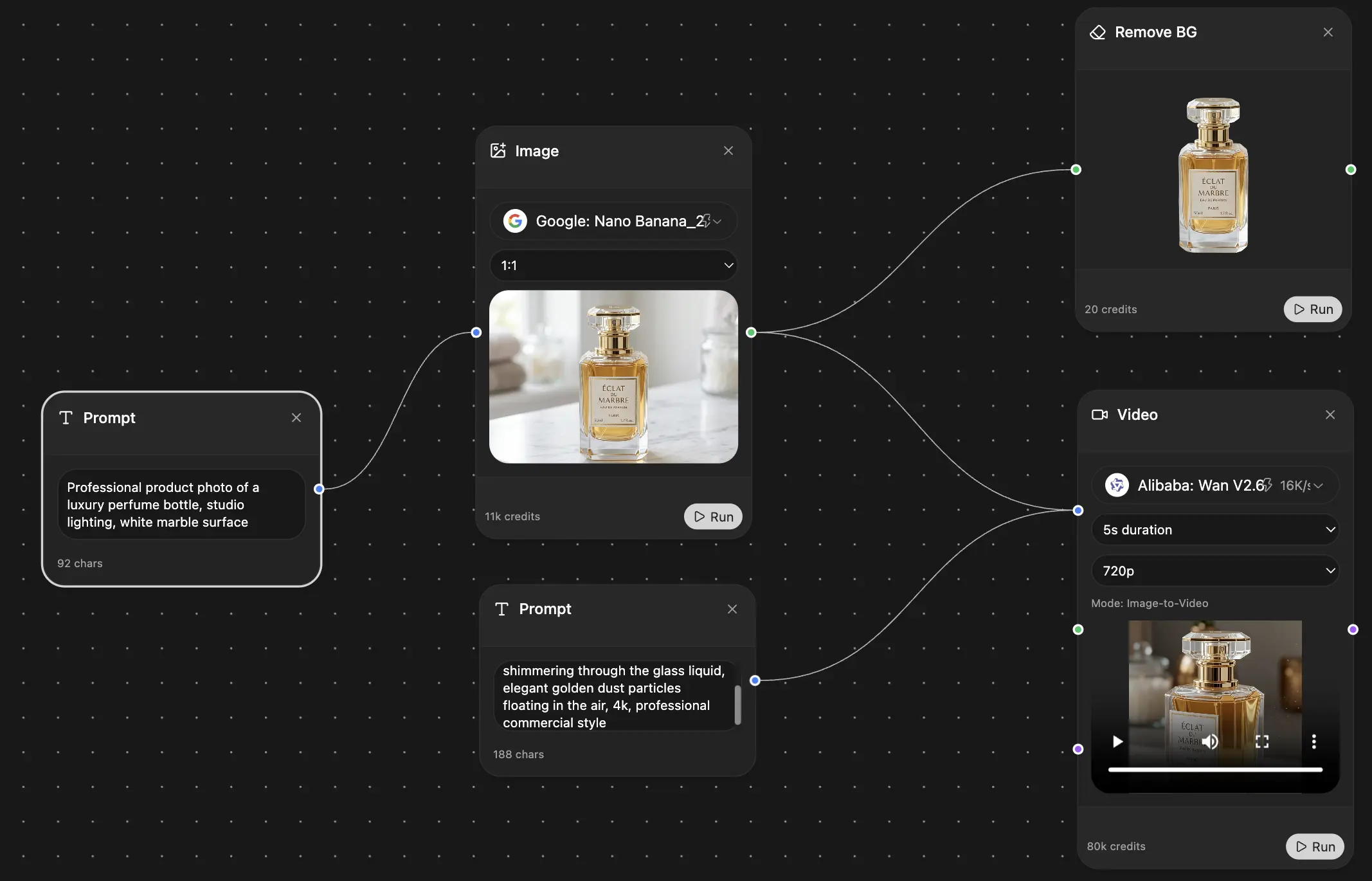
Your infinite AI canvas.
Chat, image, video & motion tools — side by side
Save hours of work and research
Transparent, High-Value Pricing
Trusted by teams at


Free
No credit card required
- 100 credits daily
- 3 AI models to try
- Basic AI chat
Plus
- 1,000,000 credits/month
- 25+ AI models — GPT, Claude, Gemini, Grok & more
- Agent Mode with web search, computer tools and more
- Creative Studio: image generation and video generation
- Project Library: chat with document, website and youtube, podcast generation, flashcards, reports and more
- Workflow Studio and FocusOS
Professional
- Everything in Plus, and:
- 2,100,000 credits/month
- Pro-exclusive models (Claude Opus, Grok 4, Sonar Pro)
- Motion Tools & Max Mode
- First access to latest features
- Access to additional offers
What Our Users Say
Great Tool after 2 months usage
"I love the way multiple tools they integrated in one platform. Going in the right direction."
— simplyzubair
Best in Kind!
"The quality of data and sheer speed of responses is outstanding. I use this app every day."
— barefootmedicine
Simply awesome
"The credit system is fair, models are perfect, and the discord is very responsive. Quite awesome."
— MarianZ
Great for Document Analysis
"Just works. Simple to use and great for working with documents. Money well spent."
— yerch82
Great AI site with accessible LLMs
"The organization of features is better than all the other sites — even better than ChatGPT."
— sumore
Excellent Tool
"It lives up to the all-in-one claim. All the necessary functions with a well-designed, easy UI."
— AlphaLeaf
Well-rounded platform with solid LLMs
"The team clearly puts their heart and soul into this platform. Really solid extra functionality."
— SlothMachine
Best AI tool I've ever used
"Updates made almost daily, feedback is incredibly fast. Just look at the changelogs — consistency."
— reu0691