How to Improve Analytical Thinking in an AI World
Learn how to improve analytical thinking with real-world exercises and AI tools. Sharpen your problem-solving skills and make smarter decisions today.
So, you want to get better at analytical thinking? Spoiler alert: the secret isn't some magic formula. It’s about learning to break down big, messy problems into smaller pieces, consistently questioning what you think you know, and making structured thinking a regular practice. Think of it less like a final exam and more like hitting the gym—it’s a skill you build one rep at a time.
Why Analytical Thinking Is Your Secret Weapon

Let's be honest, "analytical thinking" can sound a bit stuffy, like something reserved for data scientists or detectives in old movies. But in a world drowning in information (and now, AI-generated noise), it's the one skill that helps you separate the signal from the static.
At its core, analytical thinking is about looking at a complex situation and seeing the underlying structure and hidden connections that everyone else misses. It’s the ability to deconstruct, not just consume.
What It Looks Like in the Real World
This isn't just about spreadsheets and numbers. It's the practical, everyday superpower that helps you make smarter moves, no matter your role.
For example, a marketer with sharp analytical skills doesn't just see a "failed" ad campaign. They dig into the data and discover the ad actually resonated with a completely new, passionate audience they'd never reached before. Suddenly, a loss turns into a major win.
An entrepreneur might spot a tiny, overlooked frustration in a competitor's service and build a whole business in that gap. That’s not just luck; it’s analysis in action. In today's economy, this skill is your best career insurance policy.
Analytical thinking is about taking things apart to see how they work. Critical thinking is about judging whether they work well. You can't do the second part until you've mastered the first.
This distinction is key. Before you can effectively challenge an idea (critical thinking), you first have to understand all its moving parts (analytical thinking).
The Core Pillars of Analytical Thinking
To get started, you need to understand the fundamental building blocks of this skill. Here's a quick breakdown of what makes up analytical thinking and what it actually looks like in your daily grind.
These four pillars work together to create a powerful framework for making sense of any challenge you face.
Why This Skill Is Non-Negotiable Now
By 2026, this isn't just a nice-to-have. Strategic and critical thinking has become the undisputed top priority for companies, with a massive 56% of L&D professionals calling it their most critical competency. That puts it far ahead of even digital skills and leadership.
Organizations that get this right are already seeing huge benefits, reporting 2-3x faster decision cycles. They're not just working harder; they're thinking smarter.
Throughout this guide, we’ll move from theory to action. When it comes to gathering information and applying logic, for example, diving into is a great starting point. We'll show you exactly how to train each of these pillars, using powerful tools like Zemith to help you practice and scale your progress.
First, A Reality Check: Just How Analytical Are You?

Before we start building new mental muscles, we need to know what we're working with. This is your personal thinking check-up, and no, there won't be a quiz. It’s all about honest self-reflection to figure out where you shine and, more importantly, where your blind spots are hiding.
Think about it: you can’t get directions to a new city without knowing your starting point. The same goes for sharpening your mind. Getting real with yourself about how you currently think isn't just a good idea—it's the only way to start.
The point isn't to be hard on yourself. It's to gather intel. We all have mental shortcuts and default settings that can lead us astray. It’s time to find out what yours are.
Shining a Light on Your Mental Habits
Your brain is wired for efficiency. That’s great most of the time, but it also means it loves taking shortcuts, known as cognitive biases. These are the natural enemies of clear, analytical thought.
One of the most common is confirmation bias. This is our brain’s habit of cherry-picking information that proves what we already believe. It’s like creating a social media feed where everyone agrees with you—it feels comfortable, but you’re not learning anything new.
Then there’s the availability heuristic, where we give way too much weight to information that’s easy to remember. It’s the reason people are more scared of a dramatic shark attack than a mundane car accident, even when statistics paint a very different picture. Just knowing these biases exist is half the battle.
Your thinking patterns will run on autopilot if you let them. By default, they steer you toward easy, familiar conclusions—which are often the wrong ones.
A little structured self-reflection is how you grab the wheel and start steering yourself toward better insights.
Performing a Personal Decision Autopsy
Let's get practical. The best way to see your thinking in action is to dissect a recent decision you made. It doesn’t need to be a massive corporate strategy—it could be picking a new project management tool or even figuring out why a marketing campaign didn't land.
Pick a decision from the past month. Now, open a notebook (or fire up Zemith’s Smart Notepad) and ask yourself these questions. Be brutally honest.
- What problem was I really trying to solve? Did I define it clearly, or did I just rush toward the first solution that popped into my head?
- What information did I look at? Did I actively search for data that might challenge my gut feeling, or did I stick to what was easy and convenient?
- What assumptions did I make? Write down everything, even the "obvious" stuff. This is often where the biggest biases hide.
- What other options did I genuinely consider? Did I explore a few different paths or just pick between two easy choices?
- Who did I ask for input? Was it a mix of different viewpoints, or did I just talk to people I knew would back my play?
This isn't about shaming yourself over past choices. It’s about creating a "game tape" of your thought process so you can spot the fumbles. After all, building solid arguments requires solid evidence. If you want to get better at finding and using it, our guide on is a great place to start.
When you review your decisions like this, you start seeing the patterns. Maybe you consistently leap to conclusions. Perhaps you’re great at gathering facts but get stuck when it's time to connect the dots. Once you know your starting point, you can finally build a plan that works.
The Thinker's Gym: Daily Exercises to Build Brainpower

Here's the thing about analytical skills: they're a muscle. Let them sit, and they'll get flabby. But put them through a regular workout, and they'll become sharp, responsive, and ready for anything.
This is your new workout plan—a gym membership for your mind, but without the questionable locker room smells.
We're skipping the dusty old logic puzzles that have no real-world payoff. Instead, we'll focus on practical drills you can weave into your daily life. The whole point is to shift from being a passive sponge for information to becoming an active, critical thinker.
It’s not about knowing more; it's about thinking better. That means building habits that force you to break down information, challenge assumptions, and see the connections that everyone else misses. Let’s get into the reps.
Start with Assumption Hunting
One of the simplest, yet most powerful, daily exercises I’ve found is what I call "Assumption Hunting." It costs nothing and you can do it literally anywhere.
The next time you read an article, watch a TV ad, or sit through a project pitch, just ask yourself: What’s the unstated belief holding this entire argument up?
For example, that slick ad for a new energy drink? It assumes you’re not happy with your current energy level. A headline about a "booming" job market? It assumes a very specific definition of what a "good" job even is.
Spotting the hidden premise is the first step to evaluating any argument. If the foundational assumption is weak, the entire conclusion crumbles, no matter how convincing it sounds.
Here’s a quick way to put this into practice. Start a new file in Zemith’s Smart Notepad and call it "My Daily Assumption Hunt." Each day, just jot down one assumption you caught in the wild and a quick sentence on why it’s a big deal. This simple act starts retraining your brain to look past the surface.
Master the Five Whys Technique
Another killer exercise is the Five Whys technique. It was famously developed at Toyota as a way to find the root cause of a problem, not just slap a bandage on the symptoms. It's brilliant because it forces you to peel back the layers of an issue like an onion.
The process is exactly what it sounds like. When you’re staring down a problem, you ask "Why?" five times (or more, whatever it takes) to dig down to what’s really going on.
Let's walk through a classic business problem:
- Problem: Our website's bounce rate is through the roof.
- Why? (1) Because new visitors are ditching the homepage almost instantly.
- Why? (2) Because the page is taking forever to load.
- Why? (3) Because the main banner image is a massive, unoptimized file.
- Why? (4) Because our marketing team uploaded it directly from their camera without compressing it.
- Why? (5) Because the team never got trained on the new content workflow.
Boom. The problem isn't just "fix the website." The real, actionable issue is a gap in training and process. You've moved from a technical symptom to a human-centered solution, which is where real change happens. If you want to get better at this kind of self-correction, exploring will help you analyze your own problem-solving methods.
Turn Your AI into a Sparring Partner
This is where things get really interesting. You can use AI as your personal brain-training equipment instead of just a fancy search engine. The right tools can turn passive learning into an active workout.
Quiz Yourself: Got a dense industry report or a long article to get through? Feed it to Zemith's Document Assistant and give it a simple prompt: "Create a 10-question quiz from this doc, focusing on its main arguments and data." This forces you to actually engage with the material, not just let your eyes glaze over it.
Automate Analysis: Even a simple to-do list can become a decision-making drill. In the Smart Notepad, jot down the pros and cons for a choice you're mulling over. Then, ask the AI to "Organize these points into a pros-and-cons table and highlight the three most important factors." It's a great way to untangle your thoughts and see your options clearly.
Getting good at this is becoming non-negotiable. Decision intelligence—the blend of data and human judgment—is what separates the pros from the amateurs. One report noted that 76% of organizations admit to making choices without looking at their own data. That's a huge gap. People who bridge that gap are making decisions that are twice as good. You can to see why this is becoming so critical.
Go Beyond the Basics with Advanced Drills
Once these daily reps feel like second nature, you can start adding some more advanced exercises to the mix. These are designed to really challenge your ability to think in structured, logical ways.
For a deeper dive, check out resources on . Adopting those kinds of structured problem-solving frameworks is a game-changer for building true analytical brainpower.
When you commit to these daily exercises, you're doing more than learning a skill—you're fundamentally rewiring how you think. You’re building the mental habits that will help you solve bigger problems, make smarter choices, and stand out in whatever you do.
Using AI as Your Analytical Sidekick
The smartest thinkers of tomorrow aren't going to be working alone—they'll be working with AI. The real skill is figuring out how to turn artificial intelligence from a glorified search engine into your personal analytical sparring partner.
This is where you stop using AI to just fetch answers and start using it to ask much better questions. And the best part? You probably already have the tools you need. With a platform like Zemith, you can put every part of your analytical process on steroids.
Think of it as a partnership. You bring the curiosity, the context, and the final judgment. The AI brings the raw processing power. Let's dig into what this collaboration actually looks like day-to-day.
From Raw Data to Deep Insights
Let's say you're a marketer trying to get your head around a complex new market segment. Your first analytical hurdle isn't finding answers, but grabbing the right information without drowning in a sea of search results. This is your first AI workout.
Instead of spending days sifting through articles, you can fire up Zemith's Deep Research tool to pull everything together. It can chew through academic papers, market reports, and competitor analyses in minutes, handing you a curated, comprehensive brief.
But here’s where the real training starts. Don’t just read the summary. Open up your findings in Zemith’s Document Assistant and start a conversation.
The biggest leap in analytical thinking happens when you stop asking AI for facts and start asking it to challenge your perspective. The goal isn't agreement; it's intellectual friction.
Ask it the tough questions. Seriously, don't hold back. The AI doesn't have feelings.
- "What are the three weakest arguments in this research summary?"
- "Play devil's advocate. Give me three reasons this market entry strategy will tank."
- "Based on this data, what are the biggest assumptions I'm making right now?"
This isn’t about getting the "right" answer from the AI. It’s about using its massive processing ability to poke holes in your own thinking before a client or your boss does.
Brainstorming and Visualizing Your Analysis
Analytical thinking isn't just about breaking things down; it's also about building compelling arguments and stories from the pieces.
Imagine you're a content strategist brainstorming angles for a new campaign. Your gut might give you one or two ideas. But to be truly analytical, you need to explore the entire landscape of possibilities.
This is where Zemith's multi-model AI comes in handy. Give it a prompt like: "Brainstorm five completely different angles for a marketing campaign about our new productivity software. Aim one at developers, one at students, and three at remote workers."
In seconds, you've got a spectrum of ideas you probably wouldn't have landed on by yourself. But the analysis doesn't stop there. Now, pull those five angles into Zemith’s Whiteboard. For each angle, create branches for:
- Core Message: What's the one-sentence takeaway?
- Audience Pain Point: What specific problem does this solve for them?
- Supporting Evidence: What data or testimonials do we have to back this up?
- Potential Risks: How could this angle fail or even backfire?
By mapping it all out visually, you turn a simple list of ideas into a structured analytical map. It helps you compare, contrast, and pick the strongest narrative based on a logical framework, not just a gut feeling. Knowing the right way to phrase your requests is key, which is why we’ve put together a guide on the most effective . This partnership is the future of high-performance work.
Your New Socratic Coding Tutor
For developers and engineers, getting better at analytical thinking often boils down to sharpening your logic and debugging process. We've all been there—staring at a bug for hours, trapped in our own assumptions about where the problem is.
Zemith’s Coding Assistant isn't just for spitting out code snippets. Think of it as a Socratic tutor—a guide that helps you find the answer yourself through pointed, logical questions.
So, instead of just asking, "Fix this bug," try a more analytical approach:
- Explain the Logic: Paste your function and ask, "Walk me through the logic of this code, step by step, as if I'm a total beginner." This forces you to re-examine your own work from a fresh, simplified perspective.
- Hypothesize Scenarios: Prompt it with, "What are three edge cases this function probably won't handle correctly?" This shifts you from reactive debugging to proactive analysis.
- Isolate Variables: Try something like, "If the error is on line 42, what are the most likely state variables causing it?" This is all about narrowing your focus methodically.
When you use AI to structure your debugging, you’re not just fixing a bug. You’re practicing a repeatable, logical problem-solving framework that strengthens your analytical muscles for the next big challenge.
This shift in how we work with technology isn't just a neat trick; it’s quickly becoming a fundamental professional skill. Gartner predicts that by 2026, 40% of all analytics queries will be generated using natural language—basically, just talking to an AI. This means the barrier to entry for data analysis is dropping, but the bar for critical interpretation is rising. The real skill will be in judging the AI's output, since poor inputs are known to derail 84% of AI strategies. You can and how it's shaking up the business world.
Power Up Your Brain with Zemith Workouts
Ready to turn theory into practice? It's time to hit the gym—the mental gym.
Here are specific, actionable exercises using Zemith's tools to sharpen different facets of your analytical thinking. Pick one that feels like a stretch and commit to doing it a few times a week. You'll be surprised how quickly you start seeing things differently.
These aren't just one-off tasks; they're habits. Integrating these small workouts into your routine is how you build the mental muscle for tougher, more complex analytical challenges down the road.
Making It Stick: How to Turn Analysis into a Habit

Okay, let's be honest. All the exercises and fancy tools in the world won't matter if you drop them after a week. The real win is getting to a point where analytical thinking isn't something you try to do; it's just how you operate. It becomes second nature.
The secret isn’t some massive, life-altering change. It’s all about small, consistent habits that stack up over time. You’re building a system for your brain so you don't have to burn through willpower every single day. Here’s how to make it stick.
Master the Meeting with the Five Whys
You can completely change your impact in meetings with one simple technique: the Five Whys. We’ve touched on it before, but this is where you put it into practice. When a problem comes up—say, "Customer engagement is down"—most people immediately jump to shallow solutions. This is your chance to guide the conversation.
Instead of just nodding along, start asking why. "Why is engagement down? Is it happening for all our users, or just a specific group? Are we seeing this on the app, the website, or both?" By gently peeling back the layers of the problem, you move the entire group from panicking about symptoms to focusing on the actual root cause. You’ll quickly become the person who finds the real answers, not just by having them, but by asking the questions that lead to them.
Start Your Decision Journal Today
If there's one habit I can't recommend enough, it's keeping a decision journal. It's basically a log where you write down your big decisions, the 'why' behind them, and what actually happens later. This creates a feedback loop that is brutally honest and incredibly powerful for growth.
Zemith’s Smart Notepad is perfect for this. Just create a new note for any significant choice and use a quick template:
- The Decision: What am I choosing to do? (e.g., "Picking a new email marketing platform.")
- My Logic: Why this one? What data, assumptions, and gut feelings am I running on?
- My Prediction: What do I expect to see in 3-6 months because of this?
- The Review (Set a reminder!): What really happened? Where was my thinking spot on? What did I completely miss?
A decision journal turns hindsight into foresight. By systematically reviewing your past thinking, you train your brain to spot flawed logic before you act on it next time.
Actually reviewing the journal is the most critical part. This isn’t about beating yourself up over past mistakes. It's about learning from your own "game tape." You'll start to see your own biases and patterns emerge, which is the first step to correcting them in the moment. It’s the same core idea behind our guide on the —reviewing information over time is what makes it sink in.
Build Your Personal "Board of Advisors"
Great thinking is rarely a solo activity. The best way to find the weak spots in your analysis is to let other smart people poke holes in it. Find a few colleagues or mentors you trust—especially those who tend to see things differently than you do—and form an informal "board of advisors."
Before you go all-in on a major decision or presentation, send them a quick summary. Keep it simple: "Hey, here's the problem I'm working on, here's what I'm proposing, and this is why I think it's the right call. What am I missing?"
The feedback you get will be gold. They’ll question your assumptions and force you to find better evidence to support your claims. It's a low-stakes way to pressure-test your thinking before you're in a high-stakes situation.
Create a Simple Weekly Analysis Schedule
Routines are what turn effort into habit. To make analytical practice a constant, you’ve got to put it on the calendar. Nothing complicated—a simple weekly schedule is all you need to build and keep momentum.
Here’s an example you can steal or adapt. The goal is to set aside just 15-20 minutes a few times a week for a focused exercise.
On Monday, you could drop an article into Zemith's Document Assistant and ask, "What are the unstated assumptions in this text?" On Wednesday, fire up the Deep Research tool to actively search for data that disproves your belief. This kind of structured, consistent practice is how you go from just knowing about analytical thinking to actually being an analytical thinker.
A Few Common Questions We Hear
Diving into analytical thinking always brings up a few questions. That’s a good thing—it means you’re already starting to think critically! Let's clear up some of the most common hurdles people face when they start this journey.
How Long Until I Actually Feel Smarter?
Let's be real: you won't wake up tomorrow as the next Sherlock Holmes. The real magic happens with consistency.
With just 15-20 minutes of focused practice each day, you’ll start to feel a genuine shift in a few weeks. It's not a sudden lightning bolt, but a gradual change in how you see the world. You’ll find yourself questioning assumptions more often and spotting logical gaps in conversations without even trying.
The big "aha!" moments, where you're confidently tackling complex problems, usually show up after about 3-6 months of steady effort. The key is consistency, not cramming. A fantastic way to track this is to keep a decision journal in Zemith’s Smart Notepad. When you look back at your thought process from a month ago, you’ll be amazed at how much clearer you’ve become.
Is This Only for Tech People?
Absolutely not. This is one of the biggest misconceptions out there. Analytical thinking is a superpower in any job.
- A salesperson uses it to get past the surface-level "I need a cheaper option" and uncover the client's real business pain.
- A designer applies it to figure out why a user is getting stuck on a certain screen, moving beyond just "the button is in the wrong place."
- A manager relies on it to dissect team drama, pinpointing the root cause of a conflict instead of just reacting to the emotions.
Think about it—you can practice these skills anywhere. Break down the plot of a movie, deconstruct a sales pitch you got in your inbox, or even use the Five Whys to plan a family vacation. It's a universal tool.
What's the Single Biggest Mistake to Avoid?
The number one mistake is treating this like a boring chore you have to get through. Simply reading articles about logic is like reading a book about weightlifting and expecting to get stronger. You have to actually do the exercises.
The second-biggest pitfall? Being afraid of getting it wrong. You are going to make logical mistakes. You will miss key details. That's part of the process! The goal isn’t to become a perfect thinking machine; it's to get better at spotting your own blind spots and learning from them. Every single "oops, I totally missed that" is a win, because it trains your brain for next time.
AI is a powerful calculator, but it can't tell you which problem is worth solving or whether its own answer makes sense in the real world. AI handles the 'what' (data processing), but we handle the 'so what' (judgment, context, and wisdom).
Your analytical skills are what let you steer the AI and challenge its conclusions. The future isn't about being replaced by AI; it's about thinking with it. To make sure these skills stick, you can use tools that help build and maintain new routines, like some of the .
Ready to stop juggling a dozen different apps and start thinking smarter? Zemith brings all your tools into one cohesive workspace. From brainstorming on an infinite whiteboard to getting deep research insights, it's the all-in-one sidekick for your analytical journey. and begin building your brainpower today.
Explore Zemith Features
Every top AI. One subscription.
ChatGPT, Claude, Gemini, DeepSeek, Grok & 25+ more


Always on, real-time AI.
Voice + screen share · instant answers
What's the best way to learn a new language?
Immersion and spaced repetition work best. Try consuming media in your target language daily.
Voice + screen share · AI answers in real time
Image Generation
Flux, Nano Banana, Ideogram, Recraft + more

Write at the speed of thought.
AI autocomplete, rewrite & expand on command
Any document. Any format.
PDF, URL, or YouTube → chat, quiz, podcast & more
Video Creation
Veo, Kling, Grok Imagine and more

Text to Speech
Natural AI voices, 30+ languages
Code Generation
Write, debug & explain code
Chat with Documents
Upload PDFs, analyze content
Your AI, in your pocket.
Full access on iOS & Android · synced everywhere
Your infinite AI canvas.
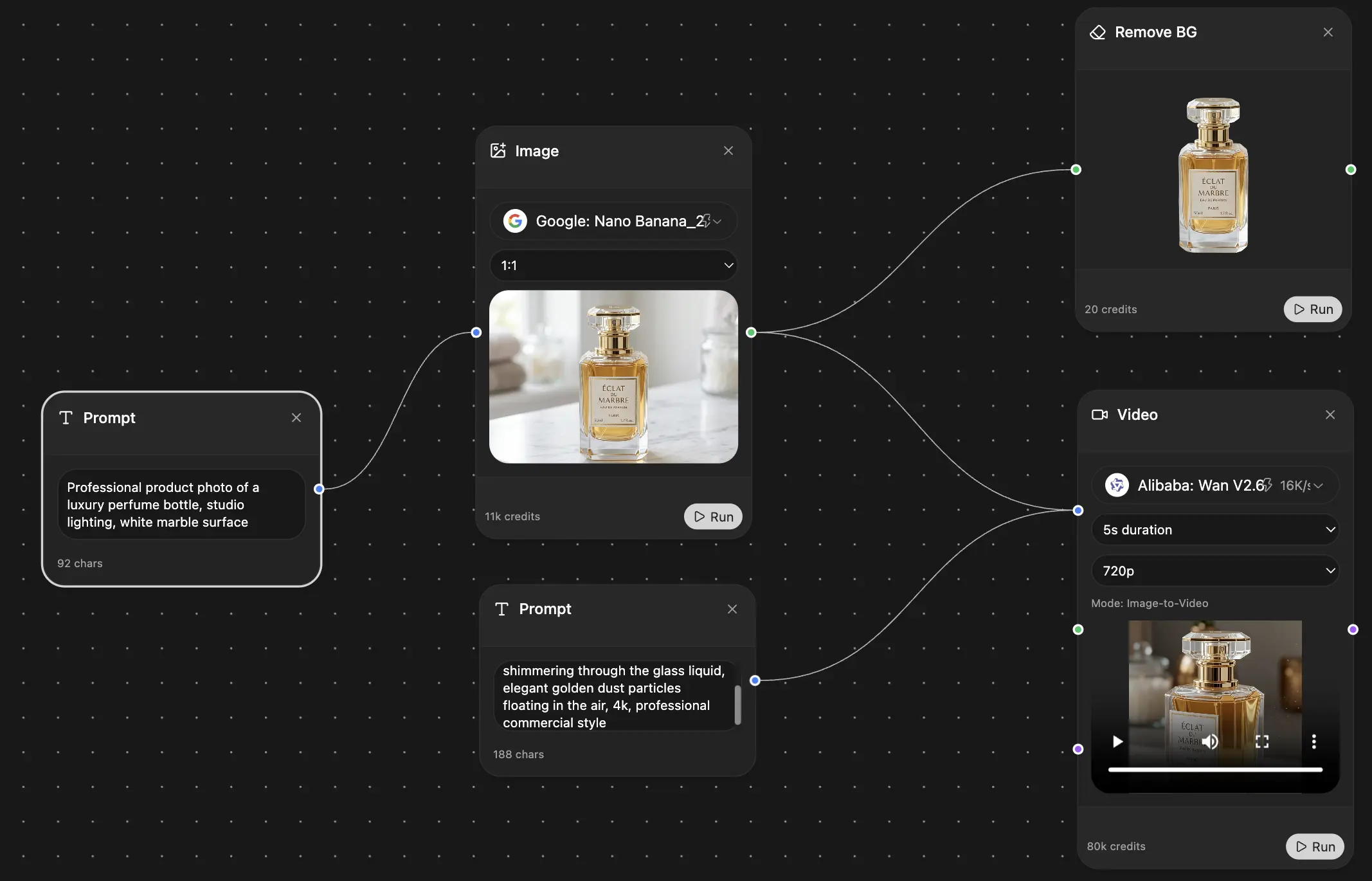
Chat, image, video & motion tools — side by side
Save hours of work and research
Transparent, High-Value Pricing
Trusted by teams at


Free
No credit card required
- 100 credits daily
- 3 AI models to try
- Basic AI chat
Plus
- 1,000,000 credits/month
- 25+ AI models — GPT, Claude, Gemini, Grok & more
- Agent Mode with web search, computer tools and more
- Creative Studio: image generation and video generation
- Project Library: chat with document, website and youtube, podcast generation, flashcards, reports and more
- Workflow Studio and FocusOS
Professional
- Everything in Plus, and:
- 2,100,000 credits/month
- Pro-exclusive models (Claude Opus, Grok 4, Sonar Pro)
- Motion Tools & Max Mode
- First access to latest features
- Access to additional offers
What Our Users Say
Great Tool after 2 months usage
"I love the way multiple tools they integrated in one platform. Going in the right direction."
— simplyzubair
Best in Kind!
"The quality of data and sheer speed of responses is outstanding. I use this app every day."
— barefootmedicine
Simply awesome
"The credit system is fair, models are perfect, and the discord is very responsive. Quite awesome."
— MarianZ
Great for Document Analysis
"Just works. Simple to use and great for working with documents. Money well spent."
— yerch82
Great AI site with accessible LLMs
"The organization of features is better than all the other sites — even better than ChatGPT."
— sumore
Excellent Tool
"It lives up to the all-in-one claim. All the necessary functions with a well-designed, easy UI."
— AlphaLeaf
Well-rounded platform with solid LLMs
"The team clearly puts their heart and soul into this platform. Really solid extra functionality."
— SlothMachine
Best AI tool I've ever used
"Updates made almost daily, feedback is incredibly fast. Just look at the changelogs — consistency."
— reu0691