Your Ultimate Guide to Homework Help for Chemistry
Struggling with chemistry? Get actionable homework help for chemistry, from problem-solving strategies to leveraging AI tools like Zemith for A+ results.
Stuck on your homework? We’ve all been there. Getting good homework help for chemistry isn't about finding a magic wand—it's about figuring out why you’re stuck in the first place. Once you diagnose the real issue, you can find the right strategies and tools, like Zemith, to start building real confidence.
Feeling Lost in a Sea of Beakers and Bonds
Let's be honest. Chemistry homework can feel like trying to read a foreign language while juggling beakers. One moment, you think you've finally got atoms figured out, and the next you're drowning in stoichiometry or some bizarre organic reaction mechanism. If that sounds familiar, you're definitely not alone.
That feeling of being totally overwhelmed is practically a rite of passage for chemistry students. In fact, a recent analysis found that a staggering 70% of US high schoolers consider chemistry their toughest STEM subject. It's no wonder so many resources—from AI tutors to desperate late-night study groups—have popped up to help students survive.
Why Is Chemistry Homework So Hard Anyway?
The challenge usually isn't about being "bad at science." It's often a mix of a few specific hurdles that gang up on you. Nailing down your personal pain point is the absolute first step to getting past it.
- Abstract Concepts: So much of chemistry is invisible. Things like quantum numbers or molecular orbitals are tough to picture, unlike dissecting a frog in biology. When you can’t see what you’re studying, it makes it much harder to grasp intuitively.
- The Math Barrier: Chemistry is loaded with math—from mole calculations to pH logarithms. If your algebra skills are a bit shaky, it can feel like hitting a brick wall every time you try to solve an equation. It's the "I came here for science, not for letters in my math problems" dilemma.
- Sheer Volume of Information: It can feel like there's an endless amount to memorize. You've got polyatomic ions, reaction types, and endless naming conventions. It’s a massive task that can easily lead to burnout.
The real goal isn't just to find an answer for tonight's homework. It's about building a solid strategy for understanding chemistry so you can solve problems on your own down the road.
Pinpointing Your Specific Hurdle
So, you've been staring at the same problem for an hour with zero clue where to begin. That's your cue to stop and play detective. What's the real roadblock?
Before you can fix the problem, you have to know what it is. Are you stuck because you don’t really get what a mole is? Or do you just forget the steps for balancing a tricky redox reaction? The table below can help you diagnose the issue.
Pinpointing Your Chemistry Challenge
Use this table to quickly diagnose where you're struggling and find the first step toward a solution.
Recognizing these patterns is a game-changer. Once you know what's tripping you up, you can look for help that’s actually targeted to your needs. For instance, if you’re struggling with just retaining all the information, you might get a lot out of these proven techniques on .
This way, you’re focusing your energy where it'll do the most good, making your study sessions way more productive and a whole lot less frustrating.
How to Actually Solve Any Chemistry Problem
It's late, the textbook is a blur, and you’re staring at a chemistry problem that feels like it’s written in an alien language. We get it. But endlessly searching for the final answer online is a dead end.
There's a much better way, and it doesn't involve memorizing every single formula.
The trick is to build a reliable system—a mental checklist you can run through for any problem, every single time. This turns a huge, overwhelming question into a series of small, manageable tasks. It's not just about surviving tonight's homework; it's about building the real skill you need to nail the exam.
Often, chemistry feels tough because several things are hitting you at once. This flowchart pretty much sums up the usual suspects.

It’s a perfect storm of abstract concepts, tons of work, and tricky math. So, let's figure out how to navigate that storm.
Deconstruct Before You Calculate
The single biggest mistake students make is jumping straight to the calculator. Before you even think about punching in numbers, just pause and break the problem apart.
Ask yourself these questions first:
- What am I actually supposed to find? Is it a mass, a concentration, a percentage yield? Go ahead and circle or highlight that final goal.
- What information do I have? List out every single value, and don't forget the units (grams, moles, liters). This is a non-negotiable step!
- What's the core concept here? Are we talking about stoichiometry? The gas laws? Acid-base reactions? Figuring out the topic tells you which formulas and rules you'll need.
This little diagnostic exercise is your roadmap. It transforms a scary paragraph into a clear set of knowns and a single unknown to solve for.
The most powerful tool you have in chemistry isn't a fancy calculator; it's a solid, systematic approach. Slowing down to really understand the question will, ironically, help you solve it way faster.
A Real-World Example: A Tricky Limiting Reactant Problem
Let’s walk through a classic stumper. Imagine your homework asks: “If you react 25 grams of sodium (Na) with 30 grams of chlorine gas (Cl₂), how many grams of sodium chloride (NaCl) can be produced?”
Here’s how we apply our deconstruction method:
- The Goal: Find the mass of NaCl in grams.
- The Givens: We have 25 g of Na and 30 g of Cl₂.
- The Concept: Ding ding ding! This is a limiting reactant problem because we have starting amounts for both reactants.
Now, we can start solving. The very first thing to do—which 90% of students forget when they're in a rush—is to write out and balance the chemical equation.
- Unbalanced: Na + Cl₂ → NaCl
- Balanced: 2Na + Cl₂ → 2NaCl
Next, convert your starting amounts into moles. You can't compare grams directly in a reaction; it's all about the moles.
- Moles of Na: 25 g Na / 22.99 g/mol = 1.087 mol Na
- Moles of Cl₂: 30 g Cl₂ / 70.90 g/mol = 0.423 mol Cl₂
Okay, now use the ratio from your balanced equation to see which reactant is going to run out first. For every 1 mole of Cl₂, we need 2 moles of Na.
- To use up all our chlorine, we'd need: 0.423 mol Cl₂ × (2 mol Na / 1 mol Cl₂) = 0.846 mol Na.
- Do we have enough sodium? Yes! We have 1.087 mol, which is more than the 0.846 mol we need. That means chlorine (Cl₂) is our limiting reactant. It’s the one that will stop the reaction.
Finally, just use the limiting reactant to figure out how much product you can make.
- Moles of NaCl produced: 0.423 mol Cl₂ × (2 mol NaCl / 1 mol Cl₂) = 0.846 mol NaCl.
- Grams of NaCl: 0.846 mol NaCl × 58.44 g/mol = 49.44 g NaCl.
Sanity Check and Common Pitfalls
Always take a second to do a quick "sanity check." Does your answer even make sense? If you get a pH of 15, something's wrong. If your final mass is more than your starting reactants combined, you've made a mistake.
In our example, our product mass (49.44 g) is less than our total starting mass (25 g + 30 g = 55 g). That passes the test, thanks to the law of conservation of mass.
Building these analytical habits is what really counts. For more tips on this, check out our guide on . The more you practice a structured approach like this, the more it becomes second nature—turning that homework confusion into genuine confidence.
Build Study Habits That Actually Work

Solving the problem in front of you is a great start. But let's be real, the real boss battle is remembering that same concept two months from now during the final exam. If you want homework help for chemistry that lasts, you’ve got to build study habits that actually stick.
This isn't about brute-force memorization or those desperate all-nighters fueled by energy drinks. It’s about working smarter, not harder. It’s about creating a system that makes learning chemistry feel less like a chore and more like a puzzle you actually know how to solve.
Go Beyond Rote Memorization
Just rereading your notes is one of the biggest traps you can fall into. Your brain gets this false sense of familiarity, but you haven't actually checked if you can apply the knowledge. You need to switch from passively reviewing to active recall.
This just means you have to actively pull information out of your brain, not just cram it in. One of the best ways to do this is with the Feynman Technique. It sounds fancy, but it's super simple.
- Pick a concept: Let’s say, VSEPR theory.
- Explain it simply: Grab a friend (or your cat, no judgment here) and try explaining it in the simplest terms possible, like you're teaching a fifth-grader.
- Find the gaps: The second you stumble and say "you know, that thingy," you've just found a weak spot in your understanding. That's a good thing!
- Review and repeat: Now, go back to your notes or textbook to fill that specific gap. Then, try explaining it all over again until it’s smooth.
This whole process forces you to truly get a topic, not just recognize the keywords on a page.
Active recall is the mental equivalent of doing reps at the gym. It feels harder than just reading, but it’s what actually builds strength and makes knowledge stick.
Create Study Materials That Work for You
Your study tools should feel like they were made for you—because they were, by you! Don't just rely on pre-made flashcards; creating your own helps you engage with the information on a much deeper level.
If you're a visual learner, concept maps can be a total game-changer. Try mapping out all the different types of organic reactions, connecting them with arrows to show how one functional group can be turned into another. It transforms a jumble of reactions into a clear, logical roadmap.
And of course, you can't go wrong with good old-fashioned flashcards, especially for the stuff that just needs to be memorized.
- Polyatomic Ions: Put the ion (like SO₄²⁻) on one side and its name (sulfate) on the other.
- Key Definitions: "Electronegativity" on the front, simple definition on the back. Easy.
- Common Formulas: The ideal gas law (PV=nRT) is a perfect candidate for a flashcard.
The act of making these is part of the learning. But if you're short on time, a tool like Zemith can be an awesome partner. You can drop in a chapter from your textbook, and its Document Assistant will generate a set of flashcards or a quiz for you in seconds. It saves you the busy work but still makes you practice active recall. To keep your digital study life in order, you might also want to check out some of the .
Embrace Consistent Practice
Chemistry is a skill. Like shooting a basketball or playing guitar, it gets better with consistent practice. Waiting until the night before an exam to cram an entire unit is a proven recipe for disaster. Aim for shorter, more frequent study sessions instead.
This method, often called spaced repetition, is a powerhouse for long-term memory. The science shows that reviewing material at increasing intervals is far more effective than cramming it all at once. If you want to go deeper, our guide on the has some great tips.
Think of it this way: doing a 20-minute titration calculation practice three times a week is way better than a single, two-hour panic session. And yes, learning titrations requires a special kind of patience, but that consistent, low-stakes practice is what builds the confidence you need to nail it when it counts.
Using Your AI Sidekick for Chemistry Homework Help

This setup is basically the modern student's command center, bringing together all the digital tools you need to attack tough chemistry problems from every angle.
Think about having a PhD-level expert, a super-patient tutor, and a visual aids whiz all rolled into one, ready to go 24/7. This isn't some sci-fi fantasy anymore. It’s what you get when you use a smart AI platform like Zemith.com for your chemistry homework. The goal isn’t just to find answers—it's to build your own personal learning hub where you call the shots.
AI is already making huge waves in education. A 2025 Pearson study revealed that students using AI tutors saw their general chemistry test scores jump by an impressive 28%. And with 47% of STEM students worldwide now leaning on AI for homework, specialized tools are becoming essential. For instance, advanced features like chemical simulations and molecular visualization on platforms like Zemith.com can slash overall study time by up to 60%. You can dig into more of these findings on .
Taming the Textbook with the Document Assistant
We’ve all been there—staring down a 40-page chapter on thermodynamics so dense it feels like it could collapse into a black hole. Reading it once is a chore. Reading it three times just to find a single formula is pure torture. This is exactly where Zemith’s Document Assistant steps in to save the day.
Just upload that monster PDF or snap a photo of your textbook pages. Then, you can ask it to do the heavy lifting.
- Get a Quick Summary: Ask for a bullet-point list of the most important concepts. You get the core ideas without the extra fluff.
- Generate Instant Flashcards: Tell it to create flashcards for all the key terms and definitions in the chapter. Boom, instant study set.
- Create a Pop Quiz: Ask it to whip up a 5-question quiz on the reading so you can check if you actually understood it.
This little trick saves you from the soul-crushing task of just processing information and lets you get straight to using it. It’s an absolute game-changer for studying efficiently.
Getting Step-by-Step Solutions in the AI Chat
Alright, let's talk about the big one: getting stuck on a specific homework problem. You've tried it a couple of times, your answer doesn't match the one in the back of the book, and you can feel your sanity slipping. Instead of just Googling for the final answer, you can use an AI chat for real guidance.
This is where asking the right question makes all the difference. To really get the most out of your AI chemistry tutor, it pays to learn the art of . Don’t just paste the problem and hit enter. Give it some context, like, "I'm stuck trying to find the limiting reactant in this problem. Can you show me the steps?"
A great prompt gets you a great answer. Instead of asking "What's the answer?" try "Can you explain the steps to find the pH of this buffer solution, and tell me why we use the Henderson-Hasselbalch equation here?"
The AI can then walk you through the entire process, explaining each calculation along the way. It’s like having a tutor with endless patience who’s always on call, even at 3 AM. If you're looking for more ideas, we’ve put together a whole guide on the best .
Visualizing the Invisible with Creative Tools
So much of chemistry is abstract. You can't see electron orbitals or a molecule twisting into a new shape. This is where visualization tools are worth their weight in gold.
Zemith’s creative suite helps turn those abstract ideas into something you can actually see and understand.
- Visualize Molecules: Struggling to picture the 3D shape of cyclohexane in its "chair" vs. "boat" form? Just ask the AI to generate images of both. Seeing the difference makes the concept click instantly.
- Brainstorm on the Whiteboard: The built-in Whiteboard is perfect for mapping out complex reaction mechanisms. You can draw molecules, use arrows to show electron movement, and even work with a study partner in real time, all in one place.
This isn't just about making things look cool; it’s about building a stronger mental model of how chemical processes actually work. By combining problem-solving with visualization, you fire up different parts of your brain and lock in the knowledge for good. Instead of juggling ten different apps—a PDF reader, a calculator, a flashcard app, and a drawing tool—Zemith puts your entire chemistry command center in one spot.
Getting the Right Help (Without Going Broke)
Sooner or later, you're going to hit a wall. It happens to everyone in chemistry. That AI sidekick you've been using is great, but sometimes it just isn't enough. You need a real person to connect the dots or maybe just some ongoing support to get you through the semester.
But jumping online to find help can feel sketchy. You're hit with a wall of questionable homework sites and tutors with sky-high price tags. Don't worry, you don't have to drain your savings to get quality homework help for chemistry. It’s all about figuring out what you actually need and finding the right tool for the job.
Free vs. Paid Help: What’s the Real Deal?
First, let's talk money. Free resources are awesome, but they have their limits. Paid services usually offer more personalized, in-depth support. Neither one is automatically "better"—it all boils down to your specific problem right now.
Free Stuff (AI Solvers, Forums, YouTube): These are your go-to for quick hits. Stuck on a single stoichiometry calculation or just need a fast definition of "enthalpy"? A free AI tool or a community forum can be a total lifesaver. The catch? They might not give you the deep conceptual understanding you need for bigger, trickier topics.
Paid Options (Tutors, Premium Platforms): This is for when you need more than just a quick answer. If you're completely lost in a chapter on organic reactions or need a structured way to prep for finals, investing in a tutor or a comprehensive platform is probably your best bet.
The demand for good chemistry help has absolutely exploded. Some platforms now have networks of over 4500 Ph.D. experts, and you’ll see some pretty wild claims, like 8 out of 10 students using a service landing an A. It's not just marketing hype; a 2026 NCES report highlighted that 65% of high school students get outside help for chemistry. This is especially true for tough lab calculations, where AI assistance has been shown to slash error rates by up to 75%. You can see even more data on how students are finding .
Tutor vs. Platform: Which Path to Take?
Okay, so you've decided a quick Google search isn't going to cut it. You're at a crossroads: hire a personal tutor or sign up for a platform like Zemith.
A one-on-one tutor offers a super personal experience. They can get to know your quirks and adapt to your learning style. The major drawback? The cost. Tutors often charge by the hour, and it adds up fast. Plus, their availability can be a nightmare. Good luck finding help at 2 AM during a frantic pre-midterm cram session.
This is where a platform can be a game-changer. For a flat fee, you get an entire toolkit that works like a whole team of specialists.
Zemith gives you the best of both worlds: instant, 24/7 AI-powered step-by-step help for immediate problems, combined with deep research tools for when you need to truly understand a concept from the ground up. It’s the value proposition that makes the most sense for most students.
The Fine Line Between Learning and Cheating
Let's get real for a second and talk about academic integrity. It's a huge deal, and for good reason. Just copy-pasting an answer isn't just cheating your professor—it's cheating yourself out of actually learning the material.
Using these tools and resources only becomes a problem when your goal is to avoid doing the work. If your goal is to understand the work, they become your most powerful allies.
Using tools the right way (to learn):
- "Okay, I'm stuck. I'll use the AI to get a step-by-step breakdown and see exactly where my logic went off the rails."
- "I'll solve this problem on my own first, then use a solver to check my work and see if there was a more efficient way to do it."
- "This whole concept of orbital hybridization is a mess in my head. I'll ask the AI to explain it with a simple analogy."
Using tools the wrong way (to cheat):
- "I'll just copy this entire solution and change a few words."
- "I don't have time for this, I'll just find the answer online and submit it."
Think of these resources as a supplement to your effort, not a replacement for it. If you want more ideas for leveling up your study game, check out our guide to the . When you use them ethically, you turn a risky shortcut into a launchpad for genuine understanding.
Got Questions About Getting Chem Help? Let’s Clear Things Up.
It's totally normal to have a few questions rolling around in your head when you're looking for homework help. In fact, being a little skeptical is a good thing! It means you care about learning the right way.
Let’s tackle some of the most common questions I hear from students who are just trying to get a grip on their chemistry assignments.
Is Using Online Chemistry Homework Help Cheating?
This is the big one, and it's a super important question to ask. The honest answer? It all comes down to how you're using the help.
If you’re just mindlessly copying an answer to beat a deadline without even trying to grasp the concept, then yeah, that's pretty much cheating. But if you’re using a tool like Zemith or working with a tutor to see a step-by-step breakdown, understand a tough concept, or check work you’ve already finished, you're not cheating. You're just using a smart learning tool. The real difference is your goal.
Here's the golden rule: If your main goal is to actually learn the material for the long haul, you're doing it right. If you're just trying to submit something to get a grade, it's probably time to rethink your approach.
It never hurts to glance over your school's academic integrity policy, just to be safe. But at the end of the day, using resources to fill in your knowledge gaps is what great students do. Learning how to properly vet your resources is a critical skill in itself. For a deeper dive, consider reading our guide on to make sure you're getting quality help.
What Are the Hardest Chemistry Topics for Students?
Trust me, if you're struggling with a particular chapter, you are in good company. From my experience, a few usual suspects consistently give students a hard time.
- Stoichiometry: This is the notorious one—all the math behind chemical reactions. Balancing equations, calculating percent yield, and especially figuring out the limiting reactant can feel like a total nightmare.
- Organic Chemistry: "O-chem" as a whole feels like a massive mountain to climb. It's like learning a new language, with a seemingly endless number of reactions and complex mechanisms to memorize.
- Chemical Equilibrium & Acid-Base Chemistry: Really getting your head around Le Châtelier's principle and navigating those tricky pH calculations (thanks, logarithms!) are very common sticking points.
- Thermodynamics: Concepts like enthalpy and entropy can feel incredibly abstract, which makes it tough to connect the numbers on the page to what's actually happening in the real world.
The good news is that these are all areas where a tool like Zemith can be a game-changer. Getting clear, step-by-step solutions and visual aids for these topics can really make the concepts click.
How Can I Get Fast Chemistry Homework Help?
We've all been there. It’s 11 PM, the assignment is due at midnight, and you’ve hit a total wall. When you need help right now, AI platforms are easily your best bet for 24/7 assistance.
Tools like are built for exactly these moments. You can snap a photo of your problem and get an immediate, step-by-step solution, or ask the AI to explain a concept like electronegativity in simple terms. It’s way faster than waiting for your professor or TA to email you back. For visual learners, asking the AI to sketch out a quick diagram of a molecule can also dramatically speed up that "aha!" moment.
Can AI Really Explain Complex Chemistry Accurately?
Yes, and the technology is getting scarily good. The AI models that power platforms like Zemith have been trained on massive amounts of scientific literature, textbooks, and academic papers. This means they can do a lot more than just spit out an answer—they can explain the "why" behind it with impressive accuracy.
You can ask it to break down the difference between an SN1 and an SN2 reaction, and it will give you a detailed comparison, complete with examples. And since Zemith's AI has Deep Research capabilities, it can even pull in and cite real-time information from across the web to back up its explanations. It’s like having a personal research assistant who also happens to be a fantastic teacher.
Feeling ready to tackle that homework head-on? Don't let confusing concepts or tricky calculations slow you down. Zemith combines all the tools you need—from a step-by-step AI solver and document summarizer to a visual whiteboard—into one powerful workspace. Stop juggling a dozen different apps and start studying smarter.
Explore Zemith Features
Every top AI. One subscription.
ChatGPT, Claude, Gemini, DeepSeek, Grok & 25+ more


Always on, real-time AI.
Voice + screen share · instant answers
What's the best way to learn a new language?
Immersion and spaced repetition work best. Try consuming media in your target language daily.
Voice + screen share · AI answers in real time
Image Generation
Flux, Nano Banana, Ideogram, Recraft + more

Write at the speed of thought.
AI autocomplete, rewrite & expand on command
Any document. Any format.
PDF, URL, or YouTube → chat, quiz, podcast & more
Video Creation
Veo, Kling, Grok Imagine and more

Text to Speech
Natural AI voices, 30+ languages
Code Generation
Write, debug & explain code
Chat with Documents
Upload PDFs, analyze content
Your AI, in your pocket.
Full access on iOS & Android · synced everywhere
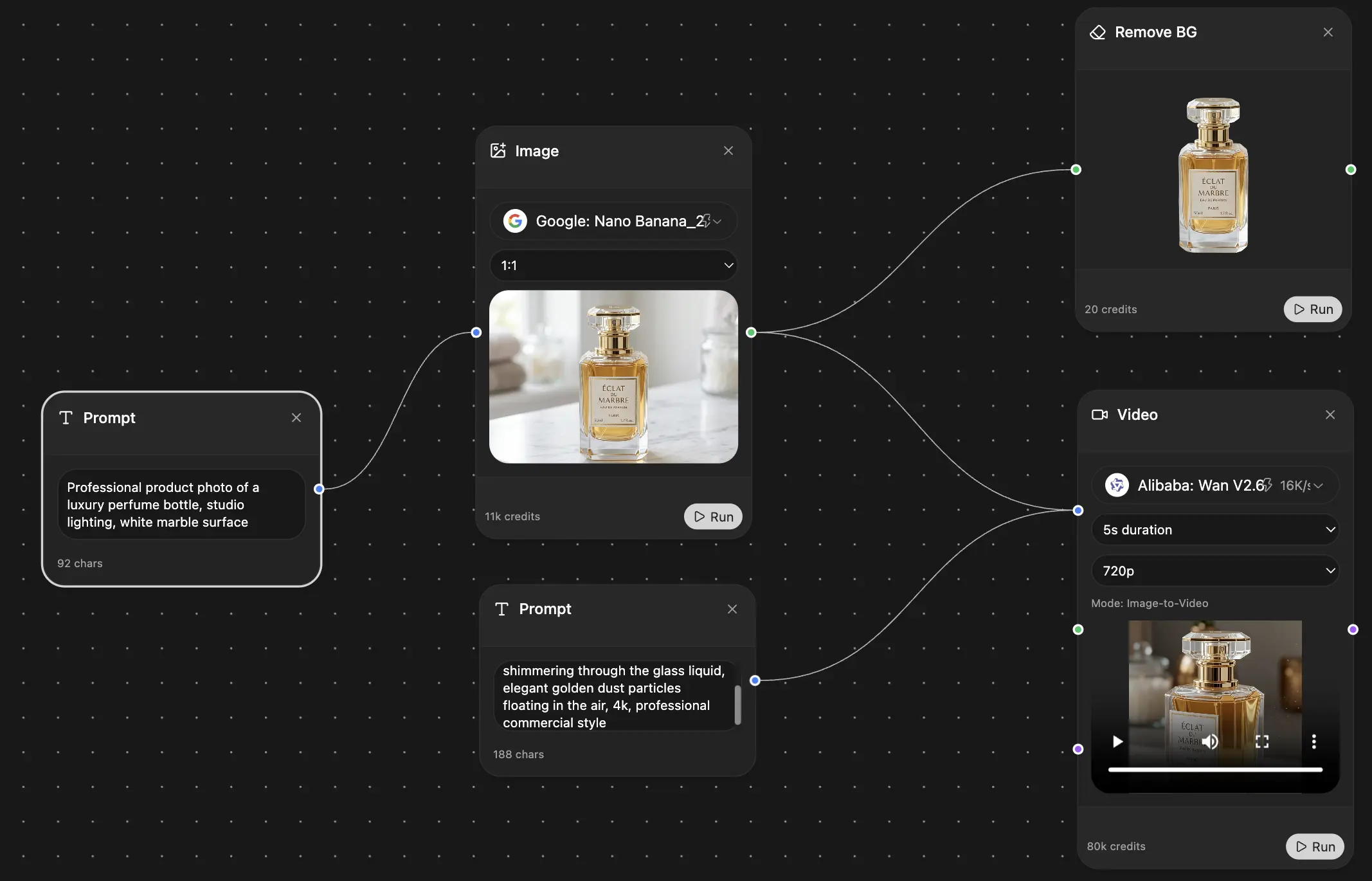
Your infinite AI canvas.
Chat, image, video & motion tools — side by side
Save hours of work and research
Transparent, High-Value Pricing
Trusted by teams at


Free
No credit card required
- 100 credits daily
- 3 AI models to try
- Basic AI chat
Plus
- 1,000,000 credits/month
- 25+ AI models — GPT, Claude, Gemini, Grok & more
- Agent Mode with web search, computer tools and more
- Creative Studio: image generation and video generation
- Project Library: chat with document, website and youtube, podcast generation, flashcards, reports and more
- Workflow Studio and FocusOS
Professional
- Everything in Plus, and:
- 2,100,000 credits/month
- Pro-exclusive models (Claude Opus, Grok 4, Sonar Pro)
- Motion Tools & Max Mode
- First access to latest features
- Access to additional offers
What Our Users Say
Great Tool after 2 months usage
"I love the way multiple tools they integrated in one platform. Going in the right direction."
— simplyzubair
Best in Kind!
"The quality of data and sheer speed of responses is outstanding. I use this app every day."
— barefootmedicine
Simply awesome
"The credit system is fair, models are perfect, and the discord is very responsive. Quite awesome."
— MarianZ
Great for Document Analysis
"Just works. Simple to use and great for working with documents. Money well spent."
— yerch82
Great AI site with accessible LLMs
"The organization of features is better than all the other sites — even better than ChatGPT."
— sumore
Excellent Tool
"It lives up to the all-in-one claim. All the necessary functions with a well-designed, easy UI."
— AlphaLeaf
Well-rounded platform with solid LLMs
"The team clearly puts their heart and soul into this platform. Really solid extra functionality."
— SlothMachine
Best AI tool I've ever used
"Updates made almost daily, feedback is incredibly fast. Just look at the changelogs — consistency."
— reu0691