Federal Resume Builder: The Ultimate 2026 Guide
Struggling with the USAJOBS federal resume builder? Learn the new 2-page rule and use AI to write a compliant, interview-winning resume in half the time.
You found a federal job that looks right. Good mission, good team, maybe even a salary range that doesn’t make you laugh-cry into your coffee. Then you click Apply on USAJOBS and run straight into the federal resume builder.
Suddenly you’re entering month-by-month dates from jobs you barely remember, wondering why the form wants hours per week from a role you had during the Obama years, and debating whether “did a lot of coordination stuff” counts as a real accomplishment. It doesn’t, by the way.
Many smart people get stuck, not due to a lack of qualifications, but because the federal application process is fussy, literal, and weirdly unforgiving. A typical federal posting can attract around 180 applicants, and 73% of hiring managers reject resumes over poor formatting alone, according to . That means people get filtered out before their experience even gets a fair look.
Trust me on this. The federal resume builder is not the enemy, but it’s also not the place to do your best thinking.
The best move is to treat the official builder like the final submission form, not your drafting workspace. Build the content somewhere smarter first. Refine it. Quantify it. Tailor it. Then paste it into the government system when it’s ready.
That’s the difference between wrestling a clunky portal for a week and walking in with a system.
Welcome to the Final Boss of Job Applications
You’re probably staring at a USAJOBS posting right now, thinking some version of: “I can do this job. Why does applying feel like assembling IKEA furniture with no manual?”
That feeling is normal. Federal hiring has always had its own rules, and the official builder doesn’t exactly win awards for charm. It’s functional in the same way a beige filing cabinet is functional.

The problem is that this isn’t a casual application. It’s high-stakes admin theater. One missed field, one sloppy block of text, one private-sector style resume that looks “clean” but skips required details, and you’re out.
Why this feels so brutal
Federal applications punish casual writing. They reward precision, matching language, and complete records. The builder asks for details private employers often don’t care about, and it expects you to know how to turn your work history into qualification evidence.
That’s why people freeze. They’re not bad candidates. They’re trying to solve the wrong problem.
Practical rule: Don’t ask, “How do I make this sound impressive?” Ask, “How do I prove I meet the announcement requirements?”
A good federal application isn’t just persuasive. It’s compliant.
The shortcut most applicants miss
Applicants often write directly into the USAJOBS boxes. Bad idea. That turns every sentence into a wrestling match with a government form. You end up editing live, losing your train of thought, and creating generic content because the interface is annoying.
A better approach looks like this:
- Draft outside the system: Write your full work history, accomplishments, and customized versions in a separate workspace.
- Clean up the language: Remove jargon, tighten sentences, and make each statement easy for HR to verify.
- Paste only final content into USAJOBS: Use the official builder for compliance, not creativity.
That process matters more than the builder itself. It gives you control, speed, and better writing.
And yes, once you use a smarter workflow, the whole thing feels a little unfair in your favor. That’s the goal.
Why a Federal Resume Is Not Really a Resume
A federal resume is closer to filing taxes than writing a sleek career summary.
A private-sector resume says, “Here’s why you should talk to me.” A federal resume says, “Here is the documented evidence that I meet the stated qualifications under the rules of this hiring system.” Those are not the same document, and treating them like they are is how people get rejected.

What makes it different
Federal resumes traditionally required a lot more detail than private-sector resumes. You’re often expected to include work history, education, volunteer experience, and other relevant background with specific fields that help HR determine eligibility and qualifications.
Here’s the kind of information federal hiring commonly expects:
That’s why a normal one-page corporate resume usually fails here. It’s too thin. It looks polished, but it doesn’t answer the government’s questions.
The two-page rule changed everything
Now the game is harder in a very specific way. Effective September 27, 2025, federal resumes are capped at a strict two-page limit under .
That’s a major shift from the old norm of 3 to 5 pages, and it changes how you write.
You no longer have room for lazy paragraphs, repeated duties, or giant blocks of text explaining the obvious. You need compression without losing proof. That means every line has to earn its spot.
Federal writing used to reward length. Now it rewards precision under pressure.
What the builder is actually doing
The official federal resume builder exists to collect required information in a standardized way. That part is useful. It helps you include the fields HR expects and keeps formatting consistent.
But it doesn’t think for you. It won’t decide which accomplishment matters most. It won’t rewrite vague job duties into sharp qualification evidence. It won’t tell you that half your resume reads like internal office jargon.
Use the builder as a compliance tool. Respect it for that. Just don’t confuse compliance with strategy.
How to Find the Answers on the Test
The USAJOBS announcement is not background reading. It’s the answer key.
Most applicants skim it once, grab the title, glance at the salary, and then start writing from memory. That’s backwards. The posting tells you exactly what the agency cares about, what language they use, and what qualifications they need to see reflected in your resume.

Read the announcement like an auditor
You’re looking for three things:
- Specialized Experience: The experience statements that define who qualifies.
- Keywords and repeated phrases: Terms that appear in duties, qualifications, and assessment language.
- KSAs: Knowledge, Skills, and Abilities, whether they’re labeled directly or baked into the announcement language.
If you’ve ever looked at , the principle is similar. Big institutional employers tell you more than people realize inside the job description. If you read carefully, the hiring criteria stop being mysterious.
The manual method still works
Print the announcement or copy it into a note. Then mark up:
- qualification phrases
- tools, systems, and subject areas
- verbs used in the duties section
- anything repeated in both duties and questionnaire language
That gives you a working list of target language. Your resume should reflect that language faithfully and directly. Not stuffed awkwardly into every line like keyword confetti. Just aligned.
The faster way
If you don’t want to spend an hour highlighting PDFs like you’re cramming for a final, use a document analysis workflow. Upload the announcement, then prompt the assistant with something simple like:
Extract all keywords, KSAs, specialized experience requirements, and action verbs from this job announcement into a clean list.
Then ask a second question:
Compare these requirements against my current resume text and show what’s missing or too vague.
That turns a bloated announcement into an actionable checklist.
If you want to get sharper at this kind of analysis in general, this guide on is worth your time.
Here’s a quick walkthrough that makes the process click:
The trick is simple. Stop treating the announcement like a formality. It’s the test, and the agency handed you the study guide.
Write Accomplishments That Make HR Stop Scrolling
Most resumes are full of duties. Federal resumes need evidence.
“Managed projects.”
“Supported operations.”
“Responsible for coordination.”
That stuff says almost nothing. It’s beige wallpaper in text form.
What works better is the STAR method. Situation, Task, Action, Result. And not the fluffy interview-answer version. The useful version. You frame what the challenge was, what you owned, what you did, and what changed because of your work.
According to , resumes that use STAR-style accomplishment statements with measurable outcomes rank up to 40% higher in the automated USA Staffing screening system. That matters because the automated screen decides whether a human reviewer sees your application.

Bad bullet versus useful bullet
Here’s a weak statement:
- Managed team projects and handled reporting requirements.
It isn’t false. It’s just useless. No scope, no outcome, no proof.
Now rewrite it with STAR logic:
- Led a cross-functional team through project deliverables, coordinated reporting across stakeholders, and improved deadline reliability through standardized tracking and follow-up.
That’s already better because it shows action and purpose. If you have defensible metrics, add them. If you don’t, don’t invent them. Use specifics you can support.
A simple way to build stronger statements
Take each duty and ask these questions:
- What problem or responsibility was I dealing with?
- What did I personally do?
- What changed because of that work?
- What words from the job announcement connect to this example?
Then write one accomplishment at a time.
Try this structure:
- Situation/Task: Oversaw intake backlog during staffing gaps
- Action: Reorganized workflow, clarified handoffs, updated tracking method
- Result: Improved consistency, reduced confusion, helped team meet deadlines more reliably
That final sentence becomes a real accomplishment statement, not a bland duty dump.
Don’t write for your old boss who already knows what you did. Write for an HR reviewer who knows nothing and needs proof fast.
Use AI for translation, not fantasy
A smart drafting tool earns its keep. You can paste rough bullets, then prompt for sharper versions:
- Rewrite this bullet using STAR.
- Make this sound more like the language in the announcement.
- Turn this duty into an accomplishment with a clearer result.
- Remove jargon and unexplained acronyms.
That’s especially useful if you’re coming from military, technical, or highly internal roles where your original language makes sense to insiders but not to general HR.
If you’re also polishing your broader application package, a good visual first impression still helps. This piece on a is useful for LinkedIn and related materials, even though your federal resume itself should stay plain and compliant.
For cleaner accomplishment writing, this guide on also pairs well with resume editing.
What to avoid
A few mistakes kill otherwise solid experience:
- Vague verbs: “Helped,” “assisted,” and “worked on” bury your role.
- Acronym soup: If HR has to decode it, you’ve made their job harder.
- Result-free bullets: Activity without outcome is forgettable.
- Huge paragraphs: Dense text invites skimming, not understanding.
Federal HR doesn’t need poetry. They need evidence written clearly enough to verify.
The Best Federal Resume Builder Is a Process Not a Tool
Here’s the contrarian answer to the “best federal resume builder” question.
There isn’t one magical builder.
The best federal resume builder is a process that uses the official system for compliance and a better workspace for drafting, refining, and tailoring. If you try to do all of that directly inside USAJOBS, you’re making the hardest part of the application even harder.
What the official builder does well
The USAJOBS builder has one job. Collect required information in a standardized format. It does that fine. It also auto-formats content into standard fonts like 10.5 to 11 pt Calibri or Arial with 0.5-inch margins, as noted in .
That consistency helps with compatibility. No argument there.
But the same source also notes that HR professionals often prefer the readability of custom PDF uploads. That’s the clue most applicants miss. The winning strategy is not blind loyalty to the builder. It’s preparing stronger content outside it first.
Why writing live in USAJOBS is a mistake
Writing directly in the builder creates bad habits:
- you draft too fast because the interface is annoying
- you settle for weak wording because editing is clunky
- you lose versions of good bullets
- you tailor less because changing text feels tedious
That’s not a writing problem. It’s a workflow problem.
Build content in a real workspace. Submit in the government workspace.
That one shift fixes a surprising amount.
The smarter setup
Use an external drafting environment where you can:
- keep multiple versions for different job series
- compare your resume against the announcement
- tighten sentences without fighting form fields
- save stronger accomplishment libraries for reuse
Then, once the content is clean, copy it into the official builder or upload a polished file if the application allows it.
If you want a better system for that kind of prep work, this article on is directly relevant.
The point isn’t to replace USAJOBS. You can’t. The point is to stop using it as your writing desk.
Your Federal Resume Workflow in Zemith
This is the workflow I recommend because it’s practical, repeatable, and a lot less painful than freehanding everything in a browser tab that feels like it was designed during a committee meeting.
A simple six-step system
Create a project for your job search
Make one workspace for your federal applications. Keep announcements, notes, resume drafts, and job-specific edits together so you’re not hunting through random folders later.Upload each job announcement to your library
Save the full posting, not just the title and link. Announcements change, close, and disappear. You want the exact language you applied against.Extract the hiring language
Use document chat to pull out keywords, KSAs, specialized experience requirements, and repeated verbs. Save that list beside the posting.Build one master resume file in Smart Notepad
Draft your full career history there first. Include raw accomplishments, stronger rewritten versions, and alternate phrasings for different job families.Tailor before you paste
Match your best evidence to the actual announcement. Rephrase bullets to reflect the agency’s wording without stretching the truth. Tighten anything that sounds vague, repetitive, or too internal.Move final content into USAJOBS
Only after the text is solid should you open the official builder. Then it becomes data entry, not creative struggle.
Why this works better
This system separates thinking from submitting.
That matters. Drafting is messy. Tailoring takes experimentation. Editing requires comparison. The USAJOBS builder is bad at all three. It’s fine for final entry.
If you want a broader look at how an AI workspace supports this kind of task flow, this overview of an connects the dots well.
Keep a reusable accomplishment bank
One extra move saves a ton of time. Build a bank of accomplishment statements by topic:
- project work
- process improvement
- compliance
- analysis
- team leadership
- systems support
- stakeholder coordination
Then pull from that bank for each application and adjust to match the posting. It’s faster, cleaner, and much better than reinventing your career every time you click Apply.
Common Mistakes That Send Your Resume to the Trash
Federal applications don’t usually fail because the candidate is wildly unqualified. They fail because the resume ignores the rules.
Here are the mistakes I see most often.
The fast rejection list
Submitting a private-sector resume
Clean design, short bullets, minimal detail. Looks nice. Fails the federal test because it often omits required information and doesn’t document qualifications clearly.Leaving out mandatory fields
Missing hours worked, incomplete dates, absent supervisor details, or vague employer info can knock you out before anyone cares about your achievements.Using unexplained acronyms
Internal shorthand makes your resume harder to assess. If an HR reviewer has to translate your language, you’ve already lost ground.Failing to prepare for the announcement Generic resumes tell HR you wanted a job. Resumes prepared for the announcement show you’re qualified for this job.
Ignoring the two-page rule
If your old federal resume still reads like a memoir, cut it. Ruthlessly.
A federal resume should feel dense with evidence, not bloated with explanation.
The fix is mostly process
Notice how these mistakes aren’t random. They all happen when people write too late, too fast, and too directly inside the submission system.
A stronger editing routine catches most of them before they become fatal. If you want help sharpening that step, this guide on is worth bookmarking.
The point isn’t perfection. It’s avoiding obvious errors that make HR’s decision easy for the wrong reason.
Federal Resume Frequently Asked Questions
Can I use a fancy template
No. For federal applications, plain beats pretty.
The builder is effectively the template. Even when you upload a document, readability and compliance matter more than style. Save the design flourishes for your portfolio site, not your federal resume.
How should I list salary if my pay was complicated
Be clear and honest. If your compensation varied because of contract work, overtime, or multiple arrangements, provide the most accurate figure you can and briefly clarify if needed.
Don’t get cute. Don’t round aggressively to make yourself look better. This is government hiring, not a dating profile.
Is the two-page limit really a hard rule now
Yes. Treat it like a hard rule.
That means older long-form resumes need to be cut down with intent. Don’t just delete lines randomly. Consolidate repeated duties, keep only the strongest evidence, and prioritize experience that directly supports the target role.
Should I write in the builder or somewhere else first
Write somewhere else first. Every time.
Drafting externally gives you better editing, better version control, and less stress. Then use the official builder for final entry so you stay compliant.
What if I’m changing fields or translating technical experience
That’s exactly when an external drafting workflow helps most. You need space to convert insider language into plain, credible descriptions that still reflect the actual work.
A lot of federal resume pain comes from trying to think and submit at the same time. Separate those two jobs and the process gets much easier.
If you want one place to do the essential work before USAJOBS, try . It gives you a cleaner way to analyze job announcements, organize application materials, rewrite weak bullets, and build a federal resume workflow that doesn’t feel like punishment. Use it as your prep lab, then paste your polished content into the official builder and apply with a lot more confidence.
Explore Zemith Features
Every top AI. One subscription.
ChatGPT, Claude, Gemini, DeepSeek, Grok & 25+ more


Always on, real-time AI.
Voice + screen share · instant answers
What's the best way to learn a new language?
Immersion and spaced repetition work best. Try consuming media in your target language daily.
Voice + screen share · AI answers in real time
Image Generation
Flux, Nano Banana, Ideogram, Recraft + more

Write at the speed of thought.
AI autocomplete, rewrite & expand on command
Any document. Any format.
PDF, URL, or YouTube → chat, quiz, podcast & more
Video Creation
Veo, Kling, Grok Imagine and more

Text to Speech
Natural AI voices, 30+ languages
Code Generation
Write, debug & explain code
Chat with Documents
Upload PDFs, analyze content
Your AI, in your pocket.
Full access on iOS & Android · synced everywhere
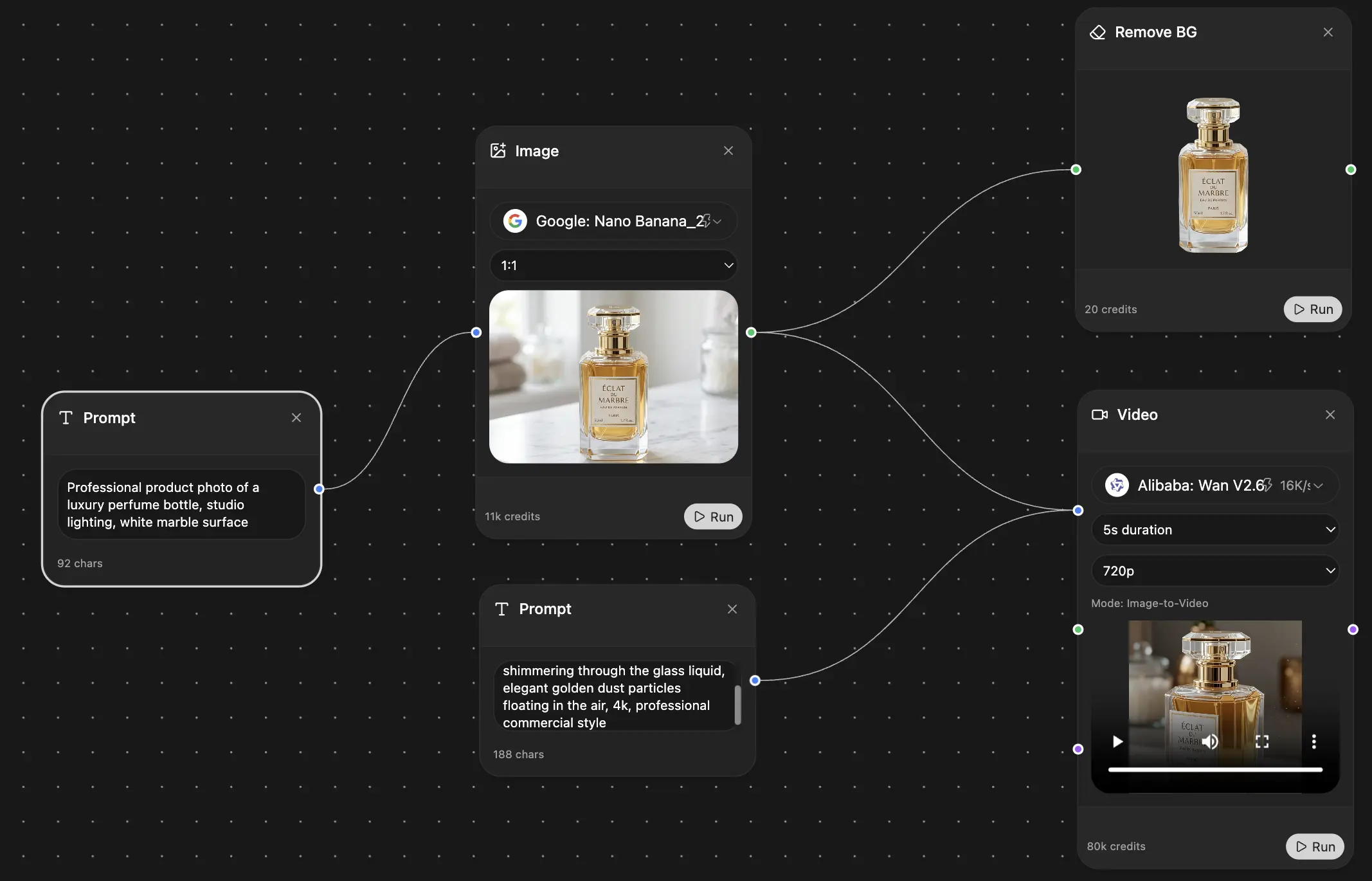
Your infinite AI canvas.
Chat, image, video & motion tools — side by side
Save hours of work and research
Transparent, High-Value Pricing
Trusted by teams at


Free
No credit card required
- 100 credits daily
- 3 AI models to try
- Basic AI chat
Plus
- 1,000,000 credits/month
- 25+ AI models — GPT, Claude, Gemini, Grok & more
- Agent Mode with web search, computer tools and more
- Creative Studio: image generation and video generation
- Project Library: chat with document, website and youtube, podcast generation, flashcards, reports and more
- Workflow Studio and FocusOS
Professional
- Everything in Plus, and:
- 2,100,000 credits/month
- Pro-exclusive models (Claude Opus, Grok 4, Sonar Pro)
- Motion Tools & Max Mode
- First access to latest features
- Access to additional offers
What Our Users Say
Great Tool after 2 months usage
"I love the way multiple tools they integrated in one platform. Going in the right direction."
— simplyzubair
Best in Kind!
"The quality of data and sheer speed of responses is outstanding. I use this app every day."
— barefootmedicine
Simply awesome
"The credit system is fair, models are perfect, and the discord is very responsive. Quite awesome."
— MarianZ
Great for Document Analysis
"Just works. Simple to use and great for working with documents. Money well spent."
— yerch82
Great AI site with accessible LLMs
"The organization of features is better than all the other sites — even better than ChatGPT."
— sumore
Excellent Tool
"It lives up to the all-in-one claim. All the necessary functions with a well-designed, easy UI."
— AlphaLeaf
Well-rounded platform with solid LLMs
"The team clearly puts their heart and soul into this platform. Really solid extra functionality."
— SlothMachine
Best AI tool I've ever used
"Updates made almost daily, feedback is incredibly fast. Just look at the changelogs — consistency."
— reu0691