English to Swahili Translator: A Guide to Accurate Results
Need an English to Swahili translator that works? Learn why basic tools fail and how to get accurate, culturally-aware translations using modern AI workflows.
You're probably here because you already tried the obvious move. Paste English into an online tool, hit translate, copy the Swahili, and hope nobody on the other side thinks, “Who taught this person language. A haunted spreadsheet?”
That feeling is valid. English to Swahili translation breaks in ways that are subtle, public, and occasionally hilarious. The sentence may look tidy, the words may be recognizable, and the whole thing can still sound off, stiff, or accidentally rude. That's the trap. Most translation mistakes don't wave a red flag. They smile politely and ruin the moment anyway.
The fix isn't “find one magic translator.” It's learning a better process. That matters even more with Swahili, where grammar, tone, region, and context can change whether your message lands as professional, warm, awkward, or plain nonsense.
That Awkward Moment Your Translator Fails
A friend once showed me a message he was about to send to a business contact in East Africa. In English, it was polished. Warm, concise, professional. The translated version looked clean too, at least to someone who doesn't live in the language.
Then a native speaker read it and laughed the kind of laugh that means, “Nobody died, but this needs to be fixed.”
The problem wasn't one catastrophic word. It was death by a hundred tiny choices. The greeting felt too blunt. The phrasing sounded imported from English instead of natural Swahili. The tone was technically understandable, but it had the charm of airport carpet. You could tell a machine had touched it and then walked away.
That's the part many people miss. Translation failure usually isn't dramatic. It's awkward silence after a message. It's a customer who reads your product copy and feels no trust. It's a travel conversation where everyone nods, but nobody is sure what was agreed.
Reality check: If your gut says “this can't be right,” trust it. Word accuracy and communication accuracy are not the same thing.
I've seen this happen with travel plans, marketing copy, onboarding docs, event invitations, and those brave attempts at “local flavor” that somehow make a brand sound like it learned Swahili from a refrigerator manual.
A basic translator can get you something recognizable. Sometimes that's enough for rough comprehension. But if you need the message to sound human, culturally grounded, and grammatically sane, “close enough” stops being enough very quickly.
The good news is that the tools have changed. The bad news is that people frequently still use them like it's 2014. They throw in one sentence, accept one output, and never test it. That's exactly how you end up sending a perfectly formatted mistake.
Why Swahili Is So Tricky for Simple Translators
Swahili looks welcoming from the outside. Clean spelling. Familiar borrowed words here and there. You think, “Nice, this should be manageable.” Then the grammar grabs your ankle.

Words stack meaning differently
English often spreads meaning across several words. Swahili loves to pack meaning into one word through prefixes and agreement markers. The technical term is agglutinative morphology, and it's one major reason simple translators fall apart.
A technical summary from the Eng-Swa-Translator project on GitHub notes that Swahili has over 10 times more inflected forms per word than English, and that this complexity can lead standard AI systems to produce grammatical errors in 30% of outputs.
If that sounds abstract, think of English as LEGO pieces laid next to each other. Swahili often snaps those pieces into one larger structure. Tense, subject, object, and agreement can all cling to the same verbal core. A model trained mostly on English-like patterns tends to translate too word-for-word, which is why the result can be understandable but still feel strangely assembled.
That matters for anyone building lessons, support docs, or multilingual communication systems. Teams managing student communication across languages often need workflow help before they need more content, which is why tools like Tutorbase for language schools are useful context when you're organizing multilingual teaching operations. The content and the delivery process have to cooperate.
For a related AI concept, semantic analysis in language systems is worth understanding because translation quality usually rises when the system handles intended meaning rather than just lexical substitution.
Dialects are not a footnote
Most online translators behave as if there is one flat, universal Swahili. Real life is messier and more interesting than that.
According to the summary published at VibeTrans on English to Swahili translation, Swahili has over 15 distinct dialects, including Kiunguja and Kimvita, and these can diverge by 20-30% in vocabulary. The same summary says no major online translator currently offers dialect-specific models.
That creates a familiar headache. Your sentence may be “correct” in a generic sense, but it can still sound wrong for the audience in front of you. Coastal flavor, mainland norms, local greetings, and region-specific phrasing all affect whether your translation feels natural or imported.
What simple tools usually get wrong
When a basic english to swahili translator stumbles, it usually fails in one of these ways:
- Literal structure: The tool keeps English sentence logic and just swaps vocabulary.
- Agreement drift: Noun class and verb agreement don't line up cleanly.
- Tone mismatch: A message meant to be respectful comes out flat or abrupt.
- Regional oddness: The translation is understandable but not locally comfortable.
A readable translation isn't automatically a usable translation.
That's why experienced users stop asking, “Did it translate?” and start asking, “Is this how it would be said?”
The Evolution from Dictionaries to Digital Brains
Translation tools used to be brutally honest about their limitations. A dictionary gave you words, not judgment. A phrasebook gave you canned sentences, often with the energy of “Where is the telegraph office?” You were on your own after that.

The old tools were useful, but narrow
The dictionary era trained people to think of translation as word replacement. That works for labels, menus, and very plain instructions. It fails as soon as context matters.
Phrasebooks improved speed, but they were rigid. Great for ordering tea. Less great when your actual need is “Please confirm whether the revised shipment terms apply to both locations.”
Early digital tools made the same basic mistake at higher speed. They processed text faster, but they still treated language like a lookup problem. That's why they often produced output that was technically assembled and socially unusable.
Neural translation changed the game, but not the whole game
Modern systems got better when they started modeling context instead of isolated words. That shift matters because meaning often lives between words, not inside them. A sentence can be polite, skeptical, urgent, playful, or formal without changing its core vocabulary much.
If you work in AI content or search, Algomizer's GEO strategy is a useful read because it touches the broader idea that machines increasingly need to interpret intent, not just tokens. Translation sits squarely in that same world.
The newer generation also overlaps with what many people know as conversational AI systems, where context, turn-taking, and user intent influence output quality.
Why the single-engine mindset is fading
Even strong translation engines still have blind spots. One model handles tone better. Another is stricter with grammar. A third catches document context more gracefully. That's why relying on a single output now feels dated.
The most interesting shift isn't just “AI got smarter.” It's that users can now compare multiple AI interpretations in one workflow instead of treating one engine like an oracle. For a language with dialect variation and dense morphology, that change matters a lot.
A translator used to be a book. Then a button. Now it's closer to a panel of fast, imperfect specialists. That's a much better setup, because language was never a one-answer problem in the first place.
A Modern Workflow for Perfect Swahili Translations
If the old workflow was “paste and pray,” the modern workflow is compare, refine, and test.
That sounds slower. In practice, it saves time because you stop cleaning up avoidable mistakes after the fact. For serious communication, an english to swahili translator works best as a process, not a single click.

Start with parallel outputs, not blind trust
A strong first step is running the same source text through multiple AI models and comparing where they agree and where they diverge. That matters because consensus often reveals the safest interpretation, while disagreements reveal the risky parts.
A summary on MachineTranslation.com's English to Swahili translator page describes a multi-model method that aggregates outputs from 22 distinct AI models and claims up to an 80% accuracy rate compared to professional human translations. The key idea is more important than the brand. Cross-model agreement helps expose weak translations before you send them.
That's why a tool like Zemith is useful here in a factual, practical sense. It gives you access to multiple major AI models in one workspace, so you can compare translations, rewrite prompts, and refine the result without hopping across a dozen tabs.
Use a prompt that tells the model what “good” means
Don't ask for “Translate this into Swahili.” That's lazy, and the output often looks lazy too.
Use instructions like these instead:
- For business communication: “Translate into professional Swahili suitable for a client email in East Africa. Keep the tone respectful and natural, not overly literal.”
- For marketing copy: “Translate into persuasive Swahili that sounds local and human. Preserve the message, not the English sentence structure.”
- For learning: “Translate into Swahili and explain any noun class or agreement choices in simple English.”
A good prompt narrows the model's job. It tells the system whether to prioritize formality, readability, or teaching value.
Practical rule: If tone matters, ask for tone explicitly. Models guess badly when users stay vague.
Compare for friction points
Once you have several outputs, don't read them like a language exam. Read them like a skeptic.
Look for these friction points:
The best version is often not the fanciest one. It's usually the one that sounds least like it was assembled under fluorescent lighting.
If you care about smoothing machine output into something more natural, this guide on how to achieve human-sounding translations is a helpful companion read because it focuses on the editing mindset rather than blind acceptance.
Handle full documents as documents
Single-paragraph translation is one thing. Full PDFs, brochures, handbooks, and contracts are another beast.
For documents, keep the whole file in one context window if possible. That helps preserve terminology, headings, and repeated phrases. It also reduces the chaos where a translator renders the same term three different ways across six pages.
A cross-language workflow matters here just as much as it does in guides like English to Albanian translation strategy, because consistency is usually the hidden quality marker in multilingual documents.
Use this sequence:
- Translate the full document for broad structure and terminology.
- Review headings and calls to action separately, because these carry tone.
- Check repeated terms such as product names, support labels, legal phrases, and instructions.
- Run a final style pass to remove robotic repetition.
Use live audio for real conversations
Text is forgiving. Live speech is not.
If you're using AI during a call, booking conversation, or travel exchange, don't expect polished literary Swahili. Aim for clean intent confirmation. Short sentences work better. Concrete nouns work better. Ambiguous jokes do not.
A solid real-time workflow looks like this:
- Speak in short units: One idea per sentence.
- Pause for confirmation: Ask the other person to confirm details, especially dates and places.
- Restate critical points: Price, time, location, names, and next steps should be repeated plainly.
Modern AI finally feels less like a toy and more like a useful travel companion. Not because it replaces native fluency, but because it helps you avoid the comedy sketch version of international communication.
Putting Your Translation to the Test in the Real World
Theory sounds smart right up until someone needs to send the brochure, book the tour, or pass the exam.

The marketer with a brochure problem
A marketer has an English brochure for a Tanzanian audience. The first machine translation is readable, but it sounds like the company is explaining features to a customs officer. Every sentence is technically calm and emotionally dead.
That's a risky move because translation quality still varies sharply by context. A summary of a 2023 study on Language Scientific's Swahili translation page reports that Google Translate accurately rendered the meaning in only 56% of evaluated English-Swahili newspaper headline cases. Headlines are short, punchy, and context-heavy. Marketing copy has the same tendency to break when tone and compression matter.
The marketer's better move is to treat the brochure in layers:
- Body copy first: Translate for meaning and clarity.
- Headlines next: Rewrite for local naturalness rather than preserving English rhythm.
- Calls to action last: Make them direct and culturally comfortable.
That process catches the common failure mode where the paragraph makes sense, but the headline sounds borrowed.
The tourist trying not to book the wrong thing
A traveler planning a safari or coastal trip doesn't need poetic mastery. They need fewer misunderstandings.
The practical trick is using short, confirmable exchanges. “Two people.” “Tomorrow morning.” “Pickup at hotel entrance.” “Food included?” This is not the time to test your inner diplomat.
If the AI gives you something long and decorative, simplify it. Real-world travel communication rewards plainness. A good translation in this setting creates alignment, not admiration.
For spoken situations, tools built around voice to text AI workflows are especially useful because they reduce the friction between hearing, checking, and clarifying.
The best travel translation is often boring. Boring is good when transportation is involved.
The student trying to understand, not just copy
A language learner uses translation differently. They aren't just trying to send a message. They're trying to see why the language behaves the way it does.
That means a strong workflow includes explanation prompts. Not just “translate this,” but “translate this and explain why the verb changes here” or “why is this noun class used?” AI becomes far more useful when it acts like a patient tutor rather than a vending machine for answers.
Modern tools provide an engaging experience. You can interrogate the sentence. You can ask for simpler alternatives. You can compare formal and casual versions. That's much closer to how people learn languages in practice than memorizing random phrasebook fragments and later discovering you've been cheerfully speaking museum-grade Swahili.
How to Spot a Good Translation from a Bad One
At some point, you need to stop generating options and judge what's in front of you. At this point, individuals often freeze. They assume that if they don't speak fluent Swahili, they can't evaluate quality at all.
You can. You just need a sharper checklist.
Use the three-pass test
Run every translation through these three passes:
Meaning pass
Compare it to the original. Did the core idea survive, or did the sentence drift into something adjacent?Tone pass
Ask what kind of person this sounds like. Respectful professional. Friendly peer. Tourist with urgency. If the voice feels wrong, the translation is wrong for the job.Naturalness pass
Read it aloud if you can. Bad machine translations often feel stiff even when they're understandable. They clunk.
Watch for these warning signs
- Overly literal phrasing that mirrors English structure too neatly
- Inconsistent terminology across the same message or document
- Formal words in casual settings, or casual words in business communication
- Odd repetitions that make the sentence sound machine-built
- No explanation for a risky phrase when the wording clearly had multiple possible meanings
A practical evaluation habit is to ask the model to justify its own choices. If it can't explain why it used a particular construction, that's useful information. If you're building that kind of quality habit broadly, this guide on how to evaluate information sources is a useful mindset companion because translation quality also depends on checking confidence, context, and reliability.
Good versus bad usually feels obvious once you compare
Here's the simplest truth I've learned: bad translations often look fine in isolation. Their weakness appears when you compare versions side by side.
If one version sounds like a person and the other sounds like a filing cabinet, choose the person.
That's why the modern workflow works. It doesn't ask you to trust one machine. It gives you contrast. And contrast is where quality becomes visible.
A good english to swahili translator doesn't just produce words in another language. It preserves intent, matches tone, respects how Swahili functions, and avoids the little embarrassments that make communication feel foreign even when the vocabulary is technically correct.
If you want one workspace for comparing AI models, translating documents, refining wording, and handling live language tasks without tab chaos, Zemith is worth trying. It's a practical setup for people who need better translation workflow, not just another button that says “translate.”
Explore Zemith Features
Every top AI. One subscription.
ChatGPT, Claude, Gemini, DeepSeek, Grok & 25+ more


Always on, real-time AI.
Voice + screen share · instant answers
What's the best way to learn a new language?
Immersion and spaced repetition work best. Try consuming media in your target language daily.
Voice + screen share · AI answers in real time
Image Generation
Flux, Nano Banana, Ideogram, Recraft + more

Write at the speed of thought.
AI autocomplete, rewrite & expand on command
Any document. Any format.
PDF, URL, or YouTube → chat, quiz, podcast & more
Video Creation
Veo, Kling, Grok Imagine and more

Text to Speech
Natural AI voices, 30+ languages
Code Generation
Write, debug & explain code
Chat with Documents
Upload PDFs, analyze content
Your AI, in your pocket.
Full access on iOS & Android · synced everywhere
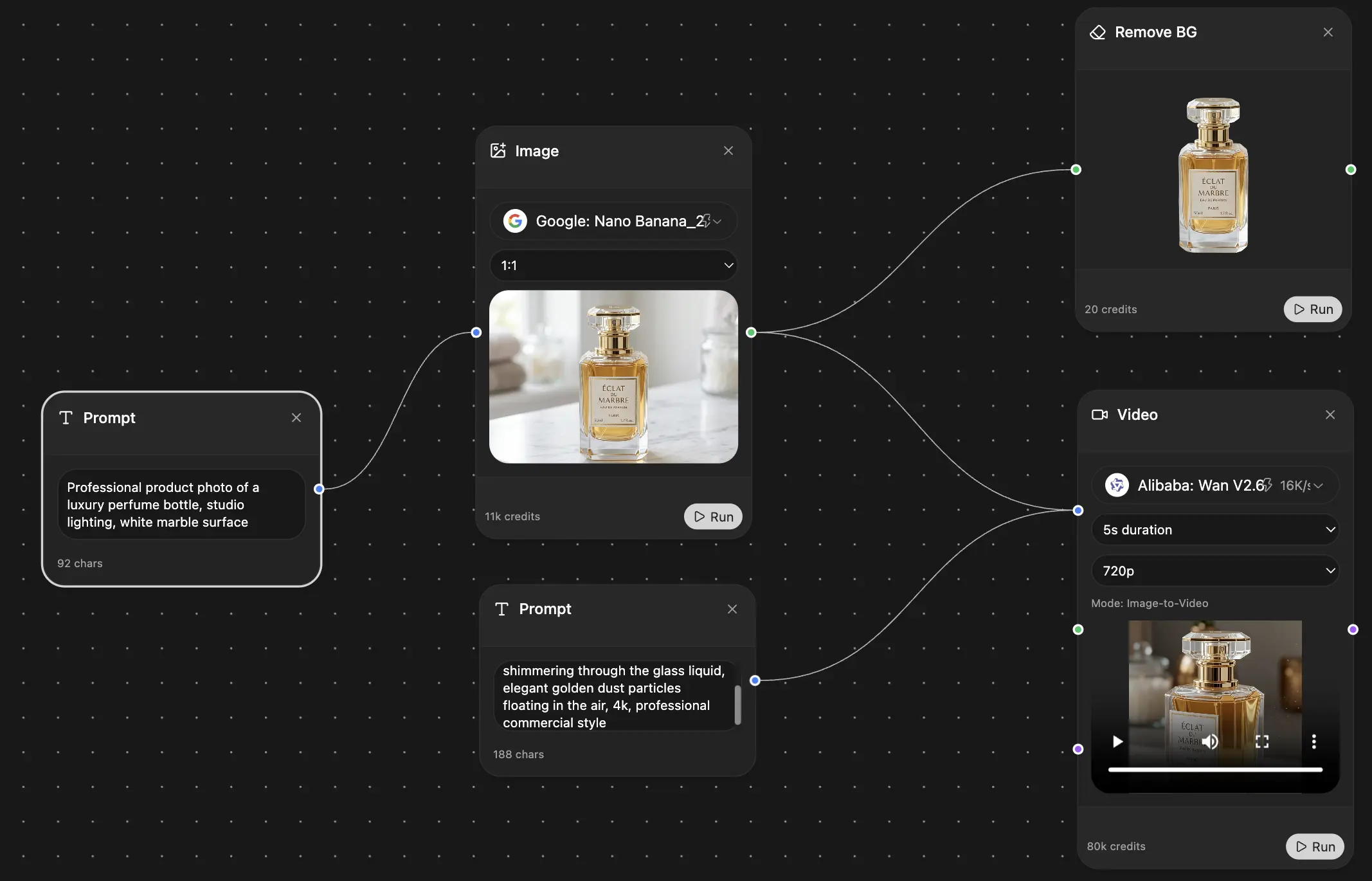
Your infinite AI canvas.
Chat, image, video & motion tools — side by side
Save hours of work and research
Transparent, High-Value Pricing
Trusted by teams at


Free
No credit card required
- 100 credits daily
- 3 AI models to try
- Basic AI chat
Plus
- 1,000,000 credits/month
- 25+ AI models — GPT, Claude, Gemini, Grok & more
- Agent Mode with web search, computer tools and more
- Creative Studio: image generation and video generation
- Project Library: chat with document, website and youtube, podcast generation, flashcards, reports and more
- Workflow Studio and FocusOS
Professional
- Everything in Plus, and:
- 2,100,000 credits/month
- Pro-exclusive models (Claude Opus, Grok 4, Sonar Pro)
- Motion Tools & Max Mode
- First access to latest features
- Access to additional offers
What Our Users Say
Great Tool after 2 months usage
"I love the way multiple tools they integrated in one platform. Going in the right direction."
— simplyzubair
Best in Kind!
"The quality of data and sheer speed of responses is outstanding. I use this app every day."
— barefootmedicine
Simply awesome
"The credit system is fair, models are perfect, and the discord is very responsive. Quite awesome."
— MarianZ
Great for Document Analysis
"Just works. Simple to use and great for working with documents. Money well spent."
— yerch82
Great AI site with accessible LLMs
"The organization of features is better than all the other sites — even better than ChatGPT."
— sumore
Excellent Tool
"It lives up to the all-in-one claim. All the necessary functions with a well-designed, easy UI."
— AlphaLeaf
Well-rounded platform with solid LLMs
"The team clearly puts their heart and soul into this platform. Really solid extra functionality."
— SlothMachine
Best AI tool I've ever used
"Updates made almost daily, feedback is incredibly fast. Just look at the changelogs — consistency."
— reu0691