10 Creative Writing Techniques to Master in 2026
Unlock your best writing with 10 actionable creative writing techniques. Learn to improve your craft, from freewriting to reverse outlines, with examples & AI.
Stuck in a Rut? Let's Supercharge Your Writing.
Staring at a blank page that feels more like a void? Or maybe you've written something, but it feels flat in that profoundly annoying, “I know this should be better” way. Most writers get stuck because they chase inspiration when they instead need a repeatable process. Craft is less glamorous than waiting for the muse, but it works a lot more often. The muse, bless her, has terrible attendance.
That gap matters even more now. Writers aren't just scribbling in notebooks anymore. They're drafting stories, scripts, newsletters, game dialogue, product narratives, and weird little passion projects at midnight with three tabs open and a cup of coffee that went cold an hour ago. Meanwhile, AI has moved from novelty to normal workflow. In 2026, 74% of content marketers use AI for ideation, 61% for outlining, and 44% for drafting content, while ChatGPT remains the most trusted tool with an 80% selection rate, ahead of Claude at 55% according to . That doesn't mean AI replaces craft. It means writers who know what they're doing now have better tools.
So this isn't another fluffy list of “be more descriptive” and “believe in yourself,” followed by spiritual fog and no usable method. These are creative writing techniques you can practice today, with exercises, trade-offs, and modern ways to use Zemith as part of your workflow. If you write fiction, content, brand storytelling, or anything in between, these techniques will sharpen your instincts fast.
If your work leans interactive, branching, or game-adjacent, this is also worth a look.
1. The Freewriting Sprint: Unleash Your Brain Without the Guilt
Freewriting works because it shuts up the inner hall monitor.
You set a timer, start with a simple prompt, and keep typing without editing, deleting, or stopping to fix that one sentence that suddenly offended your standards. Anne Lamott popularized the idea of rough first drafts in Bird by Bird, and Julia Cameron's morning pages built an entire practice around getting the mental sludge out before the useful stuff appears. Both approaches work for the same reason. They lower the stakes long enough for your real voice to show up.

Fast-moving journalists do versions of this under deadline. Content creators who publish constantly do it too, even if they call it “brain-dumping” instead of freewriting. The label doesn't matter. The motion does.
How to do it without making it precious
Start with a line like, “I want to write about...” and don't stop. If your brain freezes, type that you're freezing. If you repeat yourself, fine. Repetition is cheaper than paralysis.
A few rules make this technique useful instead of performative:
- Set a hard timer: A limit creates urgency and keeps you from turning freewriting into dawdling with a keyboard.
- Keep drafts separate: Your freewrite isn't your final piece. Treat it like raw ore, not finished jewelry.
- Mine before polishing: Drop the messy draft into Zemith's Smart Notepad and use paragraph generation or rewriting to pull structure from the chaos.
- Repeat regularly: Daily is great. Weekly still helps. Sporadic panic-writing is less of a system and more of a weather event.
Practical rule: Freewriting is for generation, not judgment. If you edit while drafting, you're trying to drive with one foot on the brake.
If blank-page dread is your recurring nemesis, this advice on pairs well with the sprint approach.
The trade-off is simple. Freewriting produces mess. Sometimes a lot of it. But mess is fixable. Silence isn't.
2. The Show, Don't Tell Rewrite: Transform Tell into Visual Storytelling
Telling gives information. Showing creates an experience.
“She was angry” is functional. “She shoved the chair back so hard it scraped the tile and startled the dog” gives the reader something to see and hear. That's the difference between summary and scene. Good writers don't eliminate telling entirely, but they know when a moment deserves a body instead of a label.

A common mistake is thinking “show, don't tell” means stuffing every sentence with adjectives until it wheezes. It doesn't. It means choosing actions, dialogue, and sensory cues that let the reader infer what's happening. Cormac McCarthy does this with sparse force. Cheryl Strayed does it with sensory memory. Good marketing copy does it too when it dramatizes a benefit instead of announcing one.
A simple rewrite drill
Take five flat sentences from your draft.
Try lines like these:
- He was nervous.
- She felt relieved.
- It was a bad neighborhood.
- They were in love.
- The meeting was tense.
Now rewrite each one using behavior, environment, or dialogue. If you're not sure where to begin, ask, “What would a camera catch?” Cameras don't record “nervous.” They record fidgeting, swallowed words, tapped rings, split-second glances at the exit.
Research on narrative writing also points to a gap here. A 2025 analysis cited by MasterWriter says 68% of emerging writers struggle with translating abstract emotional intent into concrete narrative beats, while only 12% of published creative writing guides address that problem with measurable rubrics in the same discussion of writer education gaps at . That's why this technique keeps getting repeated. Writers hear the slogan, but they rarely get a usable audit method.
Don't ask whether the sentence sounds literary. Ask whether the reader can picture it.
When you need help expanding a flat paragraph into something more vivid, Zemith can help you by rephrasing plain statements into sharper, more scene-driven prose.
For more examples of this principle in action, this piece on how to is a handy companion.
A quick visual lesson helps too:
The trade-off is that showing usually takes more space. That's fine when the moment matters. If everything gets the cinematic treatment, your draft starts acting like every sentence deserves an Oscar.
3. The Constraint Challenge: Write Brilliantly Within Artificial Limits
Freedom is lovely until it turns into flopping around in a giant empty room.
Constraints solve that. Give yourself a limit on word count, structure, point of view, sentence length, or even forbidden words, and your brain starts making sharper decisions. Poets have known this forever. So have headline writers, scriptwriters, and anyone who's had to make a message fit where it physically did not want to fit.
The nice surprise is that constraint-based writing isn't some niche gimmick anymore. A 2025 Writers' Guild Survey cited in says 54% of professional writers use intentional constraints to force innovation, yet only 8% of top creative writing guides on major platforms include it as a core strategy. That's a big reason this method still feels underrated.
Constraints that actually help
Not all limits are useful. Pick one that serves the result you want.
- For clarity: Write the scene in 150 words.
- For voice: Ban adverbs for one draft.
- For tension: Use only short sentences in a confrontation.
- For originality: Retell a familiar moment without using the obvious emotional words.
- For range: Write the same premise in five different tones.
Hemingway's famous six-word story gets cited to death because it proves a real point. Compression creates implication. Old Twitter forced the same skill in another arena. You couldn't ramble, so you had to choose.
Zemith is handy here because sentence shortening and rewriting help you cut bulk without flattening the line. That's useful when your draft has the right idea but keeps arriving in oversized packaging.
What constraint fixes, and what it can break
Constraint is excellent for shaking loose stale habits. It's also great for people who overexplain, overwrite, or confuse volume with depth. I use it when a draft feels mushy. Mushy writing hates limits.
But don't confuse “harder” with “better.” Extreme constraints can produce cleverness instead of substance. If the exercise starts feeling like a circus trick, loosen it. You're training precision, not auditioning for a literary escape room.
4. The Reader Interview Method: Write What People Actually Need to Read
A lot of writers guess what readers want. Then they wonder why the piece lands like damp cardboard.
Interviewing real readers is one of the most practical creative writing techniques you can borrow from research, journalism, and smart content strategy. Ask people what confuses them, what they wish somebody would explain, where they get stuck, and what they secretly think they're “bad at.” Their answers are better than your assumptions almost every time.
This matters for fiction too. If you're writing for a specific audience, whether that's romance readers, horror fans, or people obsessed with branching narrative games, the language they use tells you what they value. You don't need focus-group sludge. You need human phrasing.
Good questions beat clever questions
The best prompts are open-ended:
- What's the hardest part of writing a scene like this?
- What makes you stop reading?
- What advice do you keep hearing that never helps?
- When do you know a story is working for you?
Then follow up. “Tell me more about that” is worth more than a fancy questionnaire. One-on-one conversations work better than group chats because people don't start performing for each other.
Writers who do this well often sound more relevant because they literally are more relevant. They use the reader's vocabulary, not the writer's pet terminology. That's how useful articles, strong emails, and good teaching material get built.
Use AI as the filing cabinet, not the fake audience
Store interview notes in Zemith's Library so you can keep direct quotes, recurring phrases, and objections in one place. Then use Deep Research to expand on what people told you, check where patterns overlap, and spot missing angles before you draft. That's especially useful if you're building educational or search-focused content and don't want to answer the wrong question very beautifully.
If your goal is audience-first writing, this guide on is a solid next stop.
The trade-off is time. Interviews are slower than guessing. But guessing is only faster until you have to rewrite the whole thing because nobody cared.
5. The Perspective Shift Exercise: See Your Story Through Different Eyes
When a scene feels thin, the problem is often perspective, not prose.
Write the same moment from another character's point of view and hidden tensions start surfacing. The protagonist thinks they're being brave. The antagonist thinks they're being reckless. The bystander thinks they're both ridiculous. Suddenly the scene has dimension instead of a single polished surface.
Film and fiction have used this trick for years. Rashomon is the classic reference because it shows how one event changes shape depending on who tells it. Jean Rhys did something similar on the novel level by re-centering a familiar literary world in Wide Sargasso Sea. Journalists use perspective shifts too when they report one event through witnesses, victims, officials, and skeptics.
A three-pass exercise
Take one scene you've already written. Keep the setting and sequence mostly the same.
Then do this:
- First pass: Write it from your main character's inner experience.
- Second pass: Rewrite it from someone who opposes them.
- Third pass: Rewrite it from a neutral observer, like a neighbor, server, guard, or reporter.
You'll spot things quickly. Who notices the broken glass? Who remembers the insult? Who misreads the silence? Perspective exposes emotional blind spots and plot holes at the same time.
A scene usually gets stronger the moment every character stops feeling like an employee in the protagonist's life.
This technique works outside fiction too. For brand storytelling, rewrite your value proposition from the customer's perspective, then from a skeptic's. Suddenly the vague promises start looking suspicious, which is healthy. Every draft needs one skeptical friend. If you don't have one, become one.
Zemith helps here by keeping multiple versions of a scene organized in the same workspace, so you can compare them side by side instead of hunting through tabs like a raccoon in a junk drawer.
The caution is that perspective shifts can balloon your workload. Don't do it for every chapter or article. Use it when the piece feels one-note, morally too neat, or emotionally undercooked.
6. The Dialogue-First Draft: Let Characters Reveal Story Through Conversation
Some drafts wake up the minute you strip out the description and let people talk.
A dialogue-first draft starts with nothing but speech. No action beats. No scene-setting. No explanatory padding. Just voices trying to get something from each other. It's a ruthless way to test whether your characters sound distinct, whether the scene has conflict, and whether anyone wants anything.
Elmore Leonard used dialogue with a kind of casual precision that made scenes move fast without feeling thin. Aaron Sorkin builds rhythm and conflict through conversation so aggressively that even a hallway starts feeling competitive. Playwrights like David Mamet rely on speech because they have to. The words carry the pressure.
How to draft this without producing floating heads
At first, accept the floating heads. That's the point.
Write the exchange as pure dialogue. Remove tags if you can still tell who's talking. Let people interrupt, dodge, lie, flirt, stall, and change the subject. If everyone says exactly what they mean in complete polished sentences, the scene is dead on arrival.
A few habits help:
- Give each speaker a want: Nobody should talk just to fill the air.
- Use subtext: The underlying conversation often lives under the literal one.
- Read it aloud: If it sounds fake in your mouth, it'll sound fake on the page.
- Add action later: Build a second pass in Zemith to layer movement, setting, and pacing around the conversation.
For extra study, this guide on offers useful dialogue examples.
What dialogue-first is good for
This technique is brilliant for scenes with tension, negotiation, romance, rivalry, or concealed information. It's also helpful in nonfiction when you're shaping interviews, testimonials, or case-study narratives. Good dialogue clarifies what each person wants faster than most exposition.
The downside is obvious. Pure conversation can get vague fast if no one is grounded in a place or action. So don't confuse the draft method with the final form. Dialogue-first is a skeleton. You still need to give it skin, muscle, and maybe a decent jacket.
7. The Reverse Outline: Discover What You Actually Wrote vs. What You Planned
Writers often revise based on vibes. Reverse outlining replaces vibes with evidence.
Here's how it works. After drafting, summarize each paragraph or section in one sentence. Not what you meant it to do. What it does. This is one of the cleanest ways to catch repetition, weak structure, missing transitions, and paragraphs that wandered off to start a second life somewhere else.
It also lines up with how creativity and writing quality can be assessed in more rigorous ways. A review of creativity assessment methods in narrative writing identifies four validated methods: rubrics, linguistic computations, peer feedback, and the consensual assessment technique, or CAT. That same review notes CAT is widely recognized in creativity research and requires at least three independent experts to evaluate the work, while other approaches can examine patterns such as word frequency, repetition, syntactic complexity, word count per session, and revision rates in fiction writing, according to ScienceDirect's review of creativity assessment in narrative writing. The practical takeaway is simple. Revision gets better when you can observe what is on the page, not just what you intended.
A blunt but effective method
Open your draft in one window and your outline notes in another. Then summarize each paragraph in plain language.
You might end up with notes like:
- Paragraph 1 introduces the problem.
- Paragraph 2 repeats the same problem with slightly different wording.
- Paragraph 3 finally gives the example that should've appeared earlier.
- Paragraph 4 wanders into backstory and stalls momentum.
That's gold. Ugly gold, perhaps, but gold.
What to look for
- Repetition: Multiple paragraphs doing one job.
- Gaps: A leap in logic with no bridge.
- Misplaced emphasis: A minor point getting major space.
- False starts: Openings that warm up too slowly.
If you're deep in revision mode, this guide on fits neatly with the reverse outline process.
The trade-off is that reverse outlining can feel brutal. That's because it is. It won't flatter your draft. It will diagnose it. Good. Drafts don't need compliments. They need surgery.
8. The Sensory Detail Inventory: Ground Writing in Physical Experience
Most weak scenes don't fail because nothing happens. They fail because nothing lands in the body.
A sensory detail inventory fixes that by forcing specificity before or during drafting. Instead of writing “the café was cozy,” you list what makes it so. The spoon ticking against thick ceramic. Burnt orange peel near the espresso machine. A damp cuff from the rain. The table wobbling just enough to annoy someone who likes control.

Strong sensory writing isn't about dumping all five senses into every paragraph like you're filling a bingo card. It's about choosing the right details, the ones that reveal place, mood, and character together.
Build your inventory before the scene
Pause before drafting and jot down details under sight, sound, smell, touch, and taste. Don't aim for the most obvious item. Aim for the one a generic writer would miss.
For example:
- Sight: Fluorescent light caught in a chipped gold frame
- Sound: The hiss of steam covering an awkward pause
- Smell: Sweet milk on the edge of turning
- Touch: A paper menu softened by too many damp hands
- Taste: Lemon rind bitterness after weak tea
Those details do more than decorate. They locate the reader. They also reveal personality because different characters notice different things. The anxious one tracks exits. The chef notices overcooked garlic. The grieving son notices the smell of his father's coat more than the room.
Use AI carefully here
Zemith can help generate or integrate sensory material into a draft, but don't let it spray generic prettiness all over your scene. If you prompt for sensory detail, be specific about tone, setting, and point of view. Otherwise you'll get the literary equivalent of stock photos. Pleasant. Polished. Weirdly soulless.
One sharp detail beats a paragraph of scented wallpaper. Your reader doesn't need everything. They need the right thing.
9. The Borrowed Framework Technique: Organize Ideas Using Proven Structures
Some drafts don't need better sentences first. They need a spine.
Borrowing a framework means taking a structure that already works somewhere else and adapting it to your own material. The Hero's Journey, three-act structure, story spine, problem-solution, inverted pyramid, mystery reveal pattern, recipe format. None of these are magic. But they give shape to material that might otherwise slump into a heap.
This matters more than ever because writing with data, explanation, or instruction gets unreadable fast when it arrives as one giant block of thought. Practical guidance from Stats NZ recommends a lead sentence of between 15 and 20 words for engagement, advises using numbers sparingly, and recommends short sentences, short paragraphs, and descriptive subheadings that break the story into digestible pieces in . That's not just for data writers. It's a useful reminder that structure carries clarity.
Frameworks worth borrowing
A few work across creative and commercial writing:
- Hero's Journey: Great for customer stories, memoir arcs, and transformation narratives.
- Story Spine: Useful for talks, essays, and clean narrative flow.
- Problem, Agitate, Solve: Strong for persuasive writing and product storytelling.
- Inverted Pyramid: Perfect when the reader needs the main point fast.
- Recipe structure: Excellent for process writing and tutorials.
Map your material before drafting. In Zemith's Whiteboard, you can sketch the framework visually and drop your scenes, arguments, or proof points into place. That helps when your idea is solid but your order is chaos.
The trick is adaptation, not obedience
Don't force your content into a framework so hard that it squeaks. Use the structure to support your material, not suffocate it. Readers like familiar momentum, but they also notice when a piece feels mechanically assembled.
A borrowed framework is scaffolding. Helpful while you build. Very awkward if you leave it visible in the living room.
10. The Imitation Study: Learn Craft by Analyzing What Works
If you want to improve fast, study actual writing instead of inhaling endless advice about writing.
Imitation study is one of the oldest and most reliable creative writing techniques around. You pick a short passage you admire, break down how it works, and then write something original using the same techniques. Not the same wording. The same mechanics. Sentence length. Cadence. Degree of detail. Dialogue rhythm. Paragraph turns. Pattern of revelation.
This is how writers stop saying “I like this” and start saying “this paragraph accelerates because the writer shortens sentences after a long reflective opening” or “this scene feels intimate because the details are tactile rather than visual.” That's craft awareness.
How to do a proper imitation study
Pick one or two paragraphs, not a whole chapter. Then mark it up.
Look for:
- Sentence variety: Long, short, clipped, looping
- Punctuation choices: Stops, pauses, interruptions
- Image patterns: Concrete, abstract, sensory, symbolic
- Movement: Does the paragraph widen, zoom in, pivot?
- Voice cues: Formal, sly, restrained, conversational
Then write your own paragraph on a different subject using that same approach. If you admire Cheryl Strayed's pacing, study the pacing. If you admire Raymond Carver's economy, study the omissions. If you admire Sorkin's verbal momentum, study turn-taking and interruption.
Steal methods, not sentences.
Zemith can help with the analysis side too. Drop in a passage and annotate what you notice, then compare your own imitation draft in the same workspace. If you want to get sharper at this kind of analytical reading, these will make the practice much more useful.
One caution. Imitation is a training tool, not an identity. Stay too long and your work sounds secondhand. Use it as a bridge until your preferences start combining into a voice that feels like yours.
10 Creative Writing Techniques Compared
Your AI-Powered Writing Toolkit is Ready
The best creative writing techniques aren't mysterious. They're repeatable. That's why they work.
Freewriting gets you moving when perfectionism has you pinned to the chair. Show-don't-tell rewrites turn labeled emotion into felt experience. Constraints force sharper choices. Reader interviews pull you out of your own assumptions. Perspective shifts add complexity. Dialogue-first drafting exposes whether a scene has actual tension. Reverse outlining shows what your draft is really doing. Sensory inventories ground the page in physical reality. Borrowed frameworks give your ideas a skeleton. Imitation study teaches you to see craft instead of just admiring the glow from a distance.
Used together, these methods create a workflow, not just a bag of tricks. That's a major leap. Writers improve faster when they stop treating every draft like a fresh existential crisis and start using practices that solve specific problems. Flat scene? Use sensory inventory or perspective shift. Rambling piece? Use constraint and reverse outline. Wooden dialogue? Draft the exchange first, then layer action in later. Audience disconnect? Interview readers instead of inventing them in your head like a Victorian ghost.
AI makes this even more practical if you use it like an assistant, not a substitute soul. That's the difference that matters. Zemith is useful because it doesn't force you into one narrow writing mode. You can ideate in Smart Notepad, rewrite clunky sentences, tighten word count, organize reader research in Library, sketch structure in Whiteboard, compare alternate drafts inside Projects, and use Deep Research when you need supporting context without bouncing between a dozen apps and thirty-nine tabs. That last bit is not a small thing. Tab chaos is a creative writing villain nobody respects enough.
There's also a broader reason this matters now. Creative writing is no longer tucked away in a quaint corner of the internet. It's part of a growing software category. The global writing app market is projected to reach USD 15.0 billion by 2035 with a 10.6% CAGR, and the creative writing segment is projected to grow from USD 1,500 million in 2024 to USD 4,200 million by 2035 according to . More tools are coming. More writers are experimenting. The edge won't come from having access to AI. Plenty of people already do. The edge will come from knowing how to pair strong craft habits with strong tools.
So don't just nod politely at this list and wander off to rearrange your bookmarks. Pick one technique that makes you a little uncomfortable. That's usually the one you need. Set a timer. Open Zemith. Try a freewriting sprint, a reverse outline, a dialogue-only scene, or a ruthless show-don't-tell rewrite. Twenty minutes is enough to learn something useful. Maybe not enough to finish a masterpiece, but enough to stop pretending the masterpiece arrives before the mess.
Writing gets better through practice that has a point. You don't need more vague motivation. You need methods, repetition, and a workspace that helps instead of getting in the way. That's a much better bargain.
If you want one place to draft, rewrite, research, organize, and refine your work without juggling a pile of separate subscriptions, try . It's a practical setup for writers who want better output, cleaner workflows, and an AI assistant that helps turn rough ideas into finished pages.
Explore Zemith Features
Every top AI. One subscription.
ChatGPT, Claude, Gemini, DeepSeek, Grok & 25+ more


Always on, real-time AI.
Voice + screen share · instant answers
What's the best way to learn a new language?
Immersion and spaced repetition work best. Try consuming media in your target language daily.
Voice + screen share · AI answers in real time
Image Generation
Flux, Nano Banana, Ideogram, Recraft + more

Write at the speed of thought.
AI autocomplete, rewrite & expand on command
Any document. Any format.
PDF, URL, or YouTube → chat, quiz, podcast & more
Video Creation
Veo, Kling, Grok Imagine and more

Text to Speech
Natural AI voices, 30+ languages
Code Generation
Write, debug & explain code
Chat with Documents
Upload PDFs, analyze content
Your AI, in your pocket.
Full access on iOS & Android · synced everywhere
Your infinite AI canvas.
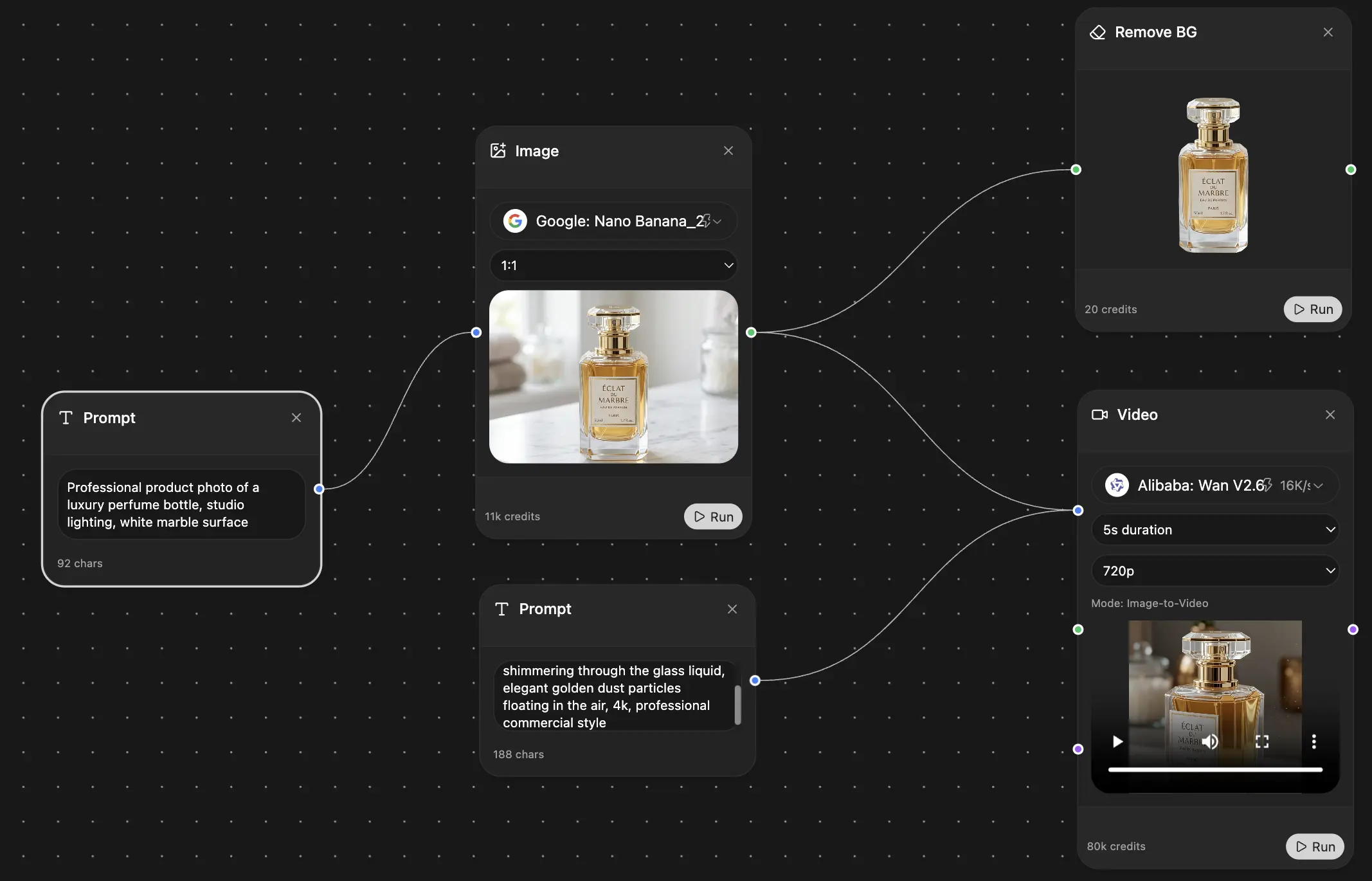
Chat, image, video & motion tools — side by side
Save hours of work and research
Transparent, High-Value Pricing
Trusted by teams at


Free
No credit card required
- 100 credits daily
- 3 AI models to try
- Basic AI chat
Plus
- 1,000,000 credits/month
- 25+ AI models — GPT, Claude, Gemini, Grok & more
- Agent Mode with web search, computer tools and more
- Creative Studio: image generation and video generation
- Project Library: chat with document, website and youtube, podcast generation, flashcards, reports and more
- Workflow Studio and FocusOS
Professional
- Everything in Plus, and:
- 2,100,000 credits/month
- Pro-exclusive models (Claude Opus, Grok 4, Sonar Pro)
- Motion Tools & Max Mode
- First access to latest features
- Access to additional offers
What Our Users Say
Great Tool after 2 months usage
"I love the way multiple tools they integrated in one platform. Going in the right direction."
— simplyzubair
Best in Kind!
"The quality of data and sheer speed of responses is outstanding. I use this app every day."
— barefootmedicine
Simply awesome
"The credit system is fair, models are perfect, and the discord is very responsive. Quite awesome."
— MarianZ
Great for Document Analysis
"Just works. Simple to use and great for working with documents. Money well spent."
— yerch82
Great AI site with accessible LLMs
"The organization of features is better than all the other sites — even better than ChatGPT."
— sumore
Excellent Tool
"It lives up to the all-in-one claim. All the necessary functions with a well-designed, easy UI."
— AlphaLeaf
Well-rounded platform with solid LLMs
"The team clearly puts their heart and soul into this platform. Really solid extra functionality."
— SlothMachine
Best AI tool I've ever used
"Updates made almost daily, feedback is incredibly fast. Just look at the changelogs — consistency."
— reu0691