Continue in C Programming: Master Loop Control
Learn to use continue in c programming effectively. Our guide explains its syntax, loop behavior, common mistakes, and best practices with practical code
You're probably here because you wrote a loop, dropped in continue, ran the program, and got one of two outcomes.
Either it worked and you felt like a wizard.
Or the loop started acting weird, skipped too much, or spun forever like it had personal issues.
That's normal. continue in C looks tiny, but it changes control flow in ways that trip up a lot of beginners, especially when switching between for and while loops. Once you really understand it, though, it becomes one of those tools you reach for all the time when filtering bad input, ignoring special cases, or keeping loop logic clean.
Skipping Steps Without Stopping the Show
Say you're processing a list of user records. Most entries are valid. A few are missing fields, a few are malformed, and a few look like someone smashed the keyboard and hit submit anyway.
You don't want to kill the whole loop because one record is junk. You just want to skip that one and keep going. That's exactly the kind of moment where continue earns its keep in continue in C programming.
Imagine checking guests into an event. If one person forgot their ID, you don't shut down the entrance. You wave them aside and move to the next person. continue does that for loop iterations.
}
That one line says, “This item isn't usable. Skip the rest of this pass and move on.”
When loop behavior starts feeling slippery, drawing the path helps. Converting code flow into a diagram can make these jumps much easier to reason about, and a guide like is handy when your mental model and your actual control flow stop matching.
Practical rule: Use
continuewhen you want to reject one item, not abandon the whole job.
What Is the Continue Statement Really
continue is the skip track button of loops.
It doesn't stop the playlist. It doesn't exit the loop. It just says, “I'm done with this iteration. Start the next one.”

C has had this kind of compact control flow from early on. The language was created by Dennis Ritchie at Bell Labs in 1972, and by 1978, Kernighan and Ritchie's The C Programming Language helped standardize how programmers learned and used core features like loop control. That history matters because continue still works across C's three core loop types, for, while, and do-while, where it skips the rest of the current iteration without ending the loop, as described in .
Continue vs break
This is the first distinction you need burned into memory.
That difference sounds simple, but in real code it changes everything.
Output:
The loop keeps going. It just skips printing 3.
Now compare that with break:
Output:
Game over at 3.
Why developers use it
continue is useful when the “bad case” is easier to identify than the “good case.”
Instead of wrapping the whole loop body in an if, you can reject early and keep the main path cleaner.
}
That reads nicely. “Ignore negatives. Process the rest.”
If you're still building your intuition for what a snippet does before you run it, can help you slow the logic down and inspect it line by line.
How Continue Behaves in Different Loops
At this point, people get burned.
The big confusion in continue in C programming isn't the keyword itself. It's that continue does not resume the same way in every loop type. Tutorials often blur that distinction, but the important gap is this: in for loops, the update step still runs after continue, while in while and do-while, control goes back to the condition check. That control-flow difference is called out in .
Here's a visual before we get into code.

Continue in a for loop
A for loop has three moving parts packed into one line:
- Initialization
- Condition
- Update expression
When continue happens inside a for loop, C still performs the update expression before checking the condition again.
}
Output:
When i == 2, the printf is skipped. Then i++ still happens. Then the loop checks i < 5 again.
That's why for loops are usually safer for continue when your loop counter matters. The progression is built in.
continuein aforloop skips the body, not the update step.
A quick walkthrough in video form can help if you prefer seeing the execution order instead of reading it.
Continue in a while loop
A while loop behaves differently because there is no automatic update expression in the loop header. You control the loop variable manually.
while (i < 5) { i++;
}
Output:
This works because i++ happens before continue.
Now look at the bug version:
while (i < 5) { if (i == 3) { continue; }
}
When i becomes 3, the loop hits continue before i++. So i stays 3 forever. Congratulations, you've invented a tiny heating device for your CPU.
Continue in a do-while loop
A do-while loop runs the body first, then checks the condition.
do { i++;
} while (i < 5);
Output:
Here, continue jumps to the condition check at the bottom of the loop.
The short version
If you remember only one thing, remember this: for loops still advance their update step after continue. while loops only advance if your code already did it.
Using Continue with Nested Loops and Switch Cases
Once a single loop makes sense, the next confusion usually shows up in nested logic.
You put continue inside an inner loop and expect the whole outer loop to move on. It won't. continue only affects the nearest enclosing loop.

Nested loop behavior
}
This skips only col == 1 in the inner loop. The outer row loop keeps going as usual.
That means continue is very local. It doesn't mean “skip everything related to this big block.” It means “skip the rest of this iteration of this loop right here.”
What about switch
This one confuses a lot of people because break has a special relationship with switch, but continue doesn't.
If you place a switch inside a loop and hit continue, it targets the surrounding loop, not the switch.
When i == 2, execution skips the rest of that loop iteration. It does not behave like “go to the next switch case.”
That's why it helps to map structures before editing them. If you bounce between code, pseudocode, and logic sketches, a guide on is a useful way to make nested control paths less sneaky.
If
continueis inside two blocks, ask one question: which loop is closest? That's the one it affects.
Practical Code Examples and Use Cases
Syntax is nice. Useful code is nicer.
Here are a few places where continue feels natural instead of forced.
Skipping negative values in a sum
Suppose you only want to total non-negative readings.
int main() { int values[] = {10, -3, 7, -1, 5}; int sum = 0;
}
Why continue works well here: the rejection rule is short, and the main path stays clean.
Ignoring comment lines in text input
A common pattern in config-style data is skipping blank lines or comments.
int main() { char *lines[] = { "# app config", "host=localhost", "", "port=8080", "# debug=false" };
}
That reads almost like plain English: if it's a comment or blank, skip it.
Skipping punctuation while scanning text
You might want to process only letters and digits.
int main() { char text[] = "Hi, Dev! C is fun.";
}
Output:
When it feels elegant
continue usually helps when:
- The skip condition is easy to spot: bad input, blank data, unwanted characters.
- The main action should stay visually central: process valid data without wrapping everything in another
if. - You're filtering, not branching heavily: once the loop starts looking like an airport security line with six exits, readability drops.
A good gut check is simple. If the code after continue is the “happy path,” the statement probably belongs there.
Common Mistakes and How to Avoid Them
The classic continue bug in C isn't subtle. It's loud, annoying, and sometimes infinite.
If you've ever had a program freeze because one variable never changed, this section is for you.

The bug you should spot fast
while (i < 5) { if (i == 2) { continue; }
}
The problem is i never changes when it becomes 2. The loop keeps checking i == 2, keeps continuing, and never reaches i++.
Microsoft's C documentation notes that continue transfers control to the next iteration of the nearest enclosing loop, and in a for loop the loop-expression update still runs before the condition is checked again. That's a key reason for loops often survive this mistake more gracefully than while loops, as explained in .
The fixed version
while (i < 5) { i++;
}
Now the variable changes before the skip can happen.
Three mistakes I see a lot
- Skipping the update: This is the infinite loop trap. It shows up mostly in
whileloops. - Expecting it to exit nested structures: It won't break out of every loop around it.
- Using it too many times: One
continuecan clarify a loop. Several can turn it into a maze.
Your future self reads your control flow with less context than current-you. Write for that person.
If you're debugging messy branching logic, is a practical way to inspect the paths you think are happening versus the ones C is taking.
And yes, programmers do sometimes create infinite loops by accident. We call that “letting the computer think.”
Is Continue Always the Best Choice
Nope.
continue is useful, but it isn't automatically the cleanest option. One C-focused source notes that it's most helpful when a loop body is long or highly nested because it can reduce extra if-else indentation. The same source also raises the more mature question many beginner tutorials skip: when should you refactor instead for readability and maintenance, as discussed in .
When continue helps
It shines when the loop has a quick reject rule.
}
That's tidy. The intent is obvious.
When continue starts to smell
If your loop looks like this, pause:
}
Is it legal C? Yes.
Is it fun to maintain? Not really.
A few alternatives often read better:
- Guard with a helper function: Move validation into
should_process(item). - Refactor the body: Put the core logic in a well-named function.
- Use a clear boolean: Compute eligibility first, then act.
}
Or even:
That second version is sometimes better. Not because continue is bad, but because readability wins.
If you want to level up from “my code works” to “my code is easy to live with,” is a useful next step.
A simple challenge for you: take a loop with two or three continue statements and rewrite it in two ways, once with a helper function and once with a single clear if. Then ask which one your teammate would understand faster on a tired Friday afternoon. That's usually the right answer.
If you want a faster way to inspect loop logic, debug tricky control flow, explain code, and refactor messy iterations into cleaner C, try . It brings coding help, research, writing, and AI-assisted problem solving into one workspace, which is handy when a tiny keyword like continue turns into a surprisingly large debugging session.
Explore Zemith Features
Every top AI. One subscription.
ChatGPT, Claude, Gemini, DeepSeek, Grok & 25+ more


Always on, real-time AI.
Voice + screen share · instant answers
What's the best way to learn a new language?
Immersion and spaced repetition work best. Try consuming media in your target language daily.
Voice + screen share · AI answers in real time
Image Generation
Flux, Nano Banana, Ideogram, Recraft + more

Write at the speed of thought.
AI autocomplete, rewrite & expand on command
Any document. Any format.
PDF, URL, or YouTube → chat, quiz, podcast & more
Video Creation
Veo, Kling, Grok Imagine and more

Text to Speech
Natural AI voices, 30+ languages
Code Generation
Write, debug & explain code
Chat with Documents
Upload PDFs, analyze content
Your AI, in your pocket.
Full access on iOS & Android · synced everywhere
Your infinite AI canvas.
Chat, image, video & motion tools — side by side
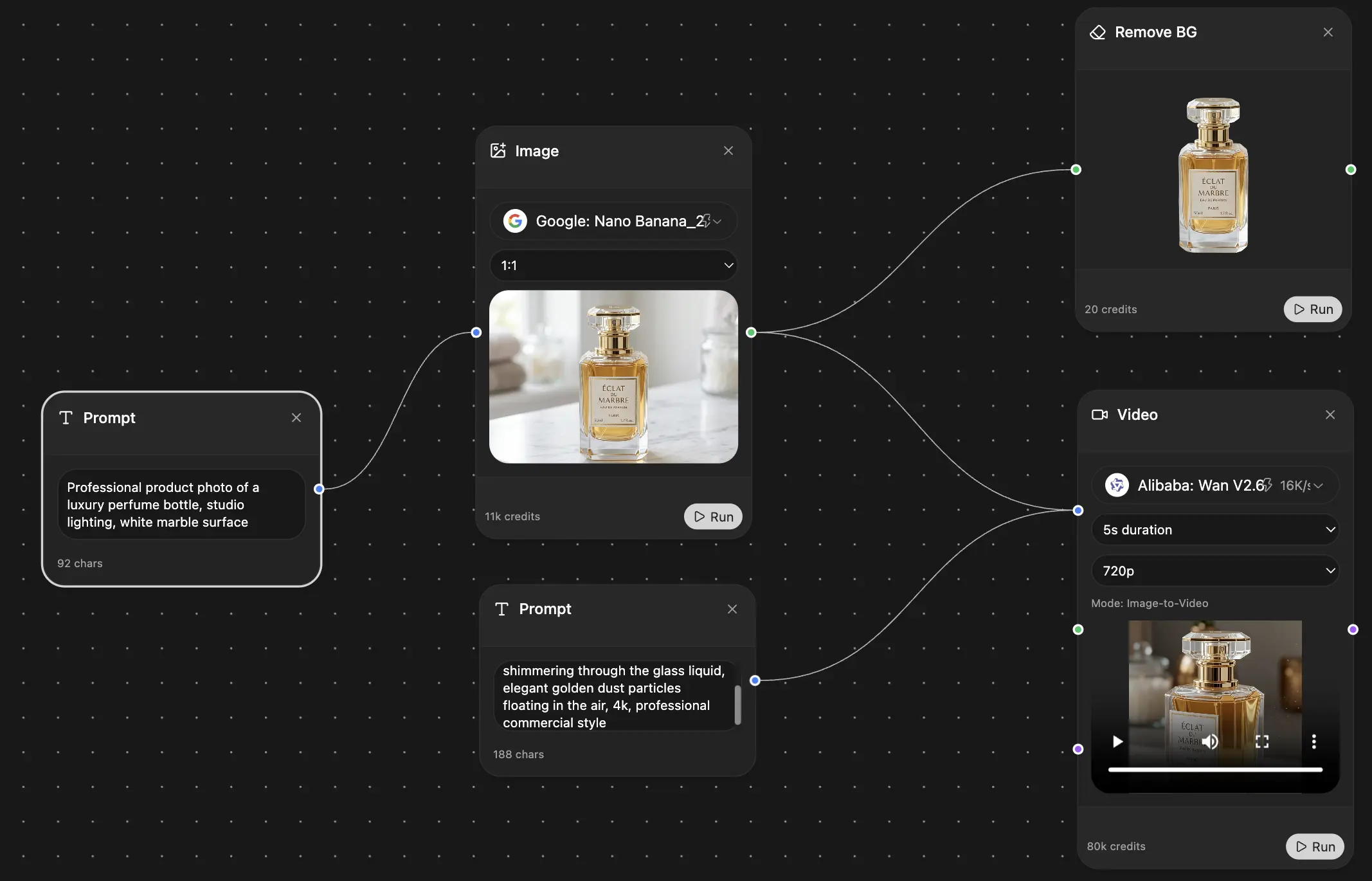
Save hours of work and research
Transparent, High-Value Pricing
Trusted by teams at


Free
No credit card required
- 100 credits daily
- 3 AI models to try
- Basic AI chat
Plus
- 1,000,000 credits/month
- 25+ AI models — GPT, Claude, Gemini, Grok & more
- Agent Mode with web search, computer tools and more
- Creative Studio: image generation and video generation
- Project Library: chat with document, website and youtube, podcast generation, flashcards, reports and more
- Workflow Studio and FocusOS
Professional
- Everything in Plus, and:
- 2,100,000 credits/month
- Pro-exclusive models (Claude Opus, Grok 4, Sonar Pro)
- Motion Tools & Max Mode
- First access to latest features
- Access to additional offers
What Our Users Say
Great Tool after 2 months usage
"I love the way multiple tools they integrated in one platform. Going in the right direction."
— simplyzubair
Best in Kind!
"The quality of data and sheer speed of responses is outstanding. I use this app every day."
— barefootmedicine
Simply awesome
"The credit system is fair, models are perfect, and the discord is very responsive. Quite awesome."
— MarianZ
Great for Document Analysis
"Just works. Simple to use and great for working with documents. Money well spent."
— yerch82
Great AI site with accessible LLMs
"The organization of features is better than all the other sites — even better than ChatGPT."
— sumore
Excellent Tool
"It lives up to the all-in-one claim. All the necessary functions with a well-designed, easy UI."
— AlphaLeaf
Well-rounded platform with solid LLMs
"The team clearly puts their heart and soul into this platform. Really solid extra functionality."
— SlothMachine
Best AI tool I've ever used
"Updates made almost daily, feedback is incredibly fast. Just look at the changelogs — consistency."
— reu0691