Top 12 Claude Code Alternatives for Developers in 2026
Tired of juggling tools? Discover 12 powerful Claude code alternatives. Find the perfect AI coding assistant and consolidate your workflow today.
So, you've been pairing with Claude, but maybe the romance is fading. Whether it’s the subscription model giving you wallet fatigue, a specific feature you’re missing, or just a classic case of “it’s not you, it’s me,” you’re ready to see what else is out there. Good news—the world of AI-powered coding assistants is booming, and there are a ton of fantastic claude code alternatives ready to jump into your workflow.
Finding the right AI coding partner can feel like dating. You need one that gets your style, anticipates your next move, and doesn't talk back when you’re debugging at 2 AM. The growth in this space is staggering; recent show just how quickly developers are adopting these tools, meaning the competition is fierce and the options are better than ever.
This guide is your ultimate resource for finding your perfect match. We’re going to break down the top contenders, from IDE-integrated giants to standalone multi-model powerhouses. For each tool, you’ll get the real scoop:
- Core coding features: What can it actually do for your code?
- Pros and cons: The good, the bad, and the buggy.
- Best use cases: Who is this tool really for?
- Pricing: Because nobody likes a surprise bill.
We'll even dive into how you can migrate your projects and integrate these tools with minimal fuss. Our goal is simple: to help you sift through the marketing noise and find a coding assistant that genuinely makes your life easier. Let’s get started.
1. Zemith
If you're tired of juggling a dozen different AI subscriptions and constantly switching tabs, Zemith is your all-in-one "get out of jail free" card. It's a powerful workspace that consolidates over 25 top-tier models, including heavy hitters like Gemini-2.5 Pro and Claude 4 Sonnet, alongside a complete suite of creative and productivity tools. Instead of paying for separate services for coding, writing, image generation, and research, Zemith rolls them all into a single, synchronized application. This makes it a formidable contender for anyone seeking claude code alternatives for complex development tasks that go beyond just writing a few lines of code.

Why Zemith is a Top Choice for Developers
For developers, Zemith's integrated coding assistant is a major draw. It's not just about generating snippets; it offers live previews for web development, robust debugging suggestions, and clear explanations of complex code. The real magic happens because the coding tools exist in the same environment as your other assets. You can generate UI mockups with its image tools, write documentation in the AI Notepad, and then build the code, all without leaving the app. It's the ultimate context-switching killer.
"The ability to switch from debugging a Python script to generating a placeholder image with Stability Diffusion, all within one interface, is a game-changer for my workflow. It's the multi-tool I didn't know I needed." - Verified User Testimonial
Key Features Beyond Coding
While its coding capabilities are strong, what makes Zemith a standout choice is its breadth. Here are some features that set it apart:
- Document & Research Powerhouse: Chat directly with PDFs, URLs, and even YouTube videos. It can generate summaries, quizzes, and even podcast-ready audio from your source material, which is a massive time-saver for research.
- Live Mode & Collaboration: This is where things get interesting. Live Mode allows for real-time voice and screen sharing with the AI, making it a conversational partner for brainstorming or getting instant help. The Workflow Studio acts as a digital whiteboard for mapping out ideas.
- True Multi-Model Access: You aren't locked into one ecosystem. You can pick the best model for the job, whether it's GPT for creative writing or a specialized model for technical accuracy, all from one prompt box. This is Zemith's superpower—why settle for one brain when you can have an entire board of directors?
Pricing and Access
Zemith offers a free starter plan to get your feet wet. The full Pro experience is priced at $14.99 per month (billed yearly), which the site claims can save users over $140 monthly compared to subscribing to equivalent services individually. While it uses a credits model for very heavy usage, the core offering is generous.
Website:
2. GitHub Copilot
If you live and breathe inside your IDE and the GitHub ecosystem, GitHub Copilot is practically a must-try. As Microsoft and GitHub's official AI coding partner, its main strength is its deep, native integration. It doesn't just offer code suggestions; it feels like part of your development environment, from inline completions to its chat interface within VS Code, JetBrains IDEs, and even Neovim. It’s one of the strongest claude code alternatives for those already committed to the Microsoft/GitHub stack.

What really makes Copilot stand out is its workflow awareness. It can scan your open tabs, terminal output, and even help you review pull requests directly on GitHub.com. This context-rich assistance means the suggestions are often spookily accurate. For teams, the enterprise controls are a big plus, but watch out for potential extra costs from organization policies like premium request billing.
Quick Look at GitHub Copilot
Pros:
- Best-in-class integration with GitHub repos, PRs, and issues.
- Wide IDE support (VS Code, JetBrains, etc.) with a consistent feel.
- Context-aware suggestions that understand your entire workspace.
Cons:
- Chat functionality isn't available in all IDE extension versions.
- Can get pricey for teams, especially with add-on billing policies.
While Copilot is a fantastic tool for its specific ecosystem, developers looking for more flexibility might explore platforms that integrate multiple AI models. To see how different tools stack up, you can find a breakdown of the options available today.
3. Cursor
If you've ever wished your code editor was built from the ground up for AI, Cursor is the project to watch. It's an AI-native, VS Code-compatible IDE that centers its entire experience around agent workflows and multi-model support. Instead of just adding AI features, it reimagines the development environment, making it one of the most interesting claude code alternatives for those who want a fully integrated workflow.

What makes Cursor special is its agent-first approach. You can spin up built-in agents to tackle complex tasks, from generating boilerplate to refactoring entire features. Its "Bugbot" feature can even automate PR reviews. For businesses, the enterprise controls like role-based access and SAML are a huge draw, offering a secure, team-oriented AI environment. It’s an editor and an AI partner rolled into one.
Quick Look at Cursor
Pros:
- Strong agent workflow directly inside the editor for complex tasks.
- Clear plan structure for individuals and teams with robust business controls.
- Built-in multi-model support lets you switch between GPT and Claude.
Cons:
- Higher-usage tiers get notably more expensive for heavy model access.
- Developers outside the VS Code ecosystem may prefer JetBrains-native tools.
Cursor is a powerful choice for those ready to commit to an AI-first editor. However, if you want the flexibility of multi-model access without changing your entire IDE, a platform like can bring that power into your existing setup.
4. Windsurf
For developers who want to move beyond simple code suggestions and embrace a fully agentic workflow, Windsurf offers a compelling vision of the future. It’s an AI-native IDE built from the ground up to support fast iteration on web applications. Its core is an AI agent named Cascade, which can take high-level prompts and build, debug, and even deploy code, making it a powerful claude code alternatives for those focused on rapid prototyping and full-stack development.

What makes Windsurf unique is its integrated environment. The built-in live previews and one-click deploys mean you can go from idea to live URL in minutes, a process that usually involves juggling multiple tools. While it’s a standalone platform, it also meets developers where they are with a JetBrains plugin and a multi-cloud provider (MCP) store. The experience feels less like a helper and more like a true AI pair programmer.
Quick Look at Windsurf
Pros:
- Excellent agentic workflows for building entire features from prompts.
- Seamless live previews and deployment features speed up the development cycle.
- Offers a free tier to get started, plus a JetBrains plugin for existing workflows.
Cons:
- Users accustomed to credit-based models may need to adjust to plan-based usage.
- Model usage billed at API price on some tiers can introduce cost variability.
While Windsurf provides an impressive all-in-one development environment, teams wanting more control over which AI models they use might find it limiting. For a more flexible approach, a multi-model gateway like allows you to integrate best-in-class models from any provider into your existing tools.
5. Amazon Q Developer
For development teams deeply embedded in the AWS ecosystem, Amazon Q Developer is a compelling option. As the successor to CodeWhisperer, its main advantage is its native integration with AWS services, from your IDE right into the command line. It’s designed less as a general-purpose assistant and more as a specialized agent for AWS-centric workflows, offering robust governance, admin controls, and IP indemnity, which are huge wins for enterprise users. This focus makes it one of the most practical claude code alternatives for enterprise aws developers running on Amazon's cloud.

Beyond standard code generation, Amazon Q offers unique, agentic capabilities like its Java and .NET transformation agents. These tools can help modernize legacy applications, though you’ll want to watch the meter, as transformation work is billed per line of code beyond your plan's allocation. The tight coupling with AWS IAM Identity Center and its administrative dashboards make it a predictable and secure choice for teams needing to manage access and policies centrally.
Quick Look at Amazon Q Developer
Pros:
- Native fit for AWS toolchains and enterprise policies.
- Predictable per-seat Pro tier and clear overage model for transformations.
- Strong governance features, including IP indemnity options.
Cons:
- Feature set is most compelling for AWS-heavy stacks.
- Java/.NET transformations beyond the included quota can get expensive with LOC-based fees.
While Amazon Q is powerful for AWS shops, its specific model focus might not suit teams wanting more flexibility. Understanding the different capabilities of the can help you decide if a multi-model tool is a better fit for your needs.
6. Google Gemini Code Assist
For teams deeply invested in the Google Cloud ecosystem, Gemini Code Assist (formerly Duet AI) is a natural fit. Its primary strength lies in its tight integration with Google's suite of developer tools and its direct access to the powerful Gemini model family. It's more than just a code completion tool; it acts as a specialized assistant for the entire Google Cloud workflow, making it a compelling claude code alternatives for developers building on GCP.

What makes Gemini Code Assist particularly useful is its focus on workflow automation beyond just writing code. Its GitHub marketplace app can help with pull request summaries and analysis, and its agent modes and CLI support provide assistance directly in your terminal. This multi-faceted approach means it can help you write, deploy, and manage applications all within its intended environment. However, figuring out the pricing can be a bit of a maze, often requiring a chat with sales for enterprise features.
Quick Look at Google Gemini Code Assist
Pros:
- Solid PR automation and an excellent on-GitHub experience.
- Tight integration with the Google Cloud developer stack.
- Direct access to Google's latest Gemini models.
Cons:
- Pricing and editions can be confusing across different Google programs.
- Advanced enterprise pricing often requires talking to sales.
While Gemini Code Assist shines within its Google-centric universe, teams wanting to compare its performance against other top models might feel limited. For a direct comparison of the AI brains behind these tools, check out our deep dive on .
7. JetBrains AI Assistant
For developers deeply embedded in the JetBrains ecosystem (IntelliJ IDEA, PyCharm, WebStorm), the native AI Assistant is a no-brainer. This tool is built from the ground up to feel like a natural extension of your IDE, not just a bolted-on chat window. Its power comes from its deep integration with JetBrains' powerful refactoring and code analysis engines, making it one of the most contextually aware claude code alternatives for users of their products.

What makes the JetBrains AI Assistant a solid choice is its focus on enterprise needs and workflow continuity. It can help you generate documentation, write commit messages based on your changes, and find issues within your code. For organizations, the ability to control data processing and even plug in your own models gives it a strong privacy and customization posture. It’s less of a general-purpose tool and more of a specialized power-up for the JetBrains-centric developer.
Quick Look at JetBrains AI Assistant
Pros:
- Unmatched native integration with the JetBrains IDE workflow.
- Strong enterprise privacy controls and model provider transparency.
- Excellent context-awareness for refactoring and code analysis.
Cons:
- Requires an extra subscription on top of your IDE license.
- The best value is almost exclusively for teams already committed to JetBrains IDEs.
While the deep IDE integration is fantastic, learning how to write effective prompts is still key to getting the most out of it. For more tips, you can explore guides on using , as many of the principles apply here too.
8. Tabnine
For enterprises where data privacy, compliance, and deployment flexibility are non-negotiable, Tabnine presents a compelling case. It’s one of the older players in the AI coding space, and its maturity shows in its focus on enterprise-grade controls. It offers a spectrum of deployment options from a standard SaaS model to fully air-gapped, on-premise installations, giving organizations total control over their codebase and the models that interact with it. This makes it a strong claude code alternatives for teams in highly regulated industries.

What really sets Tabnine apart is its commitment to privacy and model choice. The platform guarantees zero code retention on its SaaS offering and provides robust IP and license filtering to prevent accidental use of restricted code. Furthermore, enterprises can connect their own self-hosted LLMs, ensuring that proprietary code never leaves their private network. This level of control is a massive advantage for security-conscious organizations.
Quick Look at Tabnine
Pros:
- Excellent privacy and security features, including SOC 2 compliance and zero code retention.
- Unmatched deployment flexibility with SaaS, VPC, and on-premise/air-gapped options.
- Supports connecting your own LLMs for maximum control and security.
Cons:
- Enterprise tier can be more expensive than other tools.
- Using Tabnine's provided LLMs can lead to extra costs for usage.
While Tabnine is a fortress for enterprise code, its focus on single-model integrations might feel limiting for teams wanting to experiment. For a platform that offers multi-model access out of the box, you might want to look at a tool like Zemith to compare the outputs of different AIs on the fly.
9. Sourcegraph Cody (Enterprise)
For engineering teams working inside massive monorepos or labyrinthine codebases, Sourcegraph Cody offers a unique approach. It's an AI coding assistant built on Sourcegraph’s powerful code search and intelligence platform, which makes its context retrieval capabilities incredibly robust. Instead of just relying on embeddings, Cody uses Sourcegraph's core search to understand your entire repository, making it one of the most effective claude code alternatives for large codebase analysis.

The real magic here is Cody's ability to pull context from across your entire codebase, not just your open files. It understands dependencies, finds relevant definitions, and provides answers grounded in your organization's own code. While its free and pro plans were recently sunset, the enterprise version remains a heavyweight contender for large companies needing security, governance, and repo-scale intelligence. Be prepared to adopt the Sourcegraph platform to make it work.
Quick Look at Sourcegraph Cody (Enterprise)
Pros:
- Superior context retrieval for navigating and understanding massive monorepos.
- Strong governance and security features via the Sourcegraph platform.
- BYOK (Bring Your Own Key) support for enhanced control on Enterprise plans.
Cons:
- Individual free/pro plans are no longer available, making it inaccessible for solo devs.
- Requires integrating and using Sourcegraph as part of your core stack.
Cody is a specialized tool for a specific problem: code comprehension at scale. For those wanting to learn more general techniques, our guide on can offer broader productivity tips.
10. Replit AI
For those who want to jump straight into coding without setting up a local environment, Replit AI is a fantastic choice. It’s a complete, browser-based IDE with an integrated AI assistant (formerly Ghostwriter) and an AI Agent that can build projects for you. This all-in-one approach is perfect for rapid prototyping, teaching, hackathons, or any full-stack project you want to get running from the web in minutes. The combination of an editor, AI, and hosting makes it one of the most accessible claude code alternatives for web-based development available.

What makes Replit AI special is its zero-friction workflow. You can write code, get AI assistance, and deploy a live web app all from a single browser tab. The AI Agent is particularly interesting; you can give it a high-level goal, and it will plan and execute the coding steps, asking for your approval at checkpoints. This is a big step beyond simple code completion. The effort-based pricing and bundled AI credits can be a double-edged sword, offering flexibility but also potential for unexpected costs if you heavily use the Agent.
Quick Look at Replit AI
Pros:
- One-stop shop: browser IDE, integrated AI, and web hosting in one platform.
- Excellent for education, hackathons, and quickly building shareable prototypes.
- The AI Agent can autonomously build and debug simple applications.
Cons:
- Pricing model with "Cycles" for AI usage can be complex and may spike for heavy users.
- Less suited for large, locked-down enterprise repositories that require local setups.
While Replit’s integrated ecosystem is its biggest strength, developers who work across multiple local IDEs and need more model variety might find it limiting. For a more flexible tool that isn't tied to a single platform, consider a solution like , which brings multiple AI models directly into your preferred workflow.
11. Cline
For developers who want ultimate control and privacy, Cline presents a compelling open-source option. It’s a free, self-hosted agent that runs directly inside your IDE, letting you connect to virtually any model provider you want. You can bring your own keys (BYOK) for Anthropic, OpenAI, Gemini, or even connect to local models via Ollama. This makes it a fantastic claude code alternatives for privacy-conscious developers who want to avoid managed SaaS solutions.

Cline operates with a "manual approval" philosophy, giving you the final say before it executes terminal commands or edits files. This agent can read your entire repository for context, but you control its actions, striking a balance between powerful automation and developer oversight. It’s perfect for those who want an AI assistant that asks for permission before messing with their code. The trade-off is the DIY setup; you're responsible for managing API keys and relying on community support.
Quick Look at Cline
Pros:
- Completely free and open-source, offering maximum transparency.
- Extreme flexibility with model backends, including local and private options.
- Fine-grained control over actions with manual approvals for safety.
Cons:
- Requires a DIY setup for managing API keys, models, and updates.
- Support is community-based, lacking the dedicated support of a paid service.
While Cline's self-hosted nature is great for control, it places the burden of model management squarely on you. If you prefer a platform that handles multi-model integration without the setup hassle, a managed solution like offers a more streamlined experience.
12. Aider
For developers who live in the terminal and swear by Git, Aider is an intriguing open-source AI pair programmer. It operates directly from your command line, acting as a true coding assistant that understands your entire repository. Aider maps your project structure, edits files based on your prompts, and then presents the changes as a Git diff for you to approve and commit. It's a fantastic, CLI-native tool and one of the most flexible claude code alternatives for those who want complete control.

What makes Aider special is its model-agnostic approach. You can plug in your own API keys for GPT-4, Claude, or even connect it to local models running through Ollama or LM Studio. This "bring your own key" (BYOK) model gives you full power over costs and data privacy. Its diff-based editing is also incredibly efficient with tokens, as it only sends relevant code snippets to the model instead of entire files, saving you money and speeding up responses.
Quick Look at Aider
Pros:
- Free, open source, and fits perfectly into CLI-driven development.
- Model-agnostic design gives you control over cost, privacy, and performance.
- Efficient token usage due to its repository mapping and diff-based edits.
Cons:
- Purely terminal-based UX with no GUI, which is a dealbreaker for some.
- Requires you to manage your own models, API keys, and security guardrails.
While Aider is a powerful choice for CLI experts, setting up and managing different models can be a hassle. For a more integrated experience that still offers model flexibility without the DIY setup, platforms like provide a unified interface to access multiple leading AI models in one place.
Claude Code Alternatives: 12-Tool Feature Comparison
Final Thoughts
Whew, we've journeyed through a whole galaxy of coding assistants. It's clear the days of staring at a blank screen, waiting for inspiration to strike (or for Stack Overflow to load), are quickly becoming a thing of the past. From the powerhouse integration of GitHub Copilot to the enterprise-grade focus of Amazon Q Developer, the field of claude code alternatives is bursting with options for every kind of developer, project, and budget.
Our deep dive has shown that there's no single "best" tool, only the best tool for you. It’s less about finding a silver bullet and more about building your personal Iron Man suit of coding tools. What works for a solo dev hacking on a weekend project (maybe Aider or Replit AI) won't be the right fit for a massive enterprise team needing strict security and custom models (hello, Sourcegraph Cody).
Key Takeaways and Making Your Choice
So, how do you pick your co-pilot from this crowded hangar? Let’s boil it down.
First, define your primary need. Are you looking to write boilerplate faster? Your best friends will be autocompletion champs like GitHub Copilot and Tabnine. Are you constantly fighting with complex legacy code and need a deep-level assistant to help you understand it? Tools with a strong codebase context, like Cursor or Sourcegraph Cody, are your go-to.
Next, consider your workflow and existing tools. If you live and breathe inside a JetBrains IDE, their AI Assistant is a no-brainer for a smooth, integrated experience. For those who want an AI-first development environment from the ground up, Cursor presents a compelling, albeit different, way of working. Don’t underestimate the friction of a poorly integrated tool; it can completely negate any productivity gains.
Finally, think about flexibility versus specialization. This is a major theme we saw.
- Specialized Tools: Many of the options we covered are fantastic at one thing. GitHub Copilot is the king of autocompletion. Aider is a command-line wizard for test-driven development. They are sharp, focused, and incredibly effective in their niche.
- Flexible Platforms: On the other end of the spectrum, you have platforms like Zemith. Instead of locking you into a single model (and its inherent biases or weaknesses), it gives you access to multiple top-tier models. This approach acknowledges that one model might excel at Python generation while another is better at debugging JavaScript.
Your Actionable Next Steps
Feeling a little overwhelmed by the choices? Don't be. Here’s a simple plan:
- Pick Two Contenders: Based on our list, choose two tools that seem like the best fit for your main pain point. Maybe one that’s deeply integrated (like JetBrains AI Assistant) and one that’s more of an all-rounder.
- Run a Trial Week: Dedicate a few days to each. Don't just use them for simple tasks. Throw your gnarliest, most annoying coding problems at them. Try to refactor a messy function, generate unit tests for a complex class, or explain a piece of code you wrote six months ago and have since forgotten.
- Evaluate the "Feel": Did the tool get in your way or did it feel like a natural extension of your thought process? Did you spend more time correcting it than it saved you? The subjective experience is just as important as the feature list.
Ultimately, the goal is to find a partner that augments your skills, not one that you have to babysit. The perfect AI coding assistant makes you a better, faster, and happier developer. It handles the tedious stuff, letting you focus on the creative, problem-solving aspects of engineering that got you into this field in the first place. So go on, experiment, and find the right AI companion to help you build the future.
Ready to stop juggling different AI tools for different tasks? As one of the most flexible claude code alternatives, Zemith provides access to a variety of best-in-class models all in one place. Try today to find the perfect AI for any coding challenge without being locked into a single ecosystem.
Explore Zemith Features
Every top AI. One subscription.
ChatGPT, Claude, Gemini, DeepSeek, Grok & 25+ more


Always on, real-time AI.
Voice + screen share · instant answers
What's the best way to learn a new language?
Immersion and spaced repetition work best. Try consuming media in your target language daily.
Voice + screen share · AI answers in real time
Image Generation
Flux, Nano Banana, Ideogram, Recraft + more

Write at the speed of thought.
AI autocomplete, rewrite & expand on command
Any document. Any format.
PDF, URL, or YouTube → chat, quiz, podcast & more
Video Creation
Veo, Kling, Grok Imagine and more

Text to Speech
Natural AI voices, 30+ languages
Code Generation
Write, debug & explain code
Chat with Documents
Upload PDFs, analyze content
Your AI, in your pocket.
Full access on iOS & Android · synced everywhere
Your infinite AI canvas.
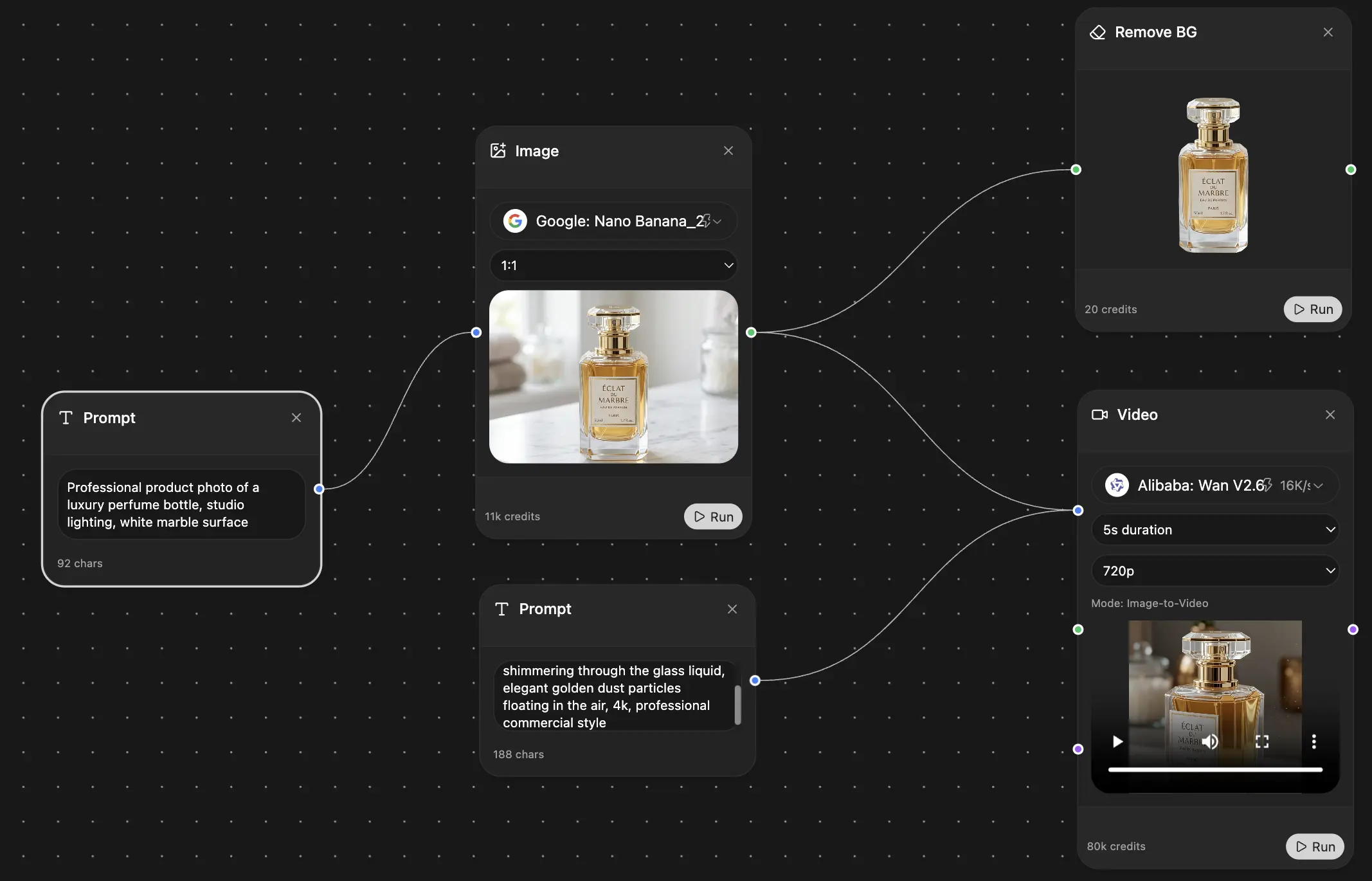
Chat, image, video & motion tools — side by side
Save hours of work and research
Transparent, High-Value Pricing
Trusted by teams at


Free
No credit card required
- 100 credits daily
- 3 AI models to try
- Basic AI chat
Plus
- 1,000,000 credits/month
- 25+ AI models — GPT, Claude, Gemini, Grok & more
- Agent Mode with web search, computer tools and more
- Creative Studio: image generation and video generation
- Project Library: chat with document, website and youtube, podcast generation, flashcards, reports and more
- Workflow Studio and FocusOS
Professional
- Everything in Plus, and:
- 2,100,000 credits/month
- Pro-exclusive models (Claude Opus, Grok 4, Sonar Pro)
- Motion Tools & Max Mode
- First access to latest features
- Access to additional offers
What Our Users Say
Great Tool after 2 months usage
"I love the way multiple tools they integrated in one platform. Going in the right direction."
— simplyzubair
Best in Kind!
"The quality of data and sheer speed of responses is outstanding. I use this app every day."
— barefootmedicine
Simply awesome
"The credit system is fair, models are perfect, and the discord is very responsive. Quite awesome."
— MarianZ
Great for Document Analysis
"Just works. Simple to use and great for working with documents. Money well spent."
— yerch82
Great AI site with accessible LLMs
"The organization of features is better than all the other sites — even better than ChatGPT."
— sumore
Excellent Tool
"It lives up to the all-in-one claim. All the necessary functions with a well-designed, easy UI."
— AlphaLeaf
Well-rounded platform with solid LLMs
"The team clearly puts their heart and soul into this platform. Really solid extra functionality."
— SlothMachine
Best AI tool I've ever used
"Updates made almost daily, feedback is incredibly fast. Just look at the changelogs — consistency."
— reu0691