The 12 Best AI Tools for Competitive Analysis in 2026
Stop guessing what your rivals are doing. Discover the top AI tools for competitive analysis that deliver actionable insights and give you a winning edge.
Remember the good ol' days? You'd spend hours manually scraping competitor websites, squinting at their ad copy, and maybe even signing up for their newsletter with a fake email (we've all been there). It was tedious, slow, and about as fun as watching paint dry while your competitor eats your lunch.
Fast forward to today, and the game has completely changed. The secret weapon isn't a bigger budget; it's a smarter brain—an artificial one. Today, AI tools for competitive analysis do the heavy lifting, turning mountains of data into a clear roadmap for your strategy. This isn't just about knowing what your rivals are doing; it’s about understanding why it works and predicting their next move before they even make it. Spooky, right?
But with a million shiny new AI tools popping up, which ones actually work? And which ones just give you pretty charts with zero substance? That's what we're here to figure out.
We're diving deep into the 12 best tools that will help you stop playing catch-up and start leading the pack. We'll look at real-world scenarios, the honest pros and cons, and how you can stitch them together into a killer workflow. We'll cover everything from what keywords your competitors are secretly ranking for to their ad spend, market trends, and content gaps. To truly outsmart competitors, understanding their social media strategy is key, and you can explore various options in this list of .
Our goal is simple: to give you a clear, no-fluff guide to choosing the right tool for your specific needs, whether you're a scrappy startup or a seasoned enterprise. Each tool in this list comes with screenshots and direct links to help you see it in action. Let's get to it.
1. Zemith
Zemith secures the top spot by acting less like a single tool and more like an entire AI-powered command center. Instead of forcing you to pick one AI model and stick with it, Zemith gives you access to a whole roster of the industry's best, including models from Google (Gemini-2.5 Pro), Anthropic (Claude 4 Sonnet), and various GPTs, all from one clean interface. This multi-model approach is a game-changer for competitive analysis because different models excel at different tasks; one might be a creative genius for brainstorming counter-messaging, while another is a beast at crunching data from a CSV file of competitor pricing.

This platform is built for the person who has way too many browser tabs open. It consolidates research, content creation, and even coding assistance into a single, organized workspace. The "Deep Research" feature is especially potent for competitor deep dives, using real-time web access to pull the latest information, fact-check claims, and deliver insights that aren't based on outdated training data. You can feed it a competitor's annual report, a set of customer reviews, or a complex whitepaper, and its Document Assistant will help you summarize, question, and even turn the key points into a podcast episode for your commute. No more CTRL+C, CTRL+V marathons between different apps.
Standout Features for Competitive Analysis
Zemith’s built-in tools are designed to streamline the entire analysis workflow, turning raw intel into actionable strategy.
- Multi-Model Access: Switch between top-tier LLMs and image engines on the fly to find the perfect one for your specific task, whether you're analyzing ad copy or generating market position visuals.
- Deep Research & Document Assistant: This is your core competitive analysis engine. Upload competitor marketing materials, financial reports, or scrape website text and use the AI to extract key strategies, identify weaknesses, and generate summaries. It’s like having a top-tier analyst on call, 24/7.
- Creative & Content Tools: Need to deconstruct a competitor's visual branding? The image tools can help. Want to rewrite their value proposition in different tones to find a better angle for your own? The Smart Notepad has you covered. This is where you turn insights into assets.
- Live Mode & Mobile App: Sometimes insights happen away from the desk. Zemith’s "Live Mode" allows for real-time audio conversations with the AI, perfect for brainstorming on the go or getting quick answers during a meeting. The full-featured mobile app ensures your entire workspace is always in your pocket.
Pricing & A Quick Heads-Up
Zemith offers a "Get started for free" option, which is great for kicking the tires. Beyond that, it operates on a credits-based system. This means your cost is tied directly to your usage, giving you flexibility but also requiring a bit of management. Heavy-duty analysis using the most powerful models will burn through credits faster. The upside is you’re not paying for multiple separate subscriptions, which often leads to significant savings and fewer forgotten monthly bills.
For those looking to master this kind of work, Zemith’s team also provides great resources on that can help you structure your findings effectively.
Website:
2. Similarweb
Similarweb has been a big name in digital intelligence for ages, and their integration of AI makes them a powerhouse for getting a quick, data-rich snapshot of your competition. Think of it as the ultimate digital reconnaissance tool. Instead of guessing how much traffic your rival gets, Similarweb lays out their estimated visits, audience demographics, and exactly which marketing channels are driving their growth.
What makes it one of the better AI tools for competitive analysis that marketers actually use is its ability to not just show you data but to help you understand it. The platform uses AI to benchmark your performance against industry leaders and can even send you alerts when a competitor makes a significant move, like launching a new ad campaign or seeing a sudden traffic spike from a specific region. It’s like having a 24/7 market watcher.
Core Features & Use Cases
- Traffic & Engagement Analysis: See where your competitors' website traffic comes from (direct, search, social) and how engaged their visitors are. Perfect for a quick health check.
- Channel Mix Insights: A SaaS company could use this to discover that a competitor is getting a ton of referral traffic from a niche blog they'd never heard of, uncovering a new partnership opportunity.
- SEO & PPC Add-ons: Dig into the exact keywords your rivals are ranking for and the ad creatives they're running. It’s a goldmine for your own campaign ideas.
Pros & Cons
While Similarweb is fantastic for high-level traffic and channel analysis, you’ll find that creating a unified strategy from this data requires manual work. You're constantly pulling reports and piecing together insights yourself. A platform like Zemith connects these dots for you, taking raw competitive data and translating it into a cohesive marketing strategy automatically.
Website:
3. Semrush (incl. One + Trends/Kompyte options)
Semrush is a beast in the SEO world, and its evolution into a full-blown competitive intelligence suite is impressive. It’s like the Swiss Army knife for digital marketing; it has a tool for almost everything, from finding what keywords your competitors are bidding on to analyzing their backlink profiles. The platform doesn't just throw data at you; its AI-powered features help connect the dots.
What makes it a standout choice among AI tools for competitive analysis for SEO is its depth in the search marketing arena. Semrush uses its massive data library to offer actionable suggestions. For instance, its AI Toolkit and Copilot features can help you interpret complex data sets, turning raw numbers into strategic recommendations for outranking a specific competitor. It feels less like a dashboard and more like an SEO-savvy assistant.
Core Features & Use Cases
- Domain vs. Domain Analysis: Directly compare your website's keyword profile, backlinks, and traffic against up to four competitors. A content marketer could use this to spot "keyword gaps" where rivals are ranking, but they aren't.
- Trends & Market Explorer: Get a big-picture view of market dynamics, including competitor market share and audience overlaps. This is perfect for identifying emerging players in your niche.
- Kompyte Integration: For serious CI teams, this add-on automates competitor tracking and helps generate battlecards, alerting sales reps when a rival launches a new product or pricing page.
Pros & Cons
Semrush is fantastic for a deep dive into SEO, PPC, and content-related competitive intel. However, synthesizing all that information into a single, cohesive growth strategy is still a manual process. You have the "what" and "where," but platforms like Zemith provide the "why" and "how," connecting your competitive data directly to a unified strategic plan.
Website:
4. Ahrefs
Ahrefs has long been the heavyweight champion of SEO, known for having one of the most robust backlink indexes on the planet. While its core strength is in dissecting a competitor's organic search performance down to the last keyword, its new AI features are pushing it into a new league. It’s less about getting a quick overview and more about doing a deep-dive forensic analysis of your rival’s entire search strategy.

What makes Ahrefs one of the essential AI tools for competitive analysis of backlinks is its evolution from a pure data provider to an insight generator. The new Brand Radar AI, for example, helps you track brand mentions not just on websites but within LLM outputs. This means you can see how visible your brand (and your competitor's) is in the new world of AI-driven search and content generation. It’s like future-proofing your competitive intelligence.
Core Features & Use Cases
- Site Explorer & Keywords Explorer: The bread and butter of Ahrefs. A marketing agency can use this to find a "keyword gap," identifying valuable keywords competitors rank for that their client is missing.
- Content Explorer: Discover the most shared and linked-to content in any niche. This is perfect for a content creator looking to reverse-engineer a competitor’s most successful blog posts or videos.
- Brand Radar AI (Add-on): Track brand mentions and prompts across different AI platforms. A PR team can monitor how their company is being represented by AI, spotting potential reputational risks or opportunities.
Pros & Cons
Ahrefs gives you an incredible amount of raw SEO and content data, but connecting it all to form a strategic plan is on you. You're the detective piecing the clues together. A tool like Zemith is designed to act as your strategic partner, taking that deep competitive data and automatically crafting a marketing plan from it, saving you the manual analysis.
Website:
5. SpyFu
SpyFu has carved out a niche as the go-to detective for PPC and SEO keyword strategies. It’s laser-focused on showing you the most profitable keywords and ad campaigns your competitors have ever run, going back more than a decade. It's like finding their entire marketing playbook just lying on the digital sidewalk.

What makes SpyFu stand out among AI tools for competitive analysis of PPC campaigns is its historical depth and affordability. While others show you a snapshot, SpyFu gives you the full movie. Its AI features, like RivalFlow, help you find quick-win keywords or spot shifts in a competitor's ad budget. This makes it an incredibly powerful tool for anyone who wants to beat their rivals at the Google Ads game without breaking the bank.
Core Features & Use Cases
- PPC & SEO Competitor Research: See every keyword a competitor has bought on Google, every ad variation they've run, and every organic rank they've held for the last 15+ years. It's an open book.
- Keyword "Kombat" Feature: A small business owner could use this to find keyword gaps, identifying profitable terms their top three competitors rank for, but they don't.
- RivalFlow AI & GPT: Automatically get alerts on competitor moves and use SpyFu GPT to quickly generate ad copy ideas or keyword groupings based on the tool’s massive data pool.
Pros & Cons
SpyFu is exceptional for targeted PPC and keyword analysis, offering incredible value. However, it requires you to manually connect its keyword-level data to your broader content and marketing strategy. You identify the "what" (keywords), but the "how" (strategy) is on you. A platform like Zemith bridges this gap by taking that competitive data and building a complete, actionable strategy for you.
Website:
6. Crayon
Crayon is built for companies that are serious about competitive intelligence (CI). Instead of just giving you data points, it’s designed to help you create and distribute actionable intel across your entire organization, especially for sales and marketing teams who need to win deals. It automatically scours the web for competitor movements and centralizes everything in one place.

This platform truly shines as one of the best AI tools for competitive analysis for sales enablement because it’s not just about tracking; it's about enablement. Its AI, "Crayon Answers," functions like a subject-matter expert, letting your sales team ask direct questions like "How do we position against Competitor X's new feature?" and get instant, curated answers. This turns raw data into battle-ready talking points without the manual digging.
Core Features & Use Cases
- Automated Intel Gathering: Crayon tracks over 100 data types across your competitors' digital footprints, from website changes to new customer reviews, saving countless hours.
- Sales Battlecards & Compete Hub: A product marketer can use Crayon to create dynamic battlecards that automatically update with the latest intel, pushing real-time alerts to the sales team via Slack or Salesforce.
- Generative AI Q&A: The "Crayon Answers" feature lets anyone on the team quickly get up to speed on competitive positioning, making CI accessible to everyone, not just analysts.
Pros & Cons
Crayon excels at arming go-to-market teams with the specific intel they need to close deals. However, it's very focused on tracking and distribution. For teams that need to translate that intel into a full-funnel marketing strategy, a platform like Zemith is key. Zemith takes the "what" from competitive data and helps you build the "how" by generating strategic content briefs and campaign ideas automatically.
Website:
7. Kompyte (by Semrush)
Acquired by Semrush, Kompyte focuses on getting competitive intelligence (CI) out of the marketing department and directly into the hands of your sales team. Its real strength is speed and automation, specifically for creating and deploying battlecards and critical alerts. It’s less about deep market research and more about equipping your revenue teams with the timely info they need to win deals.
What makes it stand out as one of the better AI tools for competitive analysis is its laser focus on the sales enablement workflow. The platform’s AI curates insights and automates company profiles, pushing updates directly into the tools your sales reps live in, like Salesforce, Slack, and Highspot. This means no more digging through a separate platform; the intel finds them right when they need it most.

Core Features & Use Cases
- AI-Powered Battlecards: Automatically generate and update sales battlecards with a competitor's latest pricing changes, product updates, or customer reviews. This is perfect for sales teams needing quick talking points.
- Real-Time Alerts: A B2B software company can set up alerts to get a Slack notification the moment a key competitor is mentioned in the news or changes its website G2 score.
- Native Integrations: Push CI directly into CRMs like Salesforce and HubSpot or sales platforms like Highspot. This helps drive adoption and ensures the insights are actually used.
Pros & Cons
Kompyte excels at activating competitive intel within sales, but it's a very specific piece of the puzzle. For a more complete view that connects sales intel with product strategy and marketing positioning, you need to combine it with other AI tools for research. Platforms like Zemith offer a more connected approach, building a unified strategy from various data points rather than just feeding one department.
Website:
8. Klue
If most competitive analysis tools feel like they're built for marketers sitting in a silo, Klue is the complete opposite. It’s a competitive enablement platform designed to get intel out of spreadsheets and directly into the hands of your go-to-market teams. It's built on the idea that competitive data is useless unless your sales team can actually use it to win deals.

What makes Klue one of the most practical AI tools for competitive analysis is its deep focus on sales enablement. Its AI, the 'Compete Agent', scans everything from G2 reviews and win/loss feedback to web updates, then automatically populates and refreshes competitor profiles and battlecards. This means your sales reps get real-time, deal-specific insights without ever leaving their CRM. It’s like having an on-demand battle strategist for every sales call.
Core Features & Use Cases
- AI-Assisted Battlecards: Klue’s AI doesn't just collect intel, it structures it. A sales manager can use it to auto-generate battlecards that are always up-to-date with a competitor’s latest pricing changes or product weaknesses.
- Centralized Knowledge Hub: It unifies external data with your internal tribal knowledge, like feedback from sales calls or product team notes, into one searchable source of truth.
- CRM & Sales Enablement Integrations: Pushes competitive insights directly into tools like Salesforce and Slack, so reps can pull up a competitor's profile right when they need it.
Pros & Cons
Klue is phenomenal for arming sales teams with the exact ammo they need to close deals. However, its strength in sales enablement means it’s less focused on building the overarching go-to-market strategy. A platform like Zemith complements this perfectly by taking a wider view, using competitive intelligence to define the entire marketing plan, not just the final sales conversation.
Website:
9. Contify
If most competitive analysis tools feel like drinking from a firehose of raw data, Contify is the curator that turns that chaos into a quiet, organized library. It specializes in aggregating market and competitive intelligence from a vast array of sources-news, company websites, social media, you name it-and then uses AI to make sense of it all. It’s less about raw traffic stats and more about understanding the narrative around your competitors.
What makes Contify stand out as one of the better AI tools for competitive analysis of market trends is its focus on curated intelligence delivery. Instead of just giving you a dashboard full of charts, it uses AI to tag, summarize, and route specific insights to the right people on your team. Imagine getting a daily alert that a competitor just got mentioned in a key industry report, complete with an AI-generated summary, delivered straight to your team’s Slack channel.

Core Features & Use Cases
- AI-Generated Insights & Summaries: Automatically condenses long articles and reports about competitors into bite-sized summaries, saving your team hours of reading.
- Custom Dashboards & Taxonomy: A product manager could create a dashboard that only tracks news and social media mentions related to a competitor's new feature launch, filtering out all the noise.
- Shareable Feeds & Integrations: Keep everyone in the loop by pushing curated competitive updates directly into tools like Slack, SharePoint, or your CRM. It’s perfect for keeping sales and marketing aligned.
Pros & Cons
Contify is a fantastic solution for teams that need to stay on top of competitor news and market signals without getting buried in information. However, the insights are often reactive. You’re analyzing what already happened. A platform like Zemith proactively takes this kind of market intelligence and helps you build a forward-looking strategy, connecting competitor movements to actionable marketing plays for your own business.
Website:
10. AlphaSense
AlphaSense is the heavyweight champion for deep, strategic competitive intelligence. While many tools focus on digital marketing metrics, AlphaSense goes straight for the source, using AI to sift through an enormous library of premium content like expert-call transcripts, broker research, and SEC filings. It's less about tracking a competitor's web traffic and more about understanding their next big M&A move or product strategy.

What makes AlphaSense one of the most serious AI tools for competitive analysis for enterprise is its domain-specific language models. These are trained on business and financial documents, so its Generative Search can give you incredibly accurate summaries and answers from verified, credible sources. Forget Googling for hours; AlphaSense gives you the "so what" from thousands of documents in seconds.
Core Features & Use Cases
- Generative AI Search: Ask a question like "What are my competitor's R&D priorities for next year?" and get a summarized answer with direct links to the source documents.
- Premium Content Access: A corporate strategist could use this to access analyst reports and earnings call transcripts to validate rumors about a competitor's financial health before a big move.
- Smart Summaries & Watchlists: Set up alerts on competitors, market trends, or regulations to get AI-powered summaries delivered to your inbox, saving you from reading countless dense reports.
Pros & Cons
While AlphaSense is phenomenal for high-stakes strategic intelligence, its focus is on analyzing dense documents, not on building a day-to-day marketing plan from that data. You get the "what," but figuring out the "how" for your marketing team is a separate step. A tool like Zemith is built to bridge that gap, translating high-level competitive insights into actionable marketing tasks and campaigns automatically.
Website:
11. Rival IQ
While many tools focus on the big picture of web traffic, Rival IQ zooms in on the social media battleground. It's designed to give you an almost unfair advantage in understanding what your competitors are doing on platforms like Facebook, Instagram, and X. Instead of just seeing vanity metrics, it tells you what content resonates, how often rivals are posting, and even which of their posts are getting a paid boost.

What makes Rival IQ one of the sharper AI tools for competitive analysis on social media is its machine-learning-powered boosted post detection. It sniffs out which content your competition is putting money behind, giving you direct insight into their social ad strategy without ever seeing their ads manager. It’s like having a spy on their social media team, letting you know exactly which messages they believe are worth paying for.
Core Features & Use Cases
- Competitive Social Benchmarking: See how your engagement, audience growth, and posting frequency stack up against a custom set of competitors. Great for setting realistic social media KPIs.
- Boosted Post Detection: A B2C e-commerce brand could use this to see that a rival is heavily boosting posts about a specific product, signaling a major marketing push or a best-seller.
- Social Listening & Content Analysis: Track keywords and hashtags to see who is leading the conversation in your industry and identify the top-performing content formats (video, carousel, etc.).
Pros & Cons
Rival IQ delivers exceptional clarity on the social media front, but that’s where its view ends. You’re left to manually connect the dots between a competitor’s hot Instagram post and their website traffic or SEO rankings. For a truly unified strategy, a platform like Zemith is built to integrate these different data streams, turning isolated social insights into a complete, actionable marketing plan.
Website:
12. Brandwatch Consumer Intelligence
Brandwatch goes beyond simple social media mentions; it’s a full-blown consumer intelligence platform that listens to conversations across social media, news, forums, and even podcast transcripts. Its AI assistant, Iris, is the real star, automatically finding the "why" behind a sudden spike in competitor mentions or a shift in consumer sentiment. It’s less about counting keywords and more about understanding the narrative around your rivals.

This makes it one of the most powerful AI tools for competitive analysis of brand perception. Instead of just seeing that a competitor's campaign is trending, Brandwatch can use its AI to summarize the key themes of the conversation, identify the most influential voices driving it, and even detect their logo in images across the web. It's like having a team of analysts dissecting every public comment about your competition.
Core Features & Use Cases
- Iris AI Narrative Summaries: Automatically generates summaries explaining what’s driving trends in your competitor's data, saving you from hours of manual analysis.
- Broad Data Coverage: A B2C brand could use this to monitor competitor discussions not just on Twitter, but also on emerging platforms like Threads and TikTok, getting a more complete picture of public opinion.
- Image & Logo Detection: Get alerted whenever a competitor's logo appears in an image online, which is great for tracking sponsorships or user-generated content you might otherwise miss.
Pros & Cons
Brandwatch gives you an incredible depth of understanding of your competitor’s brand perception and audience conversations. However, this raw intelligence is often so vast that figuring out the next strategic marketing step becomes a project in itself. Platforms like Zemith are built to take this kind of rich qualitative data and connect it directly to actionable marketing strategies, bridging the gap between insight and execution.
Website:
Top 12 AI Competitive Analysis Tools Comparison
So, Which AI Bot Gets a Spot on Your Team?
We've covered a lot of ground, from the SEO titans like Semrush and Ahrefs to the battlecard specialists like Klue and Crayon. It's clear that the days of manually scraping competitor websites and drowning in spreadsheets are, thankfully, behind us. The real question now isn't if you should use AI for competitive analysis, but how you'll integrate it into your workflow.
Choosing the right tool feels a bit like assembling a superhero team. You need the right powers for the right mission. Do you need a data-crunching powerhouse like Similarweb to understand massive traffic trends? Or a content-focused scout like SpyFu to see exactly what ads your rivals are running? Each tool we've explored has its own unique strengths.
However, a recurring theme you've likely noticed is the challenge of fragmentation. Using one tool for SEO data, another for social listening, a third for content creation, and a fourth for sales intel can lead to what I like to call "subscription fatigue." It's not just about the cost; it's about the disconnected data and the mental overhead of juggling multiple platforms. Information gets trapped in silos, and the path from gathering an insight to acting on it becomes a tangled mess.
From Scattered Data to a Unified Strategy
This is precisely where the philosophy behind a platform like Zemith becomes so compelling. Instead of just giving you one piece of the puzzle, it aims to provide the whole picture and the tools to build your response in one place. Imagine discovering a competitor's new content strategy, using an AI model to analyze its weaknesses, and then immediately generating a counter-article, all within the same workspace. That’s the goal: to close the gap between analysis and action.
As you consider which AI bots deserve a spot on your team, exploring broader applications can also spark new ideas. For example, understanding how AI is changing e-commerce can provide valuable context for your own digital strategy. The insights in this article on show just how deeply AI is being integrated into every facet of online business, from product listings to supply chain management.
Your Next Move
So, how do you make a decision without getting analysis paralysis? Here’s a simple game plan:
- Define Your Core Job: What is the single most important competitive task you need to accomplish this quarter? Is it outranking a rival on Google? Is it winning more head-to-head sales deals? Start there.
- Audit Your Current Stack: What are you already using? Identify the gaps. Are you data-rich but insight-poor? Do you have great ideas but struggle with content velocity?
- Run a Trial (or Two): Almost every tool on this list offers a free trial or a demo. Pick your top contender based on your core job and give it a real-world test drive. Don't just click around; try to complete a full competitive analysis task from start to finish.
Ultimately, the best AI tools for competitive analysis are the ones that actually get used and provide a clear return on your investment, whether that's time saved, market share gained, or deals won. Don't chase the shiniest new object. Instead, find the reliable workhorse that fits your team's unique needs and helps you not just watch your competition, but consistently outmaneuver them.
Ready to stop juggling tabs and start building a cohesive competitive strategy? Zemith consolidates deep research, multi-model AI access, and content creation into a single workspace, so you can move from insight to execution faster. and turn your competitive analysis into a competitive advantage.
Explore Zemith Features
Every top AI. One subscription.
ChatGPT, Claude, Gemini, DeepSeek, Grok & 25+ more


Always on, real-time AI.
Voice + screen share · instant answers
What's the best way to learn a new language?
Immersion and spaced repetition work best. Try consuming media in your target language daily.
Voice + screen share · AI answers in real time
Image Generation
Flux, Nano Banana, Ideogram, Recraft + more

Write at the speed of thought.
AI autocomplete, rewrite & expand on command
Any document. Any format.
PDF, URL, or YouTube → chat, quiz, podcast & more
Video Creation
Veo, Kling, Grok Imagine and more

Text to Speech
Natural AI voices, 30+ languages
Code Generation
Write, debug & explain code
Chat with Documents
Upload PDFs, analyze content
Your AI, in your pocket.
Full access on iOS & Android · synced everywhere
Your infinite AI canvas.
Chat, image, video & motion tools — side by side
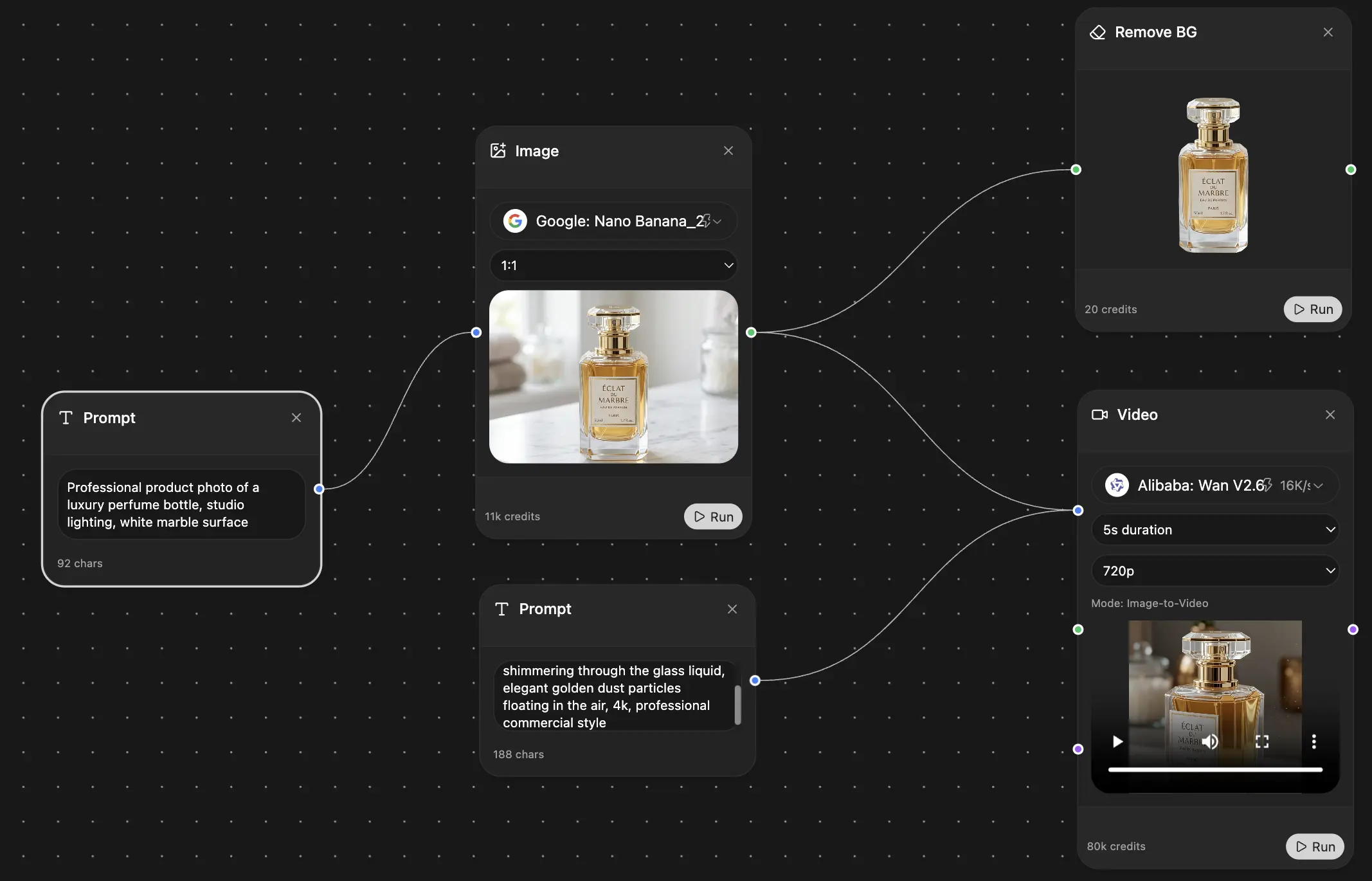
Save hours of work and research
Transparent, High-Value Pricing
Trusted by teams at


Free
No credit card required
- 100 credits daily
- 3 AI models to try
- Basic AI chat
Plus
- 1,000,000 credits/month
- 25+ AI models — GPT, Claude, Gemini, Grok & more
- Agent Mode with web search, computer tools and more
- Creative Studio: image generation and video generation
- Project Library: chat with document, website and youtube, podcast generation, flashcards, reports and more
- Workflow Studio and FocusOS
Professional
- Everything in Plus, and:
- 2,100,000 credits/month
- Pro-exclusive models (Claude Opus, Grok 4, Sonar Pro)
- Motion Tools & Max Mode
- First access to latest features
- Access to additional offers
What Our Users Say
Great Tool after 2 months usage
"I love the way multiple tools they integrated in one platform. Going in the right direction."
— simplyzubair
Best in Kind!
"The quality of data and sheer speed of responses is outstanding. I use this app every day."
— barefootmedicine
Simply awesome
"The credit system is fair, models are perfect, and the discord is very responsive. Quite awesome."
— MarianZ
Great for Document Analysis
"Just works. Simple to use and great for working with documents. Money well spent."
— yerch82
Great AI site with accessible LLMs
"The organization of features is better than all the other sites — even better than ChatGPT."
— sumore
Excellent Tool
"It lives up to the all-in-one claim. All the necessary functions with a well-designed, easy UI."
— AlphaLeaf
Well-rounded platform with solid LLMs
"The team clearly puts their heart and soul into this platform. Really solid extra functionality."
— SlothMachine
Best AI tool I've ever used
"Updates made almost daily, feedback is incredibly fast. Just look at the changelogs — consistency."
— reu0691