AI Press Release: Master Writing & Distribution 2026
Learn to write & distribute an AI press release in 2026. Master strategies for maximum media coverage & impact. Get expert tips now!
You’ve probably done this before. You open a blank doc, write a respectable company announcement, add one polite quote from the founder, paste it into a wire form, hit send, and then wait for the magic to happen.
Then nothing much happens.
A few pickups. Maybe a syndication site nobody reads. Maybe one journalist opens it, skims the first paragraph, and moves on because the release sounds like it was assembled by a committee that fears verbs. That’s the modern ai press release problem in one sentence. Most releases aren’t bad because the news is weak. They fail because the story is vague, the structure is mushy, and the distribution is lazy.
The good news is that this is fixable. The better news is that you don’t need to become a PR lifer in a navy blazer to fix it. You need a sharper workflow, stronger inputs, and a much lower tolerance for fluff.
Why Your Old Press Release Is Broken
The old playbook assumed distribution was the hard part. It isn’t. The hard part is earning attention from two audiences at once. Humans who are busy and algorithms that are picky.
PR still matters, but the mechanics have changed. As , as AI search merges with traditional engines, authority is built through earned media and structured content like press releases. The same source also notes that consistency in messaging outperforms sheer volume, and that 88% of organizations now use AI in some function, though most are still experimenting. That last part matters because the market is crowded with half-baked announcements that all sound suspiciously similar.

The inbox problem is real
Journalists don’t need more announcements. They need usable material.
If your release opens with a slogan, buries the actual news, and reads like a compliance-approved fog machine, it won’t land. The same goes for releases written to impress executives instead of readers. A newsroom can smell “strategic synergy” from orbit.
Three things usually break an ai press release:
- No real angle. “We launched a platform” isn’t news by itself. “We solved a painful workflow problem for a specific group” is closer.
- No proof. Claims show up with no evidence, no context, and no practical implication.
- No structure. Big chunky paragraphs, weak headlines, and quotes that sound like they were written by an intern trapped in a webinar.
Old-school PR treated the release like a formal artifact. Modern PR treats it like structured source material.
Volume is not a strategy
A lot of teams still act like blasting a giant media list counts as effort. It doesn’t. It’s just louder failure.
What works now is disciplined, repeatable messaging. Your release should be clear enough for a reporter to lift details fast, and structured enough for AI systems to parse what matters. That means specific headlines, concise leads, useful bullets, and claims that can survive scrutiny.
If you want a solid baseline for writing mechanics before layering in AI, is worth a read. It’s a good reminder that fundamentals still matter, even if the distribution environment has changed completely.
AI is useful, but not as a magic button
The best use of AI in PR isn’t “write the whole thing for me.” That usually produces polished oatmeal.
The better use is sharper than that:
- Angle discovery from existing documents, market context, and competitor releases
- Draft variation so you can test different framings quickly
- Jargon cleanup before a journalist sees the copy
- Message consistency across the release, pitch email, blog post, and social cutdowns
The trade-off is simple. AI gives speed. Human judgment protects credibility.
If you skip the judgment part, you get a release full of generic adjectives and suspicious certainty. If you skip the AI part, you burn hours doing work that a machine can do in minutes. Neither extreme is pretty.
Crafting Your Story with AI Assistance
Many teams start too late in the process. They open a document and ask AI to write a press release. That’s backward. Start with the story angle, then build the release around it.
The strongest ai press release usually comes from a research-first workflow. You gather your inputs, define the audience, identify the news value, and only then generate copy. Otherwise, the model will happily invent a polished narrative around a fuzzy idea. Very efficient. Also very dangerous.

Start with the angle, not the announcement
Before you draft, answer these:
That last row matters a lot. An found that including data-backed proof points boosts perceived authority and factual trust by 46% in AI-generated answers, and that structured releases with data and specific quotes are 2-3x more likely to be accurately summarized by LLMs.
That should change how you draft. Proof is not decorative. It’s structural.
A practical prompt stack
If you’re using AI to draft, don’t throw one giant prompt at the model and hope for the best. Break the job into smaller prompts with one purpose each.
Use prompts like these:
Angle finder
- “Review these product notes and identify three press-worthy angles for a launch announcement. Rank them by media interest, customer relevance, and clarity for a non-technical reader.”
Headline generator
- “Write 15 headline options for a B2B tech press release. Avoid hype. Make the news explicit in under 14 words.”
Lead paragraph builder
- “Write a lead paragraph in AP-style tone. Include who, what, why it matters, and who benefits. No buzzwords.”
Body structure prompt
- “Create a press release body with short paragraphs and bullet points. Include feature context, business relevance, and one section that translates technical capability into plain English.”
Quote drafting
- “Draft two quote options for a founder and one quote option for a customer-style stakeholder. Make them sound specific, not ceremonial.”
Jargon scrubber
- “Rewrite this release for a smart general business reader. Cut AI jargon, keep substance, and flag any sentence that makes a claim without proof.”
Use multiple models like an editor panel
One of the best tricks in AI writing is not trusting the first draft, even when it sounds good.
Run the same brief through different models for different purposes. One model may produce a cleaner structure. Another may soften the tone. Another may be better at plain-English rewriting. You’re not looking for a winner. You’re assembling a stronger composite draft.
If someone on your team still needs a clean primer on what these systems are doing under the hood, in a way that’s straightforward and useful. It helps non-technical stakeholders understand why prompt quality affects output quality so much.
For better outputs, it also helps to sharpen your instructions. A good primer on that is this guide to .
Practical rule: AI should generate options. Humans should choose the angle, verify the facts, and kill the nonsense.
Draft each component with a job to do
Every part of the release needs a function.
- Headline should state the news, not tease it.
- Subheadline should add context, not repeat the headline in fancier clothes.
- Lead should front-load relevance.
- Body should translate capability into consequence.
- Quote should add opinion, priority, or context that the factual sections can’t carry.
- Boilerplate should stay boring on purpose. This is not where your brand becomes a poet.
A common mistake is asking AI for “a compelling press release” and then keeping whatever comes back. Better approach: generate each part independently, then stitch them together like an editor.
What works and what doesn’t
Here’s the blunt version.
What works
- A release built from actual source material
- One clear audience
- Claims tied to evidence
- Quotes that sound like a person has spoken before
- Technical details translated into outcomes
What doesn’t
- Feature dumping
- “Overused adjectives” in the headline
- Quotes that say “We are thrilled”
- Long intros that delay the actual announcement
- Letting AI invent a market narrative because your brief was mush
The joke writes itself. If your quote includes “excited to announce,” you are legally required to delete it at least once before publishing.
Optimizing for Journalists and Search Bots
A draft can be accurate and still be hard to use. That’s where optimization matters.
You’re writing for two readers with very different habits. Journalists skim for relevance. Search systems parse for structure, clarity, and topical signals. If your release only satisfies one side, you’re leaving visibility on the table.

Clarity beats cleverness
The market for AI stories is huge. The . That means interest is high, but so is competition for attention.
So skip the cute headline. Say what happened.
A journalist should be able to understand your release by reading:
- the headline
- the subheadline
- the first paragraph
- one bullet list
If they need a second coffee to decode your positioning, the copy needs work.
Structure for scanning
Formatting matters more than many teams admit. Dense prose looks unfinished, even when the content is strong.
Use this checklist before publishing:
- Short paragraphs that keep one idea per block
- Bullets for product capabilities, launch details, or market implications
- Descriptive subheads if the release is long
- Specific nouns instead of fluffy abstractions
- Front-loaded facts instead of delayed reveals
A useful mental model is this. Your release should work even if the reader only skims the left edge of the page.
If you’re refining for discoverability, it helps to understand how topical meaning works beyond exact-match phrases. This breakdown of is useful for anyone trying to optimize copy without sounding like a malfunctioning SEO plugin.
Use long-tail phrases naturally
A lot of people hear “SEO” and immediately start writing like a haunted spreadsheet.
Don’t do that.
For an ai press release, the goal isn’t to cram the phrase into every paragraph. The goal is to naturally include the kinds of terms your audience and the systems around them use, such as:
- ai press release for SaaS launch
- press release for AI productivity tool
- B2B tech press release for developers
- AI platform announcement for researchers
- multi-model AI workspace for content teams
Put them where they belong. In a subheadline, a body paragraph, a bullet list, or supporting blog copy. If the phrase sounds absurd when read out loud, cut it.
Here’s a useful explainer to keep in mind while refining your copy for search and readability:
Keep the release skimmable enough for humans and structured enough for machines. That’s the sweet spot.
Smarter Distribution Finding Your Audience
Sending an ai press release to a generic “media database” is usually just organized wishful thinking.
A smarter approach starts with topic fit. Who specifically covers your space? Who has written about AI productivity, developer tools, research workflows, or creator software recently? Who tends to care about launches, and who only covers funding or policy? Those distinctions matter more than list size.
Build a list by coverage behavior
Start with publications, not people. Then identify the writers who repeatedly cover adjacent stories.
Look for:
- Recent relevance so you’re not pitching a reporter who left the beat months ago
- Format preference because some writers want embargoed launches, while others prefer trend-led commentary
- Angle alignment so your story matches how they frame the category
- Audience fit because a technical trade publication needs different detail than a startup newsletter
When you research outlets, collect examples of what each person covers, the vocabulary they use, and whether they focus on products, commentary, or business moves. That makes your pitch sharper immediately.
If your team needs a cleaner process for gathering that intelligence, this guide on is a practical place to start.
Personalize the pitch without becoming weird
Personalization doesn’t mean fake flattery. Nobody wants another email that says, “I loved your recent article,” followed by evidence that you very much did not read it.
Use a simple pitch structure:
- Reference a relevant theme they already cover.
- State the news plainly.
- Explain why their readers would care.
- Offer the release plus one useful extra, such as a short demo, founder comment, or supporting context.
That’s it. No dramatic opening. No “circling back” before the first email has even had a chance to breathe.
A good pitch sounds like a person who respects the recipient’s beat. A bad one sounds like a CRM template wearing a fake mustache.
Don’t ignore deliverability
A strong pitch can still vanish if your emails keep landing in spam. This gets overlooked constantly because teams obsess over wording and ignore the mechanics of sending.
Before any outreach push, it’s smart to review . It’s a practical safeguard, especially when a campaign underperforms and everyone is blaming the subject line.
Precision beats blast radius. Ten strong fits are worth more than a giant list of strangers who never asked for your launch.
The Complete Zemith Press Release Workflow
The fastest way to make AI useful in PR is to stop treating it like a single writing box. A proper workflow uses multiple tools in sequence, each with a narrow role.
That’s where an integrated setup is useful. Instead of hopping between separate apps for research, notes, drafting, editing, and asset creation, you can run the campaign in one place and keep context intact. That matters because context loss is one of the biggest reasons AI output gets sloppy.

Set up the campaign like a real project
Create one workspace for the release. Don’t scatter inputs across random tabs and mystery docs named FINAL_v2_REAL.
A clean setup looks like this:
Use hybrid drafting, not autopilot
There’s a strong lesson from AI delivery work that applies here. describes a hybrid AI-and-human methodology that reduced project delivery time by 60-70%, and organizations reported 3x faster ROI. The lesson isn’t “AI replaces people.” It’s that AI works best when humans guide, validate, and refine.
That same pattern fits press releases perfectly.
Use the workflow like this:
- Deep Research first to gather category context, competitor language, and supporting facts
- Library second to load product information, approved messaging, and source material
- Smart Notepad next to generate headline options, body drafts, rewrites, and cleaner language
- Document Assistant when needed to interrogate supporting PDFs, internal docs, or launch briefs without manually digging through them
- Creative tools last to produce a supporting visual or social asset once the narrative is locked
A practical sequence inside Zemith
Here’s a straightforward operating rhythm for an ai press release campaign:
Create the Project Name it after the launch or announcement. Keep everything under one roof.
Upload source material to the Library Add brand guidelines, product notes, old press releases, FAQs, competitor screenshots, and launch messaging.
Run Deep Research Ask for category themes, common journalist angles, competitor framing, and obvious jargon to avoid.
Draft in Smart Notepad Generate multiple headlines, then leads, then body sections. Work component by component.
Use model comparison Draft one version for formal media tone, another for clearer plain-English framing, and a third for punchier headline ideas.
Interrogate source documents Use Document Assistant to check whether your copy aligns with the actual product material and approved claims.
Refine with rewrite tools Shorten paragraphs, tighten quotes, simplify product explanations, and trim accidental hype.
Generate campaign extras Create a supporting image, derivative blog version, social snippets, and email pitch variants.
Final human review Confirm every fact, every quote, every date, every product name.
Where this workflow actually saves time
The obvious benefit is speed. The less obvious benefit is continuity.
Teams lose hours because they keep re-explaining the product to disconnected tools. One app writes. Another summarizes. Another stores notes. Another handles research. Then everyone wonders why the final draft feels stitched together by raccoons.
A unified workflow fixes that. The research informs the draft. The draft can be checked against stored documents. The same project context can support your release, media pitch, blog recap, and launch social copy.
If you want to think more broadly about this style of system, these show how process design often matters more than any single model choice.
The secret weapon isn’t “AI writing.” It’s a repeatable research-to-draft workflow with human review at the end.
Measuring Real ROI Beyond Pickup Reports
A press release can get picked up and still do very little for the business.
That’s the awkward truth behind a lot of PR reporting. Pickup counts look nice in a slide deck, but they don’t tell you whether the announcement changed awareness, pipeline quality, product interest, or branded search behavior. They mostly tell you that your content got duplicated.
Track business signals, not just mentions
There’s a real gap here. A is that ROI frameworks for horizontal AI platforms are still weak, and only 25% of general AI PRs cite user adoption data. That creates skepticism because broad productivity products often don’t have the tidy revenue story that vertical tools can present.
So don’t measure success with one vanity metric. Use a stack.
A better KPI mix
Track outcomes in layers:
- Visibility signals like earned mentions, branded search interest, and referral traffic from coverage
- Engagement signals like time on page, click-through to product pages, and demo-page visits from release traffic
- Pipeline signals such as qualified inquiries, partner conversations, or waitlist signups tied to the campaign
- Narrative signals including whether coverage repeated your intended message or distorted it
AI also helps after publishing. You can use it to classify mention quality, summarize coverage themes, compare intended message versus actual pickup language, and turn noisy feedback into something a team can act on.
Build a simple reporting loop
A practical reporting cadence looks like this:
If you need a cleaner way to turn all that into stakeholder-friendly reporting, an can help turn scattered PR, traffic, and outreach data into a readable summary.
The key shift is mindset. A press release is not just an announcement. It’s a measurable input into demand, authority, and category positioning.
Frequently Asked Questions About AI Press Releases
Should AI write the entire press release?
It can. It probably shouldn’t.
AI is excellent at generating options, improving structure, and cleaning up language. It’s much less reliable when you hand it a vague brief and ask for a final-ready public statement. That’s when you get invented specificity, stale phrasing, or claims that sound impressive but don’t hold up.
Is using AI for PR unethical?
No, not by itself.
What matters is disclosure when appropriate, factual accuracy, and human oversight. PR already uses templates, editorial review, and workflow software. AI is another tool in that chain. The ethical line gets crossed when teams publish unverified claims, fake quotes, or misleading framing.
Can AI-generated quotes be used?
Only after a human rewrites and approves them.
A model can draft quote options, but the attributed person should agree with the wording. If the quote sounds unlike the speaker, change it. If it says more than they can credibly stand behind, cut it. Public quotes are not decorative filler. They’re attributed statements.
Will AI replace PR professionals?
No. It changes the job, but it doesn’t erase it.
The valuable PR skills are still human: judgment, narrative sense, media instinct, positioning, relationship-building, and knowing when a story isn’t ready. AI speeds up the heavy lifting around drafting and research. It doesn’t replace taste or accountability.
What’s the biggest mistake in an ai press release workflow?
Treating speed as success.
Fast drafting is useful. Fast publishing is risky if nobody checks the facts, the angle, or the audience fit. The best teams use AI to get to a strong draft faster, then spend their saved time on sharper editing and better outreach.
How do I make the release sound less robotic?
Use shorter sentences. Cut buzzwords. Replace abstractions with concrete nouns. Remove any sentence that could be pasted into ten competitor websites without anyone noticing.
And if your draft says “leveraging cutting-edge innovation to transform the future,” congratulations, you have written absolutely nothing.
If you want one place to research, draft, organize, refine, and repurpose your next announcement, gives you a much cleaner way to do it. It combines multi-model AI, Deep Research, Document Assistant, Smart Notepad, and organized project workflows so your ai press release process stops feeling like tab-juggling with a side of chaos.
Explore Zemith Features
Every top AI. One subscription.
ChatGPT, Claude, Gemini, DeepSeek, Grok & 25+ more


Always on, real-time AI.
Voice + screen share · instant answers
What's the best way to learn a new language?
Immersion and spaced repetition work best. Try consuming media in your target language daily.
Voice + screen share · AI answers in real time
Image Generation
Flux, Nano Banana, Ideogram, Recraft + more

Write at the speed of thought.
AI autocomplete, rewrite & expand on command
Any document. Any format.
PDF, URL, or YouTube → chat, quiz, podcast & more
Video Creation
Veo, Kling, Grok Imagine and more

Text to Speech
Natural AI voices, 30+ languages
Code Generation
Write, debug & explain code
Chat with Documents
Upload PDFs, analyze content
Your AI, in your pocket.
Full access on iOS & Android · synced everywhere
Your infinite AI canvas.
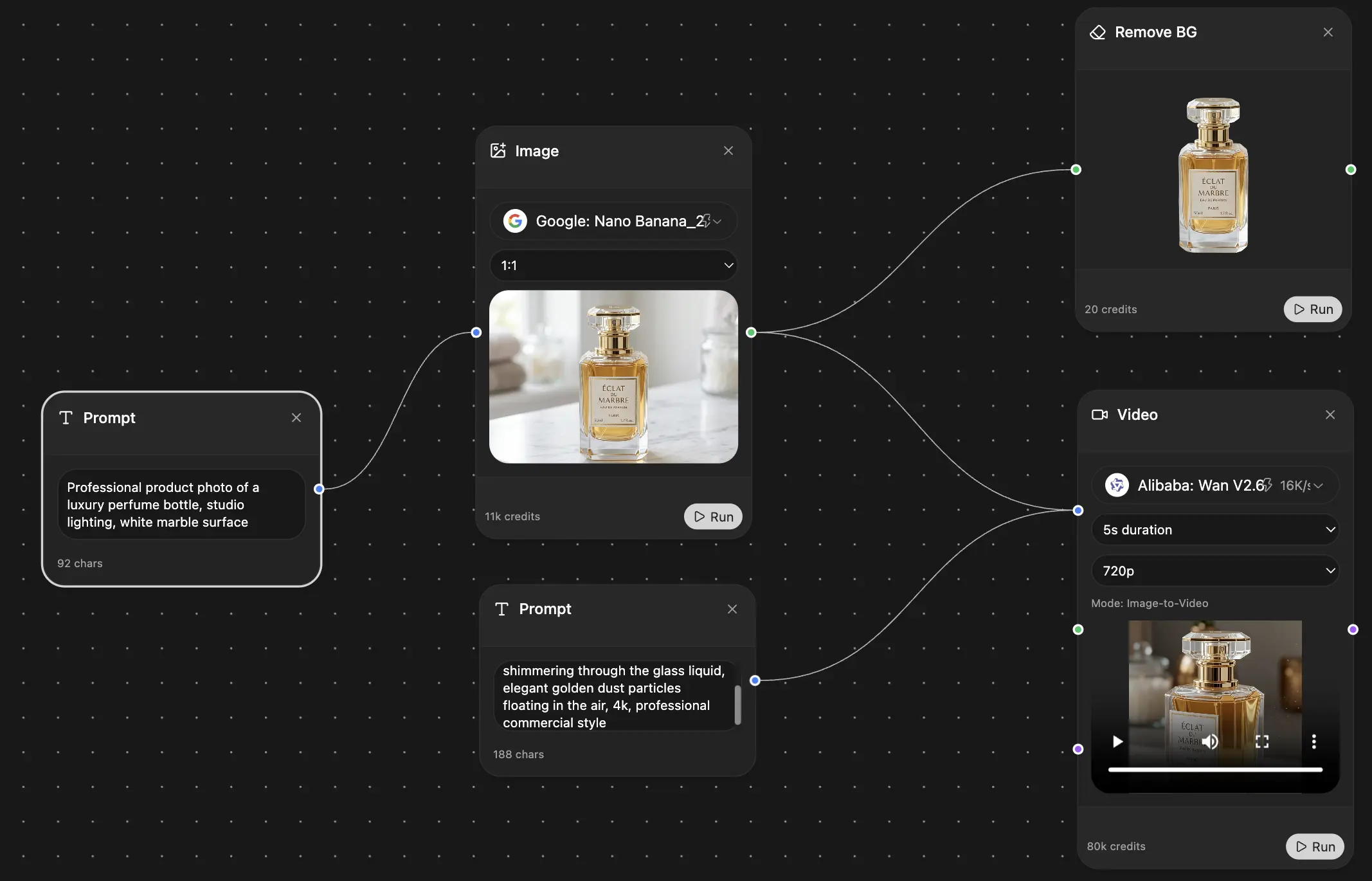
Chat, image, video & motion tools — side by side
Save hours of work and research
Transparent, High-Value Pricing
Trusted by teams at


Free
No credit card required
- 100 credits daily
- 3 AI models to try
- Basic AI chat
Plus
- 1,000,000 credits/month
- 25+ AI models — GPT, Claude, Gemini, Grok & more
- Agent Mode with web search, computer tools and more
- Creative Studio: image generation and video generation
- Project Library: chat with document, website and youtube, podcast generation, flashcards, reports and more
- Workflow Studio and FocusOS
Professional
- Everything in Plus, and:
- 2,100,000 credits/month
- Pro-exclusive models (Claude Opus, Grok 4, Sonar Pro)
- Motion Tools & Max Mode
- First access to latest features
- Access to additional offers
What Our Users Say
Great Tool after 2 months usage
"I love the way multiple tools they integrated in one platform. Going in the right direction."
— simplyzubair
Best in Kind!
"The quality of data and sheer speed of responses is outstanding. I use this app every day."
— barefootmedicine
Simply awesome
"The credit system is fair, models are perfect, and the discord is very responsive. Quite awesome."
— MarianZ
Great for Document Analysis
"Just works. Simple to use and great for working with documents. Money well spent."
— yerch82
Great AI site with accessible LLMs
"The organization of features is better than all the other sites — even better than ChatGPT."
— sumore
Excellent Tool
"It lives up to the all-in-one claim. All the necessary functions with a well-designed, easy UI."
— AlphaLeaf
Well-rounded platform with solid LLMs
"The team clearly puts their heart and soul into this platform. Really solid extra functionality."
— SlothMachine
Best AI tool I've ever used
"Updates made almost daily, feedback is incredibly fast. Just look at the changelogs — consistency."
— reu0691