AI Podcast Generator: Create Your Show Fast
Tired of tedious podcast production? Use an AI podcast generator like Zemith to create full shows from docs. Covers scripting, audio, and ethics. Start today!
You've probably done this already. You get a solid podcast idea while walking the dog, halfway through lunch, or right after publishing a blog post that could absolutely become an episode. For about five minutes, you feel like a genius. Then the workload shows up. Script it, record it, clean it up, write show notes, export the audio, upload it, title it, promote it. Suddenly the “easy new content channel” starts acting like a second job.
That's why AI podcasting has taken off. Not because creators got lazy, but because most of us already have the ideas. We're short on time, not curiosity. The smart move is turning research notes, blog drafts, transcripts, and rough outlines into a usable production pipeline instead of letting them die in a folder called “final_v2_REAL.”
Your Podcast Idea Just Got a Whole Lot Easier
The case for using an AI podcast generator is simple. Podcast creation has always had a weird mismatch between ideation and execution. Coming up with episode topics is fast. Producing them is not. AI closes that gap.
That shift isn't niche anymore. The global AI in podcasting market is projected to reach $4.06 billion in 2025 and $16.12 billion by 2030, growing at a 31.7% CAGR, according to . People don't adopt tools at that pace unless the workflow pain is real.
Creators usually go hunting for separate tools. One for transcription. One for outlining. One for voice. One for editing. One for repurposing. Then they spend half their day playing copy-paste ping-pong between tabs. If you want a broader overview before locking in your stack, this roundup of is useful because it shows how fragmented the space still is.
Why the old workflow breaks
A traditional podcast setup asks you to do all of this manually:
- Write from scratch instead of starting from existing content
- Record every line even when the episode is based on material you already published
- Edit tiny mistakes by hand like you're sanding furniture
- Create promo assets separately after the actual episode is finished
That's fine if podcasting is your only job. It's brutal if you also write, market, research, sell, or build software.
Why repurposing wins
Most creators are sitting on raw material already. Blog posts, meeting notes, PDFs, whitepapers, webinar transcripts, customer education docs. Those can all become audio if your workflow starts with source material instead of a blank page. This is the same logic behind . One good piece of thinking should feed multiple formats.
Practical rule: Don't start with “I need a podcast.” Start with “What do I already have that deserves an audio version?”
That one shift saves more time than any fancy voice model.
From Messy Notes to a Perfect Script with Zemith
Most bad AI podcast results come from weak inputs. People throw in a one-line prompt like “make me a tech podcast episode” and then act surprised when the output sounds like a toaster reading LinkedIn posts.
Good episodes start with context.
Start with source material, not vibes
The strongest input is a transcript, detailed article, research doc, or structured outline. Libsyn's workflow advice gets this exactly right. The foundational step for generating high-fidelity AI podcasts is the mandatory ingestion of a high-quality episode transcript, which serves as the “digital DNA” providing the AI with the unique voice, cadence, and full contextual knowledge of the content, as noted in this .
That “digital DNA” idea matters. If the AI can see your actual thinking, examples, phrasing, and order of ideas, the script starts sounding like a real episode. If it only sees a topic, it fills the gaps with generic fluff.
Here's the interface point where this gets practical.

A simple script-building workflow
If you're using an all-in-one workspace like Zemith, the fastest path looks like this:
Upload the source
Drop in a PDF, markdown doc, transcript, notes file, or article draft.Ask for a format, not magic
Prompt for something specific like:- a 10-minute solo episode
- a two-host conversational script
- a short educational segment with intro and outro
- a narrative version aimed at beginners
Refine in the editor
Smooth the transitions. Replace robotic phrases. Tighten sections that wander.Add your own fingerprints
A quick story, an opinion, a joke, a sharp take. That's the stuff listeners remember.
A useful side habit here is thinking like a data prep person. Clean inputs produce cleaner outputs. If your notes are messy, repetitive, or inconsistent, the model reflects that back to you. That's why this is surprisingly relevant even for creators. The principle is the same. Better structure in, better generation out.
What to actually ask the AI for
Don't ask for “a podcast.” Ask for parts.
- Opening hook that sounds conversational, not salesy
- Segment transitions so the episode doesn't lurch from point to point
- Host banter if you want a dual-voice style
- Summary close with one clear takeaway
- Title and show notes draft after the script is stable
For transcript-first workflows, it also helps to convert audio ideas into text before building the script. That's where tools focused on fit naturally. Talk through your concept out loud, transcribe it, then shape it into something publishable.
Don't polish too early. First get the structure right. Then clean up tone and phrasing.
What works and what doesn't
A few patterns show up fast when you do this more than once.
The funny part is that the “massive productivity hack” isn't the voice generation step. It's skipping the blank page. Once the script foundation exists, everything else gets easier.
Turning Your Script into a Broadcast-Ready Podcast
Text becomes something people can listen to while commuting, doing dishes, or pretending to answer email.
The mistake most creators make is treating audio generation like a separate production phase with separate tools. Export script, import elsewhere, fix formatting, reassign speakers, regenerate, download, re-upload. It works, but it's clunky.
The fastest route from script to audio
A cleaner workflow uses a direct document-to-audio step. You finalize the script, choose the voice setup, and generate the episode without doing the tab-juggling routine.

When you're generating audio, the key choices are usually:
- Single-host voice for tutorials, explainers, and briefings
- Two-voice format for dialogue-style episodes
- Tone matching based on the subject matter
- Section splitting so different parts feel intentional instead of flat
A business episode can handle a more direct, steady read. A storytelling format usually needs warmer pacing and more variation. If the tool lets you assign different voices to speakers, use that feature. Even a modest contrast between voices makes a synthetic conversation feel easier to follow.
Free tools versus full workflow tools
Google's NotebookLM is worth mentioning because it's useful as a zero-cost starting point. Google's free browser-based NotebookLM can turn uploaded documents, YouTube transcripts, or web links into an “Audio Overview” with a conversational dialog between two distinct AI voices, according to .
That's great for brainstorming and rough drafts. It's not the same as building a production workflow you can reuse every week.
Here's the practical difference:
If your goal is “I need a rough concept audio so I can hear the shape,” NotebookLM is handy. If your goal is “I want to turn source documents into publishable episodes without hopping between subscriptions,” a dedicated workflow makes more sense.
Creative control matters more than people think
An AI podcast generator isn't just about speed. It's about selective control.
You want to control:
- pacing
- speaker labels
- pronunciation of names and product terms
- whether the script sounds formal, casual, or slightly nerdy
- where the pauses happen
A generated episode is only “done” when it sounds intentional, not merely complete.
That distinction matters. Plenty of AI audio sounds technically clean but emotionally empty. The good outputs usually come from creators who treat voice generation like casting and direction, not like pressing a vending machine button.
Adding the Human Touch That Makes AI Shine
The first generated audio file is rarely your final file, and that's fine. You don't need perfection at generation time. You need a strong draft that saves you from the grindy work.
That's where AI earns its keep. AI tools in podcasting can reduce production costs by up to 50% while cutting editing time in half, and nearly 70% of podcasters have switched to AI-driven transcription services, according to . The point isn't to remove humans. It's to move human effort to the parts listeners notice most.

The final polish that matters
Once the AI gives you a clean voice track, your job changes. You're no longer doing cleanup labor. You're producing.
That usually means:
- Adding intro and outro music so the episode has identity
- Adjusting pacing in one or two sections that feel rushed
- Dropping in emphasis sounds carefully if your format supports it
- Checking pronunciations of names, tools, and brands
- Removing lines that sound too canned
A free editor like Audacity is enough for basic polish. If you already use a more advanced DAW, great. But don't overcomplicate this part. Most episodes need a light touch, not a Hollywood post-production budget.
Where people over-edit
A common trap is hearing AI audio and trying to fix every microscopic thing. Don't. If a sentence is clear, natural, and on-brand, leave it alone.
The better standard is simple:
Producer mindset: Fix what breaks trust. Ignore what only your inner perfectionist can hear.
Sometimes one small personal addition does more than twenty micro-edits. A short anecdote. A stronger intro line. A real opinion. If you want to experiment with more natural spoken delivery patterns, reading through examples in resources about can help you spot where synthetic narration still needs a nudge.
There's also a comedic law of podcasting nobody mentions. The longer you obsess over a breath sound, the less likely any listener would've cared in the first place.
Publishing and Distributing Your New Show
A finished audio file still needs a job. That job is getting discovered.
Publishing a podcast isn't only about uploading MP3s. The title, episode summary, keywords, and show notes do a lot of the heavy lifting. If those are weak, even a strong episode can disappear into the void.
Before you publish, prep the metadata
Start by figuring out what your episode is about in search terms, not just in your head. A creator might call an episode “Thoughts on AI and the Future of Audio.” A listener is more likely searching for “how to start an AI podcast” or “best AI podcast generator for blog content.”
Your title should be clear before it's clever.
A simple checklist helps:
Write one searchable title first
Then make it more interesting without losing the core topic.Draft show notes that summarize value
Mention the problem solved, the format, and who it helps.Pull out natural keywords
Use phrases your audience would actually type, especially long-tail terms.
The actual distribution step
You'll still need a podcast host such as Libsyn, Buzzsprout, or Transistor.fm. That host stores the audio file and creates the RSS feed that directories use. From there, you submit the show to platforms like Apple Podcasts and Spotify, then publish future episodes through the host dashboard.
A clean launch routine usually looks like this:
Discovery is usually won before release day
A lot of creators treat publishing like the finish line. It's closer to the handoff.
If your workflow already started from a document, you have an advantage. You can reuse that same source material for blog summaries, email blurbs, short clips, and social posts. That's a common oversight. The episode goes live, then they scramble to explain it everywhere else.
If you prep metadata early and package the episode well, the release feels smooth instead of chaotic. That alone makes consistent publishing much easier.
The AI Podcaster's Guide to Ethics and Authenticity
The easiest way to fail with AI podcasting is to let the machine do all the talking and none of the thinking.
That sounds harsh, but listeners can hear it. They don't necessarily know which tool you used, but they know when an episode feels generic, evasive, or strangely bloodless. The tech can produce fluent audio. It can't automatically produce perspective.
The authenticity problem is real
This is the big tension in the space. A 2025 Harvard Business Review study found that 68% of podcast audiences rate “human authenticity” as the top factor in enjoyment, yet 92% of new AI podcast tools focus solely on efficiency over credibility, as cited in this piece on .
That mismatch explains a lot. Tools are optimized to generate faster. Audiences are optimized to care about whether the host sounds real.

What responsible AI podcasting looks like
You don't need to reject AI. You need to direct it well.
A good ethical baseline looks like this:
Keep a human editor in the loop
Review scripts and final audio before publishing.Add your own point of view
AI can organize information. It shouldn't be your entire personality.Disclose when needed
If the voice or script is heavily AI-generated, clarity builds trust.Avoid plagiarism-by-paraphrase
Regenerated content still needs real authorship and original framing.
That last part matters more than people think. If you're adapting documents or outside material, you need to make sure the output is transformed, credited appropriately, and not just a polished remix of someone else's work. Consequently, practical habits around become part of podcast production, not just blog writing.
Quantity is not the goal
Some creators get excited by the idea that they can generate endless episodes. That's usually the wrong instinct. Publishing more doesn't help if every episode sounds replaceable.
A better test is this:
If your name were removed from the episode, would a regular listener still recognize your thinking?
If the answer is no, the workflow needs more human input. The win isn't automating yourself out of the process. It's removing the boring parts so your judgment shows up more clearly.
Frequently Asked Questions About AI Podcasting
The practical questions usually show up after the first episode. Monetization, copyright, multilingual quality, disclosure. It's then that the shiny demos stop and creator reality kicks in.
YouTube's 2025 updated guidelines require “explicit labeling of AI content” for monetization, while Spotify's policy remains ambiguous, creating a 60% drop in ad revenue for AI podcasters who fail to comply, according to this . So yes, the policy side matters.
AI Podcasting FAQs
The simplest rule is this. Treat AI like a production assistant with speed, not a publisher with judgment.
If you want one place to turn notes, documents, transcripts, and rough ideas into a podcast workflow without bouncing between separate apps, is worth trying. It combines document chat, writing refinement, and document-to-podcast creation in a single workspace, which makes the whole process feel less like software juggling and more like actual publishing.
Explore Zemith Features
Every top AI. One subscription.
ChatGPT, Claude, Gemini, DeepSeek, Grok & 25+ more


Always on, real-time AI.
Voice + screen share · instant answers
What's the best way to learn a new language?
Immersion and spaced repetition work best. Try consuming media in your target language daily.
Voice + screen share · AI answers in real time
Image Generation
Flux, Nano Banana, Ideogram, Recraft + more

Write at the speed of thought.
AI autocomplete, rewrite & expand on command
Any document. Any format.
PDF, URL, or YouTube → chat, quiz, podcast & more
Video Creation
Veo, Kling, Grok Imagine and more

Text to Speech
Natural AI voices, 30+ languages
Code Generation
Write, debug & explain code
Chat with Documents
Upload PDFs, analyze content
Your AI, in your pocket.
Full access on iOS & Android · synced everywhere
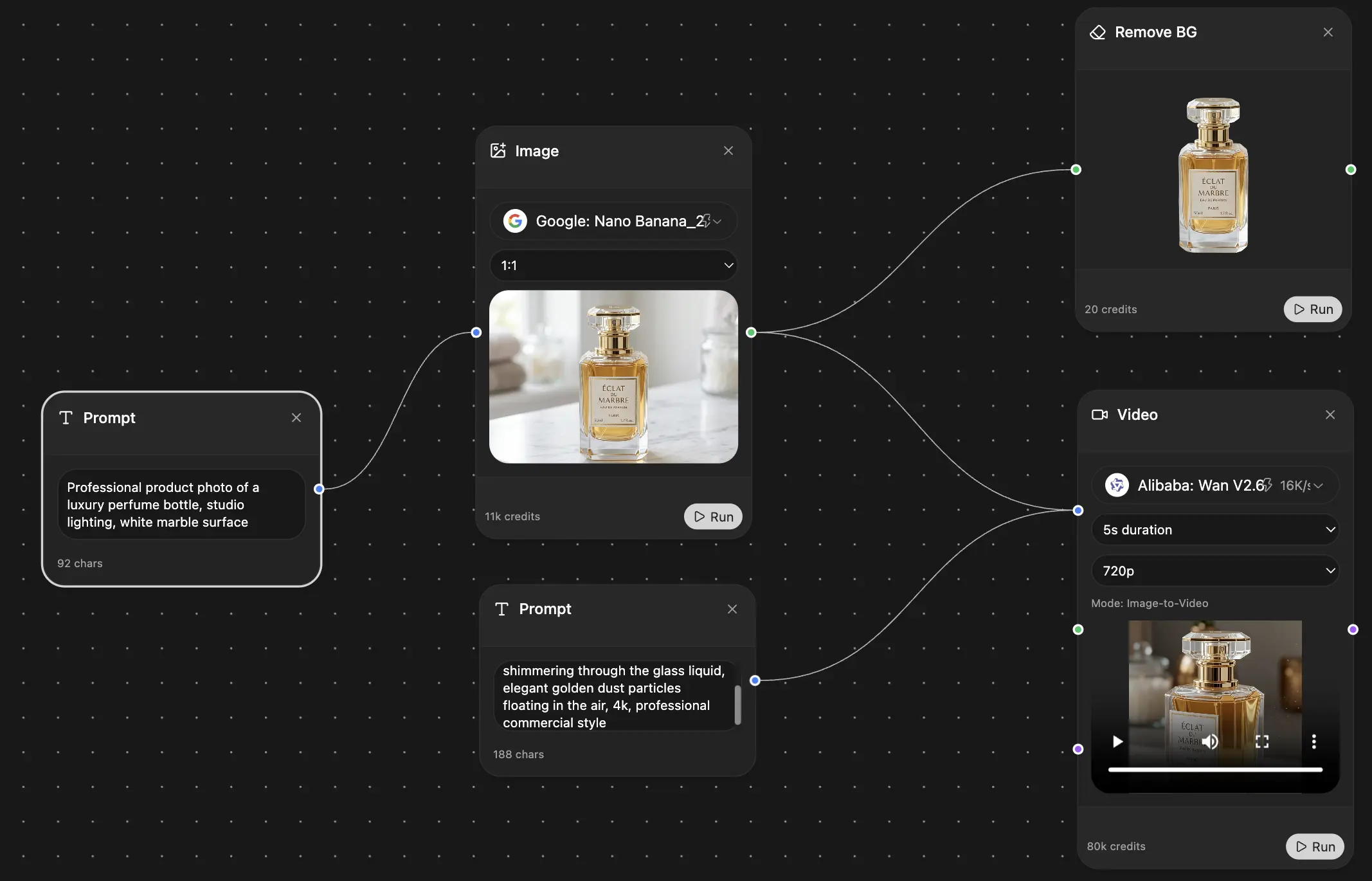
Your infinite AI canvas.
Chat, image, video & motion tools — side by side
Save hours of work and research
Transparent, High-Value Pricing
Trusted by teams at


Free
No credit card required
- 100 credits daily
- 3 AI models to try
- Basic AI chat
Plus
- 1,000,000 credits/month
- 25+ AI models — GPT, Claude, Gemini, Grok & more
- Agent Mode with web search, computer tools and more
- Creative Studio: image generation and video generation
- Project Library: chat with document, website and youtube, podcast generation, flashcards, reports and more
- Workflow Studio and FocusOS
Professional
- Everything in Plus, and:
- 2,100,000 credits/month
- Pro-exclusive models (Claude Opus, Grok 4, Sonar Pro)
- Motion Tools & Max Mode
- First access to latest features
- Access to additional offers
What Our Users Say
Great Tool after 2 months usage
"I love the way multiple tools they integrated in one platform. Going in the right direction."
— simplyzubair
Best in Kind!
"The quality of data and sheer speed of responses is outstanding. I use this app every day."
— barefootmedicine
Simply awesome
"The credit system is fair, models are perfect, and the discord is very responsive. Quite awesome."
— MarianZ
Great for Document Analysis
"Just works. Simple to use and great for working with documents. Money well spent."
— yerch82
Great AI site with accessible LLMs
"The organization of features is better than all the other sites — even better than ChatGPT."
— sumore
Excellent Tool
"It lives up to the all-in-one claim. All the necessary functions with a well-designed, easy UI."
— AlphaLeaf
Well-rounded platform with solid LLMs
"The team clearly puts their heart and soul into this platform. Really solid extra functionality."
— SlothMachine
Best AI tool I've ever used
"Updates made almost daily, feedback is incredibly fast. Just look at the changelogs — consistency."
— reu0691