AI Document Summarizer: A Guide to Instant Insights
Tired of reading endless documents? Discover how an AI document summarizer can save you hours. This guide covers how they work, top use cases, and best tools.
Your unread pile probably looks familiar. A product spec in PDF form. A research paper you meant to review yesterday. A slide deck from a meeting that somehow became required reading. A long technical doc with one key paragraph buried somewhere around page 37.
Many individuals don't have a reading problem. They have a filtering problem.
That's why the AI document summarizer has become so useful. It doesn't just shrink text. It helps you get to the part that matters before your coffee gets cold. And the payoff is real. AI document summarizers can reduce the time needed to digest lengthy research papers by up to 70%, and professionals using them completed literature reviews 2.5 times faster according to the International Journal of Digital Curation.
The practical win is simple. Instead of opening five tools, copying chunks into different tabs, and trying to remember which summary was good, you can build a cleaner process around one workspace and stop treating document review like a part-time job with no benefits.
Drowning in Documents? There's an AI for That
Last week, one of my colleagues had three things open at once: a policy PDF, a market report, and a research article with the kind of title that sounds important and exhausting. By noon, she'd read a lot of words and learned almost nothing useful.
That's the moment an AI document summarizer earns its keep.
A good summarizer gives you the short version first, then lets you dig deeper only where it counts. For researchers and knowledge workers, that's a big shift. AI document summarizers can reduce the time required to digest lengthy research papers by up to 70%, and professionals using them completed literature reviews 2.5 times faster according to the International Journal of Digital Curation.
What that looks like in real life
Say you're staring at a 50 page paper before a team discussion. You probably don't need every paragraph on the first pass. You need:
- The thesis: What is this saying?
- The evidence: What supports the claim?
- The catch: What are the limits, assumptions, or blind spots?
- The action: What should I do with this information?
That's where an AI document summarizer feels less like a gimmick and more like a very alert reading assistant.
Practical rule: Use summaries for the first pass, not the final verdict. They help you find where to focus your human attention.
There's also a sanity angle here. Endless reading creates fake productivity. You feel busy because you're scrolling and highlighting. But if you still can't explain the document in plain English, the doc won.
A smarter workflow starts with triage. Summarize first. Save key notes. Pull out questions. Then decide whether the full document deserves your deep read. If your current setup is a pile of downloads and mystery filenames like final_v2_reallyfinal.pdf, it also helps to clean up the mess with a better .
And yes, that 100 page report you were supposed to read before lunch still exists. The difference is, now lunch has a fighting chance.
How AI Summarizers Actually Work
An AI document summarizer usually works in one of two ways. Think of them as two different assistants.
One assistant carries a highlighter. They read the document and pull out the most important original sentences. That's extractive summarization.
The other assistant reads everything, closes the file, and explains it back to you in fresh wording. That's abstractive summarization.
The two styles side by side
Why this matters when you choose a tool
If you're reviewing policy language, contracts, or detailed documentation, extractive summaries can be safer because they stick close to the source. If you're trying to explain a dense paper to a student, teammate, or client, abstractive summaries are often more useful because they translate complexity into normal human language.
The engine behind both approaches is usually a large language model. That's the part that reads patterns across the document and decides what deserves attention. The jump in capability has been huge. Prior to 2024, most AI summarizers were limited to 600 to 1,200 words. Now, models like GPT-5 can process full-length documents up to 50 MB, and their integration into platforms like Adobe Acrobat means 45% of enterprise document workflows now incorporate AI summarization.
That shift changed the experience completely. People used to chop long documents into awkward little chunks like they were meal-prepping a thesis. Now a summarizer can often handle the whole file in one go, which means less context gets lost between sections.
A simple way to think about quality
When you test an AI document summarizer, ask three questions:
- Did it capture the main point early?
- Did it keep important conditions and exceptions?
- Can I trace the summary back to the document when I need to?
The best summary doesn't just save time. It preserves the logic of the original.
If you work with complex files regularly, it also helps to understand the broader mechanics behind , because summarization is often just one part of a larger document workflow.
Key Features to Look For in a Summarizer
A lot of tools claim they summarize documents. That's a low bar. The important question is whether they fit the way you work.
If you're choosing an AI document summarizer, skip the shiny marketing and look for the features that remove friction day after day.

Format support matters more than people think
The first thing to check is whether the tool handles the file types you already have. In real workplaces, documents rarely arrive in one tidy format. You get PDFs, Word docs, slides, exported notes, and the occasional file that looks like it was created by a haunted printer.
A useful summarizer should work smoothly across common formats so you aren't forced into manual conversion first.
Look for:
- PDF handling: Especially for reports, research papers, and contracts
- DOCX support: For drafts, internal documentation, and editable content
- PPTX compatibility: Helpful when you need the gist of a slide deck fast
- Clean text extraction: Bad extraction leads to bad summaries
If converting files is already slowing you down, it's worth tightening that step with a guide on .
Control beats convenience
A decent tool gives you options. A better one lets you shape the output for the task.
That means you should be able to ask for:
- A short executive brief
- Bullet points for a meeting
- A beginner-friendly explanation
- A summary focused only on methods, risks, or decisions
Without that control, every summary starts sounding like the same bland school book report.
Look for workflow fit, not just output
Many free tools fall apart by summarizing one file, one time, and then dumping you back into tab chaos. A more useful setup keeps the summary connected to note-taking, follow-up questions, and reuse.
A strong summarizer should help you do the next step, not just finish the current one.
That might mean chatting with the document, saving highlights, turning content into study material, or passing the summary into writing and planning tools. The point isn't to collect features like trading cards. The point is to reduce the number of times you have to stop, switch tabs, and rebuild context.
Real World Use Cases for Everyone
The fun part of an AI document summarizer is seeing how differently people use the same core idea. The tool is the same. The “wow” moment changes based on the person.
For students who need better study habits
A student doesn't just need shorter notes. They need notes they'll remember effectively.
That's where summaries become more useful when they turn into active study material. Research from the Journal of Educational Psychology shows that students using AI summarized study materials with interactive elements like quizzes scored 15% higher on comprehension tests. AI can also improve information retention by up to 40% by turning passive reading into active recall.
That means a chapter summary becomes more valuable when the tool also helps create quiz questions, flashcards, or simpler explanations for tough concepts. Reading alone feels productive. Testing yourself is what usually sticks.
A student workflow might look like this:
- Upload the chapter
- Get a clean summary
- Turn that summary into review questions
- Use the questions to check what you understood
That's a lot more useful than highlighting half the textbook and calling it “studying.” Classic student move, by the way. Bold strategy. Rarely works.
For researchers with too much to read
Researchers often don't need one perfect summary. They need fast triage across lots of material.
One paper gets a one paragraph overview. Another gets a methods-only summary. A third gets flagged because it's relevant enough to read closely. A summarizer helps you build a reading funnel instead of treating every source like a full weekend commitment.
If your work mixes formats, topics, and media, it can also help to pair document summaries with adjacent tools. For example, if part of your research lives in lectures or recorded explainers, an can help you capture the same kind of quick insights from video content.
For developers who need the answer, not the novel
Developers run into documentation overload constantly. API docs, RFCs, issue threads, architecture notes, setup guides. The problem isn't that the information isn't there. The problem is that it's buried under enough prose to qualify as cardio.
A summarizer can quickly answer:
- What changed
- What broke
- What dependencies matter
- What I need to read in full
That keeps the coding flow intact. Nobody wants to lose an hour spelunking through a document just to discover the one line that mattered was “deprecated as of last release.”
For writers, marketers, and busy generalists
Writers use summaries to digest sources before outlining. Marketers use them to review competitor materials quickly. Team leads use them to prep for meetings without rereading everything from scratch.
Good summaries don't replace judgment. They create a cleaner runway for it.
The common thread is simple. People don't want shorter documents for the sake of it. They want faster understanding without unnecessary friction.
Privacy Compliance and Choosing Safely
Convenience is great until the document contains something sensitive.
A free AI document summarizer might be fine for public articles, generic reports, or your own notes. It becomes a different decision when the file includes patient data, internal strategy, legal material, or anything confidential enough to make your compliance team sit upright.
Why privacy changes the tool choice
The biggest mistake people make is assuming all summarizers are basically the same. They aren't.
Some tools are built for speed and ease. Others are designed for professional use where document handling, data controls, and privacy expectations matter just as much as the output. If you're uploading sensitive information, you need to know how that tool handles storage, retention, access, and model interaction.
Healthcare is the clearest example. A 2024 Gartner report noted that 68% of healthcare organizations struggle with AI data privacy, and that gap matters because many popular guides focus on convenience instead of compliance for patient notes and other protected data, as discussed in this .
That's not a small technical footnote. It's the difference between a useful workflow and a legal problem.
A simple safety filter before you upload
Use this mental checklist:
- Public or private: Is this document safe to share outside your organization?
- Sensitive identifiers: Does it contain patient, client, employee, or financial data?
- Policy fit: Would your company approve this upload?
- Traceability: Can you verify what the summary kept, skipped, or misunderstood?
If accuracy matters alongside privacy, students and researchers should also think about source integrity. This guide on is a useful companion read because a tidy summary isn't enough if the referenced material gets distorted.
Safe workflows beat clever shortcuts
For internal conversations, exported team discussions, or records pulled from collaboration tools, keep your document chain under control from the start. Cleaning and organizing source material before summarization makes a big difference, especially if you're working from exported chats or internal archives. This walkthrough on is a good example of preparing material before it enters an AI workflow.
The rule I give colleagues is boring but reliable. If a document would cause stress when forwarded to the wrong person, don't paste it into a mystery tool on the internet.
Supercharge Your Workflow with Zemith
A lot of people don't need another summarizer. They need fewer disconnected tools.
That's where a unified workspace becomes more practical than a stack of one-off apps. Instead of summarizing in one tab, taking notes in another, building study aids somewhere else, and then rewriting the result in a separate editor, you can keep the document work in one place.

What a connected workflow looks like
For example, Zemith includes a Document Assistant that can summarize uploaded documents, let you chat with them, create quizzes and flashcards, and convert documents into podcasts. In the same workspace, Smart Notepad helps refine and expand ideas, while the Coding Assistant supports technical tasks and Projects keeps related files and chats organized.
That matters because summarization is rarely the final task. Most of the time, it's the handoff.
You summarize a report, then turn the key points into meeting notes.
You summarize a textbook chapter, then create study questions.
You summarize documentation, then draft implementation notes.
When those steps live together, the workflow feels less like app juggling and more like actual progress.
A nice bonus for audio brains
Some people think better by listening than reading. Dense documents can also be easier to absorb when converted into audio for a walk, commute, or “I can't stare at one more screen today” moment.
Here's a quick look at that kind of document workflow in action:
The practical appeal isn't flashy. It's that you can move from raw document to usable output without rebuilding context every few minutes. And in fact, that's the kind of productivity upgrade people notice by the end of the week, not just in a demo.
Best Prompts for Perfect Summaries
The same document can produce a vague summary or a brilliant one depending on the prompt. That's the secret handshake.
If you ask for “summarize this,” you'll usually get something generic. If you ask with a purpose, length, audience, and focus area, the output gets much better.

Copy and use these prompts
- For a fast brief: “Summarize this document in 5 bullet points for a busy manager. Focus on decisions, risks, and next steps.”
- For email use: “Write a one paragraph summary of this document that I can paste into an email update.”
- For studying: “Summarize this chapter in simple language, then list the key concepts I should memorize.”
- For technical review: “Summarize this documentation for a developer. Focus on architecture, dependencies, breaking changes, and implementation notes.”
- For research scanning: “Summarize this paper with separate sections for research question, method, findings, limitations, and conclusion.”
- For non-experts: “Explain this document in plain English for someone new to the topic. Avoid jargon.”
- For source-sensitive work: “Create an extractive summary using only the document's original wording where possible.”
The five things to specify every time
Output goal
Ask for an executive brief, bullets, study notes, or a plain-English explanation.Length
Give a sentence count, word target, or bullet limit.Priority information
Tell the AI what matters most, such as risks, findings, methods, or action items.Tone and audience
A summary for a professor should sound different from one for a project manager.Context
Mention the task. “I'm using this for exam prep” is better than silence.
Quick advice: The more specific the prompt, the less editing you'll do afterward.
If you want to get sharper at this, a short primer on helps a lot because prompting is really just clear thinking written down.
If you're tired of reading everything the hard way, gives you one place to summarize documents, turn them into quizzes or podcasts, ask follow-up questions, and keep the rest of your work connected. It's a practical way to spend less time wrangling files and more time using what you learn.
Explore Zemith Features
Every top AI. One subscription.
ChatGPT, Claude, Gemini, DeepSeek, Grok & 25+ more


Always on, real-time AI.
Voice + screen share · instant answers
What's the best way to learn a new language?
Immersion and spaced repetition work best. Try consuming media in your target language daily.
Voice + screen share · AI answers in real time
Image Generation
Flux, Nano Banana, Ideogram, Recraft + more

Write at the speed of thought.
AI autocomplete, rewrite & expand on command
Any document. Any format.
PDF, URL, or YouTube → chat, quiz, podcast & more
Video Creation
Veo, Kling, Grok Imagine and more

Text to Speech
Natural AI voices, 30+ languages
Code Generation
Write, debug & explain code
Chat with Documents
Upload PDFs, analyze content
Your AI, in your pocket.
Full access on iOS & Android · synced everywhere
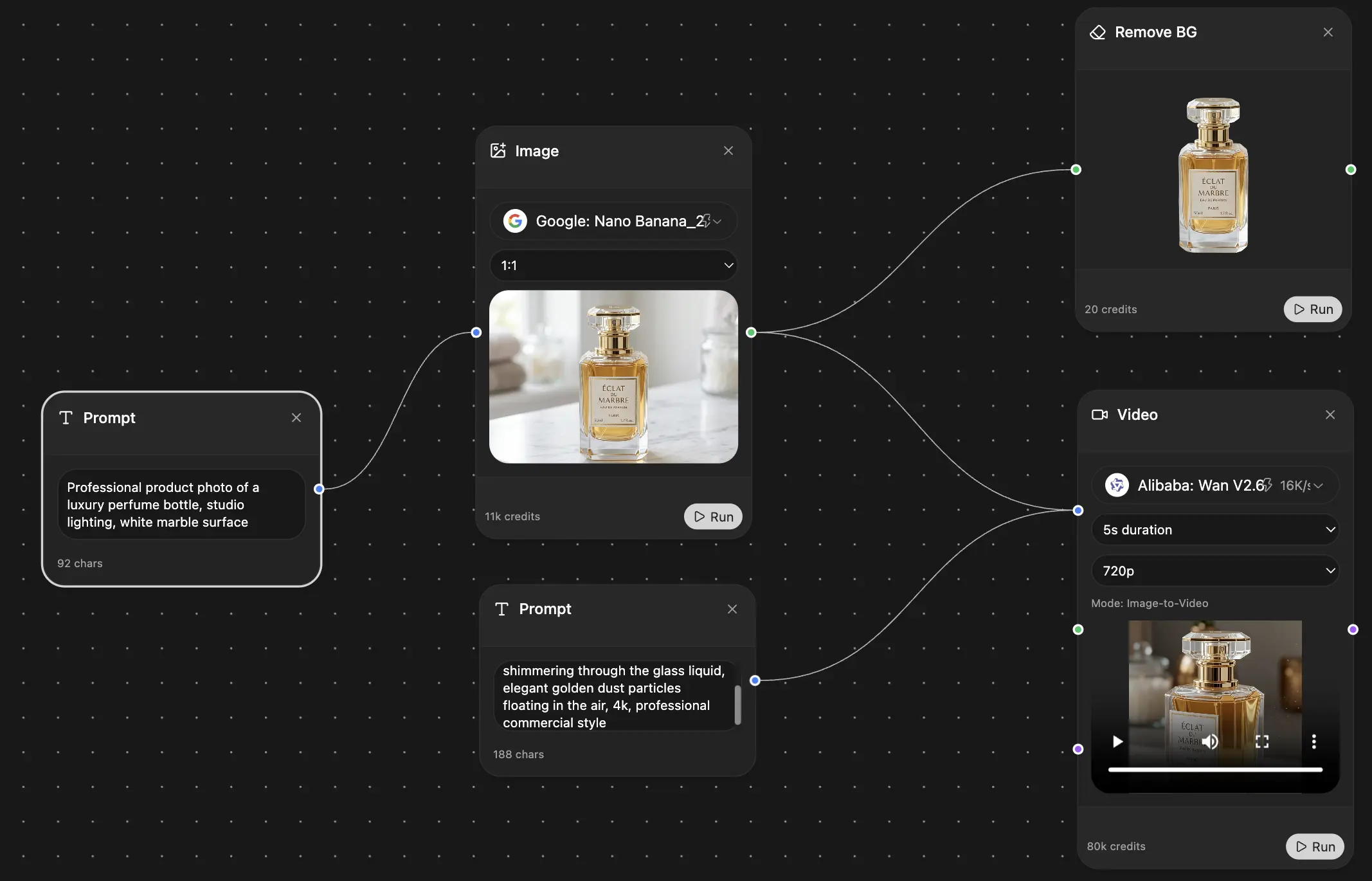
Your infinite AI canvas.
Chat, image, video & motion tools — side by side
Save hours of work and research
Transparent, High-Value Pricing
Trusted by teams at


Free
No credit card required
- 100 credits daily
- 3 AI models to try
- Basic AI chat
Plus
- 1,000,000 credits/month
- 25+ AI models — GPT, Claude, Gemini, Grok & more
- Agent Mode with web search, computer tools and more
- Creative Studio: image generation and video generation
- Project Library: chat with document, website and youtube, podcast generation, flashcards, reports and more
- Workflow Studio and FocusOS
Professional
- Everything in Plus, and:
- 2,100,000 credits/month
- Pro-exclusive models (Claude Opus, Grok 4, Sonar Pro)
- Motion Tools & Max Mode
- First access to latest features
- Access to additional offers
What Our Users Say
Great Tool after 2 months usage
"I love the way multiple tools they integrated in one platform. Going in the right direction."
— simplyzubair
Best in Kind!
"The quality of data and sheer speed of responses is outstanding. I use this app every day."
— barefootmedicine
Simply awesome
"The credit system is fair, models are perfect, and the discord is very responsive. Quite awesome."
— MarianZ
Great for Document Analysis
"Just works. Simple to use and great for working with documents. Money well spent."
— yerch82
Great AI site with accessible LLMs
"The organization of features is better than all the other sites — even better than ChatGPT."
— sumore
Excellent Tool
"It lives up to the all-in-one claim. All the necessary functions with a well-designed, easy UI."
— AlphaLeaf
Well-rounded platform with solid LLMs
"The team clearly puts their heart and soul into this platform. Really solid extra functionality."
— SlothMachine
Best AI tool I've ever used
"Updates made almost daily, feedback is incredibly fast. Just look at the changelogs — consistency."
— reu0691