AI Desktop Assistant: Boost Your Efficiency Today
Discover what an AI desktop assistant can do for you. Explore core capabilities, use cases, and choose the perfect tool like Zemith for peak productivity.
Your computer probably looks productive from the outside. Multiple monitors. Slack open. Docs open. Browser open. IDE open. Somewhere in there, your notes app is holding on for dear life.
But the lived experience is different.
You start the morning answering email. Then you jump into a document. Then you need a quick summary of a PDF, so you open one AI tool. Then you need code help, so you open another. Then you need an image. New tab. Then research. New tab. Then you forget where you saved the thing you were looking for in the first place, which is how a normal workday turns into a scavenger hunt with Wi-Fi.
That’s why the rise of the ai desktop assistant matters. Not because it’s one more shiny AI gadget, but because it can become the digital central nervous system for your work. One place to think, search, write, build, and act. Less tab acrobatics. Less “which app did I put that in?” energy. More actual work.
Your Digital Life is Chaos We Need to Talk
A lot of smart people think they have a focus problem. Usually, they have a fragmentation problem.
A developer is bouncing between GitHub, an editor, docs, chat, logs, and three browser tabs that all contain different versions of the same Stack Overflow answer. A content creator is juggling briefs, keyword notes, competitor pages, draft paragraphs, image prompts, and a folder called “final-final-use-this-one.” A researcher has papers open everywhere and can’t remember which PDF had the useful footnote.
That’s not laziness. That’s modern work.

The real productivity leak
The obvious problem is clutter. The bigger problem is context switching.
Every time you hop from one app to another, your brain has to reload the task. It’s like opening ten books at once and expecting your memory to behave like a database. Spoiler: your memory is not a database. It’s more like a desk with sticky notes and a coffee ring on top.
Three things usually pile up:
- Tool sprawl: You collect separate apps for writing, coding, meetings, images, research, note-taking, and summarizing.
- Subscription fatigue: Every task has a different login, interface, and pricing page trying to become your personality.
- Digital mess: Files end up scattered across downloads, cloud drives, chats, desktops, and “temporary” folders that somehow become permanent.
If that last part feels painfully familiar, this guide on how to is worth a look.
Why this category is exploding
There’s a reason ai desktop assistants are moving from “interesting” to “seriously, I need this.” The intelligent personal assistant market is projected to reach $83.66 billion by 2030, growing at a 34.13% CAGR, and the same source notes that AI-powered content creation has boosted performance by 58% while AI coding assistants speed up developer tasks by 55.8% according to the roundup published by .
That jump makes sense. People aren’t asking for more tools. They’re asking for fewer handoffs between tools.
The best productivity setup often isn’t the one with the most features. It’s the one that makes fewer decisions necessary.
Why this feels worse than it used to
Older software lived in lanes. Your writing app handled writing. Your calendar handled meetings. Your code editor handled code.
Now every task overlaps with five others. A writing project needs research, screenshots, editing, metadata, and maybe even code snippets. A dev task needs documentation, bug analysis, issue summaries, and release notes. The work itself is mixed. Your software stack usually isn’t.
That’s the opening for a true ai desktop assistant. Not a toy chatbot. Not just a voice command gimmick. A system that can sit across your workflow and reduce the friction of doing real work.
What Is an AI Desktop Assistant Anyway
The simplest way to think about an ai desktop assistant is this: it’s a super-powered intern that lives in your computer.
Not the kind that brings coffee. The kind that reads docs, summarizes meetings, drafts emails, explains code, remembers project context, and helps you move from task to task without losing the plot.

It’s not just Siri with a better haircut
This point often causes confusion.
A voice assistant like Siri or Google Assistant is good at quick, narrow actions. Set a timer. Send a text. What’s the weather. Handy, but limited.
A standalone AI tool is also narrow. One app writes. Another generates images. Another helps code. Another summarizes PDFs. Useful, but fragmented.
A true ai desktop assistant sits above those categories. It connects with your work, your files, and your intent. It can help across tasks because it understands more of the environment you’re working in.
Here’s the difference in plain English:
- Voice assistant: Good for short commands.
- Single-purpose AI tool: Good for one job at a time.
- AI desktop assistant: Good for ongoing work that spans multiple tools, files, and decisions.
If you want a clean primer on the conversation layer behind these systems, this explanation of helps connect the dots.
The memory part is what changes everything
The most useful assistants don’t start from zero every time.
According to IBM’s overview of , advanced desktop AI assistants use persistent memory and adaptive learning, and that can improve task efficiency by 30% to 50%. The same piece explains that these systems store past interactions so they can learn user preferences over time, such as a developer’s coding style.
That sounds technical, but the result is simple. The assistant starts to feel less like a search box and more like a colleague who remembers the project.
What that looks like in daily work
A good assistant can remember things like:
- Your writing preferences: Short intros, direct tone, no fluff.
- Your coding habits: Preferred naming conventions, framework patterns, commenting style.
- Your project context: Which files matter, what the current goal is, and what “done” looks like.
- Your recurring tasks: Weekly reports, meeting prep, research summaries, content refreshes.
That last one matters a lot. Repetition consumes time unnoticed. People underestimate how much of their day is the same ten micro-tasks wearing different outfits.
Practical rule: If you do the same digital task often enough to sigh before starting it, an ai desktop assistant should probably be handling part of it.
The big idea
The magic isn’t just that the AI is smart. It’s that the AI is positioned well.
It lives where your work happens. It sees enough context to help meaningfully. It cuts the distance between “I need to do something” and “it’s already moving.”
That’s why the category feels different from earlier assistant tools. It’s less about novelty, more about workflow gravity. Work starts pulling toward one intelligent layer instead of scattering across fifteen tabs and a prayer.
The Magic Under the Hood How It All Works
You don’t need to become a machine learning engineer to use an ai desktop assistant well. But it helps to know what parts are doing what.
The easiest mental model is to break it into four pieces: brain, ears, hands, and memory.
The brain and ears
The brain is the large language model, or LLM. That’s the part generating text, code, summaries, and explanations.
The ears and mouth are the natural language processing pieces. They help the system understand what you mean when you type or speak in normal language.
UiPath explains this clearly in its overview of . These assistants use natural language processing and LLMs to understand user intent, which can reduce manual effort on tasks like reporting and email management by 40% to 50%. The same source notes that the underlying tech can achieve over 95% accuracy in distinguishing commands like “schedule a meeting” versus “cancel a meeting.”
That matters because human requests are messy. We don’t talk like menu buttons. We say things like:
- “Can you clean this up?”
- “Make this sound less stiff.”
- “Pull the key points from that PDF.”
- “Why is this function breaking?”
An ai desktop assistant has to interpret the request, not just match exact keywords.
The hands do the useful stuff
Here’s where a chatbot becomes an assistant.
The model can generate a response, sure. But an assistant also needs hands, meaning integrations with calendars, documents, editors, browsers, notes, or other apps.
So when you ask it to summarize a report, it can read the file. When you ask it to draft a follow-up, it can use the meeting notes. When you ask it to inspect code, it can work with the actual project material instead of guessing in a vacuum.
The memory keeps it from acting goldfish-like
Without memory, every prompt is a first date.
With memory, the assistant can retrieve relevant project details, previous conversations, and your preferences. That retrieval layer is often what turns a generic answer into a useful one.
If you’ve ever wondered why one AI reply feels suspiciously generic while another feels specific, memory and context are usually the reason.
For a deeper look at the meaning side of this, semantic analysis is the key concept. This breakdown of is a solid companion if you want the non-mathy version.
A plain-language example
Say you tell your assistant:
“Review this meeting transcript, pull action items, draft a polite follow-up, and add the unresolved questions to my project notes.”
Several things happen behind the scenes:
- It understands the intent behind “review,” “pull,” “draft,” and “add.”
- It reads the transcript.
- It identifies tasks, names, and open questions.
- It generates a follow-up in the right tone.
- It stores or sends the output where it belongs.
That’s why an ai desktop assistant feels different from a one-shot prompt box. It’s not just answering. It’s participating.
Why people sometimes get weird results
When the assistant gives a bad answer, it’s usually one of a few things:
- Not enough context: You asked a broad question with no source material.
- Weak instructions: “Make it better” means ten different things depending on the day.
- Poor integration: The assistant can’t reach the files or tools it needs.
- No memory layer: It forgets earlier decisions and starts improvising.
That doesn’t mean the category is overhyped. It means setup and workflow design matter. Good assistants are powerful. Good prompts and organized context make them much better.
From Theory to Practice AI Assistants at Work
The best way to understand an ai desktop assistant is to watch it solve ordinary messes.
Not sci-fi stuff. Real work. The kind that clogs up a Tuesday.
The software developer
A developer opens the laptop to fix a bug. One issue becomes five tabs, two docs, a failed test, a Slack thread, and a half-written comment saying “looking into it.”
The assistant helps in stages.
First, it explains the error trace in plain English. Then it compares the broken function to similar code elsewhere in the project. It drafts a fix, points out likely edge cases, and writes a short summary the developer can paste into the pull request.
The key benefit isn’t just code generation. It’s continuity.
A good ai desktop assistant can help with the whole chain:
- Debugging: Explain why the code failed and where to inspect first.
- Refactoring: Suggest cleaner structure while preserving intent.
- Documentation: Turn rough implementation notes into readable internal docs.
- Context carryover: Keep the ticket, repo notes, and test output tied together.
The developer still makes the call. The assistant just removes the boring archaeology.
The content creator
A writer’s day often looks glamorous if you’ve never done it. In reality, it’s research tabs breeding like rabbits.
A creator might begin with a topic idea, collect reference notes, review competitor articles, draft an outline, write a first pass, tighten the tone, generate supporting visuals, then adapt the piece for social or email.
An ai desktop assistant compresses that sprawl.
It can summarize source material, cluster ideas into sections, turn bullet points into paragraphs, suggest better transitions, and help repurpose the finished piece into shorter formats. If the draft starts sounding too robotic, tools like can be useful as a cleanup step for making generated language feel more natural and reader-friendly.
If your content workflow involves copying text between five tools just to get one article out the door, the process is asking for consolidation.
The funny part is that creators often say they want “better prompts,” when what they really want is fewer app handoffs.
The researcher
Researchers don’t just need answers. They need traceable thinking.
That’s why this role benefits so much from a desktop-level assistant instead of a casual chatbot. The work involves papers, notes, citations, summaries, competing claims, and lots of “where did I read that?”
A strong workflow looks like this:
- Upload a set of papers or reports.
- Ask for a summary of themes across them.
- Compare where authors agree and disagree.
- Pull quotes or findings into notes.
- Draft a brief or literature overview from that material.
The assistant acts like a cross between a reading companion and a very patient organizer. It doesn’t replace judgment. It reduces the friction of navigating dense material.
And yes, the “digital central nervous system” idea becomes relevant in this context. Research isn’t one action. It’s an evolving web of references and questions. The assistant works best when it can hold that web together.
The entrepreneur
Entrepreneurs get hit with a special kind of chaos because every role reports to them, including the imaginary role of “person who remembers everything.”
One hour they’re reviewing customer feedback. Next they’re shaping a landing page. Then drafting outreach. Then analyzing competitors. Then outlining a product update. Then trying to remember whether they already answered that investor email.
An ai desktop assistant helps by reducing startup whiplash.
One workspace can support:
- Planning: Organize notes, ideas, and priorities by project.
- Writing: Draft emails, proposals, updates, and announcements.
- Research: Compare competitors or summarize market info.
- Execution support: Turn rough notes into polished assets quickly.
That doesn’t remove hard decisions. It does remove a lot of low-value formatting, searching, rewriting, and re-explaining.
Why these examples matter
Notice what all four roles share. The pain isn’t “I can’t generate text.” The pain is “my work is spread everywhere.”
That’s the central promise of an ai desktop assistant. Not magic answers. Better continuity.
When the assistant can sit near your documents, notes, conversations, code, and research, it becomes useful in a much less theatrical and much more profitable way. It helps you stay in one mental lane longer.
And that’s the dream. Fewer tabs. Fewer repeated explanations. Fewer moments where you stare at your desktop like it personally betrayed you.
Deployment Models Cloud Local or Hybrid
Once you decide an ai desktop assistant belongs in your workflow, the next question gets practical fast.
Where should it run?
This choice affects privacy, speed, maintenance, and how much control you have. It’s less of a nerd-only infrastructure debate and more of a working-style decision.
What the three models actually mean
Cloud means the assistant runs primarily on remote servers. You access it through a web app, desktop app, or connected service.
Local means it runs on your machine or inside your own controlled environment.
Hybrid mixes both. Some tasks stay local, while heavier models or external features run in the cloud.
AI Desktop Assistant Deployment Models Compared
How to decide without overcomplicating it
A few questions usually sort this out quickly:
- What data are you working with? Customer records and sensitive internal documents deserve a different setup than public blog drafts.
- Who maintains the system? If nobody wants to babysit infrastructure, local-only may become a hobby disguised as a strategy.
- How much performance do you need? Some users want simple drafting and summaries. Others need heavier research or coding workflows.
- How often do you work offline? Cloud tools are convenient until airport Wi-Fi turns philosophical.
The non-technical way to think about it
Cloud is like renting a very capable office.
Local is like owning the building.
Hybrid is like owning the archive room and renting the conference center.
None of these is automatically best. The right choice depends on how sensitive your work is and how much operational complexity you’re willing to tolerate.
If you’re weighing all-in-one platforms against specialized stacks, this gives you a practical lens.
Decision shortcut: Choose the model that protects your important data without creating a maintenance burden your team will resent in two weeks.
A small warning
People often overbuy control and underbuy usability.
A locked-down local setup sounds impressive until nobody uses it because it’s clunky. A cloud setup sounds effortless until a team realizes they didn’t ask enough questions about permissions and workflows.
Match the assistant to the reality of your work, not the fantasy version of your architecture diagram.
How to Choose Your Digital Co-Pilot
A flashy demo doesn’t tell you whether an ai desktop assistant will still help six weeks later.
The right test is boring in the best way. Does it fit the daily work. Does it reduce friction. Does it stay useful after the novelty wears off.

Start with the workflow, not the model name
A lot of people shop by asking, “Which model does it use?”
That matters, but not first.
A powerful model inside a clumsy product is like putting a race engine in a shopping cart. Technically impressive. Operationally weird.
Look for a tool that fits your actual work rhythm:
- Writers need smooth drafting, editing, note handling, and repurposing.
- Developers need code help, debugging context, and project continuity.
- Researchers need document interaction, summarization, and organized retrieval.
- Operators and founders need one place to think, write, search, and ship.
If you want a sense of what a strong all-around option looks like, this guide to the offers useful criteria.
The checklist that matters
Here’s the buyer’s guide I’d use.
- Model flexibility: Can you access more than one model or are you locked into one style of output?
- Document intelligence: Can it work with PDFs, notes, transcripts, and files you already use?
- Memory and continuity: Does it remember project context, or do you have to restate everything constantly?
- Real integrations: Can it connect to the places where your work already lives?
- Usability: Is the interface calm and obvious, or does it feel like software designed by seven committees and a caffeinated octopus?
- Output range: Can it support writing, coding, research, and creative tasks in one flow?
- Organization: Can you group chats, files, and projects so they stay useful later?
- Security fit: Does the deployment approach match your team’s privacy needs?
Don’t skip accessibility
This is a bigger deal than many product teams admit.
A key evaluation criterion is accessibility, and it’s still underserved. Research highlighted by the University of Texas at Dallas notes that specialized tools for visually impaired programmers are only just emerging in 2025, which points to a real gap in mainstream AI desktop assistants that depend heavily on visual feedback, as covered in this .
That means you should ask practical questions:
- Can the tool be used effectively without relying on visual-only cues?
- Does it support voice-first or screen-reader-friendly workflows?
- Are code explanations, navigation, and responses accessible in multiple modes?
A lot of products feel polished only if you assume the user sees and interacts the same way the designer does. That’s not good enough.
Watch a real product walkthrough
A video can reveal a lot that feature pages hide. You can see how much clicking is involved, how project context is handled, and whether the interface helps or interrupts.
A simple scoring approach
If you’re comparing options, don’t rely on vibes alone. Give each product a simple pass, maybe even in a note or spreadsheet.
Score it on:
- Daily usefulness
- Ease of switching between tasks
- Quality of outputs
- How well it handles your actual files
- Whether it reduces tool sprawl
The best assistant usually isn’t the one that impresses you in minute one. It’s the one that quietly removes friction every day after that.
That’s the whole game. Pick the co-pilot that helps you think more clearly, not the one with the loudest landing page.
The Future is Consolidated Meet Zemith
By this point, the pattern is pretty clear. The value of an ai desktop assistant extends beyond just offering one more AI feature. It’s consolidation.
The winning product in this category won’t be the one with the longest feature list. It’ll be the one that brings your work into one coherent system so you can stop bouncing between disconnected tools.

Why consolidation is the unlock
Ten AI apps are rarely needed. They need one reliable workspace where different kinds of work can happen without constant context loss.
That’s where Zemith stands out.
Instead of forcing you to piece together separate subscriptions for writing, research, coding, documents, image generation, and note-taking, Zemith brings those capabilities into one platform. That makes it much easier to maintain continuity across tasks.
A few examples make the benefit obvious:
- Multi-Model AI Access: Useful when one model is better for research while another is better for coding or writing.
- Document Assistant: Helps when your work starts from PDFs, transcripts, notes, or source material.
- Smart Notepad: Great for turning rough bullets into usable writing without leaving the workspace.
- Coding Assistant: Gives developers code generation, debugging support, previews, and explanations in one place.
- Deep Research Capabilities: Helpful for researchers, strategists, and marketers who need more than a quick answer.
- Projects and Library: This is the continuity layer. Files, chats, and knowledge stay grouped around the work instead of floating off into random session history.
- AI Live Mode: Adds a more immediate, conversational way to interact when typing feels slow or clunky.
Why this matters in practice
A consolidated system changes how work feels.
You’re not exporting notes from one app to another. You’re not pasting a summary into a separate writing tool. You’re not generating code in one place and carrying the explanation somewhere else. The workspace itself becomes the assistant.
That’s why the “digital central nervous system” framing works. Zemith isn’t just another AI tab. It’s set up to be the layer that connects the tabs you’d rather stop managing.
And yes, that’s a productivity gain. It’s also a sanity gain. Those count too.
The better question to ask
Instead of asking, “Which AI tool should I add next?” ask this:
Which platform helps me remove the most switching, repetition, and fragmentation from the work I already do?
That question leads you toward consolidation. And consolidation is where ai desktop assistants become useful instead of merely impressive.
If you’re ready to replace tool sprawl with one organized AI workspace, try . It brings research, writing, coding, documents, projects, and creative tools into one place so your workflow feels less scattered and a lot more powerful.
Explore Zemith Features
Every top AI. One subscription.
ChatGPT, Claude, Gemini, DeepSeek, Grok & 25+ more


Always on, real-time AI.
Voice + screen share · instant answers
What's the best way to learn a new language?
Immersion and spaced repetition work best. Try consuming media in your target language daily.
Voice + screen share · AI answers in real time
Image Generation
Flux, Nano Banana, Ideogram, Recraft + more

Write at the speed of thought.
AI autocomplete, rewrite & expand on command
Any document. Any format.
PDF, URL, or YouTube → chat, quiz, podcast & more
Video Creation
Veo, Kling, Grok Imagine and more

Text to Speech
Natural AI voices, 30+ languages
Code Generation
Write, debug & explain code
Chat with Documents
Upload PDFs, analyze content
Your AI, in your pocket.
Full access on iOS & Android · synced everywhere
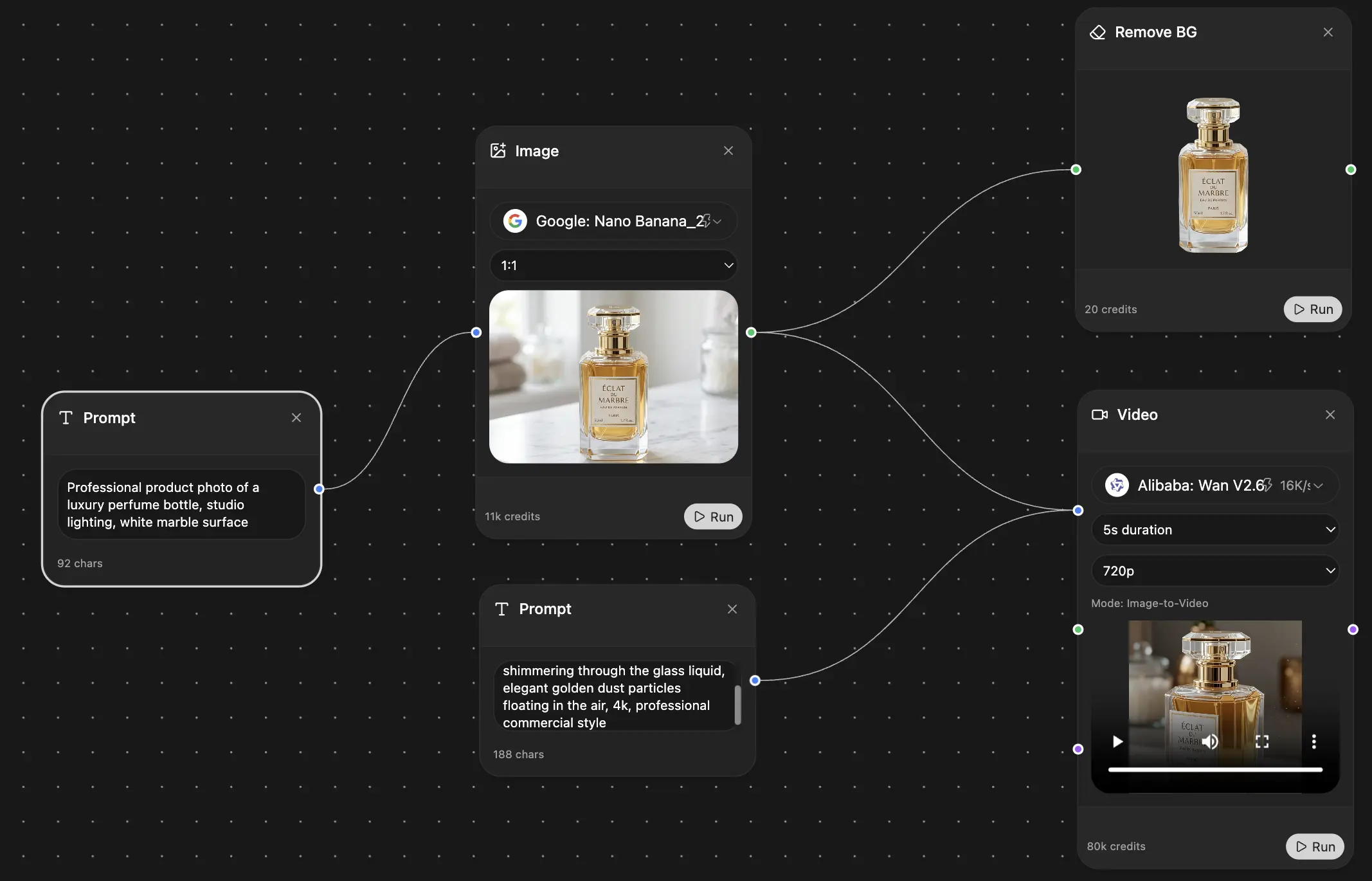
Your infinite AI canvas.
Chat, image, video & motion tools — side by side
Save hours of work and research
Transparent, High-Value Pricing
Trusted by teams at


Free
No credit card required
- 100 credits daily
- 3 AI models to try
- Basic AI chat
Plus
- 1,000,000 credits/month
- 25+ AI models — GPT, Claude, Gemini, Grok & more
- Agent Mode with web search, computer tools and more
- Creative Studio: image generation and video generation
- Project Library: chat with document, website and youtube, podcast generation, flashcards, reports and more
- Workflow Studio and FocusOS
Professional
- Everything in Plus, and:
- 2,100,000 credits/month
- Pro-exclusive models (Claude Opus, Grok 4, Sonar Pro)
- Motion Tools & Max Mode
- First access to latest features
- Access to additional offers
What Our Users Say
Great Tool after 2 months usage
"I love the way multiple tools they integrated in one platform. Going in the right direction."
— simplyzubair
Best in Kind!
"The quality of data and sheer speed of responses is outstanding. I use this app every day."
— barefootmedicine
Simply awesome
"The credit system is fair, models are perfect, and the discord is very responsive. Quite awesome."
— MarianZ
Great for Document Analysis
"Just works. Simple to use and great for working with documents. Money well spent."
— yerch82
Great AI site with accessible LLMs
"The organization of features is better than all the other sites — even better than ChatGPT."
— sumore
Excellent Tool
"It lives up to the all-in-one claim. All the necessary functions with a well-designed, easy UI."
— AlphaLeaf
Well-rounded platform with solid LLMs
"The team clearly puts their heart and soul into this platform. Really solid extra functionality."
— SlothMachine
Best AI tool I've ever used
"Updates made almost daily, feedback is incredibly fast. Just look at the changelogs — consistency."
— reu0691